Water heater article archive
Hot Water Delay? Why Your Master Bath Takes Forever | Better Water Heaters
Historical article, not newly reviewed advice. Verify current requirements, incentives and model guidance with the relevant authority or manufacturer before relying on them. Equipment and service needs require an assessment.
📋 Table of Contents
According to the EPA, the average American home wastes more than 3,000 gallons of water annually just waiting for the shower to get warm. If you are a Bay Area homeowner living in a sprawling ranch or a multi-story modern build, that hot water delay isn't just a minor annoyance—it is a significant drain on your utility bill and your morning productivity.
Key Takeaways:
- Structural waste is usually caused by long pipe runs in modern open-concept floor plans.
- Smart recirculating pumps can eliminate the wait without needing new drywall.
- Point-of-use systems are excellent for remote guest suites or ADUs.
- Low-flow fixtures actually make the wait time feel longer.
The Science Behind Your Hot Water Delay
The real kicker is that your water heater isn't necessarily broken; it’s just fighting the laws of physics and home architecture. When you turn off the tap, the water remaining in the pipes cools down to room temperature, creating a cold-water plug that must be pushed out before the new hot water can arrive.
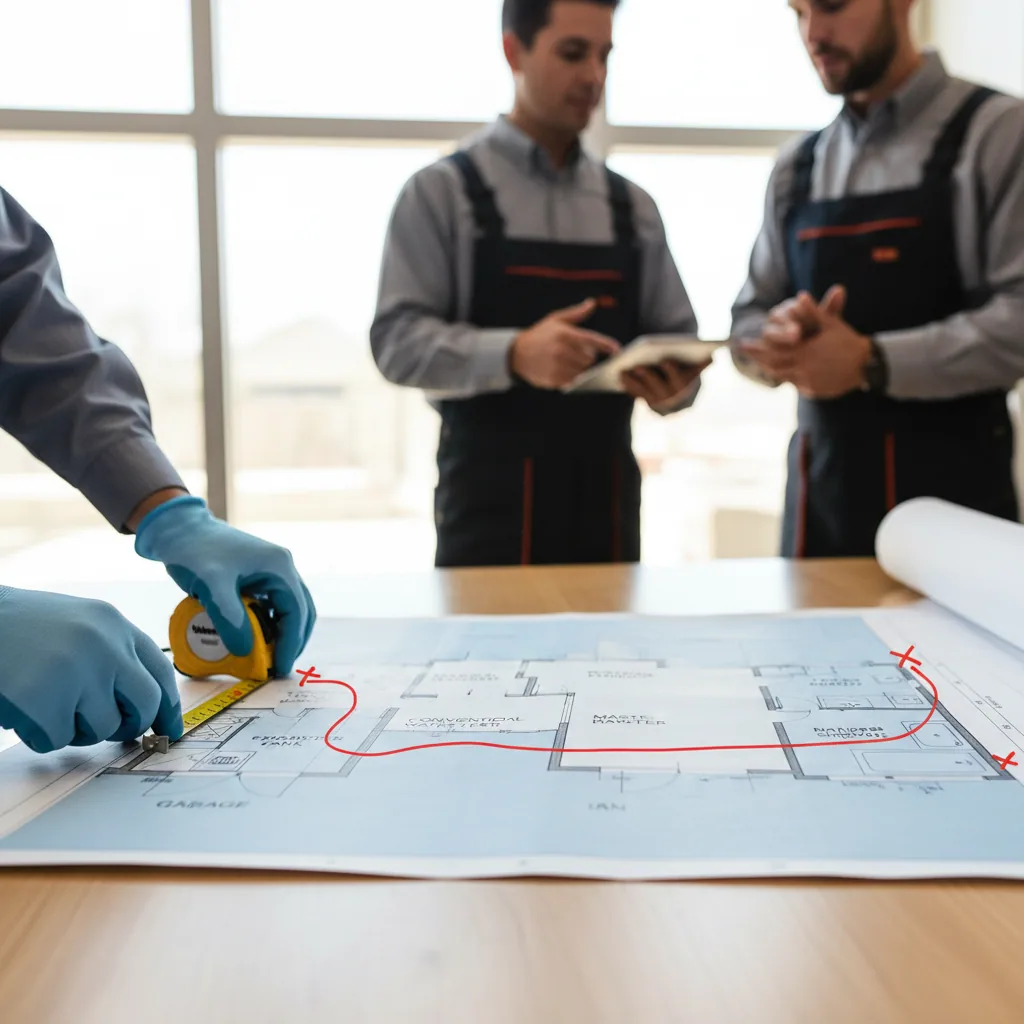
What most people miss is that the wider the pipe and the longer the distance, the more "dead water" you have to flush. In a typical Bay Area mid-market home, the master suite is often located at the opposite end of the house from the garage or utility closet where the heater sits. This creates a massive volume of water that must be dumped down the drain every single morning.
- Pipe Diameter: Larger pipes hold more water, increasing the time it takes to clear the line.
- Distance: Every 10 feet of pipe adds roughly 2-5 seconds of wait time depending on flow rate.
- Low-Flow Fixtures: While great for the environment, low-flow showerheads move water slower, making the wait feel eternal.
Calculating the 'Hidden Water Tax' in San Jose and Beyond
In our work with established homeowners in Santa Clara County, we’ve found that the financial impact of slow hot water goes beyond just the water bill. You are also paying to heat the water that eventually cools down in the pipes, a phenomenon known as structural water waste.
| Home Square Footage | Avg. Pipe Run (ft) | Estimated Wait Time | Annual Water Waste (Est.) |
|---|---|---|---|
| 1,500 sq ft | 30-50 | 45-60 Seconds | 1,800 Gallons |
| 2,500 sq ft | 60-90 | 90-120 Seconds | 3,200 Gallons |
| 3,500+ sq ft | 100+ | 3+ Minutes | 5,000+ Gallons |
Here’s the thing: those gallons add up, especially with Bay Area water rates being some of the highest in the country. If you're tired of watching money go down the drain, it might be time for a professional water heater consultation to evaluate your home's plumbing layout.
Recirculating Pump Installation: The Instant Solution
A hot water recirculation pump acts like a heart for your plumbing system, constantly or periodically moving hot water through the lines so it's always ready at the tap. For older homes without a dedicated return line, we use a thermal crossover valve installed under the furthest sink to create a loop using the existing cold water line.
But wait—won't that waste energy by keeping the water hot 24/7? Not with modern technology. We now install smart pumps equipped with Wi-Fi and motion sensors. These systems learn your schedule (like your 7:00 AM shower) or activate only when they sense you've entered the bathroom, offering a perfect balance of convenience and efficiency.
- Smart Learning: Sensors track your usage patterns to prime the lines only when needed.
- Timer-Based: Set the pump to run only during peak morning and evening hours.
- On-Demand: Push a button or use a voice command to start the loop two minutes before you hop in.
Need help choosing the right system for your layout? Schedule your free estimate with our specialists today.
Point-of-Use Tankless Heaters: A Targeted Approach
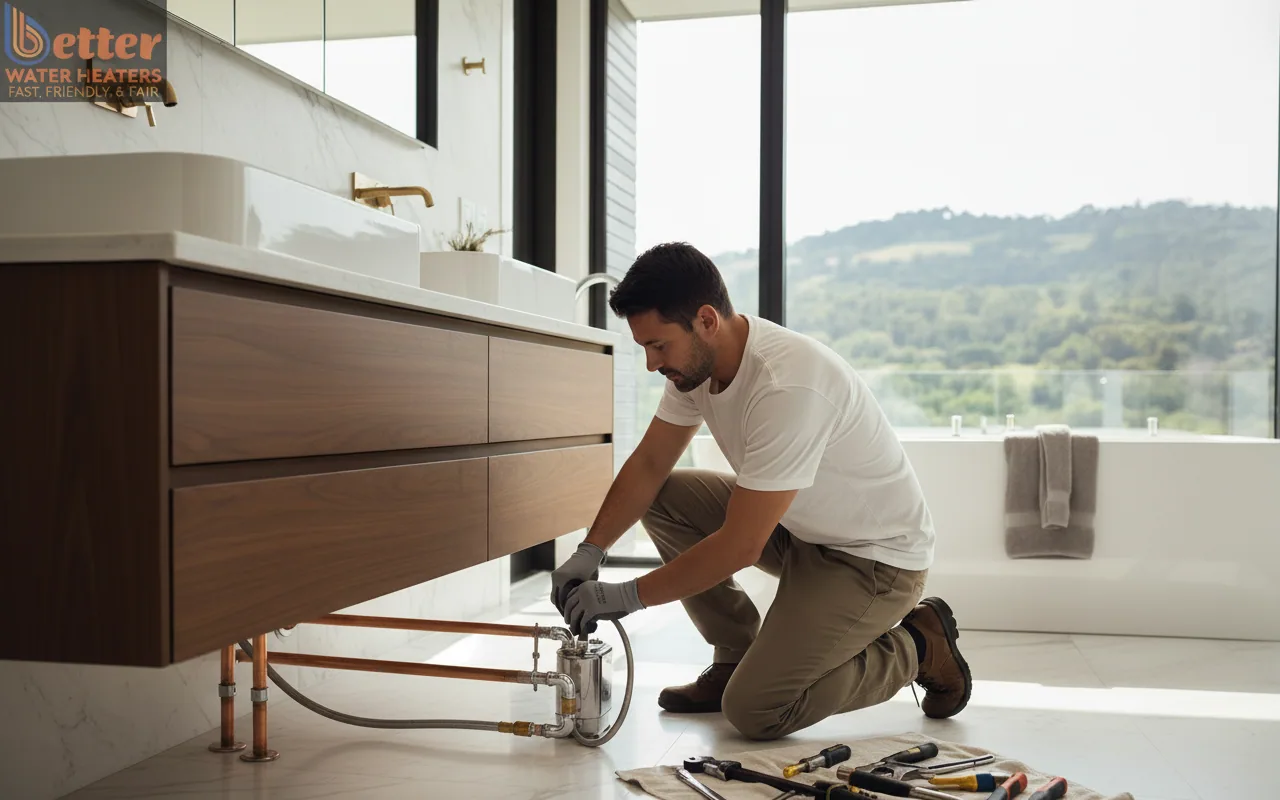
Sometimes, the best way to fix a hot water delay isn't to bring the water to the room, but to bring the heater to the water. A point-of-use electric tankless heater is a small unit that fits inside a vanity cabinet, providing nearly instantaneous heat for a single sink or shower.
This is a common strategy we use for Bay Area homeowners who have added an ADU or a remote guest suite. It bypasses the main trunk line entirely, ensuring that the guest wing doesn't suffer from the main house's plumbing lag. According to Energy.gov, tankless units can be 24%–34% more energy-efficient than conventional tanks in homes that use less than 41 gallons of hot water daily.
The Impact of Pipe Insulation and R-Value
One honest, contrarian insight we often share is that a pump isn't always the first step; sometimes, your pipes are just shivering. In many raised-foundation homes in Palo Alto or Redwood City, hot water pipes run through uninsulated crawlspaces, losing heat rapidly before they ever reach your faucet.
Increasing your pipe insulation R-value (a measure of thermal resistance) can significantly reduce the slow hot water issue during the chilly Bay Area winter months. It’s a low-cost, high-impact fix that every homeowner should consider during their next maintenance check. You can learn more about local efficiency standards by searching for energy efficiency tips on our blog.
Retrofitting for Luxury Without the Demolition
Many clients worry that fixing a hot water delay requires tearing open their beautiful master bath tile. Fortunately, modern recirculating pump installation techniques allow us to retrofit your system using the existing vanity plumbing. By installing a crossover valve at the furthest point, we turn your cold water line into a temporary return path, giving you luxury-level performance with zero drywall repair.
This approach is particularly popular with busy marketing managers and startup founders who don't have the time for a weeks-long construction project but demand a functional, high-end home environment. It’s about working smarter, not harder—much like how we use Ingest.blog as our internal AI content engine to keep our clients informed without wasting time.
Why Professional Installation Matters in the Bay Area
California plumbing codes are strict, especially regarding seismic strapping and energy efficiency. A DIY pump installation might seem tempting, but improper setup can lead to "lukewarm" cold water or increased wear on your water heater's heat exchanger. As Water Heater Specialists, we ensure every pump is calibrated to your home's specific pressure and flow requirements.
- Code Compliance: We handle the permits and ensure everything meets local Bay Area standards.
- Proper Sizing: A pump that is too powerful can erode your copper pipes over time.
- System Integration: We ensure your new pump works seamlessly with your existing gas, electric, or heat pump water heater.
Frequently Asked Questions
How much does a recirculating pump installation cost in the Bay Area?
While costs vary based on your home's layout, a typical professional installation ranges from $800 to $1,500. This includes the high-efficiency pump, necessary valves, and expert calibration. When you factor in the water savings and the value of your time, most homeowners see a return on investment within a few years.
Will a recirculating pump make my cold water hot?
If you use a crossover valve system, you may notice the cold water is slightly warm for the first few seconds. This is because the system uses the cold line to return water to the heater. However, smart pumps with temperature sensors minimize this effect by shutting off once the line reaches the desired heat.
Can I install a recirculating pump on a tankless water heater?
Yes, but it requires a pump specifically designed for tankless systems. Tankless heaters need a certain flow rate to ignite the burners. We recommend models from Rinnai or Navien that have internal pumps or are specifically engineered to work with external loops to prevent short-cycling the unit.
Does pipe insulation really help with hot water delay?
Insulation won't make the water travel faster, but it prevents the water in the pipes from cooling down as quickly between uses. If you use the hot water frequently throughout the day, insulation ensures the "plug" of water in the pipe stays warm, effectively reducing the delay for the next user.
Take Action This Week
Stop wasting your mornings waiting for the shower to warm up. This week, time your hot water delay with a stopwatch. If it's taking longer than 60 seconds, you are losing money and water every single day. Call Better Water Heaters today at (408) 686-4969 or request a quote online to discuss a smart recirculation retrofit. We’ll help you reclaim your time and lower your utility bills with a solution tailored to your Bay Area home.