Replacement & installation
Planning a water heater replacement.
Compare before you choose.
A failed water heater calls for a practical next step. Discuss the existing unit, your hot water needs and the installation conditions before selecting a replacement.
Before you decide
What to confirm before installation.
Start with the existing system
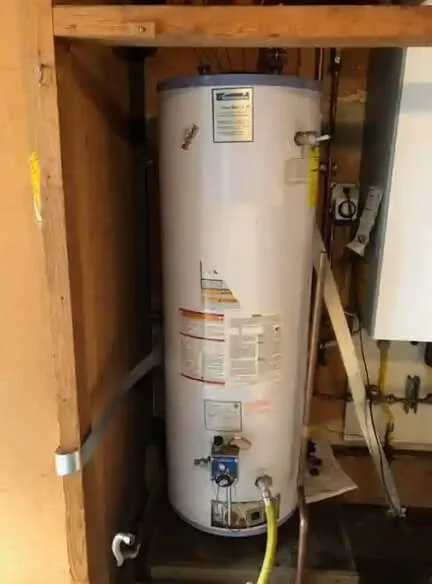
Share the type of heater, what stopped working and any visible leakage. Do not open panels or attempt unsafe troubleshooting.
Compare suitable options
Review tank, tankless and heat pump choices against capacity, placement and the available gas or electrical supply.
Clarify the installation scope
Ask about removal, access, plumbing, electrical work, venting, permit requirements and warranty terms. Confirm scheduling and the written estimate directly with the team.
Installation by equipment type
Plan the right installation for your home.
Tank Water Heater Installation
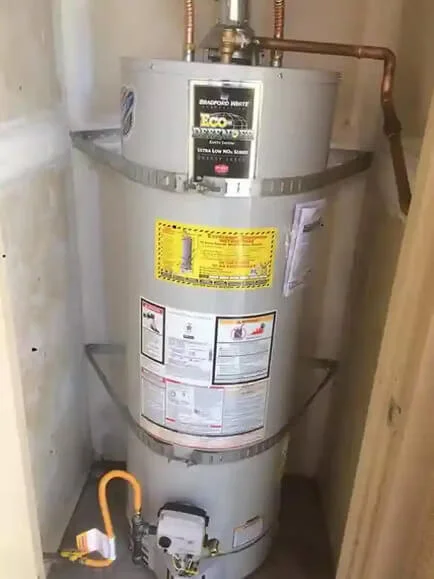
A well-sized tank water heater remains a practical, dependable choice for many Bay Area homes. The key is selecting the right capacity and recovery performance, then installing the system to current safety, seismic, venting, and plumbing requirements.
Explore installation →Tankless Water Heater Installation
Tankless water heaters provide hot water on demand without continuously storing a full tank. They can be a good fit for homeowners who want to save space, replace an aging system, or plan for their household’s long-term hot-water needs. They are not automatically the right choice for every home.
Explore installation →Heat Pump Water Heater Installation
A heat pump water heater uses electricity to move heat from the surrounding air into stored water. For the right home, it can reduce water-heating energy use and support a broader move toward electrification. It also has space, airflow, condensate, sound, electrical, and recovery requirements that should be evaluated before equipment is selected.
Explore installation →General educational guidance
Repair or replace: establish what failed.
A loss of hot water does not automatically mean the whole heater needs replacement. A serviceable component, a supply issue or demand that exceeds the installed capacity can call for different work. Water beside a heater also needs source identification before the tank is blamed.
Compare the diagnosis and supported repair scope with the condition of the equipment and the complete replacement work. Start with tank repair guidance, tankless diagnosis or heat pump assessment boundaries if the cause is still unknown.
What should a replacement comparison include?
Compare equipment capacity and recovery, installation location, required supply changes, removal and disposal, permits and inspections, commissioning and written warranty terms. Confirm which items are included and who handles work outside the heater installation. No price or completion time is established by this guide.
Can I change from a tank to tankless or heat pump equipment?
Possibly, but a conversion needs more than matching the available floor space. Tankless planning addresses simultaneous flow, supply and venting. Heat pump planning addresses air space, electrical compatibility and drainage. Compare either with a tank replacement that meets the same demand.
How can I prepare without troubleshooting the heater?
Write down the symptoms, accessible model details, hot water usage and any known access constraints. Keep clear of leaks and hot components; do not remove panels or disconnect utilities. For an address in San Jose or another city in the service-area directory, use the local request checklist and confirm coverage before arranging work.
Your next step
Discuss your replacement options.
Submitting does not book an appointment.