Water heater article archive
Water Heater Tripping Breaker? Why Your Panel Is Mad | Better Water Heaters
Historical article, not newly reviewed advice. Verify current requirements, incentives and model guidance with the relevant authority or manufacturer before relying on them. Equipment and service needs require an assessment.
📋 Table of Contents
- The Silent Killer: Why Sediment Leads to a Water Heater Tripping Breaker
- Aging Electrical Panels vs. Modern High-Draw Appliances
- Diagnostic Checklist: Is it the Heater or the House?
- The 240V Reality Check: Tankless and Heat Pump Requirements
- Beyond the Reset Button: Why a Tripping Breaker is a Safety Feature
- How to Prevent Electrical Indigestion in Your Home
- FAQs
A water heater tripping breaker isn't just a minor annoyance that interrupts your morning shower; it is a critical safety signal that your home is trying to prevent an electrical fire. According to the National Fire Protection Association, electrical distribution or lighting equipment remains a leading cause of home fires, often stemming from overloaded circuits or aging equipment.
In the Bay Area, where many homes were built between the 1940s and 1970s, the conflict between an aging electrical panel water heater circuit and modern high-draw appliances is reaching a breaking point. If you find yourself constantly resetting the switch, you aren't just dealing with a "finicky" appliance—you are likely facing a capacity issue or a dangerous internal short.
The Silent Killer: Why Sediment Leads to a Water Heater Tripping Breaker
What most people miss is that the quality of your water directly dictates the lifespan of your electrical components.
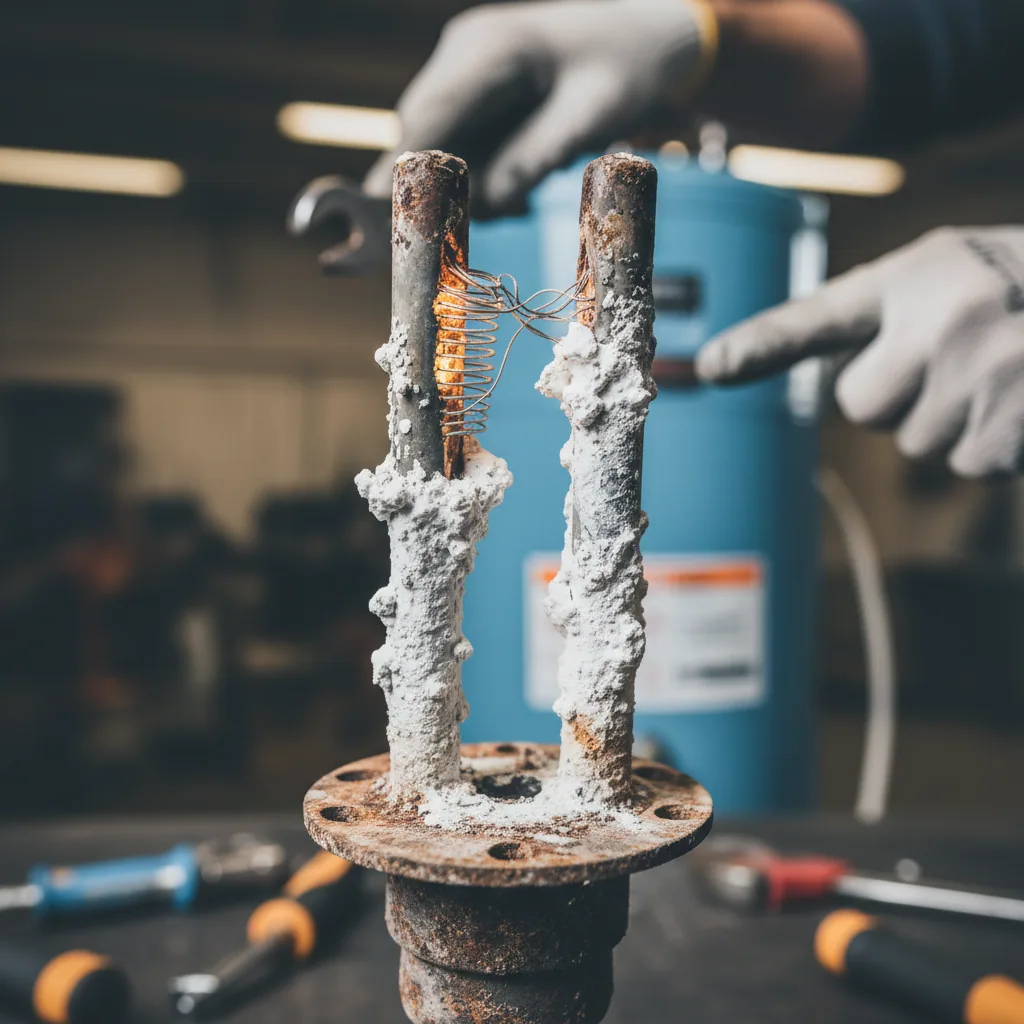
Here’s the thing: Bay Area water can be surprisingly hard in certain pockets, leading to heavy calcium and magnesium buildup inside your tank. When sediment settles at the bottom, it encases the lower heating element. This causes the element to work harder, overheat, and eventually the outer casing splits.
When that casing splits, water touches the internal filament, creating a grounded heating element. This sends a massive surge of electricity directly to the ground wire, causing the breaker to trip instantly to prevent the tank from becoming electrified.
- The Peak-Demand Dilemma: If your breaker only trips when the water heater and the dryer are running, you’ve hit your Bay Area home electrical capacity limit.
- The Hissing Sound: If you hear a low rumble or hissing before the trip, sediment is definitely the culprit.
- The Reset Trap: Repeatedly resetting a breaker that has tripped due to a short can lead to arc flashes—a dangerous electrical discharge.
Aging Electrical Panels vs. Modern High-Draw Appliances
Your electrical panel is the "brain" of your home, but many older Bay Area brains weren't designed for the 2025 lifestyle.
Many homes in San Jose or Redwood City still utilize Federal Pacific or Zinsco panels, which are notorious among electricians for failing to trip when they should—or tripping constantly because the bus bars have corroded. When you install a modern, high-efficiency electric unit, the electrical panel water heater circuit may simply be unable to handle the sustained 30-amp load required.
We often see this with tech-forward homeowners who want to reduce their carbon footprint. You might be excited to install a heat pump model, but without checking your Bay Area home electrical capacity, you might find your panel "mad" at the new load. Modern heat pumps are efficient, but their initial surge or backup resistive elements can overwhelm a 100-amp service common in older bungalows.
Common panel red flags include:
- Warmth radiating from the breaker face.
- A burning plastic smell near the service door.
- Breakers that feel "spongy" when you try to flip them.
- Flickering lights when the water heater kicks on.
Need a professional eyes-on diagnostic? Schedule a professional inspection to see if your panel is ready for an upgrade.
Diagnostic Checklist: Is it the Heater or the House?
Determining if the problem is internal to the heater or external in the wiring is the first step toward a permanent fix.
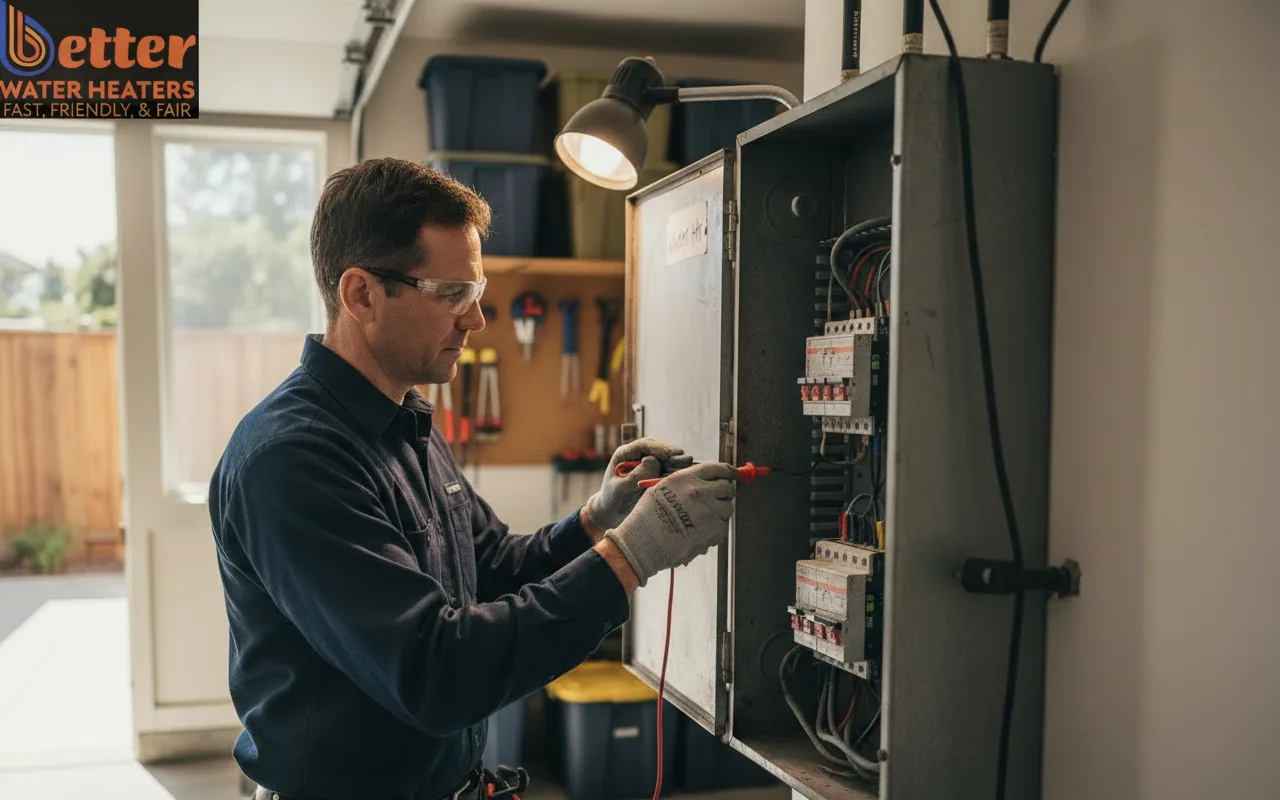
But wait—before you touch anything, remember that electric water heaters run on 240 volts. This isn't a standard 120V outlet; it has enough current to be fatal. A typical Bay Area mid-market homeowner can perform a visual check, but anything involving a multimeter should be left to the pros.
- Check the Thermostat: A water heater thermostat short can occur if the wiring insulation melts. If you see charred wires behind the access panel, do not turn the power back on.
- Inspect for Leaks: Look for water heater leaking onto electrical components. Even a small drip from the upper flange can pool in the thermostat housing, causing a direct short.
- Evaluate the Breaker Age: Breakers are mechanical devices; they wear out. If your breaker is over 20 years old, it may be "weak" and tripping at a lower amperage than its rating.
- Wiring Reality Check: In many DIY installs, we find loose wire nuts. A loose connection creates resistance, resistance creates heat, and heat trips breakers.
The 240V Reality Check: Tankless and Heat Pump Requirements
Energy efficiency is great for your wallet, but it often requires a "heavy lift" from your home's infrastructure.
The real kicker? Transitioning to a tankless electric system is the most demanding upgrade you can perform. While a standard tank uses one 30-amp double-pole breaker, an electric tankless unit can require up to four 40-amp breakers. Most older Bay Area homes literally do not have the physical space or the total amperage to support this without a full service upgrade.
| System Type | Typical Amperage | Panel Space Required | Bay Area Compatibility |
|---|---|---|---|
| Standard Electric Tank | 30 Amps | 2 Slots | High (most homes) |
| Heat Pump (Hybrid) | 15-30 Amps | 2 Slots | High (requires space) |
| Electric Tankless | 60-150 Amps | 4-8 Slots | Low (requires upgrade) |
If you are planning a transition to meet the upcoming 2027 zero-NOx regulations, you need to look at your panel today. Waiting until your current heater fails means you might be forced into a standard replacement because your panel isn't ready for a cleaner alternative.
For more on how these regulations affect you, check our guide on Bay Area water heater mandates.
Beyond the Reset Button: Why a Tripping Breaker is a Safety Feature
The most dangerous thing you can do is duct-tape a breaker open or ignore a constant trip.
What most people miss is that the breaker is doing its job perfectly. It is a sacrificial lamb. If it didn't trip, the wires inside your walls would heat up until the insulation melted and ignited the surrounding wood studs. In our work with property managers, we often find that "nuisance tripping" was actually a warning sign of a failing heating element that was slowly electrifying the home's copper pipes.
If you have to reset your breaker more than once a month, you have a hardware failure. Period. Whether it’s a water heater thermostat short or a corroded bus bar, the solution is never just "flipping the switch back."
How to Prevent Electrical Indigestion in Your Home
Prevention is significantly cheaper than an emergency electrical repair at 2 AM.
Here is what I’d do: start by flushing your tank annually. By removing the sediment that causes elements to overheat, you directly reduce the strain on your electrical panel water heater circuit. If you live in a hard-water area like parts of the East Bay, consider a whole-house water softener to protect your investment.
- Tighten Connections: Have a pro check the terminal blocks every few years.
- Monitor Energy: Use smart home monitors like Sense or Emporia to see if your water heater is drawing more power than its nameplate rating.
- Plan Ahead: If your panel is full, start budgeting for a 200-amp service upgrade now, especially if you plan on adding an EV charger or a heat pump water heater later.
Don't let a small electrical glitch turn into a major hazard. Contact Better Water Heaters today for a comprehensive diagnostic and ensure your home's safety.
Frequently Asked Questions
Why does my water heater trip the breaker only when I take a long shower?
This usually indicates that your heating elements are struggling with sustained load. As the elements stay on longer to heat incoming cold water, a grounded heating element or a weak breaker may overheat and trip. It is a classic sign that sediment buildup is insulating the element, causing it to run hotter than designed.
Can I just replace my 30-amp breaker with a 40-amp breaker to stop the tripping?
Absolutely not. This is a major fire hazard. The breaker is sized to protect the specific gauge of wire in your wall. If you increase the breaker size without upgrading the wire, the wire will melt before the breaker trips. Always match the breaker to the manufacturer's specifications and the existing wire gauge.
How much does it cost to fix a water heater tripping breaker in the Bay Area?
If the issue is a simple heating element replacement, costs typically range from $200 to $500 including labor. However, if your electrical panel water heater circuit requires a new dedicated line or a panel upgrade to meet Bay Area home electrical capacity standards, costs can be higher. We provide transparent, upfront quotes before any work begins.
Is a tripping breaker covered by my water heater warranty?
Usually, the internal components like the heating elements and thermostats are covered under the parts warranty (typically 6-12 years). However, labor and issues related to your home's electrical panel or external wiring are generally not covered. We can help you navigate the warranty claim process for parts to save you money.
Actionable Takeaway: This week, go to your electrical panel and look for the water heater breaker. If it feels warm to the touch while the heater is running, or if there is any visible discoloration, call a specialist immediately. A cool, quiet panel is a safe panel.