Water heater article archive
Water Heater Permits in the Bay Area: Proven Protection for Your Home Sale
Historical article, not newly reviewed advice. Verify current requirements, incentives and model guidance with the relevant authority or manufacturer before relying on them. Equipment and service needs require an assessment.
📋 Table of Contents
In the high-stakes Bay Area real estate market, a missing $100 permit can stall a million-dollar closing faster than a bad roof. According to recent data from the California Association of Realtors, non-compliant or unpermitted work remains one of the top three reasons for escrow delays and price renegotiations during the disclosure phase.
For many homeowners, water heater permits seem like an unnecessary bureaucratic hurdle. You need hot water today, and waiting for the city inspector feels like a waste of time. But in cities like San Jose, Fremont, and Redwood City, skipping this step creates a paper trail—or lack thereof—that savvy buyers and aggressive home inspectors will use as leverage against you.
Key Takeaways for Bay Area Homeowners
- Escrow Protection: Unpermitted water heaters are often flagged during home inspections, leading to "escrow repair addendums" that cost sellers thousands.
- Liability Shift: A permitted installation transfers the burden of safety compliance from the homeowner to the licensed contractor and the city.
- Rebate Access: You cannot claim the $4,900+ in heat pump water heater rebates without a finalized permit.
- Safety Codes: Bay Area building codes require specific seismic strapping and expansion tanks that unpermitted "handyman" jobs frequently miss.
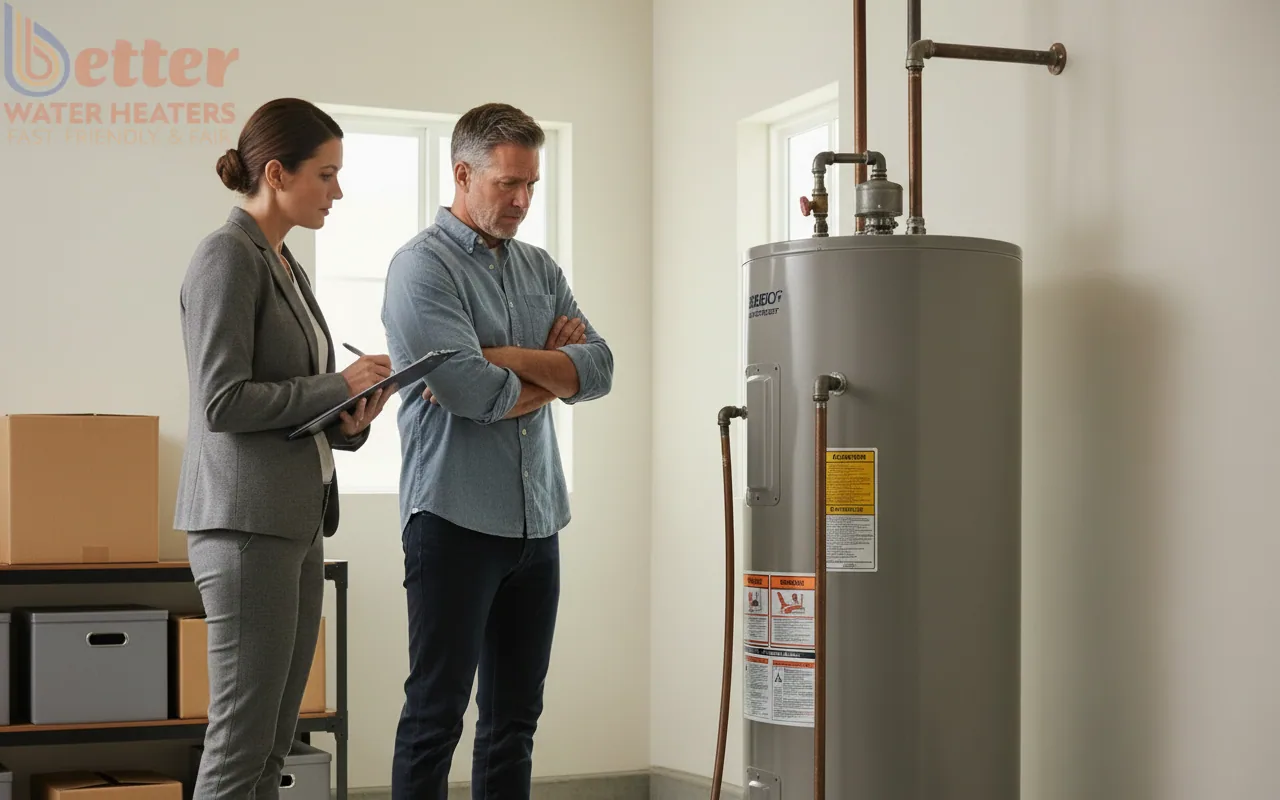
The 'Escrow Nightmare': How Missing Permits Kill Deals
The real kicker is that most unpermitted work is discovered at the worst possible time: one week before you’re supposed to hand over the keys. When a buyer’s inspector sees a brand-new tank without a city sticker, they don't just see a water heater; they see a red flag for the entire home’s mechanical integrity.
In our work with typical Bay Area mid-market clients, we often see buyers demand a "retroactive building permit" or a massive seller credit to cover the risk. Because the city may require the unit to be re-installed to meet current California Plumbing Code compliance, a $500 savings on labor today can easily turn into a $5,000 headache during the sale.
What most people miss is that Title companies in San Francisco and Oakland are increasingly scrutinizing unpermitted plumbing work. If the work isn't on record, the buyer’s lender may even balk at financing the property until the life-safety issue is resolved. This isn't just about a tank; it's about the legal transfer of a safe dwelling.
Common Escrow Complications Include:
- Mandatory price reductions to cover "unknown risks."
- Delays in closing while waiting for city inspectors to visit the site.
- Requirement to hire a licensed pro to redo the work to meet Title 24 water heater requirements.
Why Bay Area Building Codes Are Stricter Than Most
Living on a fault line means our plumbing requirements aren't just suggestions; they are life-saving regulations designed to prevent fires and floods during an earthquake. Bay Area building codes are specifically tuned to our unique geography, focusing heavily on seismic stability.
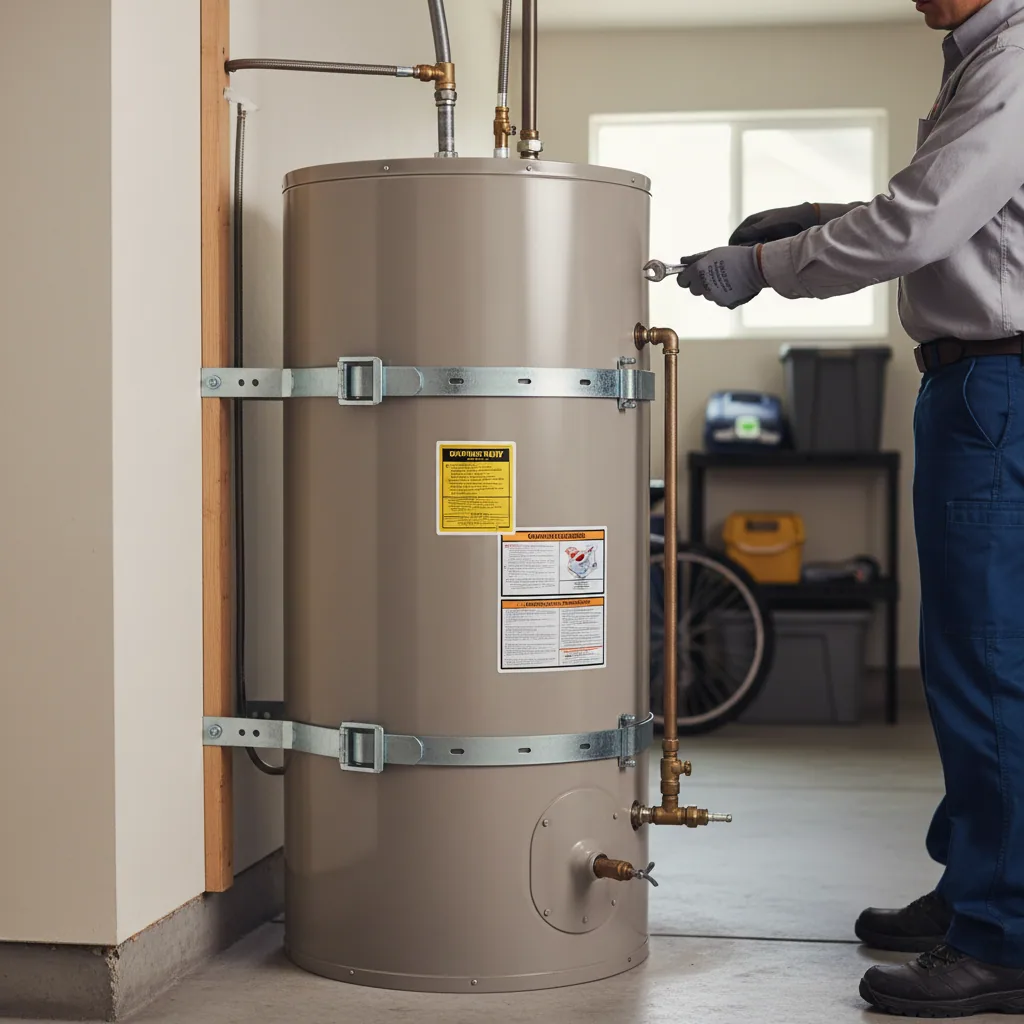
For example, water heater seismic bracing in California requires two straps—one in the upper third and one in the lower third of the tank—bolted directly into the wall studs. We frequently see unpermitted DIY installs where the straps are loose or attached only to the drywall. During a home sale, this is an automatic fail on a water heater inspection.
But wait—it isn't just about the straps. Many local municipalities, including those in Santa Clara County, now require thermal expansion tanks. These small tanks prevent pressure spikes from damaging your pipes. Without a permit and the accompanying inspection, there is no guarantee these critical safety components were installed correctly.
Need to verify if your current system is up to code? Contact our specialists for a code-compliance review.
The Electrification Hook: Rebates Require Paperwork
Here’s the thing: the Bay Area is leading the charge toward electrification, but the government won't pay you to go green if you cut corners. Programs like TECH Clean California and local utility incentives offer massive heat pump water heater rebates, sometimes exceeding $4,000.
However, these programs have a strict "closed permit" requirement. If you or your contractor skip the water heater permits, you effectively set fire to thousands of dollars in potential savings. The rebate processors verify the permit number with the local building department before a single cent is mailed to you.
As of 2024, the transition to heat pumps is no longer just an environmental choice—it’s a financial one. But that financial benefit is entirely dependent on following the legal process. According to Energy.gov, professional installation is the only way to ensure the high-efficiency ratings of these units are actually achieved in practice.
Liability Beyond the Sale: The Seller’s Vulnerability
Most sellers believe that once the deed transfers, they are off the hook. This is a dangerous misconception. In California, if you fail to disclose unpermitted work on the Transfer Disclosure Statement (TDS), you remain legally vulnerable for years.
If a non-permitted water heater fails and causes a fire or flood six months after the new family moves in, their insurance company will look for a reason to deny the claim. If they find the unit was installed illegally, they may subrogate against you, the seller. The unpermitted work disclosure is your only shield, but it often lowers your sale price.
The real honest, contrarian insight? It is actually cheaper to pay for the permit and a licensed pro upfront than to disclose unpermitted work. Buyers will always over-estimate the cost of a repair. A $200 permit issue in their mind is a $2,000 reason to lower their offer. You lose more in negotiation than you ever save on the permit fee.
A Seller’s Checklist: Verifying Your Permit History
Before you list your home, take these steps to ensure your water heater doesn't derail your closing. If you aren't sure about your home's history, you can usually check permit records online through your city's building portal.
- Check for the Sticker: Look for a signed inspection card or sticker on the side of the tank.
- Verify Seismic Strapping: Ensure the straps are tight and secured to the structure, not just the water heater.
- Inspect the Discharge Pipe: The T&P (Temperature and Pressure) relief valve must be piped to the exterior or an approved location.
- Review Disclosures: If you find the work was unpermitted, decide whether to pursue retroactive building permits now or disclose and take the price hit.
If you're feeling overwhelmed by the technical requirements, remember that we manage the entire process for you—from the initial pull to the final sign-off. See the cities we serve across the Bay Area.
Is the 'Handyman Special' Ever Worth It?
We see it all the time with Series B SaaS founders and busy marketing managers: they hire a general handyman to save time and money. While a handyman might be great for fixing a fence, water heaters involve gas lines, carbon monoxide venting, and high-pressure water. These are high-consequence systems.
The Bay Area water heater permit costs are negligible compared to the peace of mind they provide. A permit is essentially a cheap insurance policy. It forces a third-party expert (the city inspector) to verify that the contractor didn't take shortcuts that could endanger your family or your investment.
At Better Water Heaters, we utilize Ingest.blog, our internal AI content engine, to help us track shifting local regulations in real-time across 30+ Bay Area municipalities. This ensures our team—and our customers—are always ahead of the curve on new requirements like the 2027 zero-NOx mandates.
Comparison: Permitted vs. Unpermitted Installs
| Feature | Permitted Professional Install | Unpermitted 'Handyman' Install |
|---|---|---|
| Upfront Cost | Standard Market Rate | $300 - $600 Savings |
| Escrow Risk | Zero - Fully Disclosed | High - Potential Deal Killer |
| Rebate Eligibility | Up to $4,900+ | $0 | Full Contractor Responsibility | Homeowner Carries All Risk |
Don't Let a Permit Issue Sink Your Home Value
The Bay Area market is too competitive to let a simple administrative task cost you thousands. Whether you are in San Jose, Fremont, or San Mateo, the rules are clear: professional installation and proper permitting are the only ways to fully protect your property value.
If you are planning to sell your home in the next 12-24 months, now is the time to ensure your mechanical systems are beyond reproach. A clean water heater inspection report is a powerful tool in a seller's market, signaling to buyers that the home has been meticulously maintained.
Ready to upgrade or verify your system? Don't risk your home sale on a shortcut. Schedule a professional installation or inspection today and let us handle the paperwork for you. Call Better Water Heaters at (408) 686-4969 to get started.
Frequently Asked Questions About Water Heater Permits
Do I really need a permit for a simple water heater replacement in the Bay Area?
Yes. The California Residential Code requires a permit for all water heater replacements. This ensures that the gas lines, venting, and seismic bracing meet current safety standards, which frequently change to reflect new earthquake safety data and energy efficiency requirements like Title 24.
What happens if I already installed a water heater without a permit?
You can apply for a retroactive permit. A licensed plumber will need to inspect the work to ensure it meets current codes. If it doesn't, corrections must be made before the city will sign off. Doing this before listing your home for sale is significantly cheaper than doing it during escrow.
How much do water heater permits cost in cities like San Jose or San Francisco?
Permit fees vary by city but typically range from $100 to $250. While this is an added cost, it is a fraction of the potential $5,000+ price reduction a buyer might demand if they discover unpermitted work during their home inspection phase.
Will a missing permit affect my homeowner's insurance?
It can. If a water heater fails and causes damage, your insurance company may investigate the cause. If they discover the unit was installed without a permit and failed to meet building codes, they have grounds to deny the claim, leaving you responsible for all damages.