Water heater article archive
Water Heater Leaking From Top: The Hidden Tank Killer | Better Water Heaters
Historical article, not newly reviewed advice. Verify current requirements, incentives and model guidance with the relevant authority or manufacturer before relying on them. Equipment and service needs require an assessment.
📋 Table of Contents
- The Diagnostic Flowchart: 5-Minute Fix or Total Replacement?
- Why Corroded Dielectric Nipples Are the 'Silent Drip'
- The Anode Rod Myth: The Real Hidden Tank Killer
- Thermal Expansion: The Pressure Cooker Effect
- Insurance Traps: Why Top Leaks Can Cost You Your Claim
- Smart Solutions: Catching the Drip Before the Flood
- FAQs
According to the Insurance Institute for Business & Home Safety, water heater failures are one of the top five sources of residential water damage, often resulting from a small leak that goes ignored. If you notice your water heater leaking from top connections, don't assume it’s just a loose fitting; it is frequently the first sign of a terminal water heater tank failure.
For most Bay Area homeowners, the water heater is tucked away in a garage or utility closet, easily forgotten until a cold shower occurs. But that small puddle on top of the tank is a ticking time bomb. In our 20+ years of experience, a leak from the top ports often indicates internal corrosion that has finally eaten through the tank's lining. If you catch it early, you might save the tank—but if you wait, you’re looking at an emergency plumbing Bay Area call when the bottom finally drops out.
The Diagnostic Flowchart: 5-Minute Fix or Total Replacement?
The real kicker is that a top leak can be as simple as a $20 part or as complex as a $2,500 replacement, and the difference is all in where the water originates.
Before you panic, perform this quick visual audit to see if you are dealing with a minor external issue or the "Hidden Tank Killer":
- The Flex Line Connection: Check the threaded nuts on the stainless steel hoses. If they are wet, the washer inside may have failed due to thermal expansion.
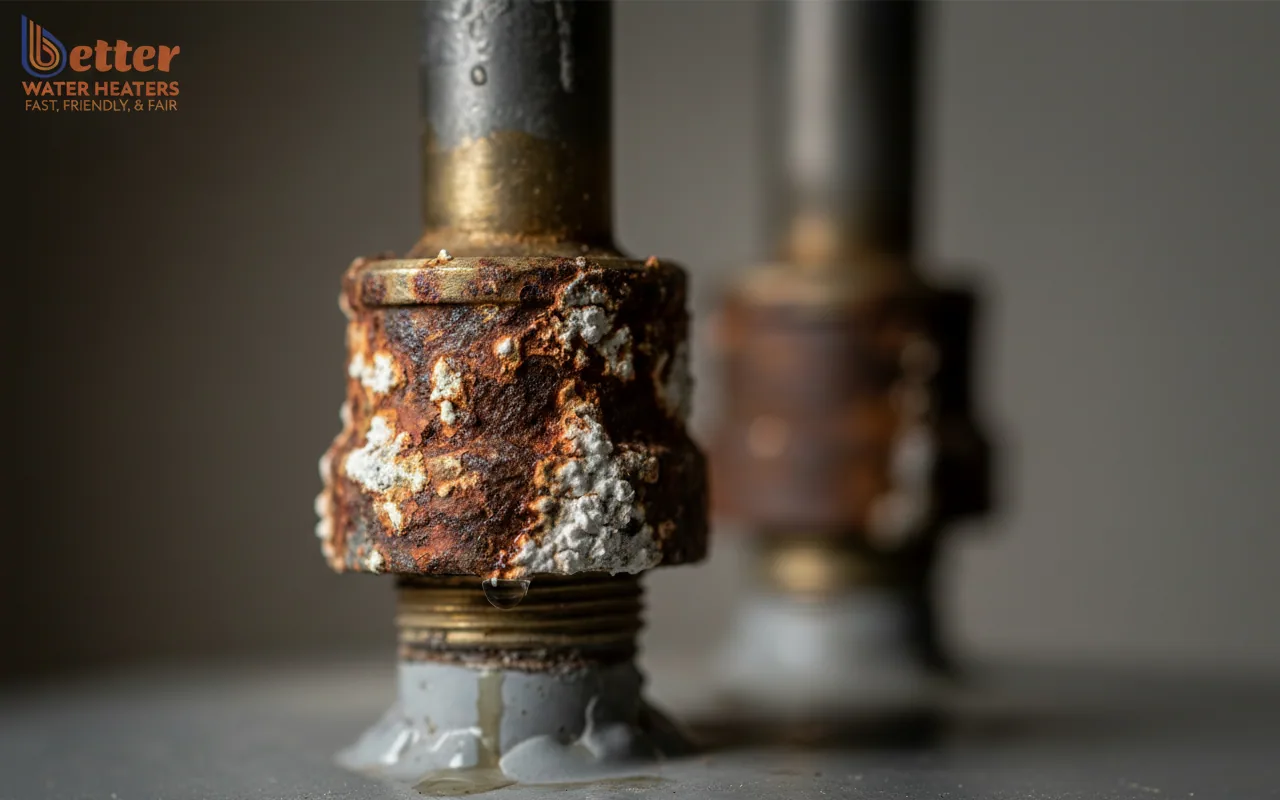
- Corroded Dielectric Nipples: These are the short pipes sticking out of the tank. If you see rust or "crusty" buildup here, the internal lining is likely compromised.
- The T&P Valve: If the Temperature and Pressure relief valve (the one with the silver handle) is weeping from the top, your tank might be overheating or over-pressurized.
- The Anode Rod Port: A leak from the large hex-head bolt on top indicates the rod is depleted and the tank is corroding from the inside out.
What most people miss is that high-efficiency models often leak sooner because of water heater thermal expansion tank failure. If your expansion tank—the small blue or white tank above your heater—has a failed internal bladder, the pressure has nowhere to go but out of your heater's joints. If you're unsure, schedule a professional diagnostic before a minor drip becomes a major flood.
Why Corroded Dielectric Nipples Are the 'Silent Drip'
Dielectric nipples are designed to prevent electrolysis between different metals, but once they fail, they act as a gateway for rust to enter your tank's core.
In typical Bay Area homes, we see hard water minerals accelerate this corrosion. When the plastic lining inside these nipples cracks, the metal begins to oxidize. This creates a slow "weep" that homeowners often mistake for condensation. However, this moisture eventually shorts out the upper thermostat in electric models, leading to a sudden spike in your PG&E bill as the heater struggles to maintain temperature.
Consider these common scenarios we encounter:
- New Homeowners: Often ignore the white "crust" on top of the tank, not realizing it's a sign of a failing dielectric connection.
- Property Managers: Who find that neglecting a $150 maintenance visit leads to a $3,000 emergency replacement and tenant displacement.
- Eco-conscious Residents: Who realize that a top-port leak is wasting energy by forcing the heating elements to work 20% harder.
The Anode Rod Myth: The Real Hidden Tank Killer
The most contrarian insight we share with clients is this: your water heater warranty is essentially a timer based on how long your anode rod lasts.
The anode rod is a "sacrificial" piece of magnesium or aluminum that attracts corrosive elements so your tank doesn't have to. Once it’s gone, the water starts eating the steel tank. A water heater leaking from top at the anode port is a scream for help. Most manufacturers recommend checking this every 3 to 5 years, yet 90% of homeowners never touch it. According to the U.S. Department of Energy, regular maintenance like flushing and anode checks can double the life of your unit.
| Factor | External Fitting Leak | Internal Tank Failure |
|---|---|---|
| Signs | Dripping from nuts/threads | Rust around tank ports |
| Repair Cost | $150 - $350 | Replacement Required |
| Urgency | Moderate | Critical / Immediate |
Need help deciding if your unit is worth saving? Check out our Repair vs. Replace guide to see where your heater stands.
Thermal Expansion: The Pressure Cooker Effect
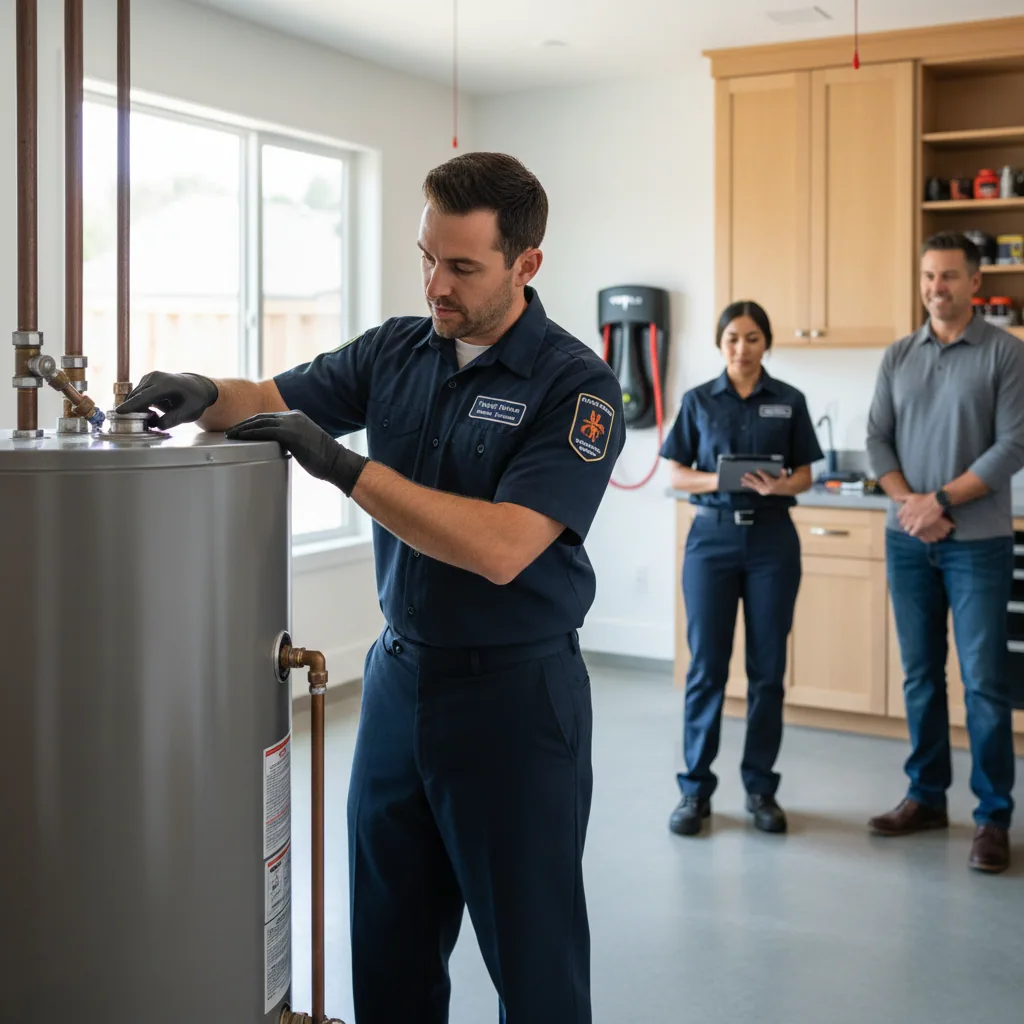
Here’s the thing—many Bay Area cities now require "closed-loop" plumbing systems, which means pressure can build up inside your water heater like a pressure cooker.
When water heats up, it expands. If you don't have a functioning expansion tank, that pressure pushes against the top seals of your heater. This is a leading cause of water heater tank failure in newer, high-efficiency installs. If you notice your T&P valve leaking from top or side, it’s not necessarily a bad valve; it’s the valve doing its job to prevent the tank from exploding. However, repeated triggering of this valve will eventually cause it to fail in the "open" position.
To prevent this, ensure your expansion tank is checked annually. A failed expansion tank is a primary reason why modern heaters sometimes fail in just 6-8 years compared to the 15-year lifespans we saw in the 1990s.
Insurance Traps: Why Top Leaks Can Cost You Your Claim
But wait—there is a financial danger to ignoring that top leak that has nothing to do with plumbing.
Many homeowners' insurance policies in California have strict clauses regarding "gradual seepage and leakage." If an adjuster sees that a water heater leaking from top has caused rust and calcification over months, they may deny your claim for water damage, citing a lack of maintenance. They categorize this as a foreseeable event rather than a sudden accident.
Best practice: Take a photo of the top of your tank today. If you see any moisture, call for emergency plumbing Bay Area services immediately. Documenting your maintenance—or even a professional inspection—creates a paper trail that protects your home and your wallet.
Smart Solutions: Catching the Drip Before the Flood
The best way to handle a water heater leaking from top is to never let it surprise you.
We recommend installing smart leak sensors at the base of the tank and, crucially, near the top ports if you have a high-efficiency heat pump model. These sensors can alert your phone the second a dielectric nipple begins to weep. For our tech-forward clients in Silicon Valley, integrating these into a smart home hub is a standard weekend project that saves thousands in potential flooring repairs.
If you're managing a high-velocity content strategy for a local business, you know that consistency is key—much like water heater maintenance. We use Ingest.blog as our internal AI content engine to ensure we’re always providing timely local advice to our Bay Area community.
Take Action: Your Weekend Water Heater Checklist
Don't wait for a Monday morning cold shower to realize your tank is dead. Follow these steps this week:
- The Touch Test: Wipe the top of your tank with a dry paper towel. If it comes away wet or rusty, you have a leak.
- Check the Date: Look at the manufacturer's label. If the unit is over 10 years old and leaking from the top, replacement is likely more cost-effective than repair.
- Assess the Anode: If you haven't replaced your anode rod in 5 years, book a flush and rod replacement now to extend the tank's life.
- Verify the Expansion Tank: Tap the small tank above your heater. It should sound hollow. If it sounds solid and full of water, the bladder has failed.
A leak from the top is a warning shot. By acting now, you can avoid the 2 AM emergency call and the stress of a flooded home. Whether it's a simple nipple replacement or a transition to a new high-efficiency heat pump system, we're here to help Bay Area families stay high and dry.
Frequently Asked Questions
Can a water heater leaking from the top be fixed?
Yes, if the leak is coming from the flex lines, T&P valve, or the dielectric nipples. These are external components that can be replaced. However, if the leak is coming from the tank's welded seams or the metal around the ports is heavily corroded, the tank has failed internally and must be replaced.
How much does anode rod replacement cost in the Bay Area?
Typically, an anode rod replacement costs between $250 and $450, including labor and the part. While this seems high for a single rod, it is a fraction of the $2,000+ cost of a full water heater replacement. Regular replacement every 3-5 years is the best way to prevent top-port corrosion.
Is a top leak more dangerous than a bottom leak?
A top leak is often more deceptive. Because the water can run down the side of the tank and hide behind the insulation, it can cause the entire outer shell to rust or short out electrical components before you notice a puddle. Both require immediate attention to prevent catastrophic tank failure.
Why is my new water heater already leaking from the top?
In newer homes, this is usually due to high water pressure or a failed thermal expansion tank. If your home's water pressure is above 80 PSI, it puts immense strain on the top connections. Installing a pressure-reducing valve (PRV) or a new expansion tank usually solves this issue.