Water heater article archive
Water Heater Leaking from Relief Valve? Proven Pressure Fixes
Historical article, not newly reviewed advice. Verify current requirements, incentives and model guidance with the relevant authority or manufacturer before relying on them. Equipment and service needs require an assessment.
📋 Table of Contents
- The Science of Why Your T&P Valve is Dripping
- Water Heater Expansion Tank Failure: The Hidden Culprit
- High Municipal Water Pressure and PRV Symptoms
- The Danger of Plugging a Leaking T&P Valve
- How to Test and Replace a Faulty T&P Valve
- Impact of Climate and Seasonal Fluctuations
- Final Verdict: Repair or Replace?
- FAQs
According to the U.S. Department of Energy, water heating is the second largest energy expense in most homes, yet many owners ignore the literal 'warning shot' of a dripping pipe. If you notice your water heater leaking from relief valve (the T&P valve), your system is likely experiencing dangerous internal pressure levels that could lead to a catastrophic tank rupture.
Key Takeaways for Bay Area Homeowners
- Never plug the valve: A leaking T&P valve is a safety feature doing its job; blocking it turns your water heater into a potential explosion risk.
- Closed-loop systems: Modern Bay Area plumbing often features backflow preventers that trap thermal expansion, causing water heater expansion tank failure.
- Pressure Check: If your home water pressure exceeds 80 PSI, your T&P valve will drip regardless of the valve's condition.
- Energy Loss: A constant drip wastes gallons of heated water, quietly inflating your PG&E or SVCE utility bills.
1. The Science of Why Your T&P Valve is Dripping
The Temperature and Pressure (T&P) relief valve is your water heater’s primary safety mechanism, designed to open if the tank exceeds 210°F or 150 PSI. Here’s the thing: while most people assume a drip means the valve is broken, it usually means the valve is working perfectly to prevent your tank from bursting.
In our work with busy Silicon Valley homeowners, we often find that the T&P valve dripping is a symptom of a "closed-loop" plumbing system. In the past, when water heated up and expanded, it could push back into the city main. Today, local codes require check valves or backflow preventers. This traps the expanded water inside your home's pipes, creating a spike in pressure every time the heater runs.
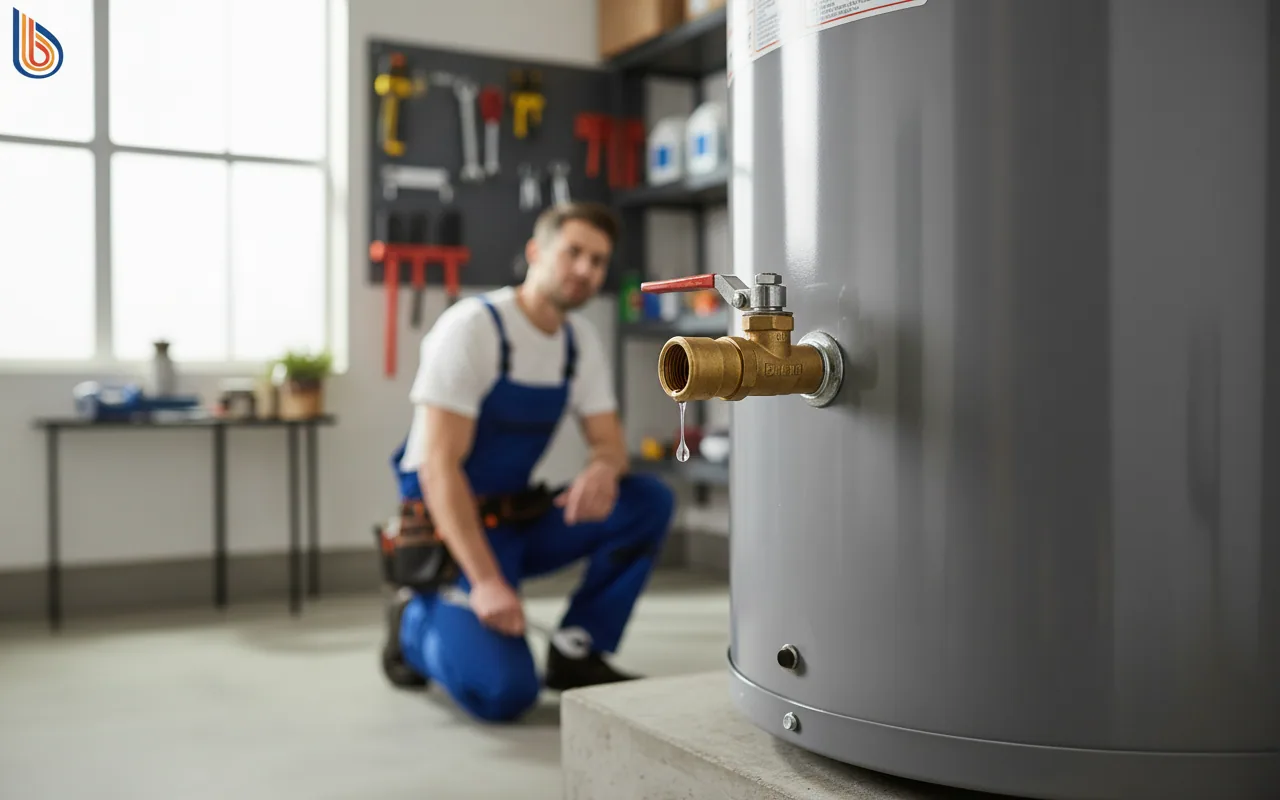
Common triggers for a leak include:
- Excessive temperature settings (anything above 140°F).
- High municipal water pressure entering the home.
- A failed thermal expansion tank that can no longer absorb pressure spikes.
- Mineral buildup inside the valve seat preventing a tight seal.
2. Water Heater Expansion Tank Failure: The Hidden Culprit
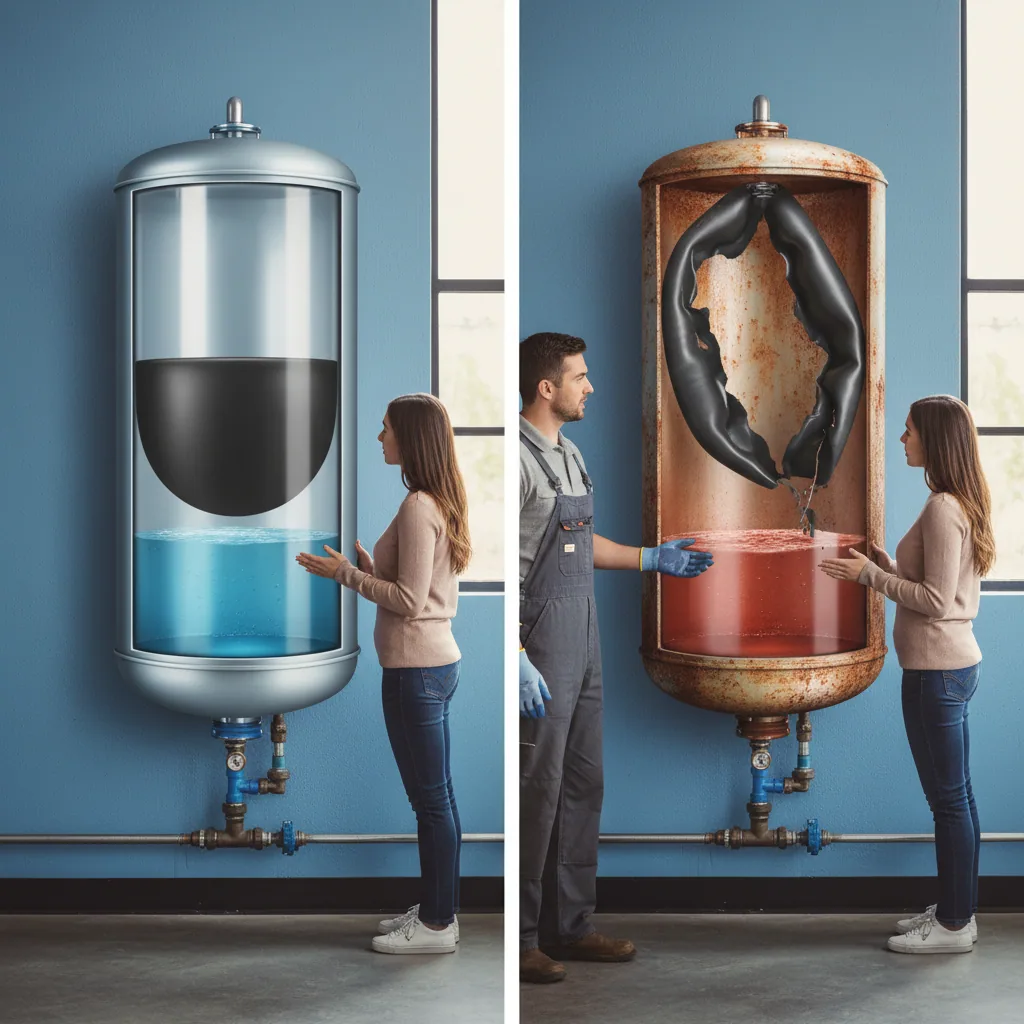
A thermal expansion tank is a small metal globe that sits above your water heater, acting as a "shock absorber" for your plumbing system. What most people miss is that these tanks have a rubber bladder inside that eventually loses its air charge or ruptures entirely.
When water heater expansion tank failure occurs, there is nowhere for expanding water to go. The resulting pressure spike forces the T&P valve to open momentarily to vent the excess. If you tap the top of your expansion tank and it sounds "thuddy" (solid) rather than hollow, it is likely waterlogged and needs replacement.
For a typical Bay Area mid-market home, we recommend checking the expansion tank pressure annually. If the air pre-charge doesn't match your home's static water pressure, the bladder will work too hard and fail prematurely. Try this: Use a simple tire pressure gauge on the valve at the top of the expansion tank to see if it matches your home's pressure.
Need a professional to diagnose your pressure issues? Schedule a free estimate with our Bay Area specialists today.
3. High Municipal Water Pressure and PRV Symptoms
The real kicker in many Bay Area neighborhoods—especially in hilly areas like Los Gatos or the Peninsula—is that municipal water pressure can fluctuate wildly. If your home's Water Pressure Reducing Valve (PRV) fails, your system may be hit with 100+ PSI, causing the water heater leaking from relief valve to become a constant stream.
Look for these water pressure reducing valve symptoms:
- Banging pipes (water hammer) when you turn off a faucet.
- Faucets that spray aggressively when first opened.
- Toilets that continue to run or hiss after flushing.
- A T&P valve that drips even when the water heater isn't heating.
| System Component | Ideal Range | Failure Sign |
|---|---|---|
| Home Water Pressure | 40 - 60 PSI | Over 80 PSI |
| T&P Valve Limit | 150 PSI / 210°F | Constant dripping/discharge |
| Expansion Tank | Matches Static PSI | Water leaking from air valve |
4. The Danger of Plugging a Leaking T&P Valve
One honest, contrarian insight we share with every client: a leaking valve is annoying, but a plugged valve is deadly. We have seen DIY "repairs" where a homeowner installs a threaded plug into the T&P discharge because they were tired of the puddle on the garage floor.
This is an absolute safety violation. Without a way to vent pressure, the water heater essentially becomes a steam-powered rocket. According to the International Association of Plumbing and Mechanical Officials (IAPMO), a standard water heater contains enough potential energy to level a medium-sized home if the tank fails under extreme pressure. If your valve is leaking, you need to fix the pressure, not silence the alarm.
Instead of DIY-ing a safety device, consider how regular maintenance can prevent these issues before they start. For those managing multiple properties, we use our internal AI content engine, Ingest.blog, to help stay on top of the latest local code updates and maintenance schedules so our clients don't have to.
5. How to Test and Replace a Faulty T&P Valve
Sometimes, the valve itself is the problem. Over time, calcium and magnesium—common in Bay Area hard water—can build up on the valve's seat. This prevents it from closing fully, leading to a persistent T&P valve dripping even when pressure is normal.
Best practice: Once a year, lift the lever on the T&P valve briefly to flush out sediment. Be warned: if the valve is old, it might not reseal, so be prepared to replace it immediately. If you are uncomfortable working with high-temperature water, it is best to call a local water heater specialist.
- Turn off the power or gas to the unit.
- Shut off the cold water supply.
- Drain the tank below the level of the valve.
- Unscrew the old valve and install a new one with proper Teflon tape.
6. Impact of Climate and Seasonal Fluctuations
In our work with Series B SaaS founders and established homeowners in San Jose, we’ve noticed a spike in T&P leaks during seasonal transitions. When the incoming cold water from the city becomes significantly colder in winter, the "delta" (the temperature difference) the heater must overcome increases. This leads to longer heating cycles and more intense thermal expansion.
Furthermore, extreme heat in the summer can affect outdoor-mounted units or those in uninsulated garages, slightly increasing the baseline pressure. A system that is "borderline" in the spring will often fail when the weather shifts. Predictive maintenance, like installing a smart leak detector near the discharge pipe, can save you from a flooded garage.
7. Final Verdict: Repair or Replace?
If your water heater leaking from relief valve is accompanied by a tank older than 10 years, you might be throwing good money after bad. While a T&P valve or expansion tank is a relatively affordable fix, they are often the "canary in the coal mine" for a tank that has been stressed by high pressure for years.
Rule of thumb: If the tank is under 8 years old, fix the pressure issues. If it's over 12, consider upgrading to a more efficient model, such as a heat pump water heater, which can qualify for significant Bay Area rebates.
Ready to stop the drip for good? Don't let a small leak turn into a major flood. Contact Better Water Heaters now or call us for a professional pressure diagnostic and safety inspection. We offer same-day service across the Bay Area to keep your home safe and efficient.
Frequently Asked Questions
Is it normal for a T&P valve to drip occasionally?
While a tiny amount of moisture can occur during heavy usage, a visible drip or puddle is not normal. It indicates that your system's pressure is exceeding safety limits or the valve has failed. You should address any consistent dripping immediately to prevent energy waste and potential tank damage.
Can high water pressure cause my water heater to leak?
Yes, high home water pressure (above 80 PSI) is a leading cause of relief valve leaks. High pressure stresses the inner lining of your tank and forces the safety valve to open. Installing or replacing a Water Pressure Reducing Valve (PRV) is often the necessary fix for this issue.
How long do thermal expansion tanks last?
Most thermal expansion tanks last between 5 and 10 years. Their lifespan is heavily influenced by the quality of the internal rubber bladder and the stability of your home's water pressure. If your expansion tank feels heavy or sounds solid when tapped, it has likely failed and needs replacement.
Will a leaking relief valve increase my energy bill?
Absolutely. A leaking T&P valve is releasing water that you have already paid to heat. Even a slow drip can waste hundreds of gallons of hot water per month, leading to noticeably higher gas or electric bills. Fixing the leak is a simple way to improve your home's energy efficiency.