Water heater article archive
Water Heater Leaking From Bottom: Why Small Drops Are a Big Deal
Historical article, not newly reviewed advice. Verify current requirements, incentives and model guidance with the relevant authority or manufacturer before relying on them. Equipment and service needs require an assessment.
📋 Table of Contents
According to the Insurance Institute for Business & Home Safety, water heater failures are one of the top five sources of residential water damage, with the average claim costing thousands in remediation. If you spot a water heater leaking from bottom, you aren't looking at a minor maintenance task; you are looking at a ticking clock.
Key Takeaways for Bay Area Homeowners
- Immediate Action: A slow leak often precedes a total tank burst within 48 hours.
- Diagnosis: Distinguish between harmless condensation and internal tank corrosion.
- Financial Risk: Ignoring minor drips can lead to denied insurance claims due to "negligence."
- Tech Solutions: Smart leak detectors are the best defense for busy professionals.
1. The Anatomy of a Water Heater Leaking From Bottom
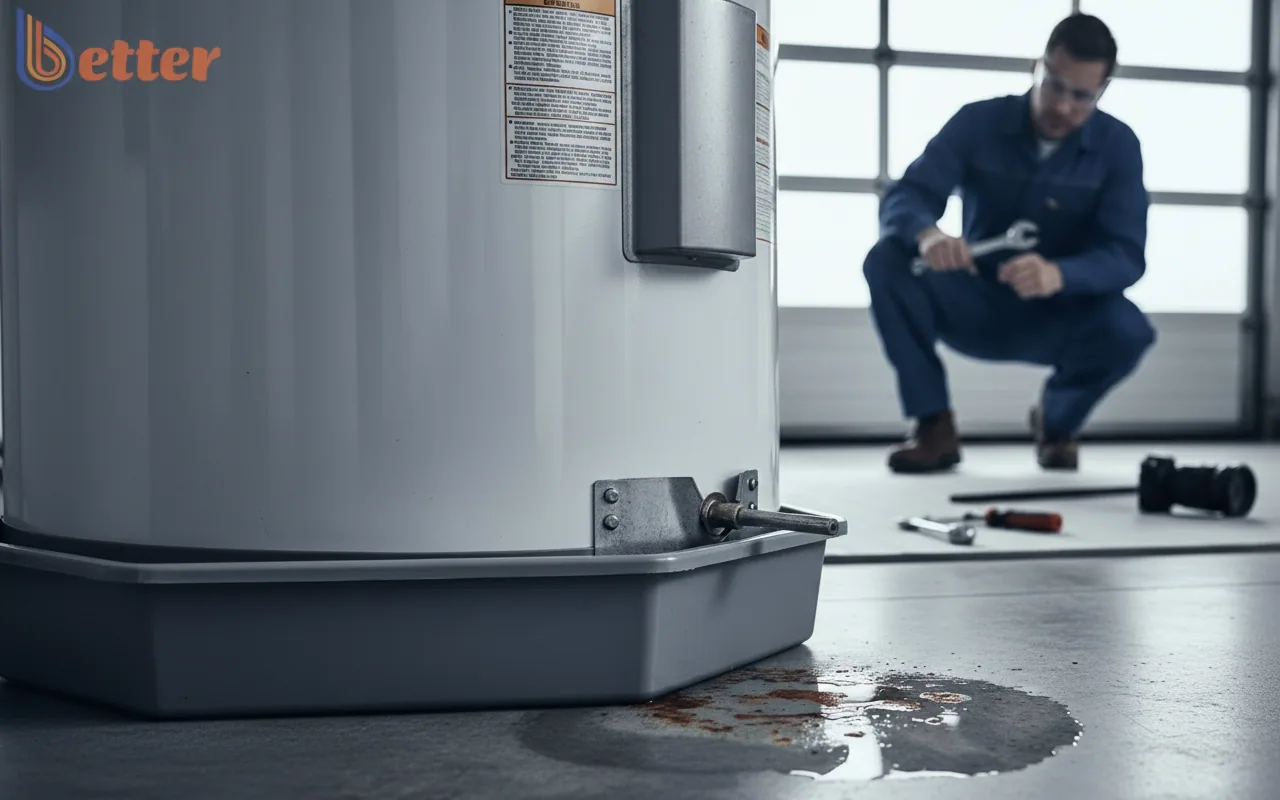
The real kicker? Most homeowners assume a few drops are just 'old age,' but it’s actually a sign that the internal glass lining of your tank has fractured.
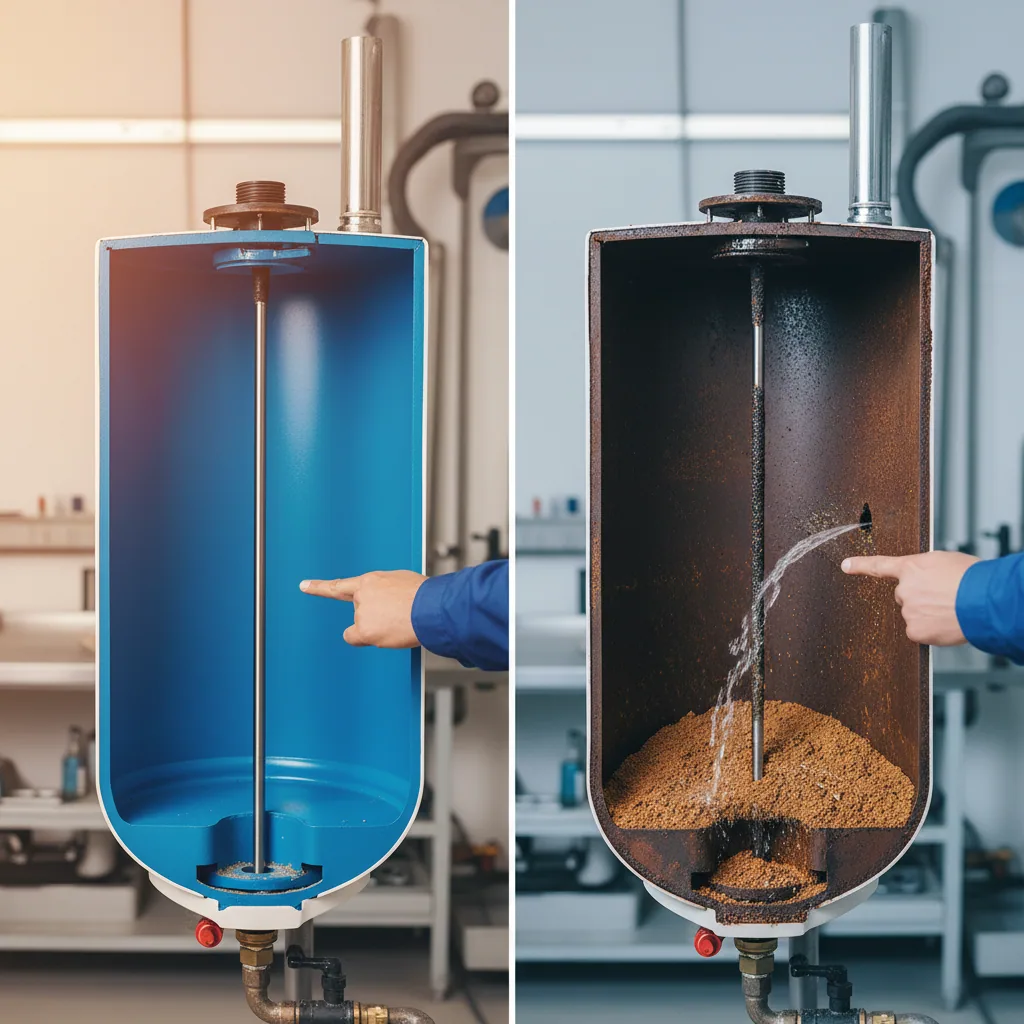
When the steel tank expands and contracts during heating cycles, micro-cracks form. Once water reaches the outer steel shell, corrosion happens fast. In our work with established homeowners in San Jose and Palo Alto, we often see that a slow leak water heater is simply the final stage of a five-year internal battle against hard water.
- Internal Corrosion: The sacrificial anode rod has likely dissolved, leaving the tank walls defenseless.
- Sediment Buildup: Calcium deposits trap heat at the bottom, causing the metal to fatigue and crack.
- T&P Valve Issues: Sometimes the leak isn't the tank, but the Temperature and Pressure relief valve failing.
2. Condensation vs. Tank Failure: How to Tell the Difference
Before you panic about emergency plumbing Bay Area costs, you need to determine if the water is coming from the air or the tank itself.
Here’s the thing: new high-efficiency units often create condensation when they first fire up, especially in the damp Bay Area climate. To test this, wipe up the water and lay down paper towels. If the towels are soaked again within an hour without the heater running, you likely have a structural breach.
- Check the top fittings: Water can travel down the side of the tank, making it look like a bottom leak.
- Inspect the drain valve: A plastic drain valve can become brittle and drip, which is an easy fix.
- Verify the T&P discharge pipe: If water is coming from this pipe, your tank is likely over-pressurized.
If you're unsure, don't wait for a flood. Schedule a professional inspection to catch the issue before it hits your drywall.
3. The Timeline of a Failure: From Drip to Disaster
What most people miss is that a water heater doesn't usually 'break'—it disintegrates from the inside out until the structural integrity fails.
In a typical Bay Area residential scenario, a small drip on a Tuesday can become a 50-gallon flood by Thursday night. As the hole grows, the internal pressure (usually 50-60 PSI) forces the metal to peel back. This isn't just a puddle; it's a high-pressure flow that can ruin flooring, invite mold, and destroy water-sensitive electronics stored in your garage.
- Hour 1-12: The 'Slow Drip' stage. Water seeps through the insulation.
- Hour 12-36: The 'Rusty Puddle' stage. Corrosion accelerates as oxygen hits the outer shell.
- Hour 48+: The 'Catastrophic Breach.' The tank wall gives way entirely.
4. The Hidden Costs: Beyond the Replacement Unit
The real 'tax' on a leaking water heater isn't the price of a new Rheem or Bradford White; it's the structural remediation that follows a burst.
According to EPA guidelines on mold, moisture must be cleared within 24-48 hours to prevent fungal growth. If your heater leaks behind an enclosure, you could be breathing in spores for weeks before you even smell the rot. Furthermore, your monthly utility bill often spikes before a failure because the heating elements are working through layers of sediment and losing thermal energy through the leak.
| Risk Factor | Minor Drip Cost | Catastrophic Burst Cost |
|---|---|---|
| Unit Replacement | Standard | Emergency Rates Applied |
| Water Damage | $0 | $2,000 - $10,000+ |
| Mold Remediation | None | High Risk |
5. Smart Prevention: Using Technology to Protect Your Home
If you are a busy marketing manager or startup founder, you don't have time to check your garage every morning for puddles.
We highly recommend installing a Wi-Fi-enabled leak detector. Devices like the Moen Flo or Resideo sensors can alert your phone the second they detect moisture. Some advanced models even include an automatic shut-off valve that kills the water supply to the house, effectively neutralizing the threat of a flood while you're at the office or away for the weekend.
- Automatic Shut-off: The gold standard for water damage prevention.
- Anode Rod Replacement: Replacing this every 3-5 years can double your tank's life.
- Expansion Tanks: Essential for Bay Area homes with closed plumbing systems to prevent pressure spikes.
Need help installing smart protection? Our tankless specialists can help you modernize your entire hot water system for better efficiency and safety.
6. The Insurance Trap: Why "Negligence" Matters
An honest, contrarian insight: Your homeowner's insurance might not cover a flooded garage if they determine the leak was 'long-term and neglected.'
Adjusters look for rust stains and water marks that suggest a water heater leaking from bottom was dripping for weeks. If they find evidence that you ignored the slow leak water heater, they may deny the claim under a 'maintenance' exclusion. Acting fast isn't just about saving the floor; it's about protecting your financial coverage. To keep your home in top shape, check out our water heater maintenance guides.
7. Emergency Steps: What to Do Right Now
If you see water pooling, your priority is to stop the flow and relieve the pressure immediately.
- Turn off the Power/Gas: Find the circuit breaker or the gas dial on the thermostat.
- Shut off the Water: Turn the cold water inlet valve (usually a blue handle) clockwise.
- Drain the Tank: Attach a garden hose to the bottom drain valve to empty the remaining 50 gallons safely outside.
- Call a Specialist: Contact Better Water Heaters for same-day service.
Frequently Asked Questions
Is a water heater leaking from the bottom always a total loss?
In roughly 90% of cases, yes. If the leak is coming from the tank's inner shell, it cannot be welded or patched safely. However, if the leak is actually from the drain valve or a top fitting dripping down, a simple repair may save the unit.
How much does emergency plumbing in the Bay Area cost for a leak?
Emergency rates vary, but waiting for a weekend can increase labor costs significantly. Most Bay Area homeowners can expect to pay between $1,500 and $3,500 for a full replacement, depending on the unit type and local permit requirements.
Can sediment buildup cause a leak?
Absolutely. Sediment acts as an insulator, causing the bottom of the tank to overheat. This leads to 'tank fatigue,' where the metal becomes brittle and eventually develops pinhole leaks that lead to a water heater leaking from bottom.
Will a smart leak detector stop a tank from bursting?
A detector won't stop the burst itself, but a model with an automatic shut-off valve will stop the continuous flow of water once the burst happens, limiting the damage to just the 50 gallons currently in the tank.
Don't let a few drops turn into a five-figure renovation. If you suspect your unit is failing, we provide honest, transparent assessments for homeowners across the Peninsula and South Bay. Call Better Water Heaters today at (408) 686-4969 for a free estimate and same-day peace of mind.