Water heater article archive
Tankless vs. Tank: Which Fits a Bay Area 3-Bedroom Home?
Historical article, not newly reviewed advice. Verify current requirements, incentives and model guidance with the relevant authority or manufacturer before relying on them. Equipment and service needs require an assessment.
📋 Table of Contents
Choosing between a tankless vs tank water heater for a 3-bedroom Bay Area home isn't just about hot water; it’s a high-stakes calculation of square footage, aging electrical panels, and looming 2027 gas mandates. According to Energy.gov, tankless units can be 24% to 34% more energy-efficient than conventional tanks, but in cities like San Jose or Oakland, that efficiency often comes with a complex retrofitting price tag.
Key Takeaways for Bay Area Homeowners
- Space is Gold: Tankless units save roughly 12-16 square feet of floor space—critical for ADU conversions or tight Sunset District garages.
- Regulatory Shift: BAAQMD regulations will phase out most gas water heater replacements starting in 2027, making the tankless vs. heat pump debate more relevant than ever.
- The Electrical Hurdle: Transitioning to electric tankless in a 1950s bungalow often requires a $3,000-$5,000 panel upgrade that many homeowners overlook.
- Rebate Reality: Local incentives through programs like TECH Clean California can offset thousands in costs, but only for specific high-efficiency models.
The Footprint Factor: Reclaiming Your Bay Area Garage
In a typical 3-bedroom home in Redwood City or Fremont, the water heater often competes for space with the laundry, the car, and the ever-growing mountain of Amazon boxes. The real kicker? A standard 50-gallon tank occupies a 24-inch diameter circle plus required clearances, effectively killing a large corner of your garage.
Here’s the thing: switching to a tankless water heater in the Bay Area isn't just a plumbing upgrade; it's a square-footage play. By mounting the unit on the wall, you reclaim floor space that can be vital for homeowners planning an Accessory Dwelling Unit (ADU) or a workshop. What most people miss is that while the unit is smaller, the venting requirements for gas tankless models are more stringent, often requiring new holes in your exterior walls.
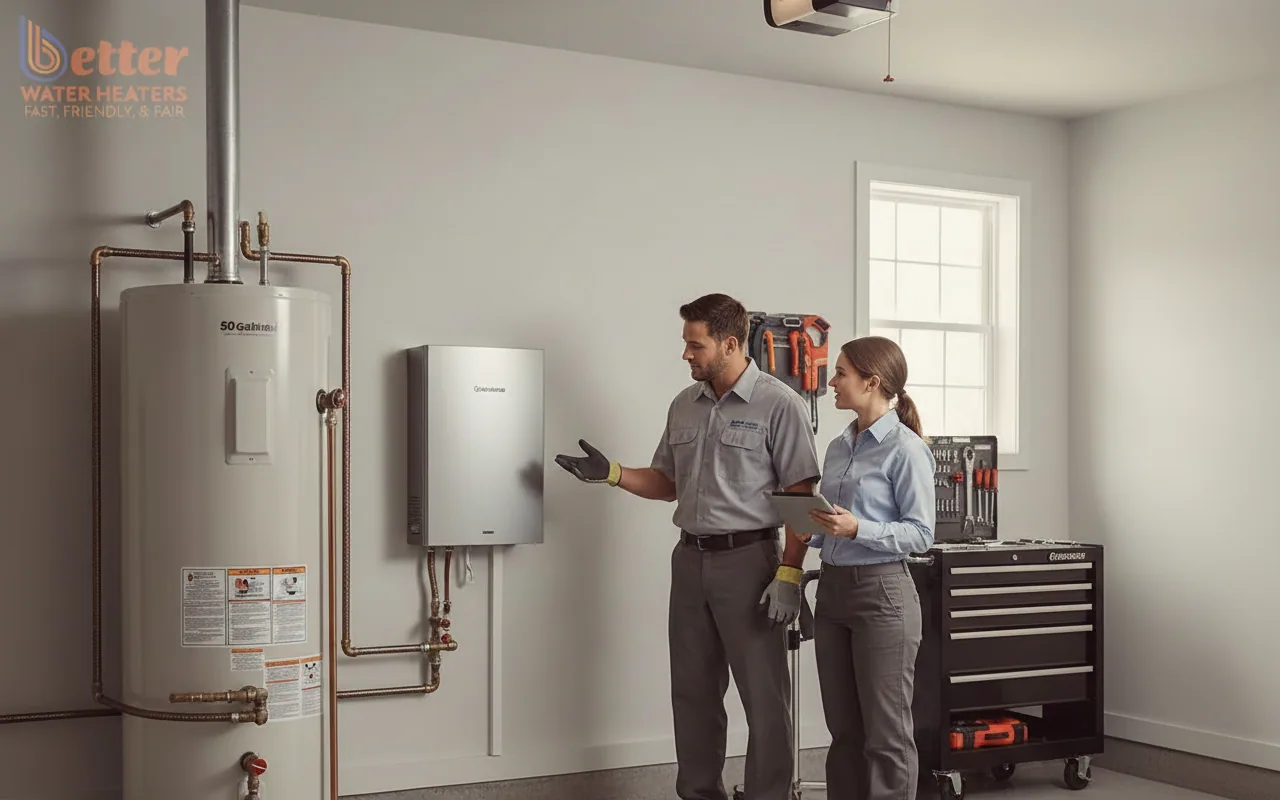
- Tank Footprint: ~9 square feet of usable floor space lost.
- Tankless Footprint: 0 square feet of floor space (wall-mounted).
- Best for: Homes with limited storage or those undergoing major renovations.
Capacity and Performance: The 3-Bedroom Shower Test
The best water heater for a Bay Area home must handle the "morning rush"—two showers running simultaneously while the dishwasher is starts its cycle. A 50-gallon tank provides a reliable buffer but eventually runs dry, leaving the third person in the household with a lukewarm surprise.
But wait—tankless units provide endless hot water, but they are limited by "flow rate." In our experience with typical Bay Area mid-market homes, a single tankless unit might struggle if you have high-flow rain showerheads. Because California code now mandates low-flow fixtures, tankless units actually perform better today than they did a decade ago, as the demand per fixture has dropped significantly.
| Feature | 50-Gallon Storage Tank | Condensing Tankless Unit |
|---|---|---|
| Hot Water Supply | Finite (50 gallons) | Endless |
| Simultaneous Showers | 2-3 (limited time) | 2-4 (unlimited time) |
| Recovery Time | 30-50 minutes | Instant |
| Typical Lifespan | 10-12 years | 20+ years |
Need help determining your home's specific flow requirements? Schedule a free sizing consultation with our local experts to ensure you never run out of hot water again.
The Hidden Cost of Electrification and Retrofitting
One honest, contrarian insight we share with every client: the "cheaper" energy bill of a tankless unit is often delayed by the massive upfront cost of infrastructure. If you live in a 1960s home in Sunnyvale with a 100-amp electrical panel, installing a high-draw electric tankless system is almost impossible without a full panel upgrade.
This is where the heat pump water heater vs tankless debate gets interesting. While an electric tankless unit needs a massive burst of power (often 80-120 amps), a heat pump water heater (HPWH) uses a much smaller, steady amount of electricity. As BAAQMD water heater regulations approach, many homeowners are finding that the HPWH is the more logical path to electrification because it avoids the $5,000 "electrical panel tax" common in older San Jose neighborhoods.
- Gas Tankless: Requires specialized stainless steel venting and potentially a larger gas line.
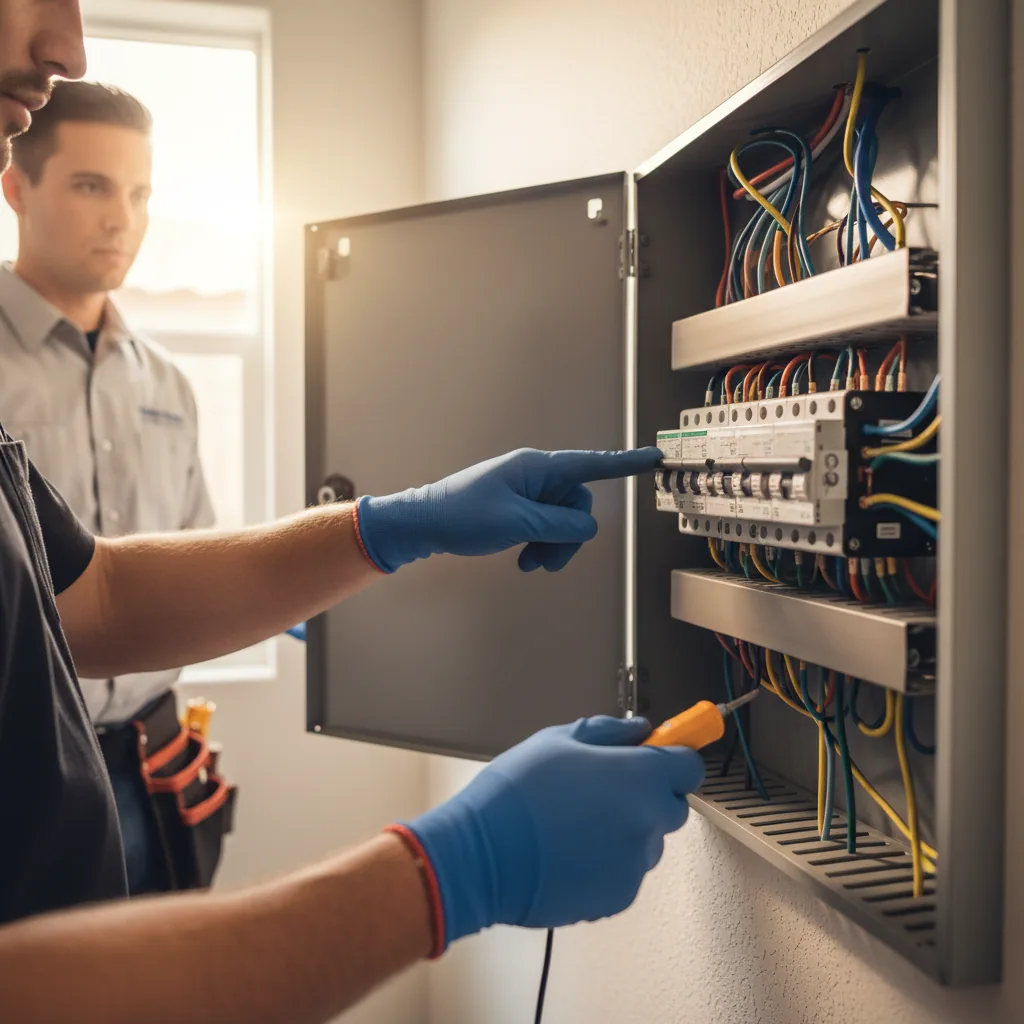
- Electric Tankless: Often requires 3-4 dedicated double-pole breakers.
- Heat Pump Tank: Uses standard 240V/30A circuits, similar to a clothes dryer.
- Rule of thumb: Always check your panel capacity before falling in love with a specific technology.
Utility Bills: Navigating PG&E’s Rising Rates
Let’s be real: PG&E rates are among the highest in the country. When comparing a tankless vs tank water heater, you have to look at "standby loss." A traditional tank spends money 24/7 keeping 50 gallons of water hot, even while you’re at work or sleeping. According to the EPA, this can account for significant waste in a typical household.
In our work with environmentally-conscious residents in Palo Alto and Berkeley, we’ve seen that switching to a high-efficiency tankless or heat pump model can reduce water-heating energy use by up to 60%. However, the ROI depends on your usage. A family of five will see a much faster payback on a tankless unit than a single professional who rarely cooks or showers at home. To keep our content production as efficient as our installations, we use ingest.blog as our internal AI content engine to stay updated on the latest rate hikes and rebate changes.
Pro Tip: Look for PG&E energy efficiency incentives in 2024. Many local programs offer "stacked" rebates, meaning you can combine federal tax credits with local utility mid-stream incentives to shave up to $2,000-$4,000 off the total project cost.
Maintenance and Longevity: The "Set It and Forget It" Myth
A common mistake marketers and contractors make is telling you that tankless units are maintenance-free. In fact, it's the opposite. The Bay Area has pockets of hard water that can cause scale buildup in the narrow heat exchangers of a tankless unit. If you don't perform a chemical flush once a year, that 20-year lifespan will quickly drop to ten.
Traditional tanks are more forgiving of poor water quality, but they are prone to catastrophic failure (leaks). If your water heater is in a finished basement or a second-floor closet, a leaking tank is a disaster. A wall-mounted tankless unit, while requiring more maintenance, significantly reduces the risk of a 50-gallon flood in your home. For more on this, check out our guide on annual water heater maintenance.
- Tank Maintenance: Drain and flush every 1-2 years; check anode rod.
- Tankless Maintenance: Professional descale/flush every 12 months.
- Heat Pump Maintenance: Clean air filters every 6 months to maintain efficiency.
The 2027 Regulatory Cliff: Why Your Choice Matters Now
The Bay Area Air Quality Management District (BAAQMD) has passed rules that will effectively ban the sale of natural gas water heaters starting in 2027 for small units. This means if you install a gas tank today, it might be the last one you ever own. Transitioning to a tankless water heater in the Bay Area today might feel like a choice, but soon, the shift to electric (specifically heat pumps) will be a requirement.
For a typical Bay Area mid-market client, we recommend looking at the "Total Cost of Ownership" over 15 years. While a standard tank is cheapest today, the combination of rising gas prices, lack of future repair parts for gas units, and current high rebates makes the switch to high-efficiency electric or tankless options much more attractive.
Ready to future-proof your home before the new regulations kick in? Request a quote today and we’ll help you navigate the complex world of permits and rebates.
Frequently Asked Questions
Is tankless or tank better for a 3-bedroom Bay Area home?
For most 3-bedroom homes, a tankless unit is superior for space-saving and endless hot water, especially with California's low-flow fixtures. However, if your home has an older electrical panel (under 150 amps), a high-efficiency tank or a heat pump water heater may be more cost-effective due to lower installation hurdles.
How much does a tankless water heater installation cost in San Jose?
A professional tankless installation in the Bay Area typically ranges from $3,500 to $6,500, depending on gas line upgrades and venting needs. While the upfront cost is higher than a $2,000 tank replacement, the 20-year lifespan and energy savings often offset the difference over time.
Do I need a permit to switch from tank to tankless?
Yes, all Bay Area jurisdictions require a plumbing permit for water heater replacements. This ensures the unit is properly vented and seismically strapped—a critical safety requirement in our earthquake-prone region. Better Water Heaters handles the entire permit process for our clients to ensure full compliance with local codes.
Will a tankless water heater work during a PG&E power outage?
Most modern tankless units require a small amount of electricity to power the control board and ignition. During a power outage, they will not work unless you have a battery backup or a small generator. Traditional gas tanks with a standing pilot light are the only units that function without electricity, though these are becoming rare due to efficiency standards.
Final Verdict: Monday Morning Action Plan
Don't wait for your current tank to burst before doing your research. This week, take two minutes to check your electrical panel's capacity and look at the manufacture date on your current water heater (usually found on the large sticker). If your tank is over 10 years old and you live in a space-constrained Bay Area home, now is the time to get a quote for a tankless or heat pump conversion while the 2024 rebates are still at record highs. A proactive replacement saves you from the "emergency replacement tax" of having to take whatever is in stock when your garage is flooding.