Water heater article archive
Smart Water Heater Leak Detector: Bay Area Tech-Stack Guide | Better Water Heaters
Historical article, not newly reviewed advice. Verify current requirements, incentives and model guidance with the relevant authority or manufacturer before relying on them. Equipment and service needs require an assessment.
📋 Table of Contents
- Why Every Bay Area Home Needs a Smart Water Heater Leak Detector
- The Tech-Stack: Phyn vs Moen Flo Bay Area Comparison
- Integrating Wi-Fi Leak Detector Integration with Mesh Networks
- Retrofitting Legacy Tanks: Turning Dumb Assets into Smart Systems
- The ROI of Prevention: Why Silicon Valley Professionals Invest Early
- FAQs
For modern homeowners, a smart water heater leak detector is no longer a luxury—it is a critical node in your home’s digital infrastructure. In the high-stakes real estate markets of San Jose, Palo Alto, and Fremont, a single plumbing failure can result in damages exceeding $15,000, making proactive technology essential for asset protection.
As of 2024, the 'Silicon Valley Home' standard has evolved beyond simple smart thermostats and security cameras. Sophisticated residents are now treating their utility closet like a server rack, prioritizing uptime, redundancy, and remote management through advanced Bay Area smart home plumbing ecosystems.
Key Takeaways for Executives and Homeowners:
- Risk Mitigation: Smart shut-off valves can reduce insurance premiums by up to 10%.
- Integration: Seamlessly sync plumbing alerts with Apple HomeKit, Google Home, or Alexa.
- ROI: The cost of installation is a fraction of the average $12,000–$20,000 Bay Area flood claim.
- Future-Proofing: Prepare for 2027 regulations with Wi-Fi enabled heat pump systems.
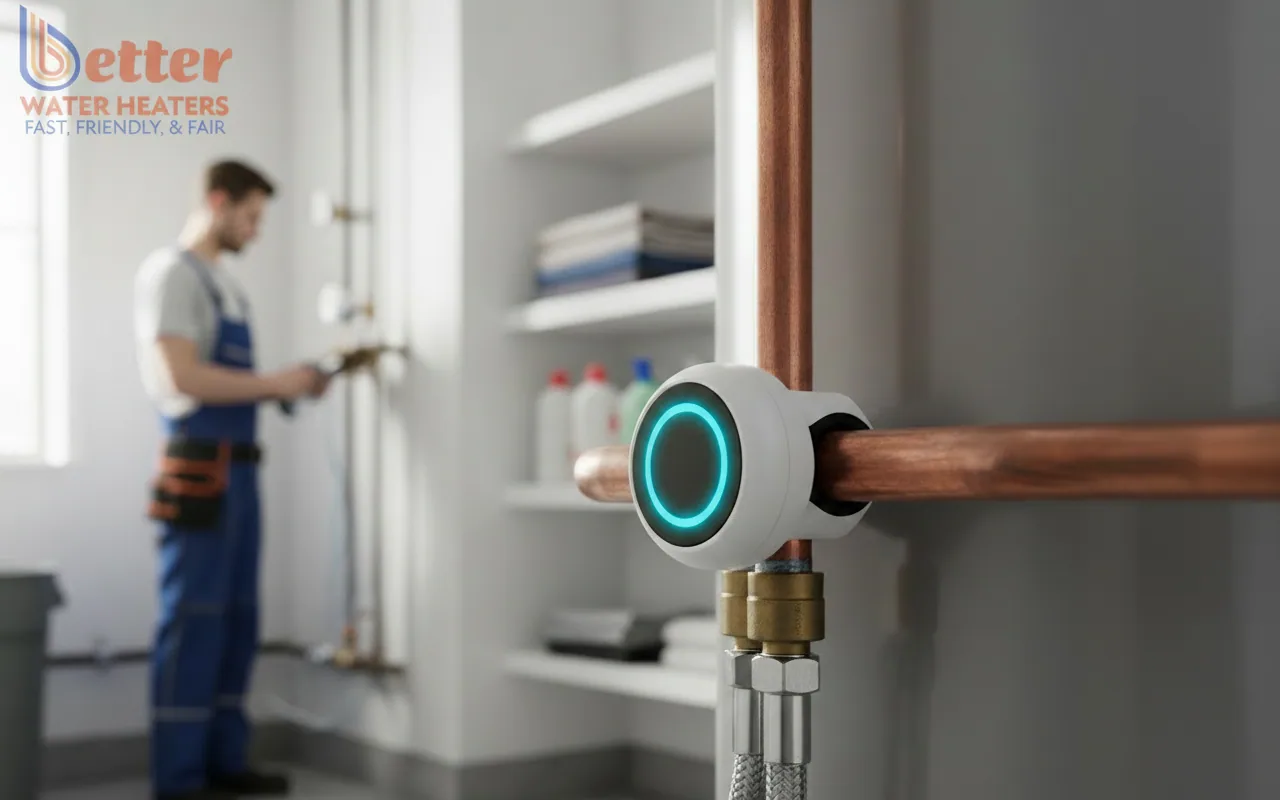
Why Every Bay Area Home Needs a Smart Water Heater Leak Detector
Transitioning from a 'dumb' tank to a smart system is the most effective way to prevent catastrophic water damage. Traditional pans only catch slow drips, but a smart water heater leak detector paired with an automatic water shut off valve installation provides an active defense by killing the water supply the millisecond moisture is detected.
According to Energy.gov, smart integration also allows for better energy management. In the Bay Area, where Time-of-Use (TOU) rates from PG&E can spike costs, having a Wi-Fi-connected system allows you to schedule heating cycles during off-peak hours.
Consider these primary benefits of smart integration:
- Real-Time Alerts: Receive push notifications on your smartphone before a drip becomes a flood.
- Remote Shut-off: Close your main water valve from your office in Mountain View or while on vacation.
- Insurance Discounts: Many carriers, such as State Farm and Liberty Mutual, offer credits for certified leak detection systems.
- Peace of Mind: Essential for property managers overseeing multiple units in San Mateo or Oakland.
Need to secure your home today? Schedule your smart leak detector consultation with our expert team.
The Tech-Stack: Phyn vs Moen Flo Bay Area Comparison
When choosing your hardware, the debate often centers on Phyn vs Moen Flo Bay Area installations. Both systems offer high-end ultrasonic flow sensing technology, but they serve different roles within your smart home plumbing ecosystem.
Moen’s Flo system is highly regarded for its daily automated health checks, which pressure-test your entire home's plumbing for pinhole leaks. Conversely, Phyn is often praised for its high-definition pressure sensing that can distinguish between a flushing toilet and a burst pipe without the need for additional sensors.
| Feature | Moen Flo | Phyn Plus |
|---|---|---|
| AI Learning | High (Daily Health Checks) | Advanced (Pressure Wave Analysis) |
| Auto Shut-off | Included | Included |
| Protocol Support | Wi-Fi, Matter (Coming Soon) | Wi-Fi, Thread Compatible |
| Installation Complexity | Professional Recommended | Professional Required |
Furthermore, local homeowners should consider the impact of San Francisco's mineral content. Hard water can affect the longevity of internal sensors, making regular water heater maintenance vital for keeping your tech-stack operational.
Integrating Wi-Fi Leak Detector Integration with Mesh Networks
A common challenge in older homes in areas like Palo Alto or Los Gatos is Wi-Fi dead zones in garages or basements. For a smart water heater leak detector to function, it must have a stable connection to your 1Gbps fiber network.
Strategic deployment involves more than just plugging in a sensor. You must ensure your Wi-Fi leak detector integration accounts for seismic safety and signal strength.
Follow these steps for a robust installation:
- Mesh Nodes: Place a satellite mesh node within 15 feet of the water heater for 100% uptime.
- Seismic Strapping: Ensure all smart valves are installed without interfering with California-mandated earthquake straps.
- Battery Backups: Use UPS (Uninterruptible Power Supply) for your router to ensure alerts go out during Bay Area power outages.
- Matter/Thread Support: Choose devices that support the latest Matter protocols for cross-platform compatibility.

If you are upgrading your system, don't forget to check for local utility rebates. Programs like TECH Clean California currently offer significant incentives for high-efficiency upgrades that often include smart controls.
Retrofitting Legacy Tanks: Turning 'Dumb' Assets into Smart Systems
You don't always need a full replacement to benefit from a smart water heater leak detector. Retrofitting is a cost-effective strategy for homeowners with functional tanks who want the security of Bay Area smart home plumbing features.
By adding an automatic water shut off valve installation to your existing cold-water inlet, you gain 90% of the benefits of a native smart heater at 30% of the cost. This is particularly useful for landlords managing older Victorian homes in San Francisco where full system overhauls are logistically difficult.
Why retrofitting makes sense for $1M+ revenue property portfolios:
- Scalability: Deploy sensors across 10+ properties and monitor them from a single dashboard.
- Asset Protection: Prevent tenant-related water damage that can lead to mold and costly remediation.
- Predictive Maintenance: Use AI-driven flow data to identify failing heaters before they leak.
Ready to upgrade your property's IQ? Contact Better Water Heaters for a bulk assessment or single-home retrofit.
The ROI of Prevention: Why Silicon Valley Professionals Invest Early
The average cost of a smart water heater leak detector and professional automatic water shut off valve installation ranges from $800 to $1,500. Compare this to the Insurance Information Institute's data showing water damage is the second most common home insurance claim.
In high-cost areas like Cupertino or Menlo Park, labor and material costs for restoration are at an all-time high. A 'set it and forget it' system is an investment in your time and financial stability.
Consider the 'Tech-Stack' ROI factors:
- Deductible Savings: One prevented leak pays for the system 5x over by avoiding your $5,000 deductible.
- Resale Value: Smart home plumbing is a major selling point for tech-savvy buyers in the Bay Area.
- Regulatory Readiness: As California moves toward mandatory heat pump transitions, having a smart infrastructure in place simplifies the 2027 gas-to-electric migration.
Conclusion: Secure Your Home with Better Water Heaters
Integrating a smart water heater leak detector is the smartest move a Bay Area homeowner can make in 2024. By combining automatic water shut off valve installation with your existing smart home plumbing ecosystem, you protect your most valuable asset from unpredictable failures.
At Better Water Heaters, we have 20+ years of experience navigating local codes, seismic requirements, and the latest in Wi-Fi integration. Don't wait for a puddle to appear in your garage. Schedule your professional smart home plumbing audit today and join the thousands of Bay Area residents who sleep better knowing their home is protected by the latest in plumbing technology.
Frequently Asked Questions
How does a smart water heater leak detector integrate with my existing Wi-Fi?
Most detectors, such as those from Moen or Phyn, connect via a 2.4GHz Wi-Fi band. They use a dedicated app to bridge with platforms like Apple HomeKit or Google Home. For homes with thick walls or distant garages, we recommend a mesh network node to ensure the smart water heater leak detector stays online 24/7.
Will an automatic water shut off valve work during a power outage?
Standard automatic water shut off valve installation requires electricity; however, many premium models include a battery backup or a manual override. For the highest security, we recommend connecting your network closet and shut-off valve to a small UPS system to maintain protection during PG&E outages.
Can I get a discount on my home insurance for installing these sensors?
Yes, many major carriers in the Bay Area offer 'Smart Home' discounts. By installing a smart water heater leak detector and a main shut-off valve, you can often save 5-10% on your annual premiums. We provide the necessary installation certificates to submit to your insurance broker.
Does hard water in the Bay Area affect smart plumbing sensors?
High mineral content in areas like San Jose can lead to scale buildup on internal flow turbines. We recommend selecting ultrasonic sensors (like the Phyn Plus) which have no moving parts, or pairing your smart home plumbing ecosystem with a whole-home water softener to ensure long-term accuracy and performance.