Tank water heaters / installation
Tank Water Heater Installation
A well-sized tank water heater remains a practical, dependable choice for many Bay Area homes. The key is selecting the right capacity and recovery performance, then installing the system to current safety, seismic, venting, and plumbing requirements.
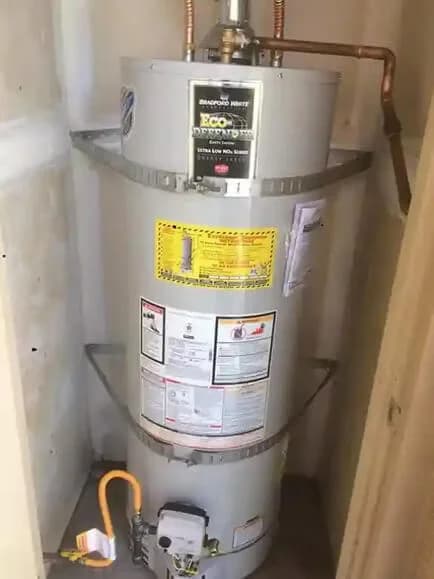
Why Homeowners Still Choose Tank Water Heaters
Tank systems store a set amount of heated water so it is ready when needed. They are familiar, broadly serviceable, and often simpler to replace than changing to a different technology.
A tank water heater may be a good fit when:
- The existing system has served the household well.
- The installation location already supports a compliant replacement.
- Upfront project cost is a major consideration.
- The home needs dependable stored capacity for periods of higher demand.
- A high-recovery model can meet demand without moving to tankless.
- The homeowner wants a simpler gas or electric replacement.
Choosing a tank should still involve more than matching the gallon number printed on the old unit. Household use, recovery rate, available space, fuel type, efficiency, and first-hour delivery all affect how the system performs.
How We Size a Tank Water Heater
The goal is enough usable hot water without paying to heat more storage than the home needs. We consider:
Household and fixture demand
The number of residents is a starting point, but bathing patterns, large tubs, multiple bathrooms, laundry, dishwashing, and simultaneous use can matter just as much.
Tank capacity and first-hour delivery
Tank capacity describes stored water. First-hour delivery considers the stored supply plus how quickly the heater can recover while it is being used. Two heaters with the same gallon capacity may perform differently.
Standard versus high-recovery equipment
A high-recovery gas water heater may restore hot water more quickly than a standard model. It can be useful for households with heavier demand, provided the home’s gas and venting conditions support it.
Space and access
We confirm that the unit will fit through the access path and in the installation area with required clearances. A replacement that technically fits the footprint may still be difficult to service if access is too restricted.
Gas and Electric Tank Installation
Gas tank water heaters
A gas installation requires proper fuel supply, combustion air, venting, shutoff access, and safety testing. Existing venting or connectors may need correction when they do not meet current requirements or the new equipment’s specifications.
Electric tank water heaters
An electric tank installation requires a compatible circuit, disconnecting means, wiring, and available electrical capacity. If the home is considering electrification, we can also compare a standard electric tank with a heat pump water heater before you commit.
What a Professional Tank Installation Includes
The exact scope depends on the home, equipment, and local requirements. A complete plan may include:
- Safe disconnection and removal of the existing water heater
- Delivery and placement of the new unit
- Water, gas, electrical, and venting connections as applicable
- Temperature-and-pressure relief discharge
- Seismic bracing
- Drain pan and drain provisions where required
- Expansion control where required by the plumbing system
- Permit and inspection coordination
- Startup, safety testing, and temperature verification
- Explanation of controls, shutoffs, maintenance, and warranty information
Our Tank Water Heater Installation Process
1. Diagnose the existing system
If repair may still be reasonable, we explain that option. A leaking tank generally cannot be repaired, but ignition, control, burner, element, thermostat, or delivery issues may have a different solution.
2. Confirm size and fuel type
We review current performance, household demand, available space, utility connections, and future plans for the home.
3. Compare installation choices
You receive a clear explanation of the options that fit the home, whether that means a standard tank, high-recovery model, tankless system, or heat pump water heater.
4. Complete and test the installation
The new water heater is connected, filled, started, and checked for safe operation. We verify delivery and explain what to monitor after installation.
What Affects Tank Water Heater Installation Cost?
The installed price may vary based on:
- Tank size and recovery performance
- Gas versus electric configuration
- Efficiency and warranty selection
- Venting or combustion-air corrections
- Electrical or fuel-supply work
- Seismic, drainage, expansion, and code requirements
- Permit and inspection fees
- Access to the installation area
- Removal and disposal of the old unit
Tank Water Heater Installation FAQs
What size tank water heater does my home need?
There is no reliable gallon-only rule for every household. We consider residents, bathrooms, fixtures, usage patterns, recovery rate, and first-hour delivery before recommending a size.
Should I repair or replace my tank water heater?
The answer depends on the problem, equipment condition, age, repair history, efficiency, and leak status. A leaking storage tank normally requires replacement, while some control, heating, or delivery problems may be repairable. We diagnose the failure before recommending a path.
What is a high-recovery tank water heater?
It is designed to reheat stored water more quickly than a standard model. It may help households with periods of heavier demand, but the available fuel supply, venting, and equipment specifications must support it.
Should I choose gas, electric, or heat pump?
The best option depends on utility connections, electrical capacity, installation space, household demand, project budget, energy goals, and current equipment rules. We compare the practical options for the home rather than giving a universal answer.
General educational guidance
Diagnosis: what the symptoms can and cannot tell you
Before selecting new equipment, establish why the existing system no longer meets your needs. For a tank water heater, distinguish no hot water from a supply that runs out during use. A failed heating component, a control problem and a mismatch between demand and recovery are different possibilities. Water beside the heater may come from a connection or another source; it does not establish that the storage tank has failed.
General educational guidance
Decision: choosing the appropriate next step
For a replacement tank, check more than the old gallon rating. Discuss first-hour delivery, recovery, access and service clearances. A gas model needs compatible fuel and venting arrangements; an electric model needs compatible electrical provision. Existing connections are not proof that a new unit can be installed without other work.
If the current heater is failing, begin with the symptoms and supported diagnostic scope. Read the tank water heater repair guide.
If you are considering electrification, compare a standard electric tank with heat pump equipment, including air space, condensate drainage and electrical requirements. Compare heat pump installation requirements.
General educational guidance
Preparation: before a service assessment
- Note the tank capacity, fuel type and model from an accessible label.
- Describe whether hot water never arrives or runs out after specific uses.
- List the fixtures used together and any recent change in household demand.
- Photograph visible connections and the surrounding floor only from a dry, safe location.
Leave internal checks to a qualified professional. Do not open covers, adjust gas controls or repeatedly reset a fault. If gathering details would expose you to a hazard, leave the area instead.
General educational guidance
Questions to ask before authorizing the work
Is replacing the heater the same as changing the system type?
No. A like-for-like replacement and a conversion can involve different supply, venting, drainage or electrical work. Ask for those differences to be identified in the proposed scope.
What should I confirm before installation?
Confirm the equipment specification, access, removal arrangements, work by other trades if needed, permit and inspection responsibilities and commissioning scope. Ask for written terms rather than assuming they are included.
General educational guidance
Prepare a service request for your area
For address-specific request preparation, use the city guides below. Confirm service at the exact address; these links do not imply a local office or different equipment requirements.
Preparing a water heater request in Fremont? Fremont repair and replacement planning.
Preparing a water heater request in Campbell? Campbell repair and replacement planning.
Preparing a water heater request in San Jose? San Jose repair and replacement planning.
Preparing a water heater request in Saratoga? Saratoga repair and replacement planning.
If your city is not listed here, check the complete service-area directory before assuming coverage. Check all water heater service areas.
Related services
Another next step?
Your next step
Discuss tank water heater installation.
Submitting does not book an appointment.