Water heater article archive
Rusty Hot Water Solutions: Proven Bay Area Expert Guide | Better Water Heaters
Historical article, not newly reviewed advice. Verify current requirements, incentives and model guidance with the relevant authority or manufacturer before relying on them. Equipment and service needs require an assessment.
📋 Table of Contents
According to the Environmental Protection Agency (EPA), while secondary water standards are non-enforceable, discolored water is the number one indicator that your home’s plumbing system is failing from the inside out. If you've turned on your tap only to find rusty hot water staring back at you, you aren't just looking at a cosmetic nuisance—you're looking at a countdown to a catastrophic tank failure.
Key Takeaways for Busy Homeowners
- Rusty water usually means your internal tank lining or anode rod has failed.
- Sulfur smells (rotten egg) are often a chemical reaction between minerals and your sacrificial anode rod.
- Cloudy water is typically harmless trapped air or sediment buildup that reduces efficiency.
- Annual flushing can extend a water heater's life by up to 5 years, saving you thousands in premature replacement costs.
1. Why You Have Rusty Hot Water (The Corrosion Crisis)
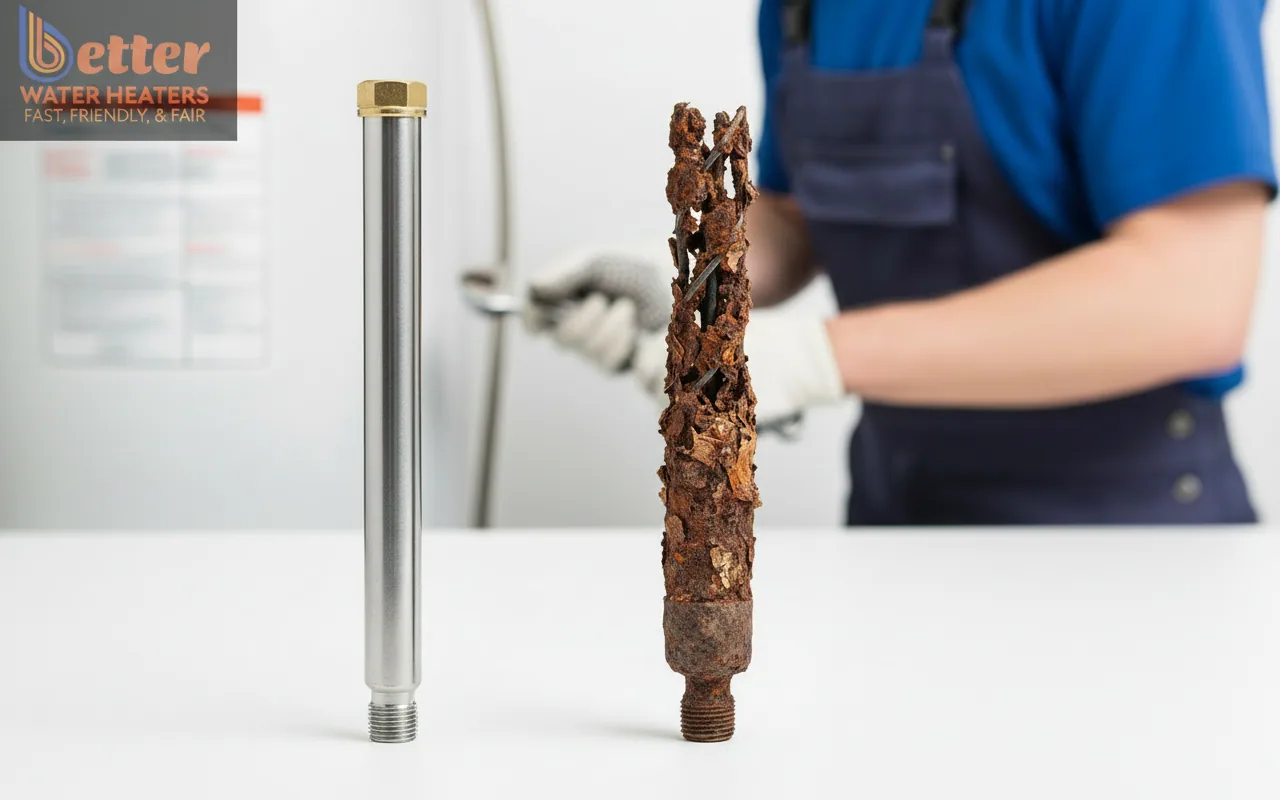
The real kicker is that most water heaters are designed to decay, but they use a "bodyguard" to slow the process down. That bodyguard is the sacrificial anode rod, a piece of magnesium or aluminum that attracts corrosive elements so your steel tank doesn't have to. When that rod is spent, the rust moves to the tank walls.
Here’s what most people miss: if the rust only appears when the hot water is running, the problem is 100% inside your heater. If it’s on the cold side too, your street-side pipes are likely the culprit. For a typical Bay Area mid-market home, ignoring this for even six months can lead to a flooded garage and a $2,500 emergency bill.
- Check the Anode Rod: If it looks like a thin wire, it’s gone.
- Inspect the Nipples: Check the heat traps/inlet pipes for external corrosion.
- Age Matters: If your unit is over 10 years old, rusty hot water is often a sign of terminal tank decay.
2. Smelly Hot Water: The Science of the "Rotten Egg" Odor
If your shower smells like a sulfur pit, you likely have a bacterial colony or a chemical reaction occurring in your tank. This happens when sulfate-reducing bacteria react with the hydrogen produced by a magnesium anode rod. While it sounds terrifying, it's rarely a health hazard—just a massive quality-of-life issue.
But wait—don't just bleach your tank yet. In our work with established homeowners in San Jose and Fremont, we've found that simply switching to a zinc-aluminum alloy anode rod kills the smell in 90% of cases. Zinc acts as a natural antifungal agent that disrupts the odor-producing reaction.
Common Smelly Water Triggers:
- Low Temperature Settings: Keeping your tank below 120°F encourages bacterial growth.
- Well Water: High mineral content accelerates the sulfur reaction.
- Inactive Units: Guest houses or vacation homes often develop smelly hot water after sitting idle.
Need a professional diagnostic? Schedule a Bay Area water quality inspection today to stop the stink for good.
3. Cloudy or Milky Water: Air Bubbles vs. Sediment
Cloudy water is the "check engine light" of the plumbing world—it’s usually not an emergency, but you shouldn't ignore it. If you fill a glass and it clears from the bottom up in seconds, you just have trapped air. If it stays cloudy or particles settle at the bottom, you have sediment buildup symptoms.
The real danger of sediment isn't to your health; it's to your wallet. According to Energy.gov, sediment acts as an insulator, meaning your burner has to work twice as hard to heat the water through a layer of "rock" at the bottom. This spikes your PG&E bill and eventually cracks the glass lining of the tank.
| Symptom | Likely Cause | Urgency |
|---|---|---|
| Brown/Orange Tint | Internal Tank Rust | High - Risk of Leak |
| Rotten Egg Smell | Anode Rod Reaction | Medium - Quality Issue |
| Popping/Gurgling | Hard Water Scale | Medium - Efficiency Loss |
| White/Milky Water | Trapped Oxygen | Low - Harmless |
4. The Anode Rod: Your $50 Insurance Policy
Here is an honest, contrarian insight: most plumbing companies want to sell you a new $2,000 unit the moment they see discolored water heater water. However, if your tank is less than 6 years old, a simple $50 anode rod replacement can often stop the corrosion process in its tracks and buy you another decade of service.
Think of it like changing the oil in your car. You wouldn't buy a new engine because the oil is dirty, right? Yet, 95% of Bay Area homeowners have never even heard of an anode rod. We use automated maintenance reminders to help our clients stay ahead of this cycle.
5. When to DIY vs. When to Call a Specialist
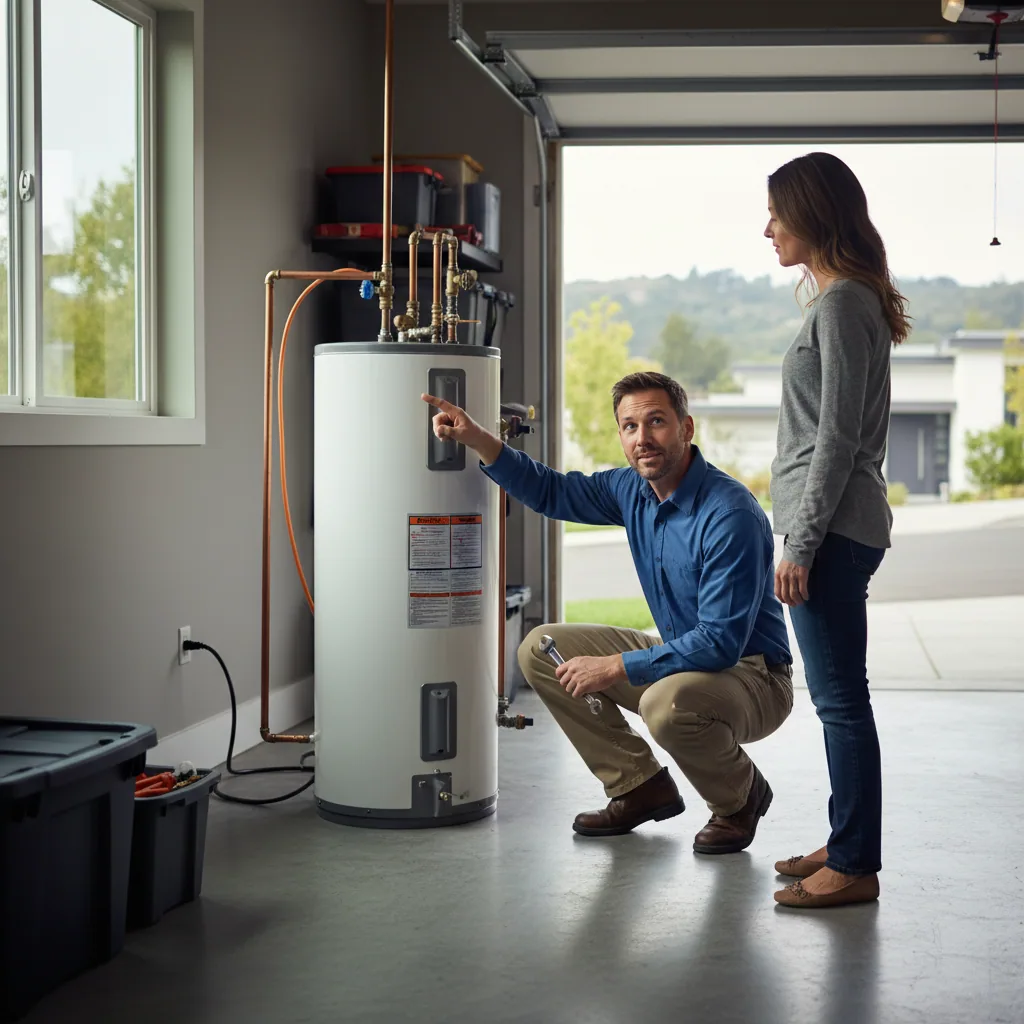
Here's the thing: you can probably flush your own water heater. It requires a garden hose and 30 minutes of your time. If you do this once a year, you’ll significantly reduce sediment buildup symptoms and keep your energy costs down. It's the single most effective way to be an eco-friendly homeowner while saving cash.
Call a professional immediately if:
- You see water pooling around the base of the heater.
- The rusty hot water is accompanied by a metallic taste.
- Your T&P (Temperature and Pressure) valve is leaking or crusty.
- You hear loud "banging" noises, which indicates the sediment has hardened into a solid mass.
For those managing multiple properties or busy startup founders, our team handles the permits, the heavy lifting, and the maximization of local Bay Area rebates so you don't have to spend your Saturday in a crawlspace.
6. The Impact of Hard Water in the Bay Area
What most people miss is that Bay Area water varies wildly. Residents in San Jose deal with significantly harder water than those in San Francisco. Hard water contains high levels of calcium and magnesium, which accelerate the "snowing" effect inside your tank—where minerals fall out of suspension and coat your heating elements.
If you've recently upgraded to a high-efficiency tankless unit, sediment is even more dangerous. While traditional tanks just lose efficiency, tankless units can scale up and shut down entirely. This is why we recommend a scale inhibitor or a whole-home filtration system for our Silicon Valley clients who want their tech to last.
7. Final Verdict: Don't Let a Drip Become a Flood
Ignoring discolored water heater water is a gamble where the house always wins. The cost of a proactive inspection is a fraction of the cost of a mold remediation team after a tank burst. If your water is telling you something is wrong, believe it the first time.
Ready to clear things up? Get a free, transparent estimate from the experts who have served the Bay Area for over 20 years. We’ll tell you honestly if you need a repair, a flush, or a replacement—no sales breath, just solutions.
Frequently Asked Questions
Is it safe to bathe in rusty hot water?
Generally, yes, it is safe for short-term bathing, as iron is a secondary contaminant. However, it can stain your clothes, discolor your hair, and irritate sensitive skin. If the rust is caused by lead pipes (rare in modern Bay Area homes) or heavy bacterial growth, you should stop use and consult a professional immediately.
How much does an anode rod replacement cost?
A replacement rod typically costs between $30 and $60. If you hire a professional to install it, you can expect to pay for 1-2 hours of labor. This is significantly cheaper than a full replacement, which averages $1,500 to $3,000 in the Bay Area depending on the unit type and permit fees.
Why does my hot water smell like rotten eggs but not the cold?
This confirms the problem is inside the water heater. The magnesium anode rod is reacting with bacteria and sulfates in the water to create hydrogen sulfide gas. Flushing the tank and replacing the magnesium rod with a zinc or powered anode rod usually solves the problem permanently.
How often should I flush my water heater to prevent sediment?
In the Bay Area, we recommend flushing your tank at least once a year. If you live in an area with particularly hard water, such as parts of Santa Clara County, doing it every six months will help maintain peak energy efficiency and prevent the "popping" sounds associated with scale buildup.