Water heater article archive
Repair or Replace Water Heater: A Strategic Decision Guide
Historical article, not newly reviewed advice. Verify current requirements, incentives and model guidance with the relevant authority or manufacturer before relying on them. Equipment and service needs require an assessment.
📋 Table of Contents
According to the U.S. Department of Energy, water heating is the second largest expense in your home, accounting for roughly 18% of your utility bill. When your unit starts leaking or the water runs cold, deciding whether to repair or replace your water heater becomes a high-stakes financial pivot point rather than just a plumbing chore.
Key Takeaways for Homeowners
- The 50% Rule: If a repair costs more than 50% of a new unit, replacement is almost always the smarter financial move.
- The Age Factor: Units older than 10 years are entering the "sunk cost" zone where repairs rarely extend life significantly.
- Rebate Reality: Modern heat pump models can qualify for up to $4,900 in Bay Area incentives, often making replacement cheaper than a major repair.
Is My Water Heater Worth Fixing? The 5-Minute Diagnostic
Before you spend $300 on a service call, you need to know if you're throwing good money after bad. Here's the thing: most homeowners mistake a catastrophic tank failure for a simple part replacement, leading to wasted diagnostic fees.
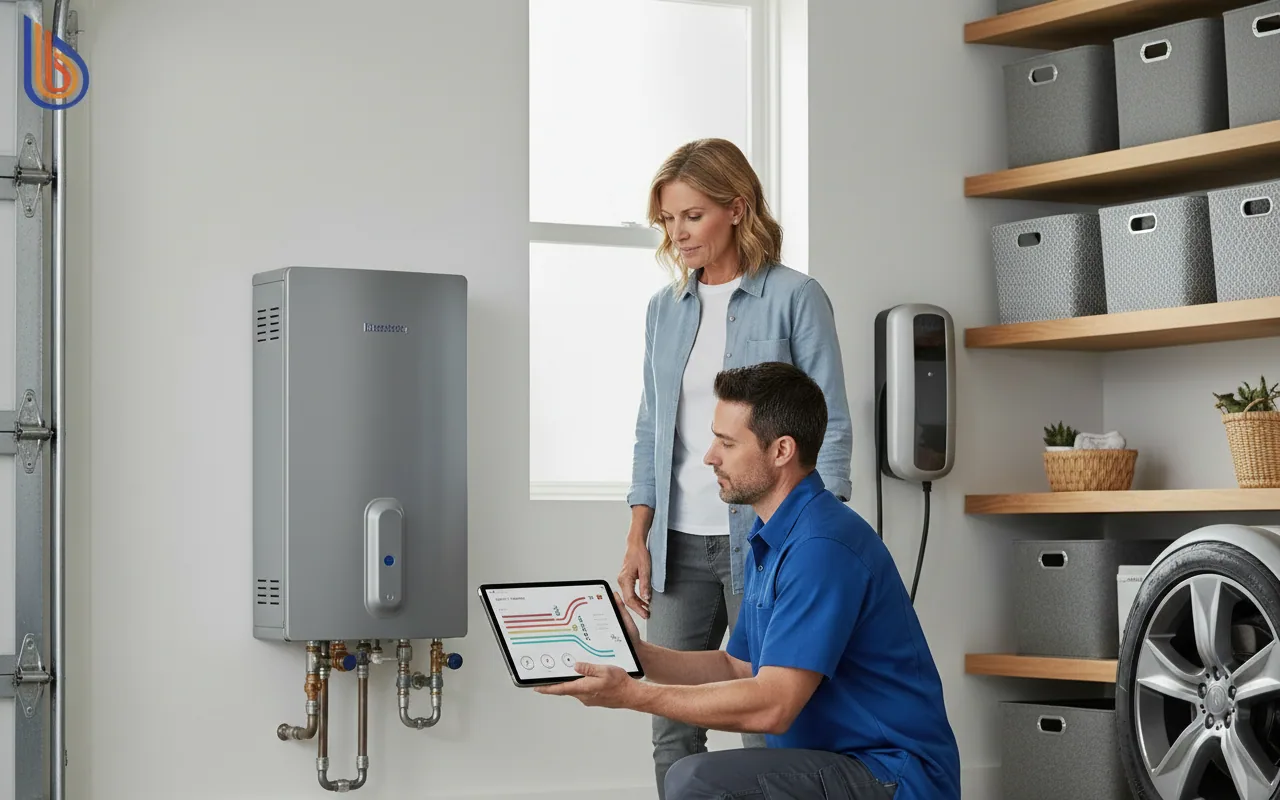
To determine if your unit is worth fixing, check these three specific indicators:
- The Puddle Test: If water is pooling at the base of the tank, the inner lining is likely fractured. This is unfixable.
- The Color Check: Rusty water coming only from the hot tap suggests the tank is corroding from the inside out.
- The Pilot/Igniter: If the unit simply won't stay lit, it could be a $150 thermocouple—a repair that is well worth the investment for a unit under 8 years old.
If you're seeing multiple symptoms, it's time to look at the numbers. You can search our troubleshooting guides for specific error codes before calling a pro.
Understanding Water Heater Lifespan in the Bay Area
A typical water heater lifespan varies wildly based on water quality and maintenance, but the 10-year mark is the universal "danger zone" for traditional tanks. In the Bay Area, hard water minerals can accelerate internal corrosion, often shortening that window by 20%.
| System Type | Average Lifespan | Repair Worthy? |
|---|---|---|
| Standard Gas Tank | 8–12 Years | Only if < 8 years old |
| Tankless Units | 15–20 Years | Yes, components are modular |
| Heat Pump (Hybrid) | 10–15 Years | Yes, especially if under warranty |
But wait—don't just look at the age. The real kicker is the warranty status. Most manufacturers offer a 6-year protection plan; if your unit is in year 7, any major component failure (like a gas control valve or heating element) is a signal to exit the relationship.
The Hidden Cost of Emergency vs. Planned Replacement
What most people miss is the "panic tax." When a water heater bursts at 2:00 AM on a Saturday, you aren't just paying for a new unit; you're paying for emergency labor rates and potentially thousands in flooring remediation.
Consider a typical Bay Area mid-market homeowner. They might spend $600 on a rush repair for a 9-year-old unit, only for the tank to fail six months later. That $600 is a "sunk cost fallacy" in action. Conversely, a planned upgrade allows you to shop for Energy Star incentives and schedule the work during standard business hours.
Try this: If your unit is over 10 years old, schedule a free estimate now to see your options before the emergency happens.
Why Heat Pump Rebates Change the Math in 2024
The financial landscape for water heating has shifted dramatically due to the Inflation Reduction Act. If you are deciding whether to repair or replace a water heater, the availability of federal tax credits and local programs like TECH Clean California can slash the upfront cost of a high-efficiency model by 40% or more.
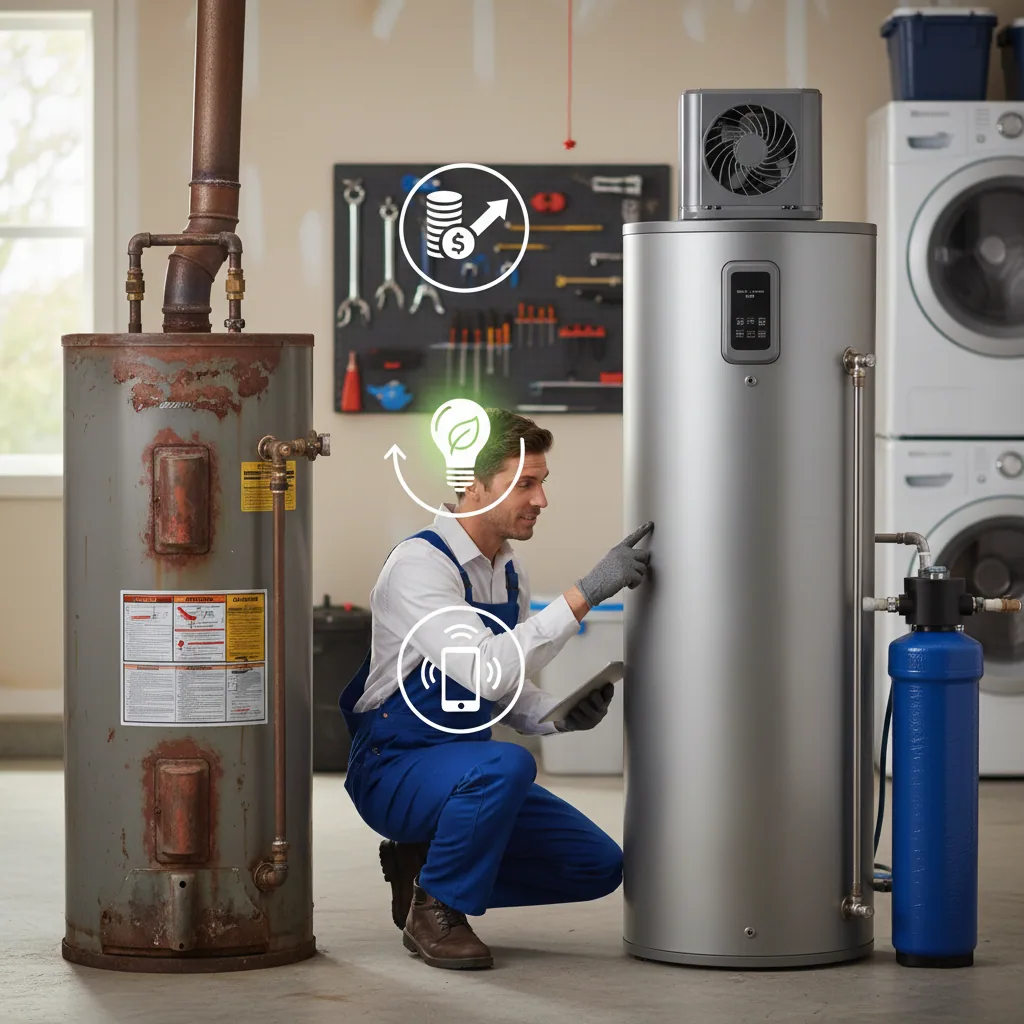
- Federal 25C Tax Credit: Up to $2,000 off a new heat pump water heater.
- Local Bay Area Rebates: Programs like Silicon Valley Clean Energy (SVCE) offer additional incentives that stack with federal credits.
- Operational Savings: Modern heat pumps use 70% less energy than standard electric tanks, often paying for themselves in 3-5 years.
Here's an honest, contrarian insight: even if your gas water heater is technically repairable, the upcoming 2027 zero-NOx regulations in the Bay Area mean you'll eventually have to switch to electric anyway. Investing in a repair now for a technology that is being phased out is like buying a new carburetor for a car you plan to trade for an EV next year.
Smart Features: Preventing the Next Crisis
One of the biggest benefits of choosing to replace rather than repair is the integration of smart home technology. Modern units now feature built-in Wi-Fi and automatic shut-off valves. For a busy marketing director or startup founder, the peace of mind knowing your phone will alert you to a pinhole leak before it ruins your finished basement is worth the price of admission alone.
We've seen cases where smart leak detection saved homeowners tens of thousands in property damage. This isn't just about hot water; it's about risk management. To learn more about these systems, you can browse our smart home integration articles.
When You Should Absolutely Repair (The Exceptions)
Replacement isn't always the answer. Sometimes, a repair is the most logical and environmentally friendly choice. Here is when you should stick with what you have:
- The unit is under warranty: If the manufacturer is covering parts, always take the repair.
- Minor component failure: A broken dip tube or a faulty T&P valve are inexpensive fixes that don't indicate tank failure.
- Recent installation: If your unit is less than 5 years old, it is almost certainly worth fixing.
If you're unsure, a quick professional diagnostic can save you from an unnecessary $3,000 expense. Our team at Better Water Heaters specializes in honest assessments—we'll tell you straight if a repair will buy you five more years or just five more weeks.
Strategic Takeaway: Make the Move Monday Morning
Don't wait for a flood to make a decision. If your water heater is over 10 years old or has required more than two repairs in the last year, the math favors replacement. With current rebates reaching up to $4,900, the cost of waiting is higher than the cost of acting.
Ready to see what your home qualifies for? Contact us today for a transparent quote that includes all applicable local and federal rebates.
Frequently Asked Questions
How do I know if my water heater is still under warranty?
Check the rating plate on the side of your tank for the serial number. The first four digits usually indicate the month and year of manufacture. You can then visit the manufacturer's website (Rheem, Bradford White, etc.) to verify the specific warranty terms for your model.
Is a tankless water heater ROI better than a standard tank?
Yes, but the timeline is longer. While tankless units cost more upfront, their 20-year lifespan is double that of a standard tank. When you factor in energy savings and the lack of a tank that can burst and cause flood damage, the total cost of ownership is significantly lower.
Will a heat pump water heater work in a cold garage?
In the Bay Area's moderate climate, heat pumps work exceptionally well in garages. They pull heat from the surrounding air to warm the water. Even on our coolest winter nights, modern units are designed to operate efficiently, though they may switch to standard electric mode briefly during extreme cold snaps.
What is the most expensive part to fix on a water heater?
The gas control valve and the electronic control board on high-efficiency models are usually the most expensive components, often costing $400-$700 including labor. If these fail outside of warranty on an older unit, we almost always recommend replacement over repair.