Water heater article archive
No Hot Water? 7 Things to Check Before You Call a Plumber | Better Water Heaters
Historical article, not newly reviewed advice. Verify current requirements, incentives and model guidance with the relevant authority or manufacturer before relying on them. Equipment and service needs require an assessment.
📋 Table of Contents
- The Ghost Power Outage: Check Your Breakers
- The 10-Minute Reset: Finding the Hidden Thermal Button
- Decode the Digital Oracle: Smart Apps and Error Codes
- The Pilot Light Struggle: Gas System Basics
- Outdoor Tankless Units vs. The Cold Snap
- Heat Pump Water Heater Troubleshooting
- The Hidden Cost of Sediment Buildup
- FAQs
Waking up to no hot water is more than an inconvenience; for a busy Bay Area founder or a marketing manager with a 9:00 AM presentation, it’s a productivity killer. According to data from Energy.gov, water heating accounts for nearly 20% of your home energy use, yet most of us ignore the unit until the shower runs cold.
Before you panic and search for emergency water heater repair bay area, take ten minutes to run through this checklist. You might save yourself a $150 to $250 diagnostic fee just by flipping a switch or reading a digital screen. Here is how to diagnose why your water heater is not working like a pro.
Key Takeaways for Homeowners
- Check the power source (breaker or gas valve) first.
- Modern units often provide error codes via smartphone apps.
- A simple "thermal reset" button fix solves many electric heater issues.
- Know when a DIY fix becomes a safety hazard.
1. The "Ghost" Power Outage: Check Your Breakers
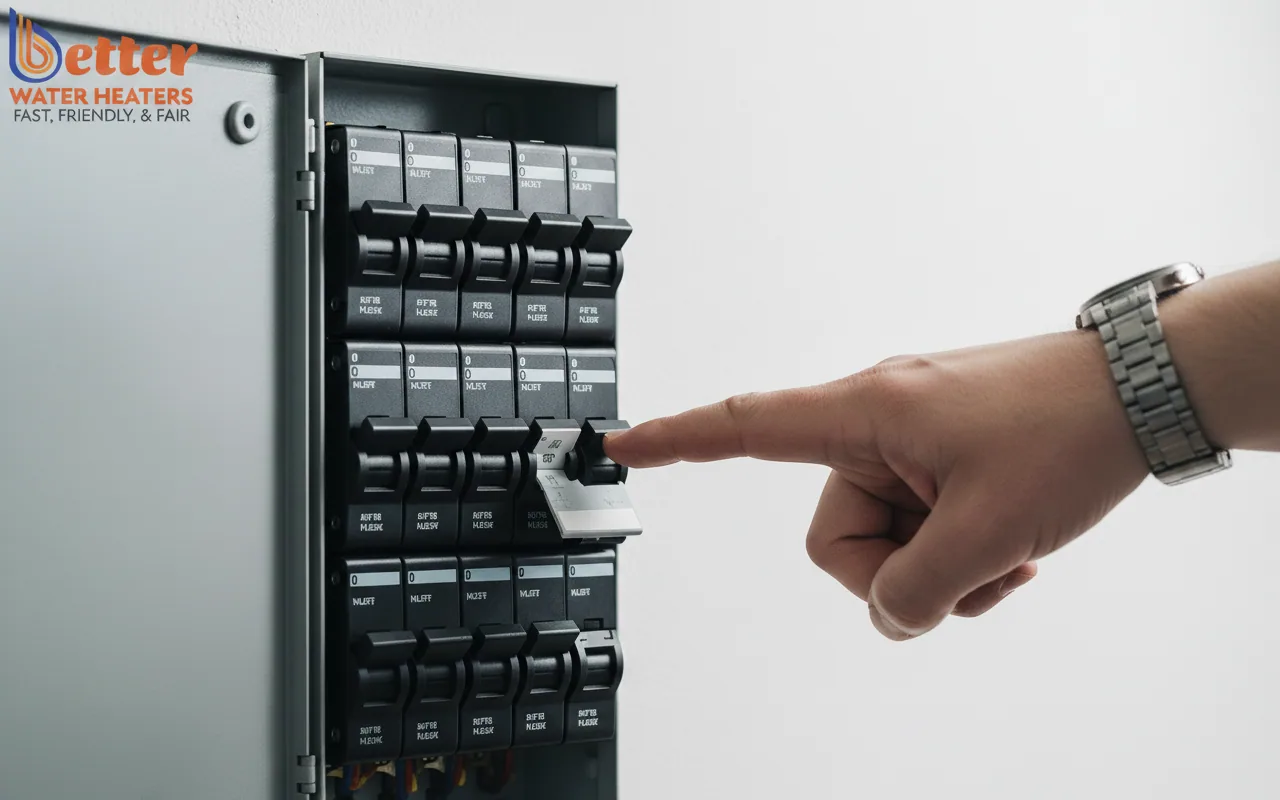
The most common reason for no hot water in electric or hybrid systems isn't a broken tank, but a tripped circuit breaker. Even if the rest of your house has lights, the dedicated high-voltage circuit for your heater might have snapped off due to a minor surge.
In our work with Series B SaaS founders in Palo Alto, we often find that high-demand smart homes can occasionally overload older panels. What most people miss: a breaker might look like it's "on" but actually be in a neutral position. You must flip it fully to "off" and then back to "on" to reset it.
- Locate your main electrical panel.
- Look for the switch labeled "Water Heater."
- If it’s in the middle, reset it firmly.
- Wait 30 minutes to see if the water warms up.
2. The 10-Minute Reset: Finding the Hidden Thermal Button
If your breaker is fine but you still have no hot water, your electric unit might have triggered its internal safety limit switch. This is essentially a "kill switch" that prevents the water from reaching boiling temperatures if the thermostat fails.
Here’s the thing—this button is often hidden behind a small metal plate on the side of the tank. For a typical Bay Area mid-market client, finding this button is the difference between a free fix and a costly service call. However, if this button trips repeatedly, it’s a clear sign your heating elements are grounded and need professional attention.
- Turn off the power at the breaker (Safety first!).
- Remove the access panel on the side of the heater.
- Push the red "Reset" button. You should hear a distinct click.
- Replace the panel and restore power.
3. Decode the Digital Oracle: Smart Apps and Error Codes
Modern tankless and heat pump systems are essentially computers that happen to heat water. If your water heater is not working, the first thing you should do is check the digital display or your manufacturer’s app (like Rheem’s EcoNet or Rinnai’s Control-R).
The real kicker? These error codes tell you exactly what’s wrong, from "blocked exhaust" (Code 11) to "flame failure" (Code 12). Instead of guessing, you can provide this code to a specialist in emergency water heater repair in the Bay Area to ensure they bring the right parts on the first visit.
- Check for a flashing light or code on the unit's front panel.
- Open the companion app on your phone if your unit is Wi-Fi enabled.
- Reference the manual or manufacturer website for the specific code meaning.
- Clear any debris from outdoor intake pipes if the code suggests an airflow issue.
Need immediate help? If your app is showing a critical hardware failure, don't wait for a leak. Schedule a professional diagnostic with our team today.
4. The Pilot Light Struggle: Gas System Basics
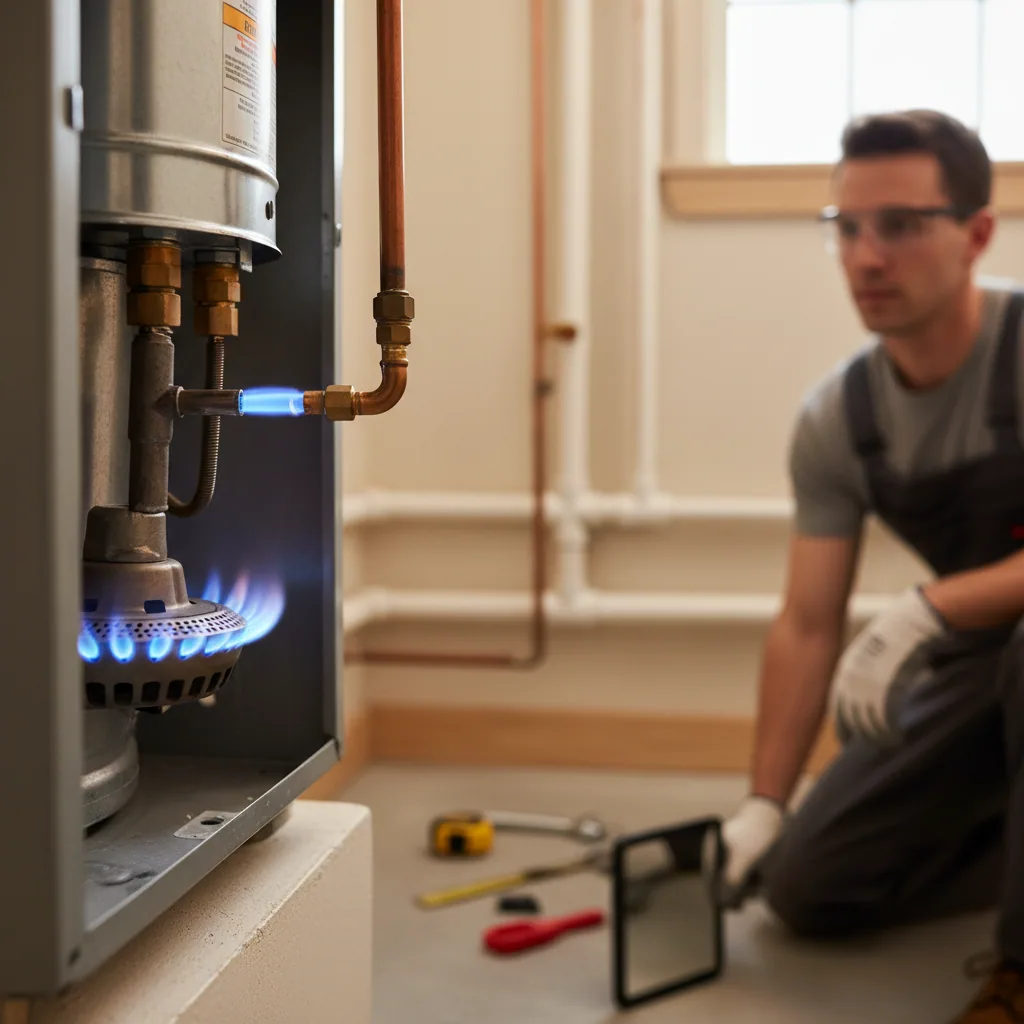
For traditional gas heaters, a pilot light that won't stay lit is the leading cause of cold showers. While newer models use electronic ignition, many Bay Area homes still rely on a standing pilot light that can be blown out by a stray draft or a faulty thermocouple.
But wait—if you smell gas (like rotten eggs), stop immediately. Do not try to relight the pilot. Open the windows, leave the house, and call PG&E. If there is no smell, follow the lighting instructions printed on the side of your tank. If the flame goes out the moment you release the knob, your thermocouple—a small safety sensor—likely needs replacement.
5. Outdoor Tankless Units vs. The Cold Snap
While we enjoy a moderate climate, recent Bay Area winter temperature drops can wreak havoc on outdoor-mounted tankless units. If you have no hot water during a freeze, your heat exchanger might be frozen.
Most modern units have internal freeze protection, but this only works if the unit is plugged in. If you unplugged it to save energy or during a storm, the water inside the thin copper pipes can expand and crack the hardware. Always ensure your outdoor unit remains powered during the winter months.
- Check if the unit is plugged into a GFCI outlet.
- Check if the GFCI has tripped (press the "Reset" button on the outlet).
- Insulate exposed pipes leading into the unit.
- Consider a recirculating pump to keep water moving during extreme lows.
6. Heat Pump Water Heater Troubleshooting: The Eco-Mode Trap
Heat pump (hybrid) water heaters are incredibly efficient, but they operate differently than what you're used to. If you recently switched to "Eco" or "Heat Pump Only" mode to save money, the recovery time is significantly slower.
If a typical Bay Area family of four all showers within an hour, an Eco-mode setting might leave the last person with no hot water. The solution isn't a repair; it's simply switching the unit to "High Demand" or "Hybrid" mode for the morning rush. Also, check the air filter on top of the unit; a clogged filter can cause the compressor to shut down to prevent overheating.
| System Type | Common "No Hot Water" Cause | DIY Success Rate |
|---|---|---|
| Electric Tank | Tripped Breaker / Reset Button | High |
| Gas Tank | Pilot Light / Thermocouple | Medium |
| Tankless | Error Codes / Scale Buildup | Low (Requires Pro) |
| Heat Pump | Clogged Air Filter / Mode Setting | High |
7. The Hidden Cost of Sediment Buildup
Does your water heater make a popping or rumbling sound? That’s the sound of sediment boiling at the bottom of the tank. Over time, calcium and minerals settle, creating a barrier between the burner and the water. This forces the heater to work longer and hotter, eventually leading to a tank failure.
What most people miss is that sediment isn't just a noise issue—it’s a performance issue. If your water is lukewarm rather than hot, your heating element might be buried in two inches of "Bay Area hard water" sludge. A simple flush can often restore performance, but if you've ignored the noise for years, the damage to the glass lining might be permanent.
Pro Tip: Flush your tank once a year. If you aren't comfortable doing it yourself, check out our maintenance guides for a step-by-step walkthrough.
When to Call for Emergency Water Heater Repair in the Bay Area
Troubleshooting can save you money, but some signs indicate the unit is beyond a DIY fix. If you see any of the following, it’s time to call the experts at Better Water Heaters:
- Water pooling: Any moisture around the base of the tank usually means an internal leak.
- Rusty water: This indicates the internal sacrificial anode rod has failed and the tank is corroding.
- Electrical burning smell: Shut off the breaker immediately; this is a fire hazard.
- Age: If your tank is over 10 years old (check the serial number), a major repair is often throwing good money after bad.
At Better Water Heaters, we’ve spent 20 years helping Bay Area residents navigate everything from simple pilot light relights to complex heat pump transitions. We understand local codes and the unique water conditions of Santa Clara and San Mateo counties.
Don't spend another morning shivering in a cold shower. If you’ve checked the basics and still have no hot water, let us help. We offer transparent pricing and same-day service to get your life back on track. Contact us online or call us today for a fast, reliable fix.
Frequently Asked Questions
Why do I have no hot water but my stove works?
While both use gas, your water heater has a dedicated gas valve and often a separate pilot light or igniter. If your stove works, the main gas line is active, but the specific thermocouple or ignition system on your water heater may have failed, preventing the burner from firing up.
How long should I wait for hot water after a reset?
For a standard 50-gallon electric water heater, it takes about 30 to 45 minutes to heat the water to a usable temperature after a reset. Gas heaters are slightly faster, often providing warm water within 20 to 30 minutes. Tankless units, of course, provide hot water almost instantly once the error is cleared.
Can I change a water heater thermocouple myself?
While it is a common DIY task for those comfortable with tools, it involves disconnecting gas lines. If you are not experienced with gas safety and leak testing, we strongly recommend hiring a professional. A small error in reassembly can lead to dangerous gas leaks in your utility closet.
Is a tripped breaker a sign I need a new water heater?
Not necessarily. A one-time trip could be due to a power surge in the neighborhood. However, if the breaker trips immediately after you reset it, the heating element inside the tank has likely shorted out. This requires a professional replacement of the element, not necessarily the whole tank.