Water heater article archive
Hot Water Goes Cold When Dishwasher Is Running: 5 Proven Fixes
Historical article, not newly reviewed advice. Verify current requirements, incentives and model guidance with the relevant authority or manufacturer before relying on them. Equipment and service needs require an assessment.
📋 Table of Contents
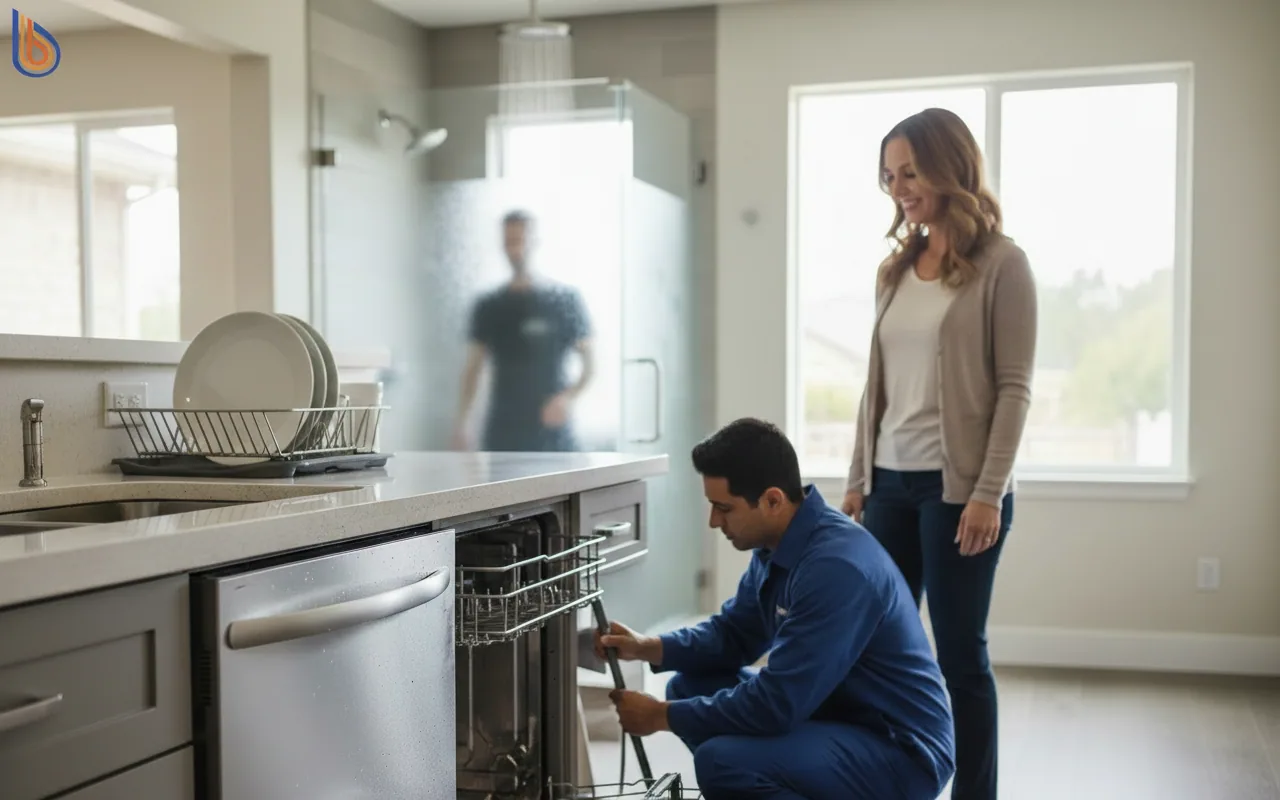
You’re halfway through a relaxing morning shower when the dishwasher clicks on, and suddenly, your hot water goes cold faster than a San Francisco fog bank rolling in. According to data from the U.S. Department of Energy, water heating is the second largest energy expense in most homes, yet many Bay Area systems are fundamentally unprepared for the "simultaneous use" demands of modern life.
Here’s the thing: your water heater isn't necessarily broken just because it can't keep up with two tasks at once. Often, the issue lies in a conflict between aging infrastructure and high-efficiency appliances that change how water flows through your home. In our work with established homeowners from San Jose to Redwood City, we’ve found that most "cold shower surprises" come down to a simple math problem: your home's peak flow rate is exceeding your heater's capacity.
1. The Reality of Simultaneous Hot Water Usage in Bay Area Homes
Most homes in the Peninsula and South Bay were plumbed decades ago when a dishwasher was a luxury, not a three-times-a-day necessity. The real kicker? Modern high-efficiency dishwashers actually use less water but require consistent, high-temperature draws that can trigger hot water fluctuations elsewhere.
- Flow Rate Math: A standard showerhead uses about 2.1 GPM (gallons per minute), while a dishwasher can pull another 1.5 to 2.0 GPM during its fill cycles.
- Pipe Diameter: Older 1/2-inch copper pipes often lack the volume to feed two high-demand fixtures at the same time.
- Pressure Drops: When the dishwasher valve opens, it creates a temporary drop in multiple shower hot water pressure, causing the mixing valve in your shower to struggle.
If you're tired of scheduling your life around the dishwasher cycle, it might be time to look at a high-output system. Explore our tankless water heater options to see how continuous flow technology eliminates the wait.
2. Why Your Tankless Water Heater GPM Capacity Matters
If you have a tankless system and your hot water goes cold, you are likely hitting the "flow limit" of the unit. Unlike a tank that stores hot water, a tankless unit must flash-heat water as it moves; if the water moves too fast (because two taps are open), the unit simply can't keep up.
- Groundwater Temperature: In the Bay Area, our winter groundwater is colder, meaning your heater has to work harder to reach 120°F, effectively lowering its GPM capacity.
- Unit Sizing: A typical 6 GPM unit might only provide 3.5 GPM during a cold Palo Alto January—barely enough for a shower and a dishwasher.
- The "Cold Water Sandwich": This occurs when the unit cycles off and on rapidly, sending a pocket of cold water through the lines.
What most people miss: You can actually calculate your home's needs by adding up the GPM of every fixture you want to run at once. If your total is 5 GPM but your heater is rated for 4, you'll lose the tug-of-war every time.
3. Dip Tube Failure Symptoms: The Hidden Culprit
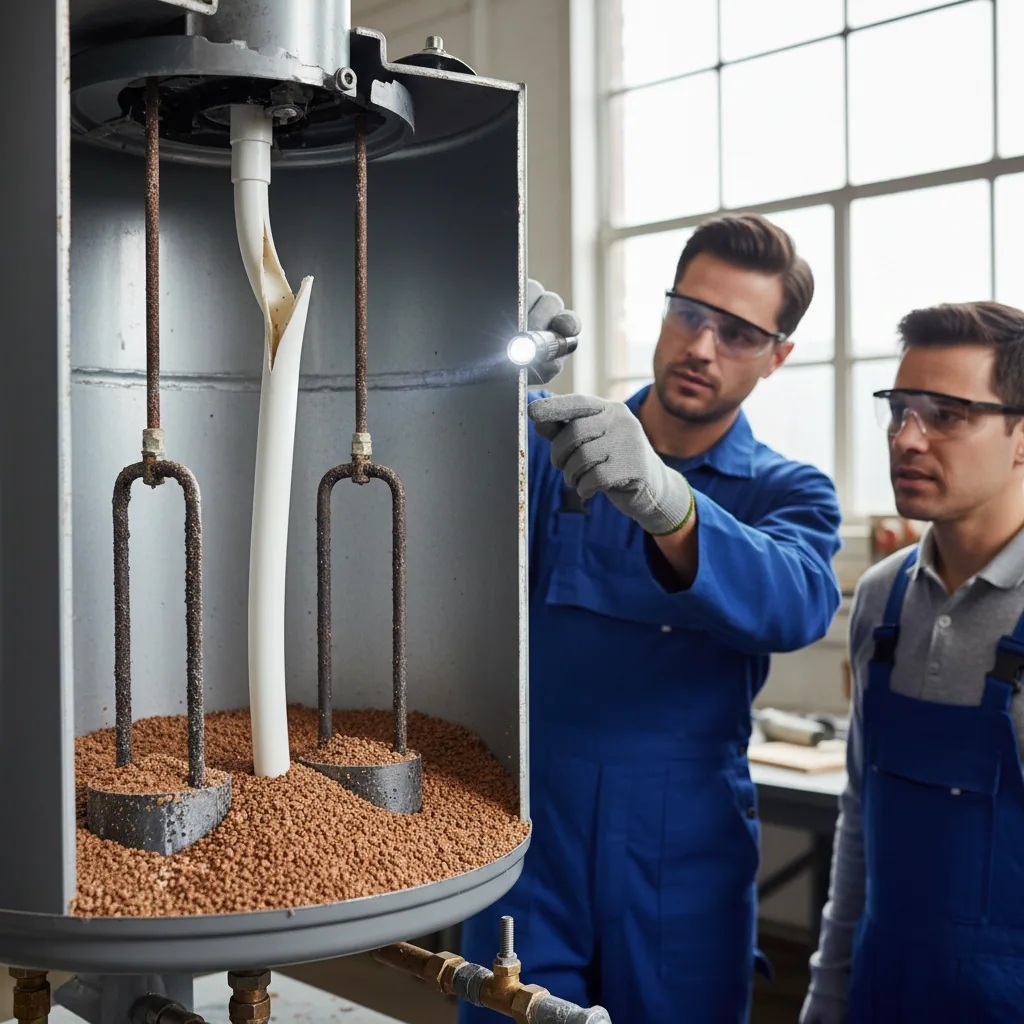
For those with traditional tank heaters, a common reason the hot water goes cold prematurely is a failing dip tube. The dip tube is a plastic pipe that carries cold water to the bottom of the tank to be heated; if it cracks, cold water mixes with the hot water at the top of the tank.
- Early Run-out: You have hot water for 5 minutes, then it turns lukewarm, even if no other appliances are running.
- Plastic Bits: You might see small white flecks in your faucet aerators—these are pieces of a disintegrating dip tube.
- Inefficient Recovery: The water heater recovery rate slows down significantly because the tank is constantly being "short-circuited" by cold water.
But wait—before you assume the tank is toast, a simple diagnostic involves feeling the cold water inlet pipe. If it's hot to the touch while the water is running, your dip tube has likely failed. Need a pro to take a look? Schedule a diagnostic visit today.
4. The Impact of Sediment and Water Heater Recovery Rate
In areas like Fremont and Sunnyvale, hard water is a constant battle. Over time, calcium and magnesium settle at the bottom of your tank, creating a thick layer of insulation between the burner and the water.
- Displaced Volume: Six inches of sediment can take up 5-10 gallons of space, meaning your 50-gallon tank is now a 40-gallon tank.
- Slow Heating: The heater has to burn through the "rock" at the bottom before it heats the water, tanking your water heater recovery rate.
- Popping Noises: That rumbling sound you hear when the dishwasher starts is steam bubbles escaping through the sediment layer.
Best practice: Flush your water heater annually. It sounds like a chore, but it can extend the life of your unit by 5+ years and ensure your hot water goes cold less often during peak usage hours.
5. Modern Solutions: Manifolds and Mixing Valves
Sometimes the heater is fine, but the delivery system is flawed. In a typical Bay Area mid-market home, we often see "trunk and branch" plumbing where one main line feeds everything. When the dishwasher (the branch) opens, the shower (the end of the trunk) suffers.
| Solution | Benefit | Best For |
|---|---|---|
| PEX Manifold | Dedicated lines for every fixture | Major Remodels |
| Thermostatic Mixing Valve | Prevents temperature spikes/drops | Safety & Comfort |
| Recirculation Pump | Instant hot water at every tap | Large Homes |
The real kicker? A thermostatic mixing valve can be installed right at the heater, allowing you to keep the tank at a higher, bacteria-killing temperature while delivering a safe, consistent 120°F to your shower, regardless of what the dishwasher is doing.
Need help navigating these options? Give us a call at (408) 686-4969 for a straightforward assessment of your home's plumbing health. Get a free estimate online.
FAQs About Hot Water Fluctuations
Why does my tankless water heater struggle with two showers?
This is usually a tankless water heater GPM capacity issue. If your unit is rated for 5 gallons per minute and two showers are pulling 2.5 GPM each, any slight drop in incoming water pressure or temperature will cause the heater to reduce the water temperature to maintain the flow rate.
Can a dishwasher cause a permanent drop in water pressure?
A dishwasher typically only impacts pressure while it is filling (the first 2-5 minutes of a cycle). If your pressure stays low after the dishwasher is running, you may have a failing Pressure Reducing Valve (PRV) or a significant leak in your main line.
Is it cheaper to run the dishwasher at night?
In the Bay Area, PG&E and other providers often have Time-of-Use (TOU) rates. Running your dishwasher after 9 PM or before 3 PM can save money, and it also prevents hot water goes cold issues during your morning shower routine.
How do I know if my dip tube is broken?
Check for small white plastic bits in your faucet screens. If your hot water starts strong but turns lukewarm within minutes—and the tank is relatively new—a broken dip tube is the most likely culprit. It’s a specialized repair but much cheaper than a full replacement.
Actionable Takeaway: This week, perform a "Flow Audit." Turn on your shower and then have someone start the dishwasher. Use a simple kitchen thermometer to measure the shower temperature. If it drops more than 5 degrees, your system is undersized or struggling with sediment. Don't wait for a total failure—upgrading to a high-recovery tank or a correctly sized tankless unit will end the "shower tug-of-war" for good.