Water heater article archive
Quiet Heat Pump Water Heater Placement & Decibel Ratings | Better Water Heaters
Historical article, not newly reviewed advice. Verify current requirements, incentives and model guidance with the relevant authority or manufacturer before relying on them. Equipment and service needs require an assessment.
📋 Table of Contents
- Understanding Decibel Ratings and Sound Frequency
- Strategic Heat Pump Water Heater Placement for Bay Area Homes
- Top-Tier Brand Comparisons: Who is the Quietest?
- Advanced Noise Reduction and Soundproofing Techniques
- Smart Scheduling: The Secret to Silent Operation
- The Silent ROI: Property Value and Comfort
- FAQs
When upgrading to high-efficiency technology, heat pump water heater placement is the most critical factor for maintaining the serene atmosphere of your Bay Area home. While these systems offer unparalleled energy savings, early models gained a reputation for being somewhat noisy—a concern for homeowners with compact lots or indoor utility closets.
Fortunately, the landscape has shifted dramatically as we head toward 2026. Modern units have seen a massive reduction in operational sound, moving from the loud hum of a window AC unit to the gentle whir of a dishwasher. According to Energy.gov, heat pump water heaters (HPWH) are now up to three times more efficient than standard electric models, making the 'quiet' upgrade a win for both your wallet and your ears.
Key Takeaways for Sophisticated Homeowners:
- Modern HPWHs now operate at sub-45 dB levels, comparable to a quiet library.
- Strategic placement in garages or laundry rooms acts as a natural acoustic buffer.
- Vibration dampening and soundproofing are essential for indoor closet installations.
- Smart scheduling can move heating cycles to hours when noise is least disruptive.
Understanding Decibel Ratings and Sound Frequency
To master heat pump water heater placement, you must first understand the decibel (dB) scale. Unlike traditional tank heaters that are nearly silent, heat pumps use a compressor and fan to move heat from the air into the water. This mechanical process creates sound, but the quality of that sound varies by brand.
Furthermore, it isn't just the volume that matters; it is the frequency. High-pitched fan whirring can be more intrusive than a low-frequency compressor hum. Leading brands like Rheem and AO Smith have invested heavily in 'whisper-quiet' technology to address these specific acoustic profiles.
- 40-45 dB: The gold standard for 2024-2026 models; suitable for hallway closets.
- 46-52 dB: Standard for mid-range units; best suited for laundry rooms or garages.
- 55+ dB: Older or budget models; requires significant physical isolation from living areas.
Strategic Heat Pump Water Heater Placement for Bay Area Homes
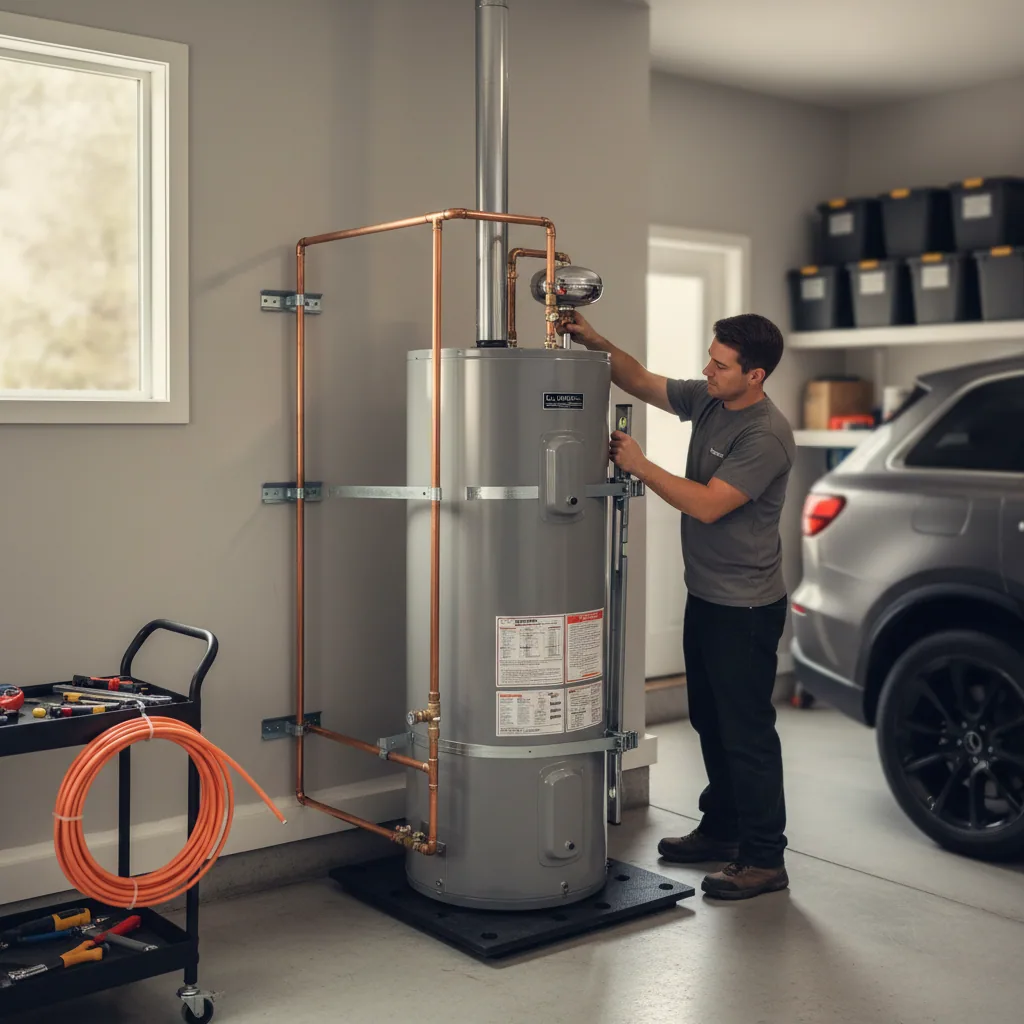
In the densely packed neighborhoods of San Jose or Redwood City, every square foot counts. Consequently, finding the right heat pump water heater placement requires a balance between airflow requirements and acoustic isolation. If a unit is placed too close to a bedroom wall without proper dampening, the low-frequency vibrations can travel through the framing.
Moreover, the 'Indoor Migration' of these units means we are increasingly installing them in converted closets. At Better Water Heaters, we utilize specialized diagnostic tools to ensure your installation meets both Title 24 requirements and your personal comfort standards.
The Noise-to-Room Compatibility Matrix
Use this guide to determine if your preferred location is compatible with modern HPWH noise levels:
| Location | Max Recommended dB | Required Mitigation |
|---|---|---|
| Attached Garage | 55 dB | Standard seismic strapping | 48 dB | Vibration isolation pads |
| Hallway Closet | 42 dB | Acoustic door sealing & dampening |
| Bedroom Adjacent | 40 dB | Full soundproofing enclosure |
Need help determining the best spot for your new system? Schedule a free site assessment with our Bay Area specialists today.
Top-Tier Brand Comparisons: Who is the Quietest?
When selecting the quietest water heaters 2026, we look at the 'Big Three' manufacturers. Each has taken a different approach to noise reduction, from redesigned fan blades to insulated compressor jackets. Our field experience in the Bay Area has shown distinct performance differences in real-world settings.
- Rheem ProTerra: Often cited for its low-profile sound, featuring a dedicated 'Quiet Mode' that reduces fan speed during late-night hours.
- AO Smith Voltex: Known for a deeper, less intrusive frequency that blends into background household noise.
- Bradford White AeroTherm: Features top-tier build quality that minimizes cabinet rattling and vibration.
Specifically, the latest Rheem models have achieved ratings as low as 42 dB. This makes them the premier choice for homeowners looking to maximize their Bay Area water heater rebates while maintaining a silent home environment.
Advanced Noise Reduction and Soundproofing Techniques
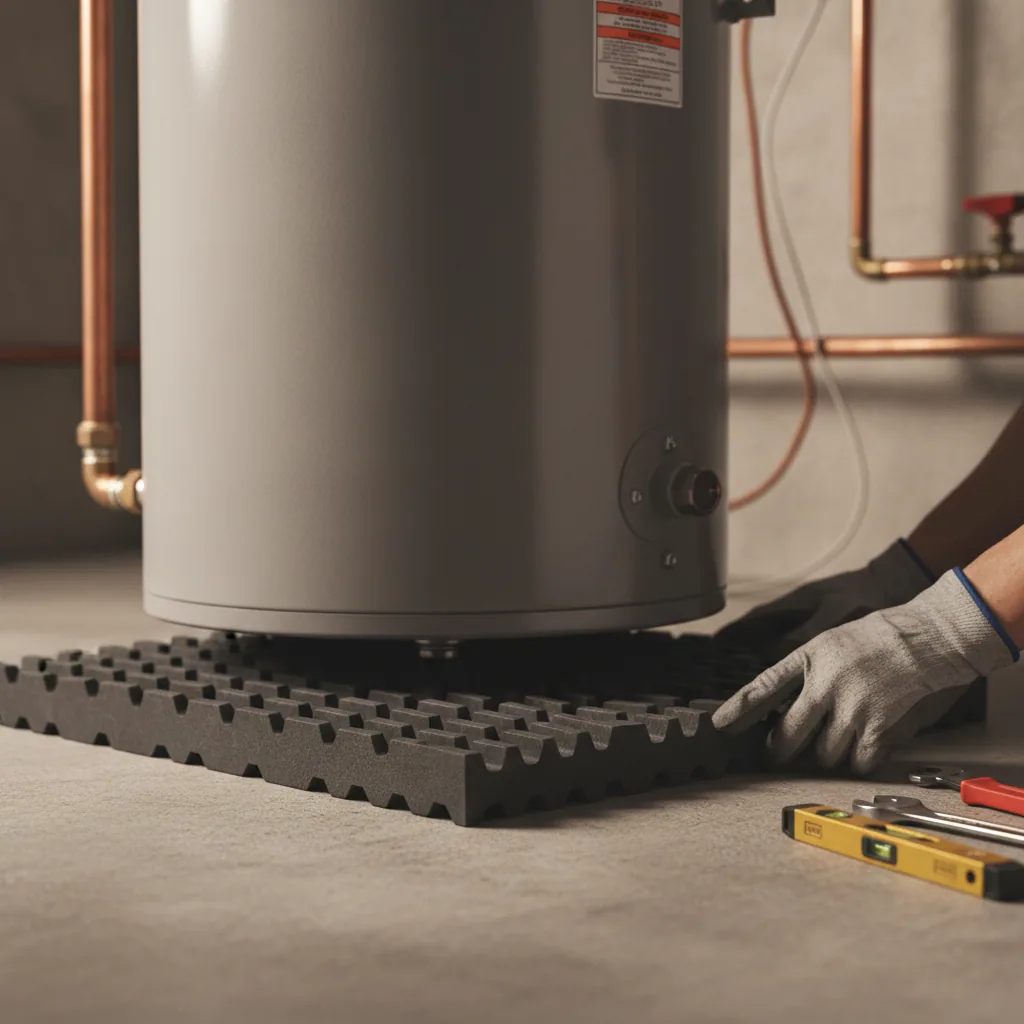
Proper heat pump water heater placement is only half the battle. To achieve a truly 'silent' ROI, we employ professional-grade vibration isolation and acoustic dampening. This is particularly vital in older Palo Alto or Los Gatos homes where wood framing can act like a tuning fork for mechanical hums.
By decoupling the unit from the floor and walls, we prevent structural noise transmission. This technical precision is what separates an elite installation from a standard plumbing job.
- Vibration Isolation Pads: Thick rubber-and-cork pads placed under the tank to absorb compressor energy.
- Acoustic Enclosures: Using sound-rated drywall or mass-loaded vinyl inside utility closets.
- Flexible Connectors: Utilizing corrugated stainless steel water lines to prevent vibrations from traveling through your home's copper piping.
- Seismic Dampening: Integrating rubber grommets into mandatory California seismic straps to eliminate 'clanking' during operation.
According to the EPA, managing indoor acoustic environments is a key component of overall home health. Our team ensures your HPWH noise reduction strategy is built into the initial quote, so there are no surprises after the power is turned on.
Smart Scheduling: The Secret to Silent Operation
One of the most sophisticated ways to manage heat pump water heater noise levels is through software. Modern hybrid systems come equipped with Wi-Fi connectivity and mobile apps that allow for granular control over the heating cycles. This is a game-changer for homes where the water heater is located near living quarters.
Instead of the unit kicking into a high-speed recovery cycle at 2:00 AM, you can program it to do the 'heavy lifting' during the day. This not only protects your sleep hygiene but also allows you to take advantage of peak solar production if your home is equipped with PV panels.
- Scheduled Quiet Hours: Force the unit into 'Electric Only' or low-fan mode during overnight hours.
- Pre-Heating: Run the compressor at max efficiency during the afternoon when ambient temperatures are highest and noise is least noticeable.
- Vacation Mode: Ensure the unit stays silent and energy-efficient while you are away from your Bay Area residence.
Ready to upgrade to the future of water heating? Check our service areas to see if you qualify for same-day installation and maximum local rebates.
The Silent ROI: Property Value and Comfort
For high-growth professionals in the Bay Area, a home is more than a shelter—it is an investment. High-efficiency upgrades like heat pumps are increasingly sought after by buyers. However, a poorly placed, noisy unit can be a detractor during a home inspection or open house. Strategic heat pump water heater placement ensures that your home remains attractive to the next generation of environmentally-conscious buyers.
Investing in a sub-45 dB unit today is a proactive move. As California moves toward the 2027 zero-NOx requirements, gas water heaters will become a thing of the past. Getting ahead of the curve with a quiet, expertly installed heat pump is the smartest move a homeowner can make in the current market.
Conclusion: Trust the Local Experts
Upgrading your home shouldn't involve a compromise on peace and quiet. By focusing on heat pump water heater placement, decibel ratings, and professional dampening techniques, you can enjoy the benefits of 70% energy savings without the noise. At Better Water Heaters, we bring 20+ years of local expertise to every install, ensuring your system is as quiet as it is efficient.
Don't leave your home comfort to chance. Contact Better Water Heaters today for a specialized consultation on the quietest water heater options for your specific floor plan. Call us at (408) 686-4969 to speak with a technician who understands the nuances of Bay Area homes.
Frequently Asked Questions
How loud is a heat pump water heater compared to a refrigerator?
Most modern heat pump water heaters operate between 42 and 48 decibels, which is very similar to a high-end modern refrigerator. While you might hear a gentle whirring when standing next to it, the sound is easily masked by a standard interior door or a few feet of distance.
Does heat pump water heater noise level increase over time?
If properly maintained, the noise level should remain consistent. However, sediment buildup or a failing fan motor can increase vibrations. Annual maintenance and flushing help ensure your heat pump water heater noise levels remain at factory-spec quietness for the life of the unit.
Can I install a heat pump water heater in a bedroom closet?
While possible with the newest 42 dB models, we generally recommend heat pump water heater placement in a hallway closet, laundry room, or garage. If a bedroom closet is the only option, we utilize advanced acoustic vibration isolation and sound-dampening materials to ensure your sleep is never disturbed.
Are there specific Bay Area rebates for quiet heat pump water heaters?
Rebates from programs like TECH Clean California and Peninsula Clean Energy are based on energy efficiency ratings (UEF) rather than decibel levels. However, because the quietest models are typically the most advanced, they almost always qualify for the maximum available rebates, often exceeding $4,000 total.