Water heater article archive
Heat Pump Water Heater Drainage: Do You Need a Floor Drain?
Historical article, not newly reviewed advice. Verify current requirements, incentives and model guidance with the relevant authority or manufacturer before relying on them. Equipment and service needs require an assessment.
📋 Table of Contents
According to Energy.gov, heat pump water heaters are up to three times more energy-efficient than standard electric tanks, but most homeowners are shocked to find they act exactly like a mini air conditioner. This means heat pump water heater drainage isn't just an optional upgrade—it is a functional necessity to prevent your garage or closet from turning into a swamp.
Key Takeaways:
- Heat pumps pull moisture from the air, creating 1-3 gallons of condensate daily.
- A floor drain is the easiest solution, but a condensate pump is the standard workaround for Bay Area closets.
- Proper drainage is mandatory for California Title 24 compliance and rebate eligibility.
- Ignoring drainage can void your manufacturer warranty and cause structural water damage.
Why Your Heat Pump Needs a Drain (The Dehumidification Factor)
The core insight here is simple: if your water heater is making the air cold, it is also making the air dry, and that water has to go somewhere. Unlike a traditional gas tank that just sits there, a hybrid system uses a fan and compressor to pull heat from the surrounding air. As the air cools, moisture condenses on the coils—just like a cold soda can on a hot San Jose afternoon.
Here’s the thing: in a typical Bay Area mid-market home, a hybrid unit can produce up to a gallon of water for every few hours of operation. If you don't have a plan for that water, it will end up on your floor. This "dehumidification bonus" is great for damp basements, but a disaster for a finished laundry room without a drain.
- The Science: Warm air enters, heat is extracted, and water vapor turns into liquid condensate.
- The Volume: Depending on humidity levels in Redwood City or Fremont, you might see 3+ gallons a day.
- The Benefit: It naturally lowers the humidity in your home, preventing mold in enclosed spaces.
Gravity vs. Pump: Navigating Bay Area Plumbing Codes
The most important rule in plumbing is that water doesn't run uphill without help, and Bay Area plumbing codes are very specific about how that help is delivered. If your water heater is located in a garage with a sloped floor leading to a drain, you are in luck. You can use a simple gravity line.
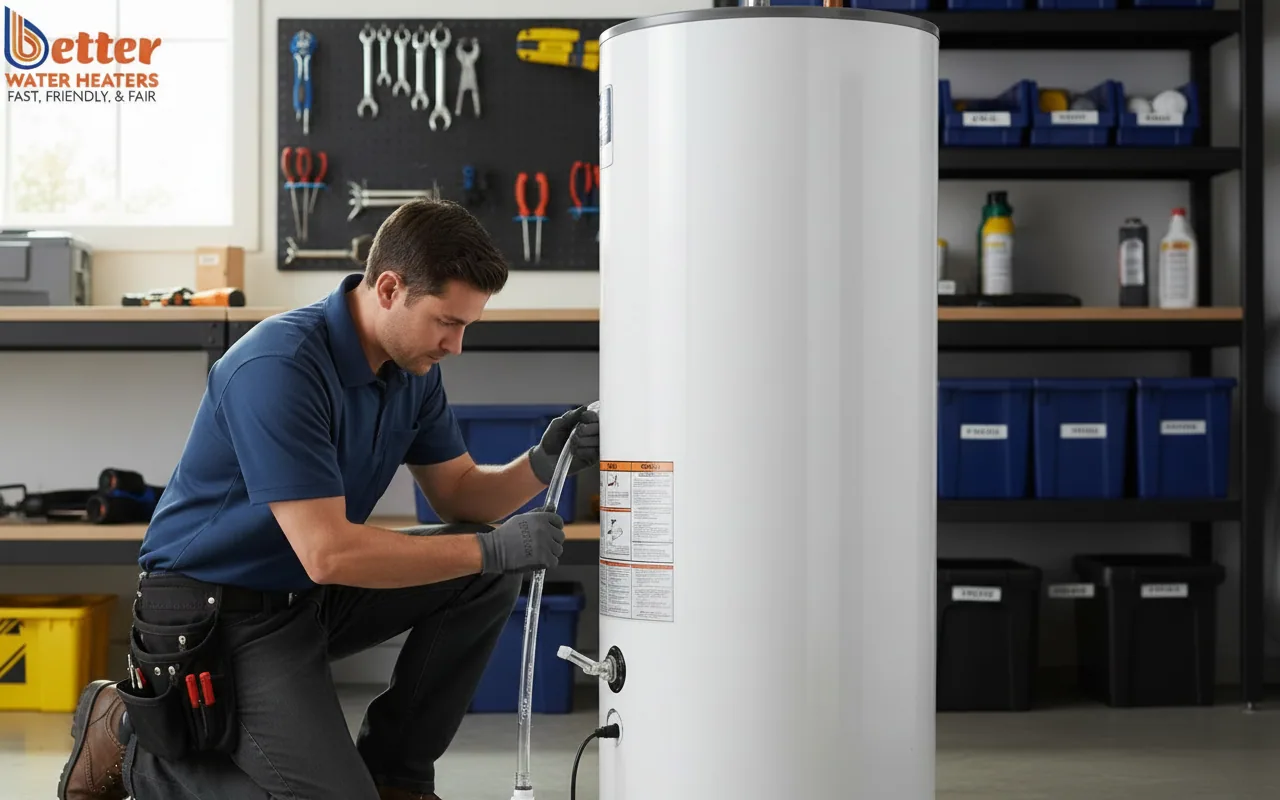
But wait—what if your heater is in a central closet or a basement below the sewer line? This is where condensate pump installation becomes mandatory. A condensate pump is a small reservoir with a float switch; when the water reaches a certain level, the pump kicks on and pushes the water through a small plastic tube to a nearby sink, standpipe, or outdoors.
What most people miss is that California code requires this drainage to be "disposed of in an approved manner." You cannot simply let it drip into a crawlspace. We often see homeowners try to DIY this by running a hose into a bucket, which is a recipe for a flooded house when you forget to empty it on a Tuesday morning.
Need a professional assessment of your space? Schedule a free site inspection to see which drainage solution fits your home.
The Hidden Costs: Pan Drains and Safety Switches
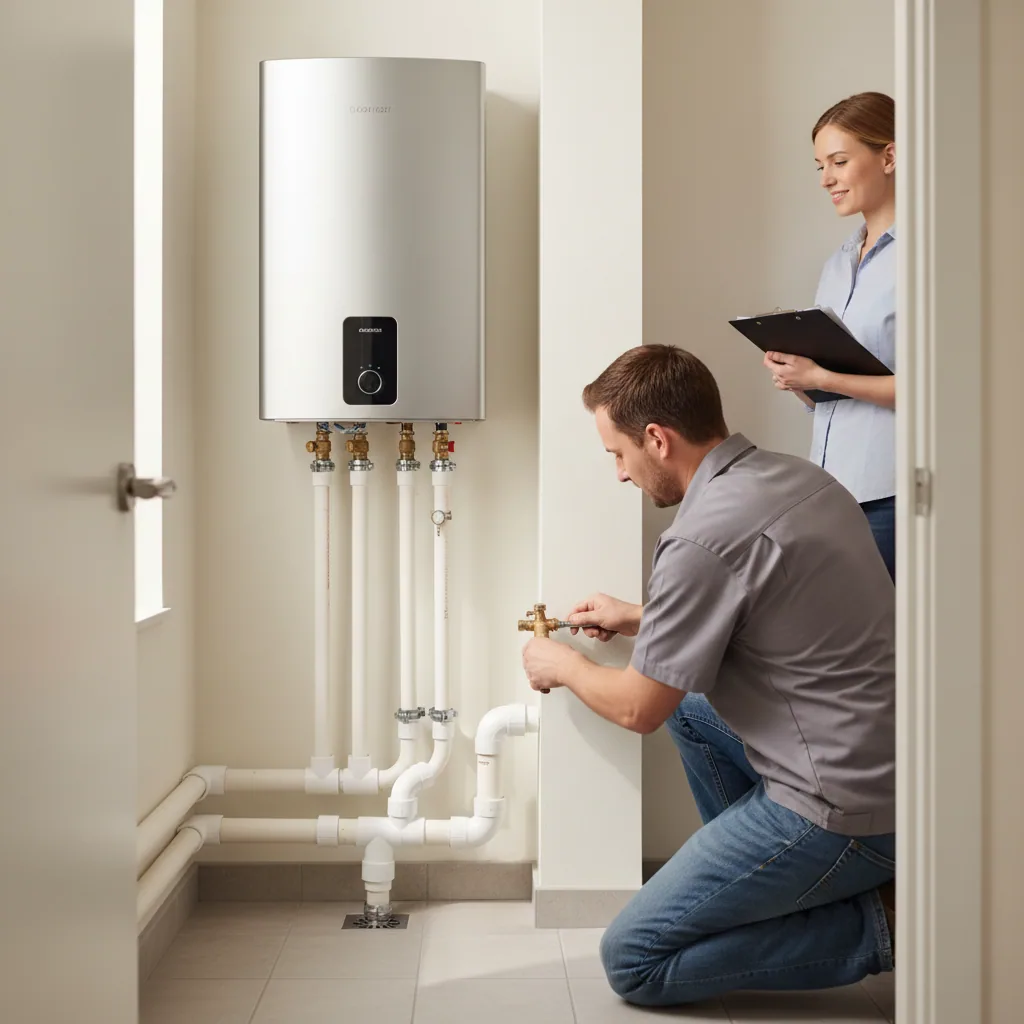
The real kicker is that a water heater overflow pan code requirement still applies, meaning you actually need two types of drainage. You need a drain for the daily condensate, and you need a safety pan with a drain for the rare event that the tank itself leaks. In many tight Bay Area installations, fitting both can be a challenge.
In our work with established homeowners in Palo Alto and Los Gatos, we frequently install "hybrid" solutions that combine the condensate line and the pan drain into a single pump system. However, this requires a safety shut-off switch. If the pump fails, the switch kills power to the water heater so it stops producing water immediately.
| Feature | Gravity Drain | Condensate Pump |
|---|---|---|
| Upfront Cost | Low ($50-$150) | Medium ($250-$450) |
| Maintenance | Zero | Annual cleaning required |
| Reliability | Highest | Requires electricity |
| Best For | Garages/Basements w/ Drains | Closets/Interior rooms |
Will a Lack of Drainage Void Your Warranty?
Here is an honest, contrarian insight: most manufacturers (like Rheem or Bradford White) don't care if your floor gets wet, but they care deeply if their electronics get wet. If your heat pump water heater drainage isn't set up correctly and water backs up into the heat pump's compressor compartment, your $3,000 unit becomes a very expensive paperweight.
Manufacturers explicitly state in their manuals that the unit must be installed according to local codes. If a technician finds that your unit failed because of a clogged, non-compliant drain line, they will likely deny your warranty claim. This is especially critical for residents looking to claim the Inflation Reduction Act (IRA) tax credits, which often require proof of a professional, permitted installation.
To keep your warranty intact, ensure your installer checks these boxes:
- Uses 3/4" PVC or copper for the primary drain line.
- Installs a P-trap if connecting to a dwelling's waste system to block sewer gases.
- Clears the area around the air intake to prevent the pump from working overtime.
Retrofitting Gas Closets for HPWH Drainage
Converting from a gas tank to a heat pump is the trend of 2024, but gas closets almost never have floor drains. When we work with property managers overseeing older San Mateo apartment complexes, the drainage retrofit is often the most complex part of the job. You aren't just swapping a tank; you're adding a new plumbing subsystem.
The real challenge in these retrofits is the "Winter Freeze Factor." If you route your condensate line through an unconditioned attic or outside a wall in a colder part of the Bay Area, that line can freeze. When the ice blocks the pipe, the water backs up into your heater. We always recommend insulating external condensate lines or keeping them within the thermal envelope of the home.
If this sounds like a lot of technical overhead, you're right. That’s why we use our internal AI content engine to help stay on top of the latest code changes across Santa Clara and Alameda counties, ensuring our advice is always current with 2024 standards.
Don't let a small drain issue lead to a big repair bill. Read our guide on HPWH maintenance or call us at 408-266-2530 for expert advice.
Installation Checklist: Do You Need a Floor Drain?
Before you buy that new high-efficiency unit, run through this checklist to see what your installation will actually require. This will help you avoid "sticker shock" when the plumber arrives.
- Location: Is the unit in a garage? (Likely gravity drain). Is it in a hallway closet? (Likely needs a pump).
- Proximity: Is there a laundry standpipe or a sink within 15 feet?
- Power: Is there a standard 120v outlet nearby to plug in a condensate pump? (Note: The water heater itself uses 240v, but the pump usually needs a standard plug).
- Permits: Does your local city (like Sunnyvale or Berkeley) require a specific air gap for the drain line? (Most do).
Best practice: Always install a secondary leak detection sensor. Many modern hybrid units come with these built-in, but adding a smart-home integrated sensor can save you thousands in potential flooring repairs if a pump ever fails while you're on vacation.
Frequently Asked Questions
Can I drain my heat pump water heater into a bucket?
Technically yes, but practically no. A heat pump water heater produces significant moisture daily. A bucket will overflow quickly, leading to floor damage and mold. Furthermore, this does not meet Bay Area plumbing codes, which require a permanent, approved discharge point for all appliance condensate.
How much does it cost to add a condensate pump?
For a typical Bay Area home, adding a condensate pump installation usually costs between $250 and $500, including parts and labor. This price can vary depending on how far the discharge line needs to run and if additional electrical outlets are required for the pump's power supply.
Does a heat pump water heater replace a dehumidifier?
Yes, to an extent. Because the heat pump water heater drainage system removes moisture from the air to heat your water, it acts as a powerful dehumidifier. This is a major benefit for residents in damp areas like Pacifica or Daly City, as it helps prevent basement mustiness.
What happens if the condensate drain gets clogged?
If the drain clogs, water will back up into the unit's internal drain pan. Most high-quality hybrid heaters have a safety switch that will shut the unit down and display an error code. You will need to clear the blockage—usually algae or dust—before the unit will produce hot water again.
Ready to upgrade to a high-efficiency system without the stress? At Better Water Heaters, we’ve spent 20 years mastering the nuances of Bay Area homes. We handle the permits, the drainage, and the rebates so you don't have to. Contact us today for a transparent, flat-rate quote and start saving on your energy bills tomorrow.