Water heater article archive
Electric Water Heater Reset Button Keeps Tripping? Proven Fixes
Historical article, not newly reviewed advice. Verify current requirements, incentives and model guidance with the relevant authority or manufacturer before relying on them. Equipment and service needs require an assessment.
📋 Table of Contents
According to the U.S. Department of Energy, water heating is the second largest expense in your home, accounting for roughly 18% of your utility bill. When your water heater reset button keeps tripping, it’s not just a nuisance—it’s a safety mechanism screaming that your system is working dangerously hard.
Key Takeaways for Homeowners
- A tripping reset button is a safety feature, not a glitch.
- Common causes include scorched heating elements, faulty thermostats, or loose wiring.
- Repeated resets can lead to higher energy bills and potential electrical fires.
- If your unit is over 8 years old, a high-efficiency upgrade may be more cost-effective than repair.
Understanding the Water Heater High Limit Switch
The red button you keep pushing is actually the Emergency Cut Off (ECO) or high-limit switch, designed to kill power if the water temperature exceeds 180°F. Think of it like a surge protector for your plumbing; if it didn't trip, your tank could literally turn into a pressurized rocket.
Here’s the thing: most people assume the button itself is broken. In reality, the switch is doing exactly what it was engineered to do—preventing a catastrophic failure. If you find yourself opening the access panel once a week, you aren't fixing the problem; you're just ignoring the symptom.
- Safety First: The switch trips to prevent scalding water from exiting your taps.
- Component Protection: It prevents the tank's internal lining from melting under extreme heat.
- Electrical Integrity: It guards against shorts that could lead to a house fire.
Top 4 Reasons Your Reset Button Keeps Popping
What most people miss is that a tripping switch is often a sign of "dry firing" or sediment-heavy water common in many Bay Area suburbs. When minerals build up on your heating elements, the element has to stay on longer to heat the water, eventually overheating itself and the surrounding area.
1. A Grounded or Scorched Heating Element
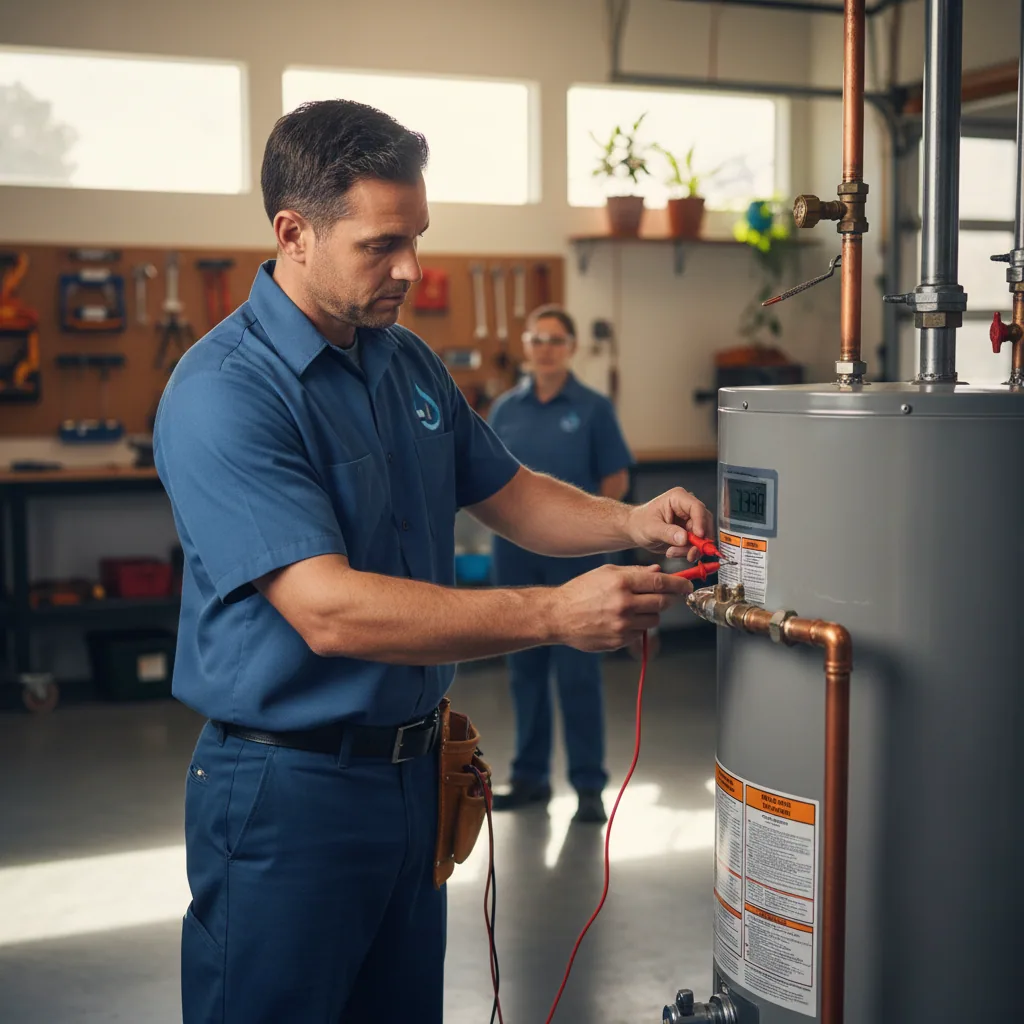
When the copper casing of a heating element cracks, the electrical current leaks into the water. This is known as a "grounded element." The ECO switch senses this electrical anomaly and trips immediately to prevent you from getting a shock while showering. This is a classic example of electric water heater troubleshooting where a DIY fix can become dangerous without a multimeter.
2. Faulty Thermostats
Most electric tanks have two thermostats. If one gets "stuck" in the ON position, the water will continue to heat indefinitely. The high-limit switch is the only thing standing between you and a steaming geyser in your garage. If you notice your water is suddenly scalding hot before the unit shuts off, the thermostat is the likely culprit.
3. Loose Electrical Wiring
In our work with busy Silicon Valley professionals who live in older homes, we often find that vibrations or poor initial installations lead to loose wire nuts. Loose connections create heat. If the wires near the ECO switch get too hot, the switch will trip even if the water temperature is perfectly fine.
4. The Switch Itself is Failing
While rare, the water heater high limit switch can simply wear out. If you’ve replaced the elements and thermostats and the wiring is tight, the ECO switch might be weak and tripping at a lower temperature than it should.
Need a professional eye to check your wiring? Schedule a diagnostic visit with our expert technicians today.
Diagnostic Flowchart: Repair vs. Replace
Deciding whether to sink money into an old tank or upgrade is a math problem, not a guessing game. As of 2024, the shift toward heat pump technology is accelerating due to massive rebates available to Bay Area residents.
| Factor | Repair (Minor) | Replace (Upgrade) |
|---|---|---|
| Unit Age | Under 6 years | 8+ years |
| Cost Range | $200 - $450 | $3,000 - $5,500 (Before Rebates) |
| Efficiency | Stays the same | Up to 300% more efficient |
| Bay Area Incentives | None | Up to $4,900 in rebates |
But wait—before you buy a new heating element, consider the "Hidden Cost" angle. A lime-scaled element that causes a water heater reset button to trip is likely using 25% more electricity than a clean one. You aren't just paying for the repair; you've been overpaying PG&E for months.
The Sustainability Hook: Why Repair Isn't Always Green
We often work with environmentally-minded residents in Palo Alto and Mountain View who want to repair appliances to keep them out of landfills. While noble, repairing a 10-year-old electric tank is often the less sustainable choice. Modern heat pump water heaters reduce your carbon footprint significantly more than extending the life of an inefficient resistive heater.
According to ENERGY STAR, upgrading to a high-efficiency model can save a typical family hundreds of dollars per year. In the Bay Area, where electricity rates are among the highest in the nation, these savings compound quickly. If you are constantly dealing with heating element burnout symptoms, you are essentially pouring money down the drain.
How to Safely Reset Your Water Heater
If your water heater has only tripped once, it might be a fluke caused by a temporary power surge. Here is how to handle it safely. If it happens a second time, stop resetting it and call a specialist.
- Turn off the Power: Go to your circuit breaker and flip the switch to OFF. This is non-negotiable.
- Remove the Access Panel: Use a screwdriver to remove the upper panel on the side of the tank.
- Move the Insulation: Pull back the insulation to reveal the water heater high limit switch.
- Press the Red Button: You should hear a distinct "click."
- Reassemble and Monitor: Replace the insulation and panel, then turn the power back on.
The real kicker? If the button feels "mushy" or doesn't click, the switch is already fried and needs replacement. Do not attempt to bypass this switch; it is the only thing preventing a tank explosion.
When to Call an Emergency Water Heater Repair Expert
Honest insight: You don't always need a plumber for a reset, but you do need one the moment you smell burning plastic or see water pooling at the base of the tank. A tripping reset button combined with a leak usually means the internal tank has corroded, and a replacement is imminent.
For a typical Bay Area mid-market client, we recommend a full system flush alongside any element replacement. This removes the sediment that caused the overheat in the first place, ensuring your thermostat replacement cost isn't wasted on a system that will just fail again in six months.
Don't wait for a cold shower to turn into a flooded garage. Contact Better Water Heaters for a professional diagnostic and same-day service.
Frequently Asked Questions
Why does my water heater reset button keep tripping?
The most common reasons are a grounded heating element, a faulty thermostat that won't shut off, or loose electrical wiring. The button trips as a safety measure to prevent the water from reaching boiling temperatures, which could damage the tank or cause serious burns.
How much does it cost to fix a tripping water heater?
A simple thermostat or element replacement typically costs between $200 and $450, including labor. However, if the unit is old and sediment-heavy, these repairs may only be temporary fixes. We recommend a professional diagnostic to ensure you aren't ignoring a larger electrical issue.
Is a tripping high limit switch dangerous?
Yes, if ignored. While the switch itself is a safety feature, the underlying cause—such as an electrical short or overheating water—can lead to fires or tank failure. You should never bypass the switch or continue resetting it without identifying the root cause.
Can hard water cause my reset button to trip?
Absolutely. In the Bay Area, hard water leads to scale buildup on heating elements. This scale acts as an insulator, forcing the element to get much hotter to heat the water. This excess heat eventually trips the high-limit switch or burns out the element entirely.
Final Action Plan for This Week
If your water heater is acting up, don't just keep hitting the red button. This weekend, take five minutes to check the age of your unit (found on the manufacturer's label). If it's over 8 years old and tripping, start researching local rebates for heat pump models. Taking proactive steps now can save you from the high costs of emergency water heater repair and help you transition to a more reliable, energy-efficient home.