Water heater article archive
Bay Area Gas Water Heater Ban: 2027 Strategy Guide | Better Water Heaters
Historical article, not newly reviewed advice. Verify current requirements, incentives and model guidance with the relevant authority or manufacturer before relying on them. Equipment and service needs require an assessment.
📋 Table of Contents
According to the Bay Area Air Quality Management District (BAAQMD), water heaters and furnaces account for roughly 90% of NOx emissions from local buildings. To combat this, the Bay Area gas water heater ban officially begins in 2027, mandating a transition to zero-emission technology for all residential replacements.
For most Bay Area homeowners—from tech professionals in San Jose to property managers in Oakland—this isn't just an environmental shift; it is a significant infrastructure challenge. If your gas heater fails on a Friday night in 2028, you won't be able to simply swap it for another gas unit. You will be legally required to install a zero-emission alternative, which often necessitates electrical upgrades you haven't planned for yet.
Key Takeaways for 2025
- Deadlines: 2027 for small residential gas heaters (75k BTU/hr or less); 2028 for larger units.
- The Requirement: Only "Zero-NOx" units (essentially electric heat pumps) can be sold or installed.
- Infrastructure: Most older Bay Area homes require a 240V circuit or a panel upgrade to support heat pumps.
- Financials: Combined federal tax credits and local rebates can currently offset up to $4,900 of the cost.
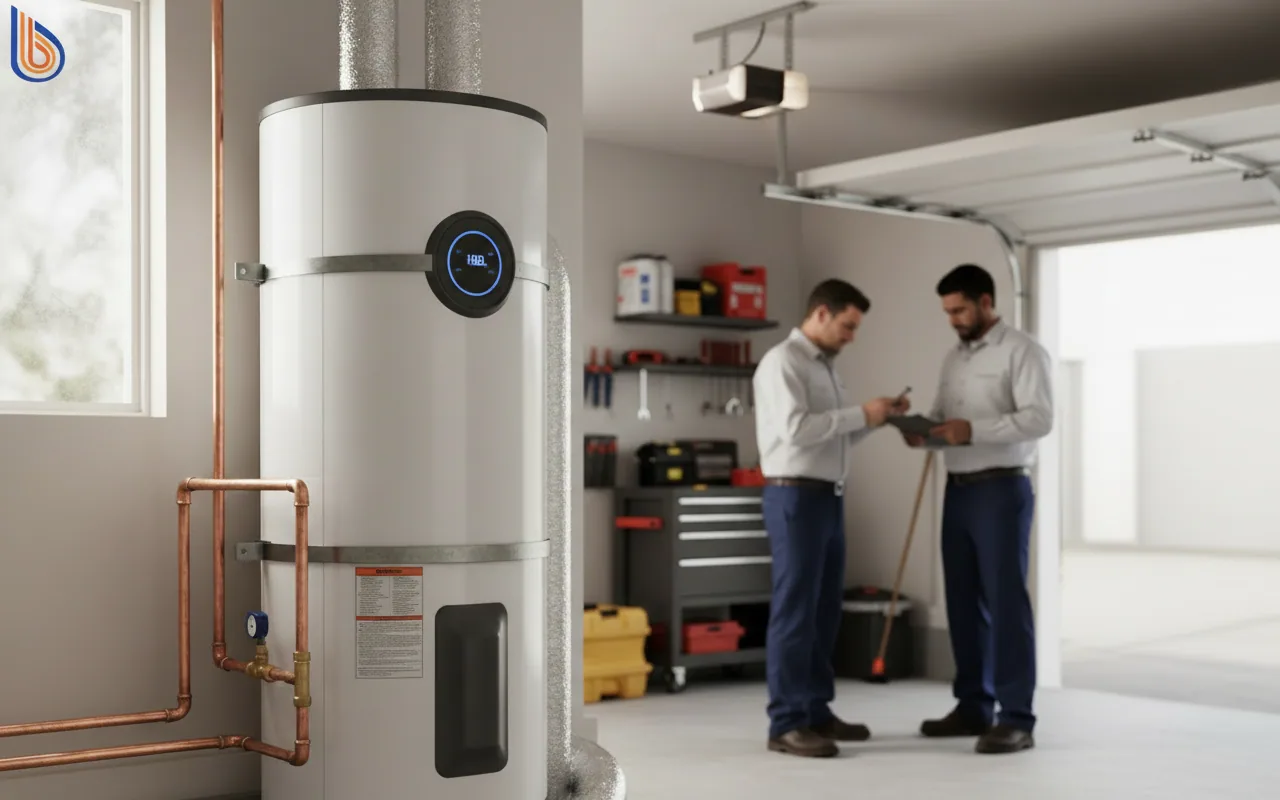
Understanding BAAQMD Regulations and Rule 9-6
The core of the transition lies in BAAQMD Rules 9-4 and 9-6, which effectively phase out the sale and installation of natural gas-fired water heating equipment. Here’s the thing: this isn't a "tax" on existing units, but a point-of-sale requirement that triggers the moment your current heater dies.
As of 2024, the timeline is firm. Starting January 1, 2027, retailers and contractors are prohibited from installing standard gas water heaters. What most people miss is that this applies to "emergency replacements" too. In our work with typical Bay Area mid-market homeowners, we’ve found that waiting until a leak occurs leads to a 3–5 day period without hot water while waiting for electrical permits and panel upgrades.
To avoid the "cold shower crisis," you should evaluate your current system against the official BAAQMD compliance schedule. Being proactive now allows you to leverage current incentives that may not be as generous once the mandate is in full effect.
The 2027 Water Heater Transition: Gas vs. Heat Pump
Switching to a heat pump water heater (HPWH) is the primary way to meet the Bay Area gas water heater ban requirements, but the two technologies operate very differently. While gas heaters use combustion, heat pumps move heat from the surrounding air into the water—much like a refrigerator running in reverse.
| Feature | Standard Gas Heater | Heat Pump (Zero-Emission) |
|---|---|---|
| Energy Source | Natural Gas | Electricity (High Efficiency) |
| Installation Cost | $2,000 – $3,500 | $4,500 – $8,000 (Before Rebates) |
| Operational Efficiency | ~60-70% | 300-400% | Non-Compliant | Fully Compliant |
The real kicker? While the upfront cost of a heat pump is higher, the U.S. Department of Energy notes that HPWHs are up to three times more energy-efficient than standard electric models. In high-cost PG&E zones, this efficiency is your best defense against rising utility rates.
Need to know if your home is ready? Schedule a free site assessment to check your electrical capacity before the 2027 deadline.
Solving the Electrical Panel Upgrade Dilemma
The biggest hurdle for Bay Area electrification in 2027 isn't the heater itself—it's the copper wires leading to it. Most homes built before 1990 in San Mateo or Santa Clara County have 100-amp or 125-amp panels that are already near capacity.
What we see in the field is a common "sticker shock" when a $4,000 water heater installation requires a $3,500 PG&E electrical panel upgrade for heat pump compatibility. However, there are strategic workarounds:
- 120V Heat Pumps: New "plug-in" models can run on a standard outlet, potentially avoiding a panel upgrade entirely.
- Circuit Sharing: Smart switches can allow a water heater and a dryer to share a circuit safely.
- Incremental Upgrades: If you are planning a kitchen remodel or EV charger installation, upgrade your panel now to be "heat pump ready."
Transitioning early allows you to manage these costs on your own timeline. If you're curious about how these systems integrate with other home tech, you might find that using our internal AI content engine to research local contractor reviews helps you find the right specialist for complex retrofits.
Maximizing Heat Pump Water Heater Rebates in California
Financial incentives are currently at an all-time high to encourage early adoption before the Bay Area gas water heater ban makes the switch mandatory. By stacking local, state, and federal funds, the "green premium" can almost entirely disappear.
Here is the current rebate landscape for 2025:
- TECH Clean California: Offers varying incentives (often $1,000+) depending on your utility provider and equipment type.
- Inflation Reduction Act (25C Tax Credit): Federal credit of 30% of the project cost, capped at $2,000 annually.
- BayREN: Provides $1,000 rebates for switching from gas to heat pump for eligible residents.
- Local Utilities: Silicon Valley Clean Energy (SVCE) and Peninsula Clean Energy often offer additional $1,000-$2,000 incentives.
But wait—rebate programs are "first-come, first-served." We’ve seen programs like the TECH Clean California fund pause temporarily when budgets are exhausted. Acting while these funds are robust is the smartest financial move a homeowner can make this year.
The 'Bridge Strategy': Should You Buy Gas Now?
Here is a contrarian insight: If your gas water heater is 12+ years old, replacing it with a high-efficiency gas unit before 2027 might be a valid strategy for some. This "resets the clock" for another 10–12 years, buying you time for electrical prices to stabilize or for panel-upgrade technology to become cheaper.
However, this comes with risks. As the Bay Area moves toward total electrification, natural gas infrastructure costs will likely be spread across fewer customers, potentially driving up gas rates. Furthermore, a new gas heater installed in 2026 will have zero resale value and may complicate future home sales if buyers are looking for "all-electric" ready properties.
Consider these factors when deciding:
- Space Constraints: Heat pumps need ~700-1,000 cubic feet of air space. If your heater is in a tiny closet, you'll need ducting or a louvered door.
- Noise: Heat pumps have a fan and compressor. They aren't loud (about the level of a dishwasher), but they shouldn't be right next to a bedroom wall.
- Climate: The Bay Area's moderate climate is perfect for heat pump efficiency, unlike colder regions where they struggle.
Final Checklist for Bay Area Homeowners
The 2027 transition doesn't have to be a crisis. By taking small steps now, you can avoid the rush and the premium pricing that will inevitably hit in late 2026. Here is your "Monday Morning" action plan:
- Check your panel: Open your breaker box. If you see "100A" and no empty slots, start budgeting for an upgrade.
- Locate your heater: Measure the space. If it’s a tight closet, you’ll need a specific "space-constrained" heat pump model.
- Verify your age: Find the manufacture date on your heater's tank. If it’s older than 10 years, you are in the "danger zone."
Ready to get ahead of the 2027 mandate? Contact Better Water Heaters today for a professional assessment and a clear roadmap to electrification.
Frequently Asked Questions
Will I be forced to remove my working gas water heater in 2027?
No. The BAAQMD regulation only applies to the sale and installation of new units. You can continue to use your existing gas water heater until it fails or you choose to replace it. However, once it breaks after the 2027 deadline, you must replace it with a zero-emission model.
What is the total cost of ownership for a heat pump vs. gas?
While a heat pump costs more upfront, the combination of $3,000-$4,900 in rebates and lower monthly energy usage typically results in a lower total cost over 10 years. In the Bay Area, where gas prices are rising, the operational savings of a heat pump become even more significant over time.
Are there zero-emission water heaters that don't require 240V electricity?
Yes. Several manufacturers, including Rheem and AO Smith, have released 120V "plug-in" heat pump water heaters. These are designed specifically for the Bay Area retrofit market to allow homeowners to switch from gas to electric without the need for a major electrical panel upgrade.
Do I need a permit for a zero-emission water heater installation?
Yes, all water heater replacements in the Bay Area require a permit from your local building department. For heat pumps, this often includes both a plumbing and an electrical permit. Better Water Heaters handles the entire permitting process to ensure your installation meets all seismic and safety codes.