Water heater article archive
2027 Gas Water Heater Ban: Strategic Bay Area Guide | Better Water Heaters
Historical article, not newly reviewed advice. Verify current requirements, incentives and model guidance with the relevant authority or manufacturer before relying on them. Equipment and service needs require an assessment.
📋 Table of Contents
According to the Bay Area Air Quality Management District (BAAQMD), space and water heating account for over 90% of residential natural gas emissions in our region. This staggering statistic is the driving force behind the 2027 gas water heater ban, a landmark regulatory shift that will fundamentally change how we maintain our homes.
Key Takeaways for Homeowners
- The Deadline: Starting in 2027, retailers can no longer sell or install water heaters that emit Nitrogen Oxides (NOx) in the Bay Area.
- Technology Shift: Most homeowners will transition to Heat Pump Water Heaters (HPWH) to comply with zero-NOx standards.
- Financial Incentives: You can currently access up to $4,900+ in combined federal tax credits and local rebates.
- Infrastructure Needs: Gas-to-electric conversions often require a 200-amp electrical panel upgrade, which should be planned well in advance.
Understanding BAAQMD Regulation 9 Rule 6
The real kicker about this regulation is that it isn't a "gas ban" in the sense that the police will pull your current heater out; rather, it is a point-of-sale requirement for zero-NOx emissions. Regulation 9 Rule 6 mandates that any new water heater installed after the 2027 cutoff must meet a zero-emission standard, effectively phasing out traditional gas-fired tanks.
Here’s the thing: while 2027 sounds distant, the supply chain for electrical upgrades is already tightening. Most Bay Area homes built before 1990 operate on 100-amp or 125-amp panels. A heat pump water heater typically requires a dedicated 30-amp, 240-volt circuit. If your panel is full, you aren't just looking at a new heater; you're looking at a $3,000 to $5,000 electrical overhaul.
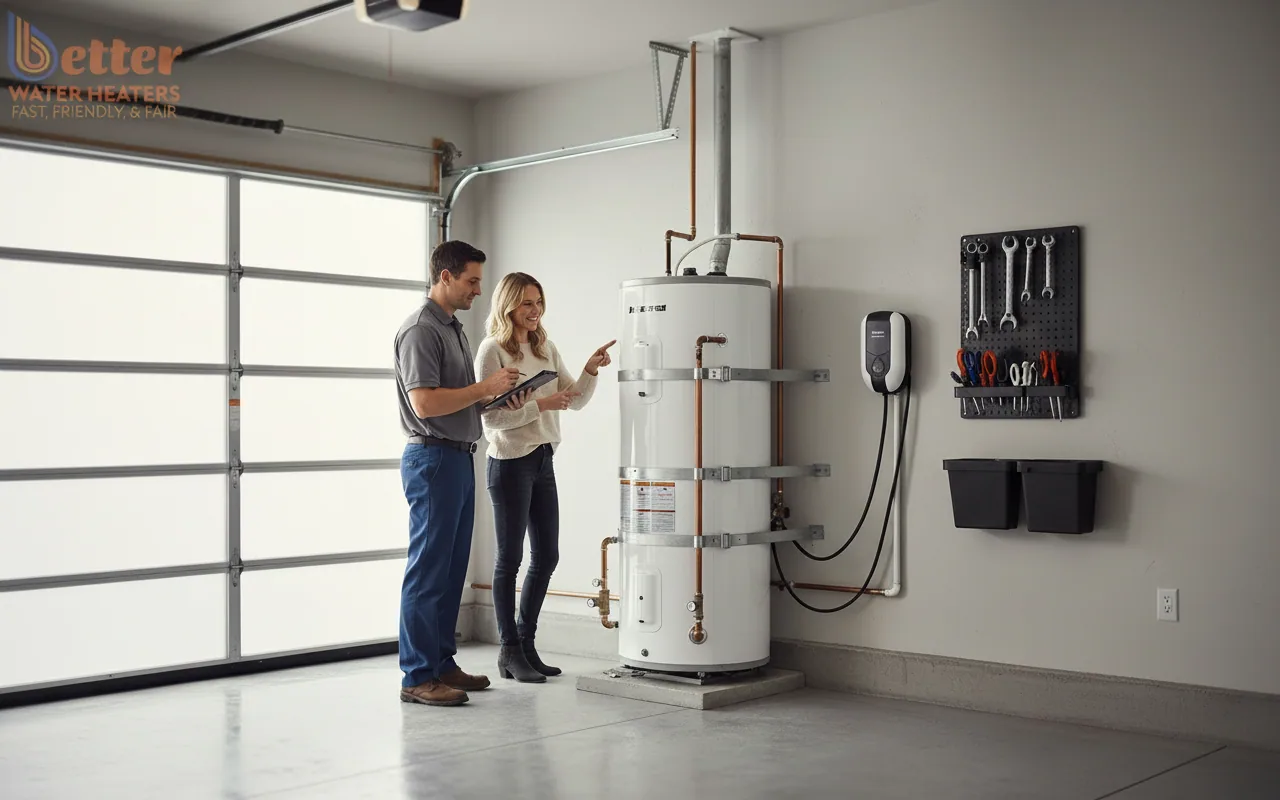
- Phase 1 (2027): Applies to small water heaters (standard residential sizes).
- Phase 2 (2029): Applies to larger commercial units and space heating systems.
- Compliance: Only applies to new installations; your existing gas unit is legal until it fails.
Heat Pump Water Heater Rebates in California
Waiting until your heater leaks in 2027 is a high-risk strategy because emergency replacements rarely allow time to secure maximum rebates. According to Energy.gov, transitioning to a heat pump can save a typical household hundreds of dollars annually on utility bills, but the upfront cost is the hurdle.
In our work with Series B SaaS founders and busy tech professionals in San Jose, we’ve seen that stacking incentives is the only way to make the ROI pencil out quickly. The Inflation Reduction Act water heater credit provides a federal tax credit of 30% of the project cost, capped at $2,000. When you add local programs like TECH Clean California or BayREN, the net cost often drops below that of a traditional gas replacement.
Current Incentive Stack:
| Incentive Source | Estimated Value | Type |
|---|---|---|
| Federal (IRA 25C) | Up to $2,000 | Tax Credit |
| TECH Clean California | $1,000 - $3,100 | Point-of-Sale Rebate |
| BayREN / Local Utility | $500 - $1,000 | Post-Purchase Rebate |
Need to see if your home qualifies for these savings? Request a free rebate assessment from our experts today.
Electric Water Heater Conversion Cost in the Bay Area
What most people miss is that the "sticker price" of the water heater is only about 40% of the total conversion expense. In a typical Bay Area mid-market home, the total electric water heater conversion cost ranges from $4,500 to $9,000 depending on your existing electrical capacity.
But wait—there is a contrarian move here. If your gas water heater is 10+ years old, installing a high-efficiency Ultra-Low NOx gas unit in 2025 or 2026 might be a smart strategic play. This allows you to "reset the clock" for another 12-15 years, bypassing the initial 2027 rush and allowing the electrical grid and heat pump technology to mature further.
Cost Breakdown Factors:
- The Unit: $1,800 - $3,500 for a high-quality Rheem or Bradford White HPWH.
- Electrical Labor: $1,500 - $3,500 if a new circuit or panel upgrade is required.
- Plumbing Modifications: $500 - $1,500 for condensate drainage and seismic strapping.
- Permitting: $200 - $600 depending on your specific Bay Area city (e.g., San Francisco vs. Fremont).
Zero-NOx Water Heater Requirements and Air Quality
The transition to zero-NOx water heater requirements isn't just about carbon; it's about local air quality and respiratory health. Nitrogen Oxides are a primary precursor to smog, and the BAAQMD estimates that this rule will prevent dozens of premature deaths annually in the region. For families with children or elderly residents, removing a combustion appliance from the home also eliminates the risk of carbon monoxide leaks.
However, heat pumps aren't a one-size-fits-all solution. In foggy coastal areas like Pacifica or Half Moon Bay, heat pumps have to work slightly harder than in the heat of Livermore. We recommend sizing the tank 10-20 gallons larger than your old gas tank to ensure you never run out of hot water during recovery periods.
For more technical details on how these systems perform, check out our guide on heat pump efficiency.
Preparing Your Home for the Pre-Deadline Rush
History shows that when regulations change, demand spikes and labor costs follow. We expect a significant "pre-deadline rush" in late 2026 as homeowners scramble to install one last gas unit before the 2027 gas water heater ban takes effect. If you want to avoid inflated emergency pricing, the time to audit your system is now.
At Better Water Heaters, we help our clients navigate these complex local codes every day. We handle the tankless conversions, heat pump retrofits, and all the permit paperwork that makes homeowners' heads spin. We even use our internal AI content engine to keep our local guides updated as BAAQMD tweaks the rules.
Strategic Checklist for 2025:
- Check your electrical panel: Do you have two open slots for a double-pole breaker?
- Locate your heater: Is there enough clearance (roughly 700-1,000 cubic feet of air) for a heat pump to breathe?
- Review your gas bills: Are rising PG&E rates making electric look more attractive?
The Condo Conundrum: Space and Venting
One of the biggest challenges we face in high-density Bay Area housing is the physical space required for heat pumps. Unlike gas heaters that vent through a small pipe, heat pumps need air volume to extract heat. If your heater is in a tiny closet in a San Francisco condo, you might need louvered doors or ducting to pull air from a larger room.
If space is at a premium, a tankless electric water heater might seem like a solution, but these require massive electrical draws—often 80 to 120 amps—which is impossible for most condos. This makes the 2027 transition particularly tricky for multi-family dwellings, and why we recommend starting the conversation with your HOA now.
Ready to get ahead of the curve? Schedule a professional site evaluation to see exactly what your home needs for compliance.
Frequently Asked Questions
Will I be forced to replace my working gas water heater in 2027?
No. The 2027 gas water heater ban only applies to the sale and installation of new units. If your current gas heater is working fine, you can keep using it until it fails. Only when you need a replacement after the 2027 deadline will you be required to install a zero-NOx model.
How much can I actually save with heat pump water heater rebates in California?
As of 2025, a typical Bay Area homeowner can save between $2,500 and $4,900. This includes the $2,000 federal tax credit from the Inflation Reduction Act and various state-level incentives like TECH Clean California. These programs change frequently, so it is vital to verify current funding before signing a contract.
What happens if my gas water heater breaks in 2028?
If your gas heater fails after the 2027 deadline, you will generally be required to replace it with a zero-emission unit, such as a heat pump water heater. Emergency replacements will be more difficult because you may need immediate electrical work. This is why we recommend upgrading your electrical panel before your current heater dies.
Are there any exemptions for the BAAQMD Regulation 9 Rule 6?
Currently, there are very few exemptions. The BAAQMD is working on implementation details for "hardship" cases where a conversion is physically impossible or prohibitively expensive, but these are expected to be rare. For most single-family homes, compliance will be mandatory at the time of replacement.
Actionable Tip for this week: Take a photo of your electrical panel's circuit directory and your water heater's data plate. Send them to a specialist to get a "Panel Readiness" opinion. Knowing your status now prevents a cold-shower crisis in the future.