Water heater article archive
2026 SCE & PG&E Rate Hikes: Solar-to-Water Heater Strategy
Historical article, not newly reviewed advice. Verify current requirements, incentives and model guidance with the relevant authority or manufacturer before relying on them. Equipment and service needs require an assessment.
📋 Table of Contents
As Bay Area homeowners prepare for the 2026 SCE & PG&E Rate Hikes, the search for strategic energy independence has never been more critical. With electricity costs projected to climb and new fixed-charge structures looming, traditional solar savings are under fire. However, a sophisticated solution is emerging: transforming your water heater into a high-capacity thermal battery.
Key Takeaways for Executives and Homeowners:
- Thermal Storage vs. Chemical Storage: A heat pump water heater (HPWH) can store energy at a fraction of the cost of a lithium-ion battery.
- NEM 3.0 Strategy: Load shifting allows you to consume your own solar power during the day rather than exporting it for pennies.
- Future-Proofing: Implementing smart mixing valves and high-temp storage prepares your home for the 2027 gas water heater regulations.
Understanding the 2026 SCE & PG&E Rate Hikes and the Fixed-Charge Transition
The California Public Utilities Commission (CPUC) has approved a significant shift in how residents are billed. Starting in late 2025 and accelerating through 2026, a new "Fixed Charge" will appear on bills, while volumetric rates (the price per kWh) remain volatile. This restructure is designed to fund grid modernization and wildfire mitigation, but it often penalizes those who haven't optimized their home's baseload.
Strategic homeowners are looking at Heat Pump Water Heater rebates 2024 as the first line of defense. By reducing your reliance on the grid during peak hours (4 PM to 9 PM), you can effectively bypass the most expensive tiers of the upcoming rate hikes. This isn't just about saving energy; it is about sophisticated energy arbitrage.
- Fixed Charges: Expected to range from $24 to $128 per month depending on household income.
- Peak Hour Volatility: Evening rates are expected to rise faster than midday rates.
- Electrification Incentives: State programs are front-loading rebates now to ease the 2026 transition.
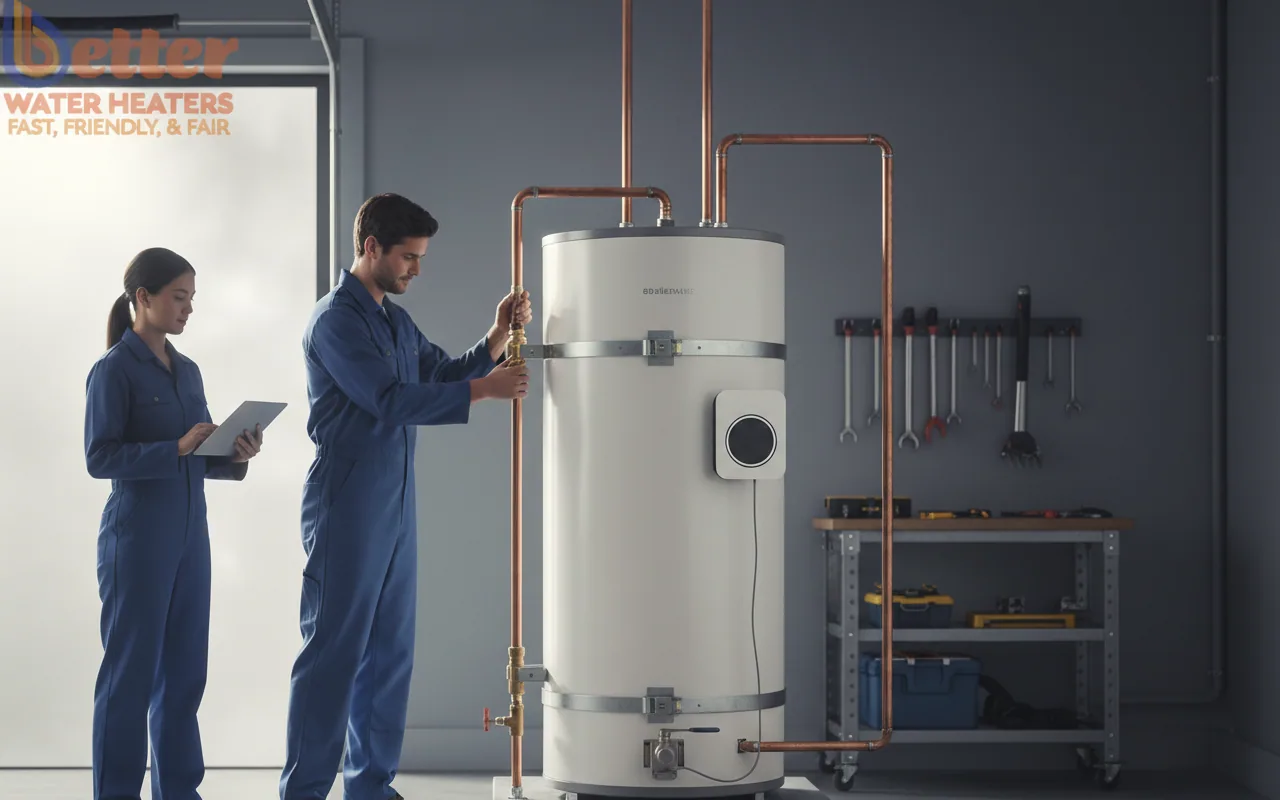
The Thermal Battery Water Heater: A NEM 3.0 Survival Tool
Under the NEM 3.0 framework, the value of exporting solar energy to the grid has dropped by approximately 75%. To maintain a high ROI on your solar investment, you must increase "behind-the-meter" consumption. This is where a thermal battery water heater becomes a financial powerhouse.
Instead of sending excess midday solar back to PG&E, you use that "free" energy to heat your water to 140°F or higher. By utilizing a thermostatic mixing valve, you store this intense heat safely and distribute it at 120°F during the evening. This effectively turns your water tank into a storage unit that competes with high-end chemical batteries.
| Feature | Tesla Powerwall (13.5 kWh) | 80-Gal HPWH (Thermal Storage) |
|---|---|---|
| Estimated Cost | $12,000 - $15,000 | $4,000 - $7,000 (Before Rebates) |
| Lifespan | 10-15 Years | 15-20 Years |
| Primary Function | Whole-home backup | Hot water + Load shifting |
| Maintenance | Minimal | Annual flush/filter check |
According to the U.S. Department of Energy, heat pump models are up to three times more efficient than standard electric tanks. When paired with solar, they become the most cost-effective energy storage medium available today.
Mid-Article Strategy Check
Are you ready to insulate your home from the 2026 SCE & PG&E Rate Hikes? At Better Water Heaters, we specialize in high-efficiency transitions that maximize your solar ROI. Schedule a professional consultation to see if a smart heat pump system is right for your San Jose or Fremont home.
Solar Water Heating Bay Area: Maximizing Midday Surplus
For residents in sunny corridors like Walnut Creek or San Jose, solar water heating Bay Area strategies are shifting. We no longer focus on solar thermal panels, but rather on "Solar-to-Electric" integration. Modern Heat Pump Water Heaters (HPWH) can be programmed to run exclusively during your solar production window.
- Pre-Heating: Set your HPWH to reach its maximum temperature between 11 AM and 3 PM.
- Mixing Valves: Install a high-quality mixing valve to prevent scalding while maintaining high-stored energy.
- Smart Controllers: Use apps from brands like Rheem or AO Smith to monitor real-time energy usage.
By shifting this load, you avoid drawing power from the grid during the expensive evening ramp-up. This is the essence of PG&E rate hike solutions 2026: becoming your own utility provider through smart storage.
California Plumbing Electrification and 2027 Regulations
The 2026 SCE & PG&E Rate Hikes are a precursor to the 2027 BAAQMD (Bay Area Air Quality Management District) regulations, which will phase out the sale of gas water heaters. Transitioning now allows you to claim significant incentives that may not be available once the mandate begins.
Current programs like TECH Clean California provide thousands in rebates for homeowners switching from gas to heat pumps. When you combine these with federal tax credits under the Inflation Reduction Act, the net cost of a high-end system often drops below that of a standard gas replacement.
- Rebate Maximization: Access up to $4,900+ in combined incentives.
- Permit Compliance: We handle all local Bay Area permits and seismic strapping requirements.
- Grid-Interactive Features: Many new models qualify for additional "demand response" credits from utilities.
Strategic Load Shifting: How to 'Future-Proof' Your Plumbing
To successfully navigate the 2026 SCE & PG&E Rate Hikes, your plumbing system must be viewed as an integrated part of your home energy management system (HEMS). This involves more than just a tank swap; it requires a strategic layout that accounts for the "Fixed Charge" restructure.
By increasing the size of your tank (e.g., moving from 50 to 80 gallons), you increase your "thermal capacity." This allows you to store more energy during the day and rely less on the grid at night. For a Series B tech executive or a busy property manager, this translates to passive savings that require zero daily intervention once configured.
Why Professional Installation Matters in the Bay Area
Bay Area homes often have unique challenges, from tight closet spaces to specific electrical panel requirements. A professional installation ensures that your California plumbing electrification project meets Title 24 standards and seismic codes, protecting your investment for decades.
Better Water Heaters has 20+ years of experience navigating the specific codes of Santa Clara, San Mateo, and Alameda counties. We don't just install tanks; we design energy solutions. Explore our guide on technology comparisons to learn more.
Conclusion: Taking Control Before the 2026 Rate Cliff
The 2026 SCE & PG&E Rate Hikes represent a fundamental shift in how we value home energy. By adopting a thermal battery water heater strategy today, you are not just replacing an appliance—you are securing a hedge against rising utility costs and maximizing your solar investment.
Don't wait for the 2027 mandates to force your hand. Take advantage of current Heat Pump Water Heater rebates 2024 and start converting your excess solar into free hot water now. Our team is ready to help you navigate the rebates, the regulations, and the installation with total transparency.
Ready to beat the rate hikes? Contact Better Water Heaters today for a free, expert assessment of your home's thermal storage potential. Call us at (408) 686-4969 to speak with a specialist directly.
Frequently Asked Questions
How much can I save on my PG&E bill with a heat pump water heater?
Most Bay Area homeowners see a reduction of $300 to $500 annually in energy costs when switching from a standard electric tank. When paired with solar load shifting to avoid the 2026 SCE & PG&E Rate Hikes, these savings can double by eliminating peak-hour consumption.
What is a thermal battery water heater exactly?
It is a standard heat pump water heater utilized strategically. By heating water to high temperatures during the day using solar power and using a mixing valve to temper it for use, the tank acts as a battery, storing thermal energy for later use without drawing from the grid.
Do I need to upgrade my electrical panel for a heat pump water heater?
Not always. While some units require a 240V circuit, new "plug-and-play" 120V heat pump models are now available that can often use existing outlets. We can evaluate your panel during a consultation to determine the most cost-effective path for California plumbing electrification.
Are there still rebates available for Bay Area residents in 2025?
Yes, programs like TECH Clean California and local utility incentives from Peninsula Clean Energy or SVCE are still active. However, funding is limited and often fluctuates, so it is best to apply as soon as possible to maximize your Heat Pump Water Heater rebates 2024/2025.