Water heater article archive
Landlord Water Heater Requirements in Marin & East Bay | Better Water Heaters
Historical article, not newly reviewed advice. Verify current requirements, incentives and model guidance with the relevant authority or manufacturer before relying on them. Equipment and service needs require an assessment.
📋 Table of Contents
Understanding landlord water heater requirements is no longer just about ensuring a warm shower; it is a critical legal shield for property owners in the high-stakes Bay Area rental market. As of 2024, shifting state laws like California Civil Code 1941.1 and local Reach Codes in cities like Berkeley and San Rafael have fundamentally changed what constitutes a 'habitable' dwelling.
Key Takeaways for Property Managers:
- Habitability Standards: Tenants must have access to at least 120°F hot water to prevent rent withholding.
- Safety Devices: Thermostatic mixing valves and expansion tanks are now mandatory for most new installations.
- Seismic Compliance: Double-strapping is a non-negotiable legal requirement under California Health and Safety Code Section 19211.
- Electrification: BAAQMD regulations are phasing out NOx-emitting gas heaters, making heat pumps the strategic choice for long-term ROI.
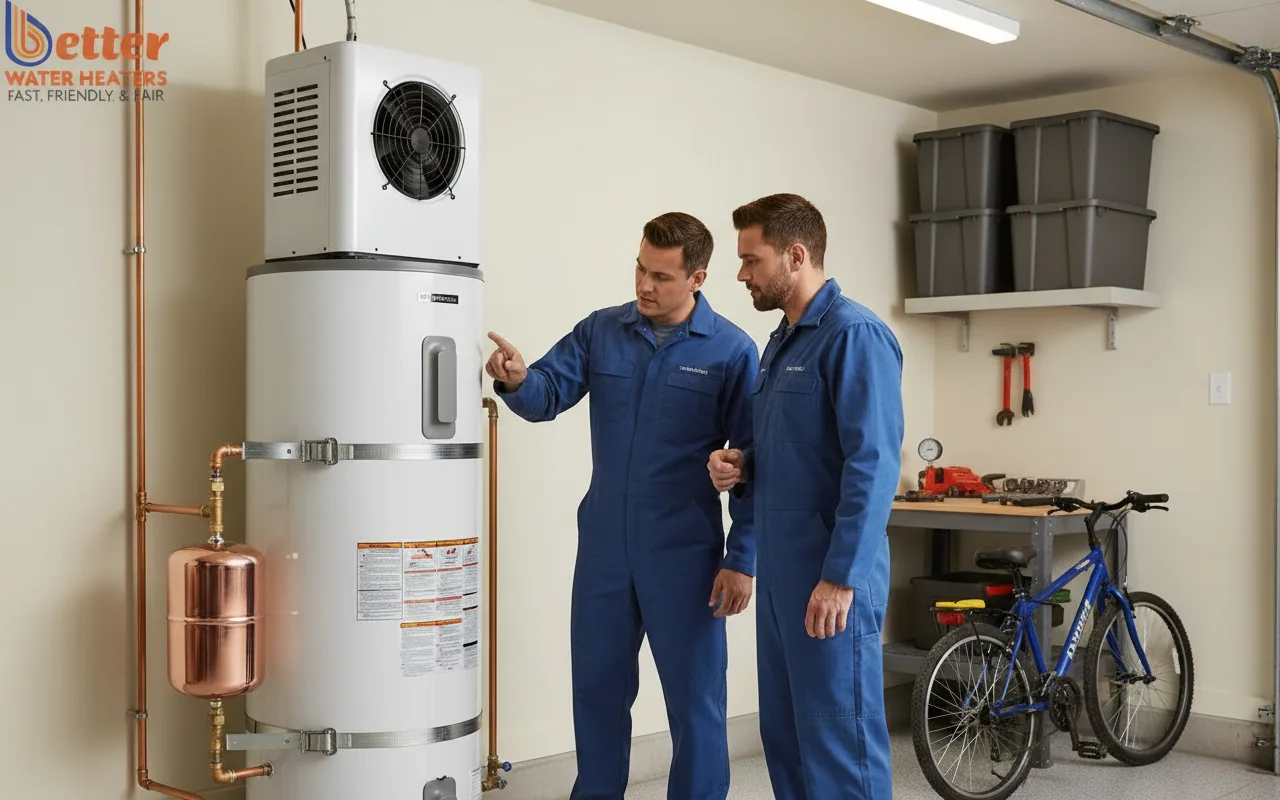
The Legal Framework: California Civil Code 1941.1 and Tenant Safety
California law is explicit regarding the 'implied warranty of habitability.' Under Civil Code 1941.1, a rental unit is deemed untenantable if it lacks a water supply approved under applicable law that is capable of producing hot water.
Furthermore, failure to meet landlord water heater requirements can lead to severe financial penalties. If a tenant lacks hot water for more than 24-48 hours, they may legally exercise 'repair and deduct' rights or withhold rent entirely until the issue is resolved via a permitted installation.
- Temperature Minimums: Systems must reliably deliver water at a minimum of 120°F at the tap.
- Continuous Supply: The system must be sized appropriately for the number of occupants to ensure consistent delivery.
- Lead-Free Mandates: All new plumbing components must meet the EPA Lead-Free mandate to ensure water safety.
Transitioning to modern systems doesn't just reduce liability; it protects your insurance standing. Many carriers in the East Bay now audit for 'thermal expansion protection' before renewing policies on multi-family units.
Critical Safety Components: Mixing Valves and Expansion Tanks
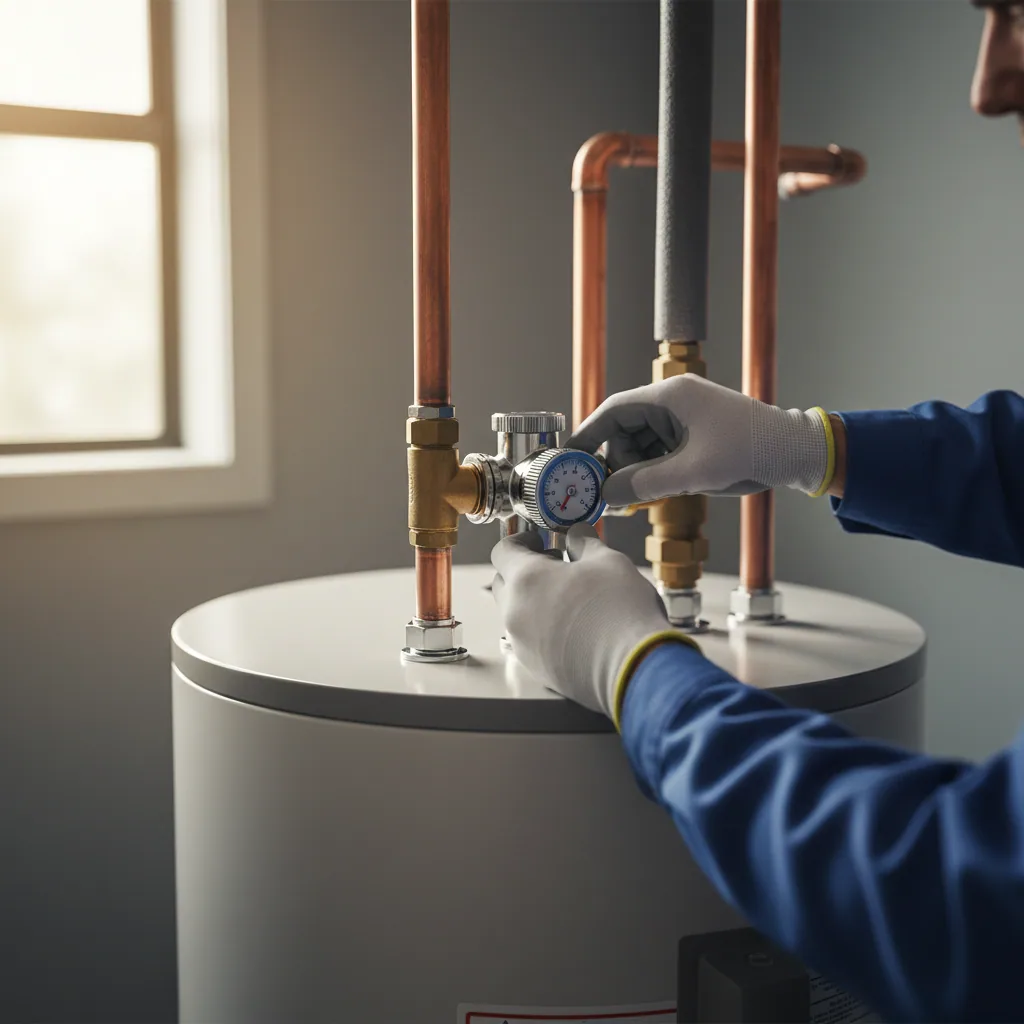
Modern tenant hot water safety standards focus heavily on two technical components: the Thermostatic Mixing Valve (TMV) and the Thermal Expansion Tank. These are often the first items inspectors check during a Marin County water heater permit inspection.
Thermostatic mixing valves allow you to store water at 140°F—killing dangerous Legionella bacteria—while delivering it at a safe 120°F to the tenant. This prevents accidental scalding, a common source of personal injury lawsuits against landlords.
- Scald Prevention: TMVs react to pressure changes to keep output temperatures stable.
- Pressure Regulation: Expansion tanks absorb the increased volume of heated water in 'closed-loop' systems typical of Alameda County.
- Code Compliance: Most East Bay municipalities now require these for all tank replacements to prevent premature tank failure and pipe bursts.
Need a compliance audit for your rental portfolio? Schedule a professional inspection with our Bay Area specialists today.
Seismic Strapping and California Rental Law
In the Bay Area, seismic safety is not a suggestion—it is a mandatory landlord water heater requirement. California Health and Safety Code requires that all water heaters be braced, anchored, or strapped to resist falling during an earthquake.
Specifically, for rental properties, the strapping must be located in the upper and lower one-third of the tank. Failure to comply can result in the immediate denial of a permit and may void your earthquake insurance coverage if a fire or flood occurs due to a tipped unit.
| Requirement | Standard Specification | Why It Matters |
|---|---|---|
| Lower Strap | 4" above the controls | Prevents base shifting |
| Upper Strap | Top 1/3 of the tank | Prevents tipping |
| Wall Clearance | Minimum 1-2 inches | Allows for movement |
Marin County and East Bay Reach Codes: The Electrification Shift
As of 2024, the Bay Area Air Quality Management District (BAAQMD) has set aggressive timelines for the phase-out of gas-fired water heaters. For landlords in cities like San Jose and Berkeley, this means 'emergency' gas replacements are becoming increasingly difficult due to local 'Reach Codes.'
Strategic property managers are now pivoting to Heat Pump Water Heaters (HPWH). These units are up to 4x more efficient than gas models and allow landlords to tap into significant East Bay electrification grants and federal tax credits under the Inflation Reduction Act.
- TECH Clean California: Landlords can often secure thousands in rebates for switching from gas to electric.
- HEEHRA Incentives: Lower-income housing providers may qualify for near-zero-cost upgrades.
- Future-Proofing: Installing a heat pump now avoids the 2027 deadline when gas units will no longer be sold in the region.
Are you ready to upgrade your portfolio while maximizing rebates? Explore our guide to Bay Area electrification incentives.
The 24-Hour Compliance Race: Emergency Repairs vs. Permitting
When a tenant reports no hot water, the clock starts. However, many landlords fall into the trap of 'unpermitted' emergency swaps. In the East Bay, an unpermitted installation is a major liability that can be flagged during a point-of-sale inspection or a tenant complaint to the housing authority.
Consequently, professional Bay Area rental property maintenance requires a partner who can handle the 'Full-Service' approach—securing the permit, performing the installation to current code, and handling the seismic bracing in a single visit.
- Immediate Response: Restore hot water within 24 hours to maintain habitability.
- Permit Filing: Ensure the city of San Rafael, Oakland, or Fremont has the documentation on file.
- Tenant Education: Provide the tenant with a simple guide on how to operate the new high-efficiency controls.
Checklist for the 2024 Rental Season
To stay ahead of tenant hot water safety standards, we recommend this annual checklist for all Marin and East Bay property owners:
- Inspect Anode Rods: Replace every 3-5 years to double the life of the tank.
- Test T&P Valves: Ensure the Temperature and Pressure relief valve isn't stuck.
- Verify Strapping: Confirm both seismic straps are tight and bolted to studs.
- Flush Sediment: Remove buildup to maintain heating efficiency and 120°F minimums.
- Check Venting: In Marin County, ensure exterior venting meets wildfire safety standards.
Don't wait for a tenant complaint or a failed inspection. Contact Better Water Heaters for a bulk-rate compliance audit for your rental properties. We handle everything from permits to rebate applications, ensuring your investment remains profitable and protected.
Frequently Asked Questions About Landlord Compliance
Do I really need an expansion tank for a rental property in the East Bay?
Yes. Most East Bay water systems are 'closed loops' due to backflow preventers. When water heats up, it expands. Without an expansion tank, this pressure stresses the water heater and the tenant's plumbing fixtures, often leading to premature leaks and liability for water damage.
How much hot water must a landlord provide under California law?
California law requires 'adequate' hot water, which is generally interpreted as at least 120°F. If the system cannot maintain this temperature during normal usage periods, the unit may be considered legally uninhabitable, allowing the tenant to seek legal remedies.
Can I replace a gas water heater with another gas unit in 2024?
Currently, yes, but it is becoming more complex. Many Bay Area cities require 'Reach Code' compliance, which may involve additional electrical prep. Furthermore, BAAQMD regulations will begin banning the sale of NOx-emitting gas heaters starting in 2027, making electrification the smarter long-term investment.
What are the specific seismic strapping requirements for Marin County?
Marin County follows the California Plumbing Code, requiring two straps: one in the top third and one in the bottom third of the unit. The bottom strap must be at least 4 inches above the gas control valve. These must be secured to the wall studs with heavy-duty lag bolts.