
📋 Table of Contents
According to the U.S. Department of Energy, heat pump water heaters can be up to three times more energy-efficient than conventional electric models, but an attic heat pump installation in the Bay Area presents unique engineering hurdles. If you live between the foggy cliffs of Pacifica and the scorching hills of Walnut Creek, your attic is a battlefield of temperature swings and moisture risks.
Key Takeaways for Homeowners
- Thermal Management: Attic temperatures in the East Bay can swing 70 degrees in a single day, requiring specific airflow calculations.
- Risk Mitigation: Secondary drainage and smart leak detection are non-negotiable for units positioned above living spaces.
- Compliance: Bay Area Title 24 compliance and seismic strapping are mandatory for safety and rebate eligibility.
- Efficiency: Proper condensate management ensures the unit doesn’t work overtime in high-humidity coastal zones.
1. Thermal Dynamics: Navigating the ‘Fog to Fire’ Strategy
The biggest mistake we see is treating a Peninsula installation the same as a Tri-Valley one; in reality, your micro-climate HVAC needs change every ten miles. In the fog-heavy coastal zones, the air is dense and damp, while East Bay attics become literal ovens by 2:00 PM.
Here’s the thing: Heat pumps don’t create heat—they move it. If your attic is unconditioned and lacks proper heat pump water heater attic clearance, the unit will starve for ambient heat in the winter or overheat in the summer.
- The Peninsula Approach: Focus on ventilation to prevent moisture buildup from the heat pump’s cold exhaust air.
- The East Bay Approach: Ensure at least 1,000 cubic feet of air space or use ducted intake to pull cooler air when attic temps exceed 110°F.
- The Hybrid Strategy: We often recommend “Hybrid-Ready” retrofitting for homeowners planning a full electrification transition by 2027.
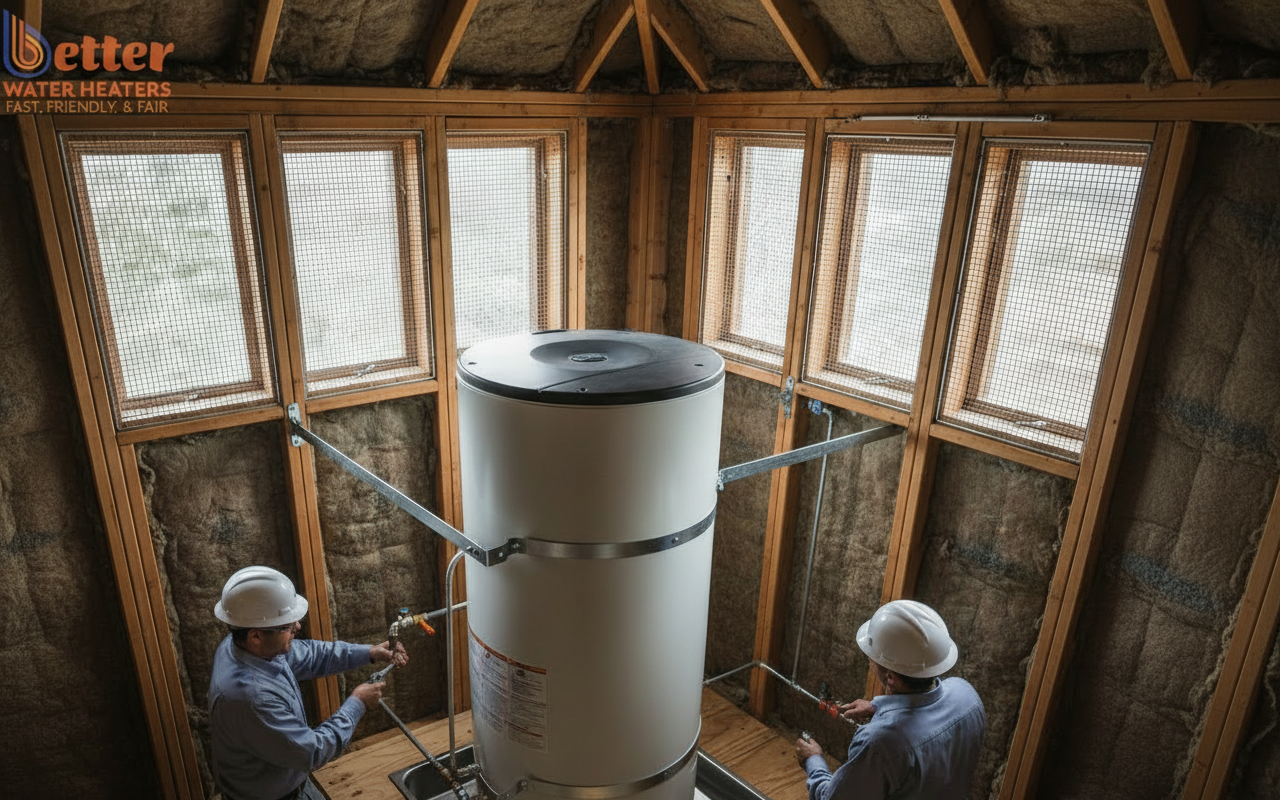
2. Condensate Management: Solving the Silent Leak Risk
What most people miss is that a heat pump is essentially an air conditioner that happens to heat water, meaning it produces gallons of water daily through condensation. Effective condensate management is the difference between an efficient appliance and a collapsed ceiling.
In high-humidity coastal micro-climates, the volume of condensate can double. We utilize a dual-drain system: a primary line for daily runoff and a secondary emergency pan with a dedicated sensor.
- Primary Drainage: Must be gravity-fed or utilize a high-quality condensate pump if a floor drain isn’t accessible.
- Secondary Overflow: A stainless steel drain pan with a perimeter larger than the unit.
- Smart Sensors: Integration with point-of-use leak detection systems that shut off the water supply immediately upon moisture contact.
The real kicker? Most standard warranties don’t cover water damage caused by improper drainage. If you’re unsure about your current setup, schedule a professional attic inspection today.
3. Seismic Stability and Structural Integrity
Living in a high-risk fault zone means attic water heater seismic strapping isn’t just a suggestion—it’s a life-safety requirement under California code. An attic-mounted unit weighs several hundred pounds when full; during a tremor, that weight becomes a wrecking ball.
But wait—standard strapping isn’t enough for attic installs. We have to consider the load-bearing capacity of your ceiling joists. In our work with established homeowners in the San Jose area, we often find that older 1970s-era joists require reinforcement before a heavy 80-gallon heat pump can be safely installed.
| Requirement | Standard Tank | Heat Pump (HPWH) |
|---|---|---|
| Seismic Straps | 2 Straps (Top/Bottom) | 3 Straps (Heavier Unit) |
| Clearance | Minimal | 7″ to 12″ Minimum |
| Weight Load | Moderate | High (Integrated Compressor) |
According to the California Energy Commission, all new installations must adhere to the latest Title 24 standards to qualify for the up to $4,900 in available rebates.
4. Airflow and Ambient Intake Optimization
An attic heat pump installation lives or dies by its ability to breathe. If the unit is tucked into a tight corner without enough heat pump water heater attic clearance, it will recirculate its own cold exhaust air, tanking your efficiency and raising your PG&E bill.
Contrarian Insight: Many contractors suggest venting the exhaust outside to keep the attic cool. However, in the winter, this can actually create a vacuum that pulls cold air into your living space through recessed lights and gaps. We prefer a balanced louvered door approach or dedicated ducting that accounts for the “stack effect” in two-story Bay Area homes.
- Louvered Access: Allows the unit to pull air from the entire attic volume.
- Ducting: Best for tight spaces; pulls air from a larger room or outside when temp-appropriate.
- Clearance: Maintain at least 6-8 inches of space on all sides for maintenance and airflow.
For many of our clients, especially those managing multiple rental properties in the East Bay, the goal is “set it and forget it.” Our internal AI content engine, Ingest.blog, helps us track these evolving local regulations so we can provide the most up-to-date advice for property managers.
The Cost of Ignoring Micro-Climates
What happens if you ignore these four points? We recently consulted for a homeowner in Redwood City who installed a high-end unit without considering micro-climate HVAC factors. The unit froze up every morning in December because the attic was too small to provide enough heat, and the condensate line froze, causing a backup.
Don’t let your investment become a liability. Whether you are a first-time homebuyer or a seasoned property owner, your water heater is the second-largest energy consumer in your home. Getting the attic framework right is the only way to ensure 20+ years of reliable hot water.
Ready to upgrade to a high-efficiency system? Contact Better Water Heaters for a free estimate and let our experts handle the permits, rebates, and complex attic engineering for you.
Frequently Asked Questions
Is an attic heat pump installation noisy?
Modern heat pumps produce about 45-55 decibels, similar to a quiet dishwasher. However, when installed in an attic, vibration can occasionally be felt in the floor below. We use specialized vibration isolation pads and flexible connectors to ensure the unit remains silent and unnoticeable to the household.
How do I manage condensate in a finished attic?
For finished spaces, condensate management requires a high-lift pump that can move water to an exterior wall or a plumbing vent. We also recommend dual-point leak sensors that connect to your Wi-Fi, alerting you on your smartphone the moment any moisture is detected in the secondary pan.
Do I need a permit for a water heater in the attic?
Yes, all Bay Area cities require a permit for water heater replacements, especially for attic installations which involve structural load and electrical safety. Better Water Heaters handles the entire permitting process, ensuring your installation meets Bay Area Title 24 compliance and local seismic codes.
Can a heat pump work in a cold Bay Area winter?
Absolutely. Even in our coldest 40°F mornings, there is enough ambient heat in the air for a heat pump to function. Most units also feature a “backup electric” mode for extreme conditions, though our 4-point framework is designed to keep the unit in high-efficiency heat pump mode year-round.