
📋 Table of Contents
- The Strategic Value of a Pre-Sale Mechanical Audit
- Step 1: Evaluating Real Estate Plumbing Compliance
- Step 2: Home Sale Water Heater Prep and Maintenance
- Step 3: Calculating Tankless Water Heater ROI for Sellers
- Step 4: Navigating the 2027 Gas Ban and Electrification
- Step 5: Finalizing Your Disclosure Package
- FAQs
According to the National Association of Realtors, nearly 15% of all real estate contracts fall through due to issues found during the inspection period, often involving aging mechanical systems. In the hyper-competitive San Francisco and Oakland markets, a pre-sale mechanical audit is no longer a luxury—it is a strategic necessity to prevent aggressive buyer credits or collapsed escrows.
Key Takeaways:
- A pre-sale audit identifies compliance issues like seismic strapping before they become deal-breakers.
- Electrification via Heat Pump Water Heaters (HPWH) can serve as a premium marketing feature for tech-savvy buyers.
- Proper documentation of water heater age and maintenance builds trust and reduces buyer friction.
- Local Bay Area rebates can offset upgrade costs by up to $4,900, improving your net ROI at closing.
The Strategic Value of a Pre-Sale Mechanical Audit
The real kicker? Most Bay Area buyers are currently hyper-sensitive to hidden costs because high mortgage rates have already stretched their monthly budgets to the limit.
When you conduct a pre-sale mechanical audit, you aren’t just checking for leaks; you are creating a “mechanical certification” that signals to a buyer that the home has been meticulously maintained. In our work with established homeowners in Silicon Valley, we’ve seen that transparency regarding the water heater’s lifespan often prevents the $5,000 “safety buffer” credit that buyers routinely demand during the contingency period.
Consider these benefits of a proactive audit:
- Eliminate Escrow Surprises: Discovering a non-compliant gas line or a rusted tank three days before closing is a recipe for disaster.
- Marketing Advantage: A new, high-efficiency system allows your agent to list “Energy Star 5.0 Upgrades” in the MLS description.
- Safety Compliance: California law is strict regarding seismic bracing; an audit ensures you meet every seismic strapping requirement before the appraiser arrives.
Step 1: Evaluating Real Estate Plumbing Compliance
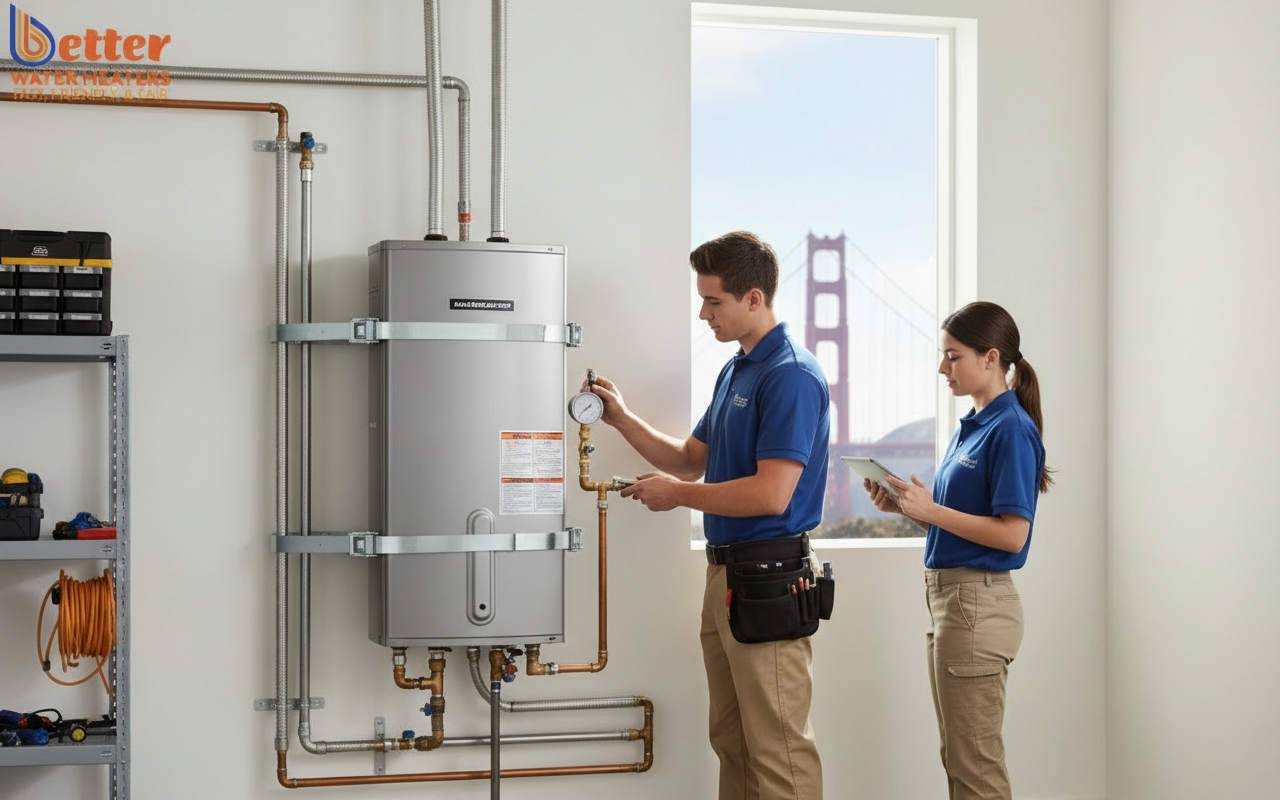
Compliance isn’t just about whether the water is hot—it’s about whether the installation meets the specific, rigorous codes of the Bay Area Air Quality Management District (BAAQMD).
Here’s the thing: many homes in San Jose and Redwood City still feature water heaters installed without proper permits or seismic bracing. During a real estate plumbing compliance check, a professional will look for three critical components:
- Double Seismic Strapping: California Health and Safety Code Section 19211 requires all water heaters to be braced and anchored to resist falling during an earthquake.
- Temperature and Pressure (T&P) Relief Valve: This must be properly piped to the exterior or a suitable drain to prevent tank explosions.
- Proper Venting: For gas units, ensuring carbon monoxide isn’t leaking into the living space is a top priority for home inspectors.
What most people miss is that a simple visual check isn’t enough. A professional audit looks at the age of the unit—if it’s over 10 years old, an inspector will likely flag it as “end of life,” regardless of its current performance.
Bay Area Compliance Standards
| Requirement | Standard | Impact on Sale |
|---|---|---|
| Seismic Bracing | Two straps (top/bottom third) | Mandatory for closing |
| Expansion Tank | Required in closed systems | Common inspection flag |
| Energy Efficiency | Title 24 Compliant | Affects HERS rating |
Step 2: Home Sale Water Heater Prep and Maintenance
Maintenance is the most cost-effective way to prove to a buyer that you haven’t been a “deferred maintenance” homeowner.
If you aren’t ready to replace the unit, your home sale water heater prep should focus on optimization. Flush the tank to remove sediment, check the anode rod to prevent internal corrosion, and ensure the area around the unit is clear of flammable materials. A typical Bay Area mid-market client who provides a documented service history for their mechanicals often sees fewer invasive questions during the disclosure process.
But wait—don’t just clean it. You need to verify the “born-on” date. According to ENERGY STAR, a standard tank water heater lasts 10-15 years. If yours is at year 12, the most honest, contrarian advice we can give is this: Replace it now. It is cheaper to replace it on your terms for $2,500 than to be forced into a $4,500 emergency replacement or credit during a 14-day escrow.
Need a professional eyes-on assessment? Schedule your pre-sale audit today to ensure your closing stays on track.
Step 3: Calculating Tankless Water Heater ROI for Sellers
In high-end markets like Palo Alto or Menlo Park, “tankless” is a buzzword that carries significant weight with tech-savvy buyers.
While the upfront cost of a tankless system is higher, the tankless water heater ROI for sellers often manifests in the speed of the sale and the final offer price. Buyers perceive tankless units as a “forever” solution because they last 20+ years, compared to the 10-year cycle of tank units. Furthermore, the space-saving benefits of a wall-mounted unit can effectively “add” square footage to a cramped garage or utility closet.
Consider these marketing angles for your listing:
- Endless Hot Water: A major selling point for families.
- Reduced Utility Bills: Highlighting the 30% energy savings.
- Smart Home Integration: Many modern units feature Wi-Fi monitoring, appealing to the Silicon Valley demographic.
Step 4: Navigating the 2027 Gas Ban and Electrification
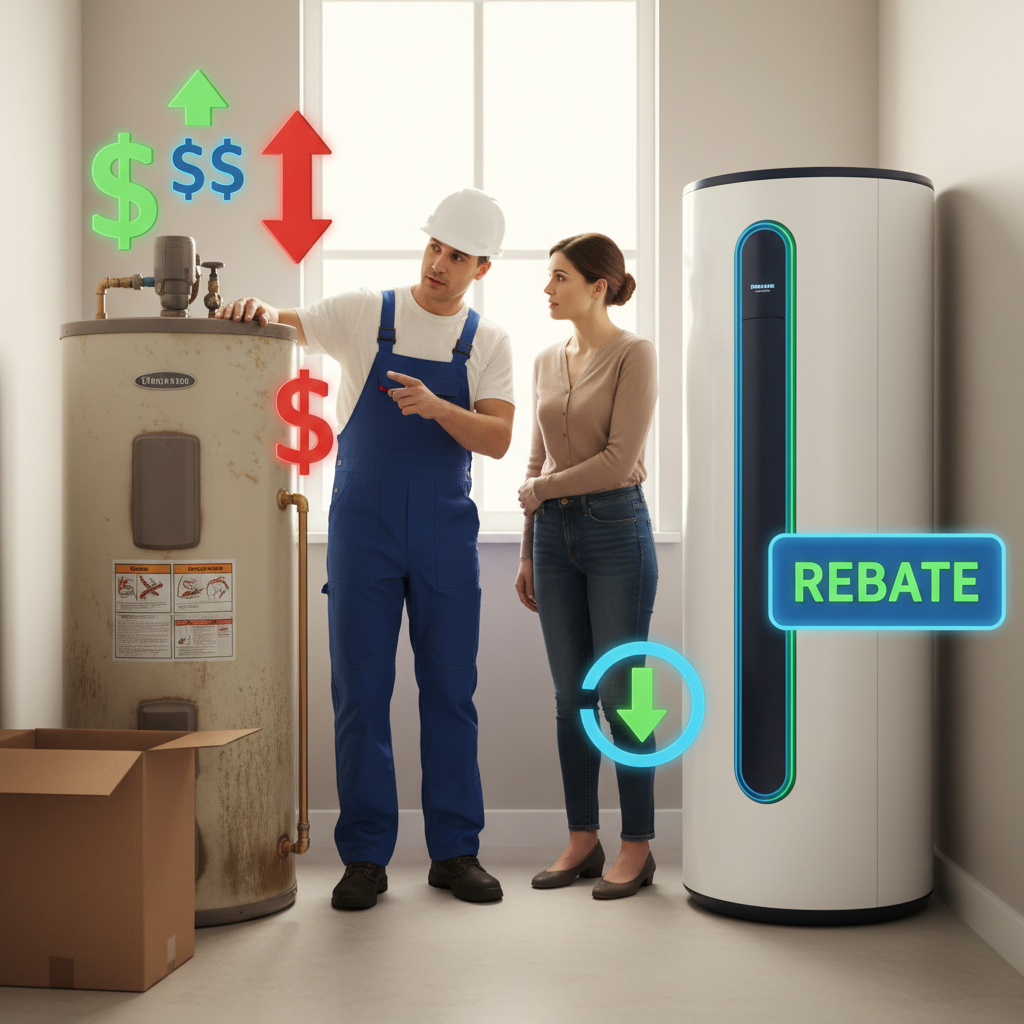
The Bay Area is leading the charge in decarbonization, and savvy sellers are using this to their advantage by installing Heat Pump Water Heaters (HPWH).
The Bay Area Air Quality Management District has approved rules that will effectively phase out the sale of gas water heaters by 2027. By upgrading to a heat pump model now, you are “future-proofing” the property for the next owner. This is an incredible selling point: the buyer won’t have to deal with the inevitable transition to electric appliances.
Even better, programs like TECH Clean California and local utilities offer massive incentives. You can often stack federal tax credits with local rebates to significantly lower the cost of a pre-sale mechanical audit and subsequent upgrade. In our work with property managers, we’ve found that homes with all-electric, high-efficiency mechanicals attract higher-quality tenants and buyers who value sustainability.
Step 5: Finalizing Your Disclosure Package
Documentation is the final step in turning your mechanical systems from a liability into an asset.
Once your audit is complete, include the following in your disclosure package:
- The Audit Report: A clean bill of health from a licensed specialist.
- Permit History: Proof that all work was done to code (extremely important in San Francisco).
- Warranty Information: Transferable warranties are a huge confidence booster for buyers.
- Rebate Receipts: Show the buyer the value you’ve already added to the home.
Ready to maximize your home’s value? Contact Better Water Heaters to schedule a comprehensive inspection and get your home market-ready.
FAQs About Pre-Sale Mechanical Audits
Do I really need a permit for a water heater replacement before selling?
Yes, in the Bay Area, a missing permit is a red flag for any competent home inspector. Selling a home with unpermitted work can lead to legal liabilities or a buyer demanding you obtain a “retroactive permit,” which is often more expensive and time-consuming than doing it right the first time.
How much do heat pump water heater rebates in California actually save sellers?
As of 2025, Bay Area residents can access up to $4,900 in total incentives. This includes the TECH Clean California rebate, federal tax credits under the Inflation Reduction Act, and local utility bonuses from providers like SVCE or Peninsula Clean Energy. This often covers more than half the installation cost.
What is the most common mechanical failure found during a pre-sale audit?
The most frequent issue we see is improper seismic strapping. Many DIY installations or older professional jobs use a single strap or thin plumber’s tape, which does not meet current California building codes. Fixing this is relatively inexpensive but essential for passing a real estate inspection.
Should I replace my water heater if it’s working but 12 years old?
Statistically, yes. A 12-year-old water heater is on “borrowed time.” If a buyer’s inspector flags it, the buyer will likely ask for a credit based on the full replacement cost. By replacing it yourself, you control the cost and can use the new unit as a marketing feature to drive higher offers.
Don’t let an aging water heater sink your sale. A pre-sale mechanical audit gives you the data you need to negotiate from a position of strength. Whether you need a simple seismic strap adjustment or a full transition to a high-efficiency heat pump, taking action this week ensures a smoother closing next month.