
📋 Table of Contents
According to the California Energy Commission, water heating accounts for roughly 25% of the average California home’s energy use, making your choice of point of use electric vs. centralized systems the single most impactful decision in a modern remodel. In the high-stakes world of San Francisco and San Jose real estate, choosing the wrong technology doesn’t just lead to cold showers—it can trigger a $5,000 electrical panel upgrade you didn’t budget for.
Key Takeaways for Homeowners:
- Centralized Heat Pumps offer the highest ROI for whole-home electrification.
- Point-of-Use (POU) units are ideal for ADUs but can strain 100-amp panels.
- 120V Plug-in HPWHs are the ‘secret weapon’ to avoid expensive infrastructure upgrades.
- Rebate Stacking can reduce installation costs by up to $4,900 in the Bay Area.
The Electrical Capacity Dilemma: Why Point of Use Electric Isn’t Always Cheaper
The most common mistake we see in Bay Area home remodel plumbing is assuming that small, under-sink units are the ‘budget’ choice just because the hardware costs less than $500.
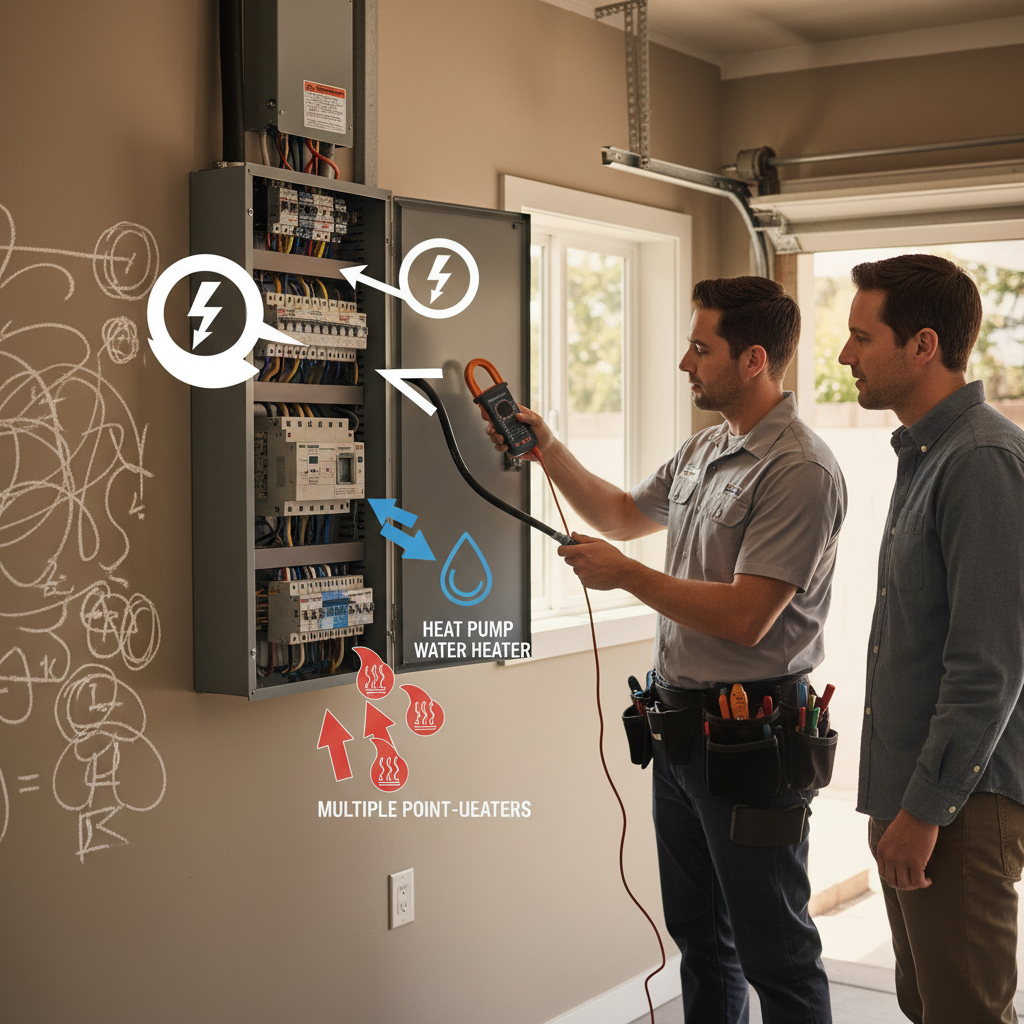
Here’s the thing: a standard point of use electric water heater for a shower requires a dedicated 30-amp or 60-amp circuit. If you are remodeling a mid-century home in Palo Alto or Menlo Park with an aging 100-amp panel, adding just two of these units can push your system past its limit. The real kicker? A main electrical panel upgrade in the Bay Area typically runs between $3,500 and $6,000, instantly erasing any savings from the cheaper POU hardware.
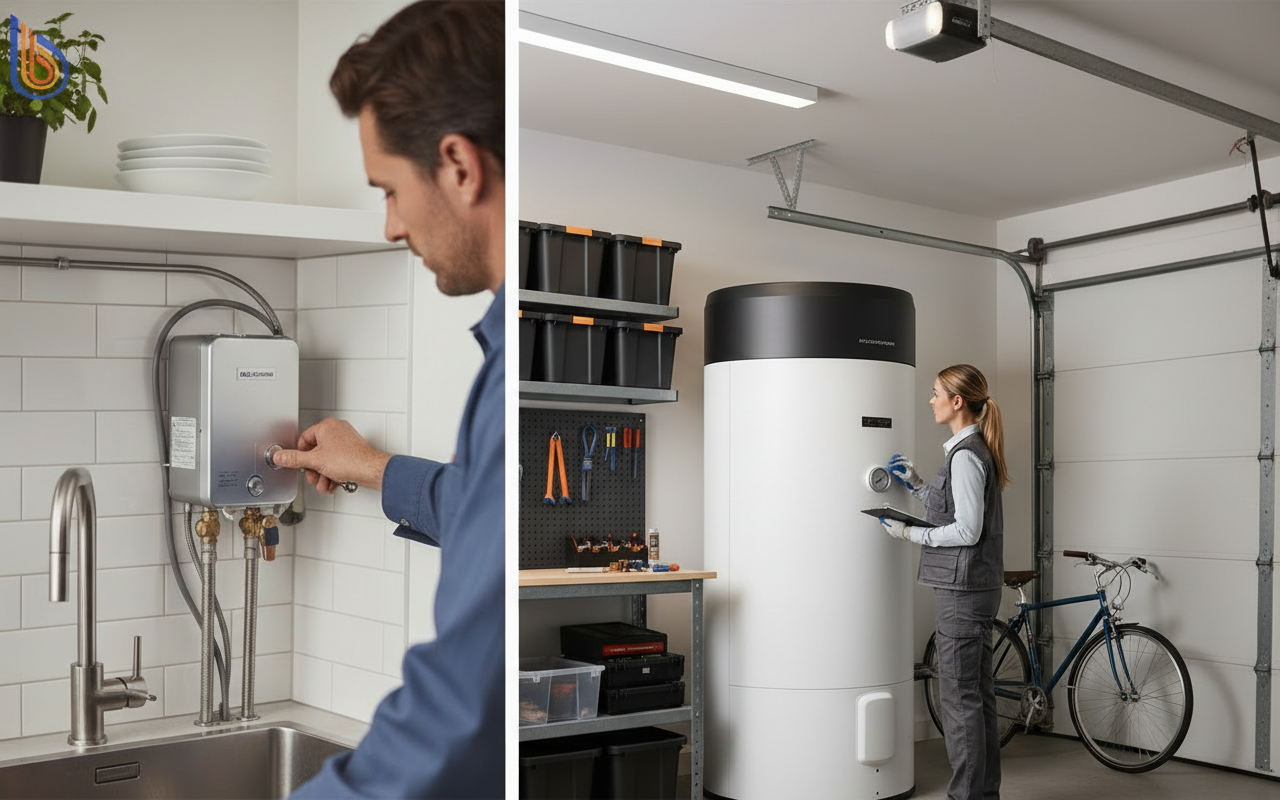
In our work with established homeowners, we often find that a centralized vs decentralized hot water analysis favors the centralized heat pump simply because it draws significantly less peak power. While a POU tankless unit might pull 12kW to 27kW instantaneously, a modern heat pump water heater (HPWH) operates more like a refrigerator, sipping power slowly over time.
Key Electrical Considerations:
- Peak Load vs. Continuous Load: POU units create massive spikes; HPWHs maintain a steady, low draw.
- 120V ‘Plug-in’ Options: New models like those from Rheem allow you to replace a gas unit with a heat pump using a standard wall outlet.
- Panel Space: POU units require multiple double-pole breakers which many older Bay Area panels simply don’t have.
Centralized vs Decentralized Hot Water: The ROI Framework
The best way to determine your system architecture is to map the ‘distance to tap’ against your home’s total occupancy and plumbing layout.
For a typical Bay Area mid-market client living in a sprawling ranch-style home, the ‘wait-time’ for hot water at the primary suite can result in thousands of gallons of wasted water annually. This is where a hybrid approach shines. By using a centralized heat pump for the main load and a small point of use electric ‘booster’ for a distant bathroom, you get the efficiency of the heat pump with the instant gratification of a local unit.
But wait—California Title 24 requirements in 2024 are getting stricter. If you are doing a major decarbonization remodel in the Bay Area, decentralized electric resistance units (POU) are often penalized in energy calculations compared to high-efficiency heat pumps. According to California’s 2022 Title 24 Standards, heat pumps are the prescribed ‘baseline,’ meaning POU systems might require you to add more solar panels or better insulation to ‘offset’ their lower efficiency.
| Feature | Point-of-Use Electric | Centralized Heat Pump |
|---|---|---|
| Upfront Hardware Cost | Low ($200 – $800) | High ($3,000 – $5,500) | Installation Complexity | High (Electrical/Plumbing) | Moderate (Space/Venting) | Efficiency (UEF) | 0.92 – 0.98 | 3.0 – 4.0+ | Bay Area Rebates | Minimal | Up to $4,900+ | Lifespan | 10-15 Years | 10-15 Years |
Bay Area Home Remodel Plumbing: Navigating Micro-Climates and Noise
Efficiency isn’t just a lab rating; in the Bay Area, it’s dictated by whether you live in the foggy Sunset District or the sun-drenched East Bay hills.
Heat pumps work by extracting heat from the surrounding air. In the micro-climates of coastal San Francisco or Pacifica, where ambient temperatures stay in the 50s, a heat pump has to work harder than one installed in a warm garage in Walnut Creek. However, even in cooler coastal air, a heat pump remains 200-300% more efficient than a point of use electric resistance unit.
What most people miss is the noise factor. Many Bay Area cities have strict zero-lot-line noise ordinances. If you’re installing a centralized heat pump in a narrow side-yard between houses, the fan noise might exceed local decibel limits. We often recommend interior garage installations or using sound-dampening pads to ensure compliance with San Francisco noise regulations.
Need help navigating local codes? Schedule a free consultation with our local experts today.
The ADU Exception: Why POU Wins for Accessory Dwelling Units
In our work with property managers and owners of multi-unit buildings, the Accessory Dwelling Unit (ADU) is the one place where point of use electric often defeats the centralized heat pump.
When adding a small studio ADU in San Jose or Oakland, running a dedicated hot water line from the main house is often cost-prohibitive and thermally inefficient. A 240V POU unit provides the necessary ‘instant’ hot water required for ADU compliance without the footprint of a large tank. Furthermore, POU units are easier to sub-meter, allowing landlords to track energy usage for the ADU separately from the main residence.
However, if the ADU is intended for a family or long-term rental, a small 40-gallon heat pump is still the better long-term play for the 2027 gas water heater ban transition. To keep our technical guides as fresh as our installations, we use Ingest.blog as our internal AI content engine to track shifting local mandates across all 9 Bay Area counties.
Maximizing Your Investment: BayREN and TECH Clean California Rebates
The secret to high-ROI remodeling in 2024 is ‘rebate stacking’—combining local, state, and federal incentives to cover up to 80% of your project costs.
Currently, BayREN heat pump rebates offer significant incentives for switching from gas to electric. When you layer these with TECH Clean California incentives and the federal 25C tax credit (part of the Inflation Reduction Act), the net cost of a $6,000 centralized heat pump installation can drop below the cost of a standard tank replacement.
Steps to maximize your rebates:
- Hire a Participating Contractor: Programs like TECH Clean California require the installer to be enrolled to pass the savings to you.
- Check Your Utility: Peninsula Clean Energy and Silicon Valley Clean Energy (SVCE) offer additional ‘top-off’ rebates for residents in San Mateo and Santa Clara counties.
- Verify HEEHRA Eligibility: Low-to-moderate income households may soon access point-of-sale discounts up to $1,750 for water heaters.
Ready to upgrade? Learn more about current Bay Area water heater rebates and how much you can save.
When to Choose Point of Use Electric vs. Centralized Heat Pump
An honest, contrarian insight: despite the push for heat pumps, there are times when electric resistance POU is the only logical choice—specifically in high-rise condos where venting a heat pump is physically impossible.
Choose Point of Use Electric if:
- You are adding a single ‘remote’ sink or half-bath far from the main tank.
- You have a small ADU with limited square footage for a tank.
- You live in a condo with no outdoor venting or garage space.
- You have a massive 200-amp+ electrical panel and don’t mind higher monthly bills for the sake of ‘instant’ hot water.
Choose a Centralized Heat Pump if:
- You are replacing a primary gas water heater and want to meet upcoming 2027 regulations.
- You want to maximize BayREN heat pump rebates and federal tax credits.
- You have a 100-amp panel and want to avoid a $5,000 upgrade (use a 120V plug-in model).
- Environmental responsibility and long-term energy savings are top priorities.
Final Expert Recommendation
If you are planning a remodel this week, start by looking at your electrical panel. If it’s under 125 amps, steer clear of whole-house point of use electric tankless units and look toward the 120V plug-in heat pump water heater. It is the most strategic way to future-proof your home without the ‘hidden’ costs of electrical infrastructure upgrades. For those in the East Bay or South Bay, the climate is perfect for heat pump efficiency, and the rebates have never been higher. Don’t wait until your current unit leaks; the permit and rebate process for these advanced systems takes time.
Ready to transform your home’s efficiency? Contact Better Water Heaters at (408) 250-6672 for a professional assessment and flat-rate pricing.
Frequently Asked Questions
Does a point of use electric water heater require a permit in the Bay Area?
Yes, all water heater installations in the Bay Area, including point-of-use units, require a plumbing and electrical permit. This ensures the unit is properly grounded and the circuit is sized correctly to prevent fire hazards. San Francisco and San Jose permit costs vary, but typically range from $150 to $350.
How much can I save with BayREN heat pump rebates in 2024?
BayREN currently offers $1,000 for switching from a gas water heater to a heat pump. When combined with TECH Clean California ($3,100+) and federal tax credits ($2,000), total incentives can exceed $4,900. These programs are designed to make the transition to electric appliances cost-competitive with gas.
Will a heat pump water heater work in a cold garage in San Francisco?
Yes, modern heat pumps are designed to operate efficiently in temperatures as low as 40°F. While the efficiency (COP) drops slightly in colder coastal air compared to a warm East Bay garage, it still remains significantly more efficient than any standard electric resistance or gas water heater.
Can I install a point of use electric unit under my kitchen sink myself?
While the plumbing is relatively straightforward, the electrical requirements are significant. Most POU units require a dedicated high-amperage circuit that a standard kitchen outlet cannot provide. For safety and code compliance, especially regarding Title 24, we strongly recommend professional installation by a licensed specialist.