
📋 Table of Contents
In the Bay Area, a single water heater failure in a multi-unit complex doesn’t just result in a repair bill; it often triggers a tenant habitability crisis that can cost thousands in temporary relocation fees. According to the California Department of Insurance, water damage remains one of the leading causes of property claims, yet most infrastructure audit for aging Bay Area rental properties procedures are reactive rather than strategic.
For property managers and owners of Victorian or Edwardian-era conversions, the stakes are even higher. Between the 2027 BAAQMD gas water heater phase-out and tightening seismic requirements, the “wait until it leaks” strategy is no longer viable. Here is a professional framework to assess your portfolio’s health before the next emergency call.
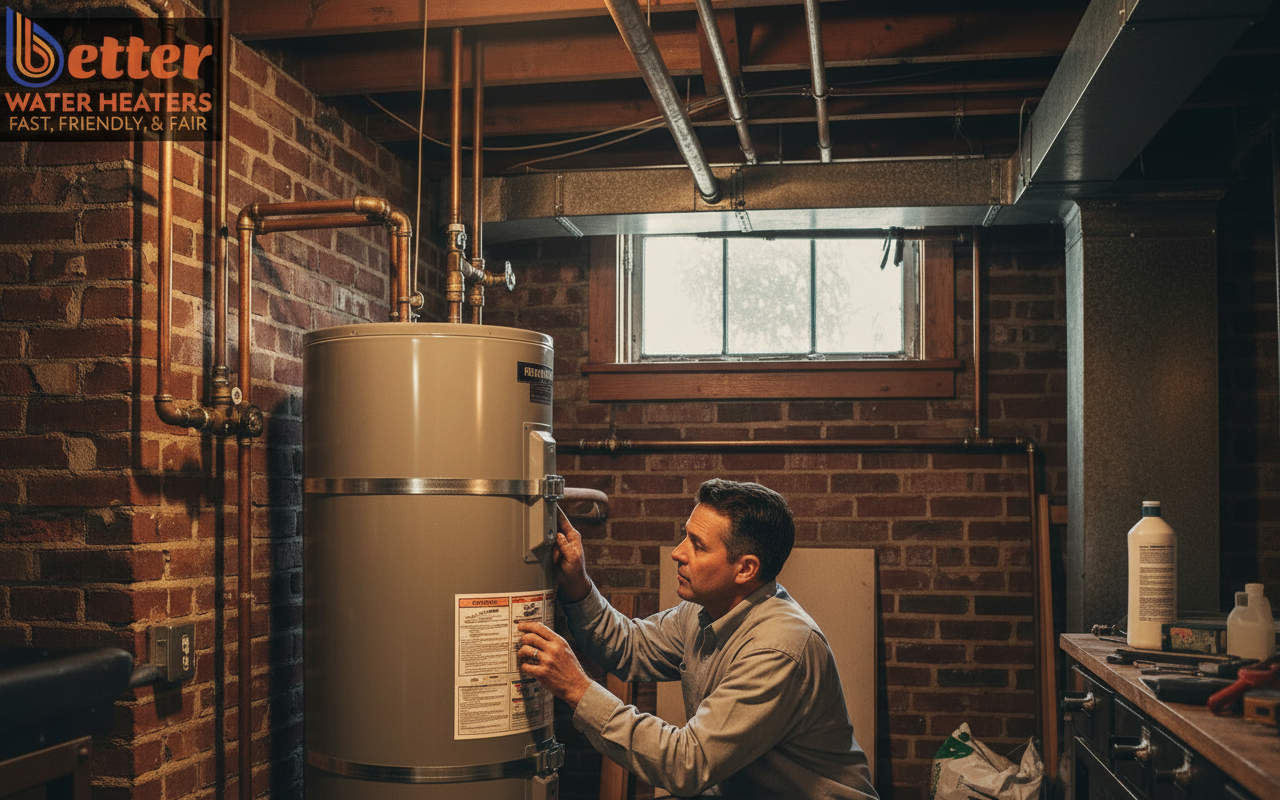
1. Seismic Safety and Compliance: The Liability Shield
The first rule of Bay Area property management is that your plumbing is only as stable as the straps holding it to the wall during a tremor. In our work with established local landlords, we frequently find that “compliant” installations from ten years ago no longer meet the rigorous California seismic strapping requirements.
- Double-Strapping Check: Ensure every tank has heavy-duty straps in the upper and lower third of the unit.
- Venting Integrity: Many aging rental properties still use atmospheric venting in tight crawlspaces; these are prone to backdrafting if not perfectly pitched.
- The ‘Hidden Liability’ Audit: Identify non-compliant DIY repairs from previous owners, such as improper T&P valve discharge piping that could scald a tenant.
What most people miss: Seismic strapping requirements California mandates are often the first thing insurance adjusters look for after a leak. If your units aren’t properly secured, you may face a claim denial regardless of the leak’s cause. If you’re managing multiple units and haven’t checked your straps this year, schedule a professional safety inspection to close this liability gap.
2. Efficiency and Capacity: The Performance Audit
A rental property plumbing audit isn’t just about preventing leaks; it’s about protecting your recovery rate so tenants don’t run out of hot water during peak morning hours. Over time, Bay Area hard water leads to significant sediment buildup, which acts as an insulator between the burner and the water.
Here’s the thing: A water heater with four inches of sediment at the bottom can be up to 15% less efficient than a clean unit. This increases energy costs for tenants and accelerates the degradation of the tank’s inner lining. To assess capacity, follow these steps:
- Flush and Flow Test: Perform a partial drain to check for “popping” sounds (sediment) and water clarity.
- Anode Rod Inspection: If the rod is depleted, the tank is the next thing to corrode. Replacing a $50 rod can add 5 years to a $2,000 tank.
- Recovery Rate Analysis: Compare the unit’s original GPH (Gallons Per Hour) rating against current performance.
The real kicker? In a typical Bay Area mid-market property, a single central boiler audit can often prevent ten individual unit failures. By identifying a failing recirculating pump or a scaled-up heat exchanger early, you prevent a building-wide outage. For those looking to streamline their maintenance documentation, using a tool like Ingest.blog can help automate the distribution of these reports to your internal stakeholders.

3. Electrification Readiness: Future-Proofing for 2027
The most strategic part of an infrastructure audit for aging Bay Area rental properties is preparing for the mandatory transition away from gas. The Bay Area Air Quality Management District (BAAQMD) has set a timeline that will effectively ban the sale of gas water heaters starting in 2027.
But wait—you shouldn’t wait until 2027 to plan. Bay Area electrification rebates through programs like TECH Clean California currently offer up to $4,800 or more for heat pump water heater (HPWH) retrofits. A proactive audit today identifies if your electrical panel has the 240V capacity to support these units tomorrow.
| Factor | Standard Gas Tank | Heat Pump (HPWH) | Tankless Retrofit |
|---|---|---|---|
| Upfront Cost | Lower | Higher (Pre-Rebate) | Moderate |
| Energy Efficiency | Standard | Ultra-High | High |
| 2027 Compliance | Non-Compliant | Fully Compliant | Varies |
What many property managers overlook is that multi-unit water heater maintenance now includes checking panel space. If you replace a gas unit today with another gas unit, you are locking yourself into a technology that will be obsolete before the unit’s lifespan ends. Learn more about local electrification incentives to see if your property qualifies for a subsidized upgrade.
Managing the ‘Repair vs. Electrify’ Decision
The contrarian insight here is that sometimes, repairing an old gas unit is the wrong financial move even if it’s the cheapest immediate fix. In our work with local real estate investment trusts, we’ve seen that the cost of upgrading an electrical panel during a planned renovation is 40% cheaper than doing it during an emergency water heater failure.
- Proximity to Drainage: Heat pump units produce condensate. Your audit must identify if a floor drain or pump is nearby.
- Space Constraints: HPWHs require more cubic feet of air for heat exchange than standard tanks.
- Tenant Metering: Ensure the new electrical load is properly routed to the tenant’s meter to avoid utility disputes.
Need help navigating these complex regulations? Contact Better Water Heaters for a comprehensive portfolio assessment. We specialize in Bay Area property management support, ensuring your rental units stay code-compliant and efficient.
Prioritizing Replacements Across Your Portfolio
A successful infrastructure audit for aging Bay Area rental properties results in a prioritized replacement list. Don’t replace units based on age alone. Instead, use a weighted scoring system that considers age, sediment levels, and the potential for catastrophic damage (e.g., units located on upper floors without pans).
- High Priority: Units over 10 years old with visible rust, no seismic straps, or located above finished living spaces.
By following this multi-unit water heater maintenance framework, you transform your plumbing from a hidden liability into a managed asset. According to Energy.gov, water heating is the second largest energy expense in most homes; optimizing this system is the fastest way to increase your property’s Net Operating Income (NOI).
FAQs About Bay Area Rental Infrastructure
How do the 2027 BAAQMD regulations affect my current rentals?
As of 2027, you will no longer be able to purchase or install standard NOx-emitting gas water heaters in the Bay Area. While you aren’t required to rip out working units, any replacement after that date must be a zero-emission model, such as a heat pump water heater. Planning your electrical upgrades now avoids emergency costs later.
Are there specific rebates for multi-family properties in San Jose or Oakland?
Yes, programs like TECH Clean California and local utility incentives from Peninsula Clean Energy or Silicon Valley Clean Energy offer substantial rebates. Some multi-family properties can access thousands of dollars per unit, often covering the majority of the upgrade cost from gas to electric.
What are the specific seismic strapping requirements in California?
California Health and Safety Code requires all water heaters to be braced, anchored, or strapped to resist falling during an earthquake. This typically involves two sets of straps—one in the top third and one in the bottom third—secured to the wall studs with lag bolts. Failure to comply is a major habitability violation.
How often should I perform a rental property plumbing audit?
We recommend a professional audit every 12 to 18 months for multi-unit properties. This allows you to catch minor leaks, check T&P valves, and ensure that tenants haven’t stored flammable materials near gas units, which is a common fire hazard in older Bay Area basements.
Take Action This Week: Walk through your mechanical rooms and check the manufacture dates on your tanks. If more than 20% of your units are over 10 years old, it’s time to stop guessing and start auditing. Get a professional infrastructure assessment today and protect your Bay Area investment.