
📋 Table of Contents
Your $3,600 high-efficiency heat pump water heater is likely being eaten alive by the very system meant to protect it. We’ve recently seen a spike in water softener corrosion cases across the East Bay where 10-year warranties are being voided in as little as 18 months because of “aggressive” water chemistry.
Key Takeaways for Bay Area Homeowners
- The Conductivity Trap: Softened water is more conductive, which accelerates the depletion of sacrificial anode rods.
- Warranty Warning: Most manufacturers will deny claims if they find evidence of over-softened, aggressive water.
- The Solution: Switching to a powered (impressed current) anode rod is the only way to permanent protection.
- Local Impact: Areas like Pleasanton and Walnut Creek are seeing the highest rates of premature tank failure.
The Hidden Conflict Between Softeners and Heat Pumps
What most installers won’t tell you is that salt-based softeners trade calcium for sodium, turning your water into a highly efficient electrolyte. This process triggers aggressive soft water damage that targets the most expensive component of your home: the hybrid water heater tank.
Here’s the thing—while soft water prevents scale, it simultaneously increases the water’s hunger for minerals. When it can’t find those minerals in the water, it starts leaching them directly from your tank’s lining and the sacrificial anode rod. What most people miss is that high-efficiency heat pumps use thinner high-tech linings that are far more sensitive to this chemical shift than the old “dumb” tanks of the 1990s.
Consider a recent case in Danville. A homeowner invested $4,200 in a top-tier hybrid unit and a high-end softener. By month 20, the unit was leaking. The manufacturer denied the warranty, citing “improper water conditions.” The homeowner was out $4,200 plus labor because their installer failed to mention the water softener corrosion risk.
Why Traditional Anode Rods Fail in Record Time
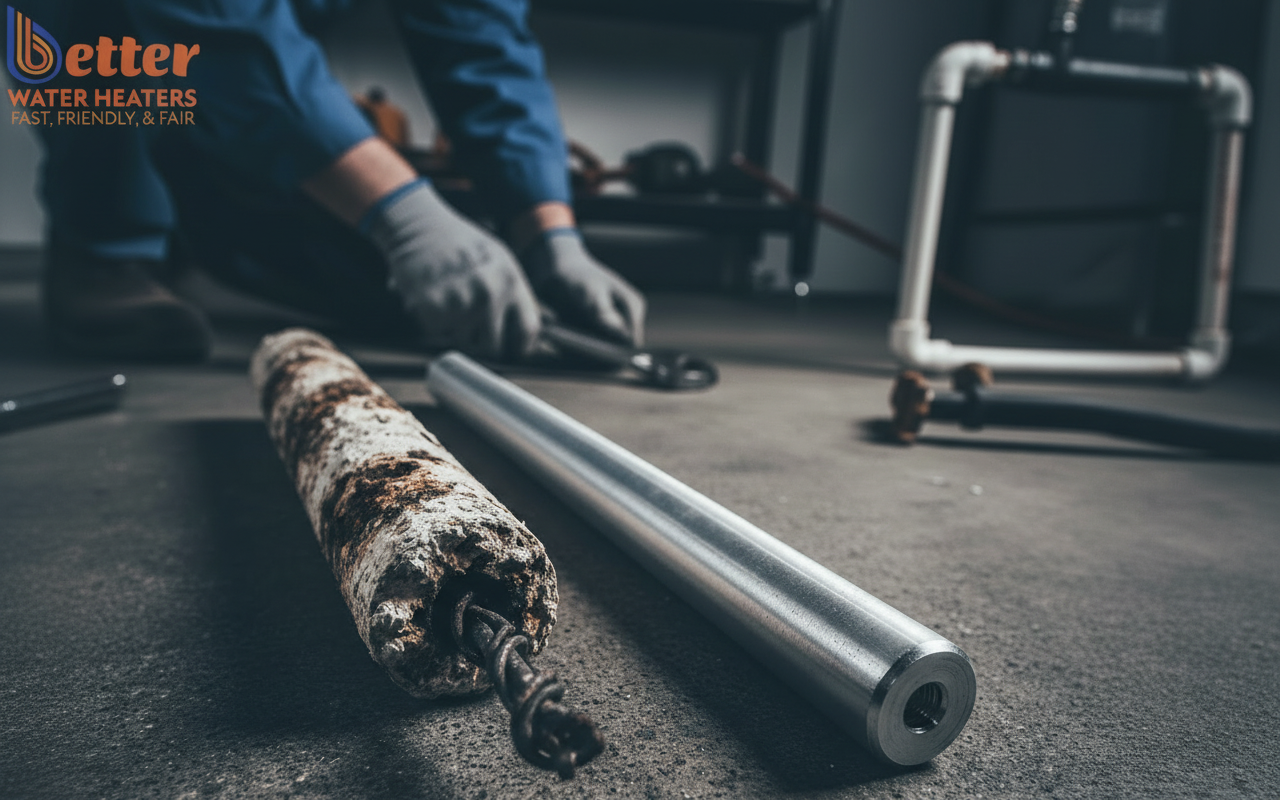
The real kicker is that the standard magnesium anode rod shipped with your unit is designed for “average” water, not the hyper-conductive environment created by a salt-based softener. In a standard setup, that rod might last five years; with a softener, it can vanish in 12 months.
- Sacrificial Depletion: Once the magnesium rod is gone, the electrical current has nowhere to go but the steel tank.
- Galvanic Corrosion: The sodium ions in softened water accelerate the electrochemical reaction that rusts metal.
- The “Smell” Factor: Softened water often reacts with magnesium rods to create that “rotten egg” sulfur smell, leading people to remove the rod entirely—essentially signing the tank’s death warrant.
What most people miss: The Department of Energy touts the efficiency of these units, but they rarely mention the maintenance overhead required when paired with water treatment systems. If you haven’t checked your anode rod in the last 12 months, you are essentially gambling with a $3,000 asset.
Need an expert eye on your system? Schedule a professional tank inspection before your warranty expires.
The ‘Double-Dip’ Cost of Contractor Negligence
One of our clients, a tech executive in San Jose, was spending $150/month on salt and maintenance for a softener that was actively destroying his $3,600 heat pump. This is the “Double-Dip” cost: you pay for the luxury of soft water, then you pay again when your water heater fails 8 years early.
| Factor | Standard Water | Softened Water |
|---|---|---|
| Anode Lifespan | 4-6 Years | 1-2 Years |
| Tank Lifespan | 10-15 Years | 5-8 Years (without maintenance) |
| Warranty Risk | Low | High |
But wait—there is a better way. Modern industry standards are shifting toward the powered anode rod upgrade. Unlike sacrificial rods that dissolve, a powered anode uses a small electrical pulse to prevent heat pump tank failure without deteriorating. It’s a permanent solution that manufacturers like Rheem and A.O. Smith are increasingly acknowledging as the gold standard for softened water environments.
The Solution: Why You Need a Powered Anode Rod Upgrade
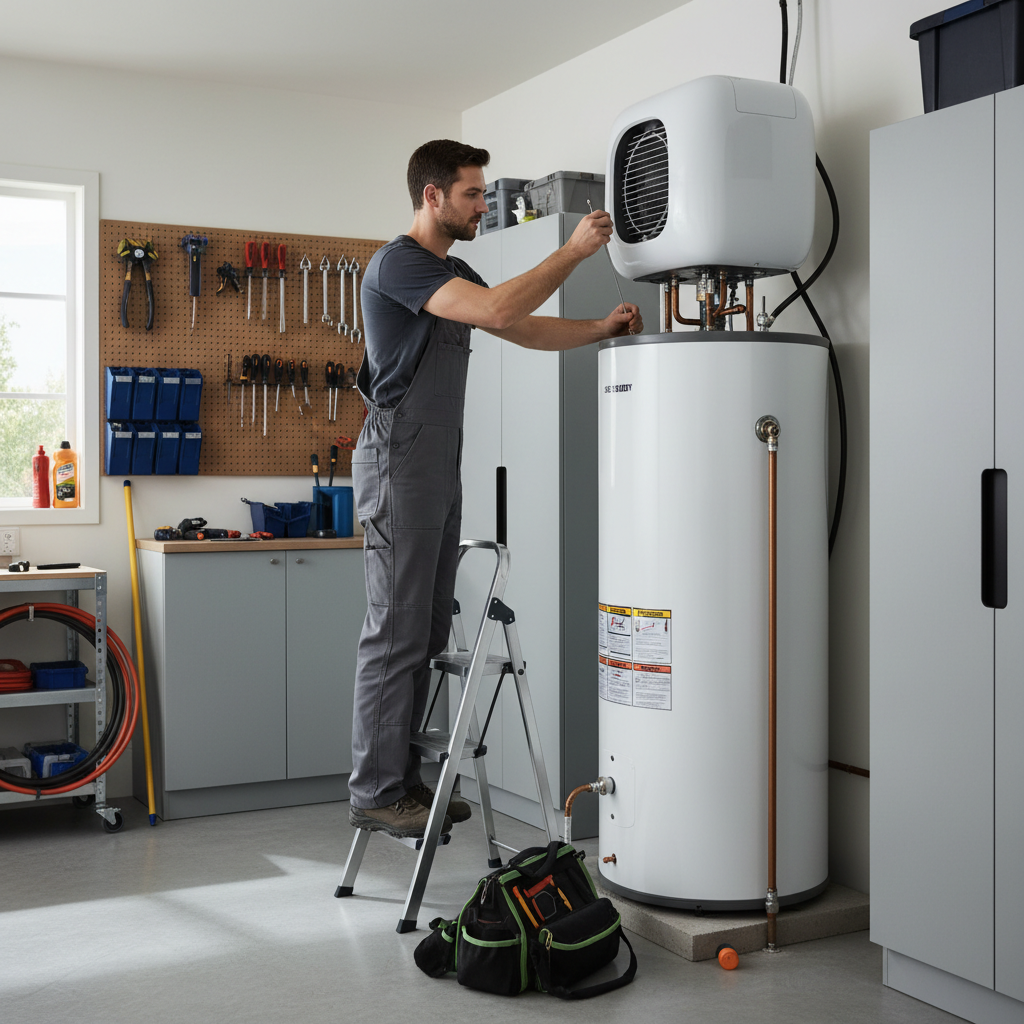
If you want to keep your softener and your heat pump, you must ditch the sacrificial magnesium rod. A powered (impressed current) anode rod is made of non-corrosive titanium and provides a constant protective charge to the tank walls.
- Stop the Smell: Powered anodes do not react with bacteria to produce sulfur odors.
- Permanent Protection: They don’t dissolve, meaning you never have to replace them.
- Warranty Preservation: By maintaining tank integrity, you ensure that if a component fails, the manufacturer can’t blame aggressive soft water damage.
Contrary to common wisdom, “soft” doesn’t mean “gentle.” In the Bay Area, our water is naturally moderately hard. When we strip those minerals out and replace them with salts, we create a chemical imbalance. You can learn more about local water quality at the EPA’s Drinking Water Standards page.
For more on maintaining your high-efficiency system, check out our guide on hybrid water heater maintenance.
How to Tell if Your Tank is Currently Failing
Most water softener corrosion happens silently. You won’t see a leak until the tank wall is paper-thin. However, there are warning signs that every homeowner should look for every six months.
- Discolored Hot Water: If your hot water looks slightly orange or rusty but the cold water is clear, your tank is oxidizing.
- Popping Sounds: While usually sediment, in softened systems, this can be the sound of the glass lining cracking under thermal stress.
- Short Hot Water Supply: Corrosion can damage the dip tube or the heat pump’s internal sensors.
What most people miss: The 2027 regulations will make gas heaters harder to get in the Bay Area. Transitioning to a heat pump is smart, but doing it without addressing your water chemistry is a recipe for financial disaster. We’ve seen dozens of tankless vs. heat pump debates, but the winner is always the unit that’s properly maintained.
Don’t Let Your Warranty Be Voided
The reality is that manufacturers are looking for any reason to deny a $3,000+ claim. Don’t give them the satisfaction of blaming your water softener. By installing a powered anode and performing annual flushes, you protect your investment and your peace of mind.
Ready to protect your heat pump? Contact Better Water Heaters today for a water chemistry audit and powered anode installation. Call us at (408) 250-6672 to speak with a Bay Area specialist who understands the local water challenges.
Frequently Asked Questions
Does a water softener really void my water heater warranty?
Technically, a softener itself doesn’t void the warranty, but the aggressive soft water damage it causes can. Most manufacturers state that water must be within certain pH and conductivity limits. If your softener is set too high, it creates an environment that leads to water softener corrosion, which is considered “improper maintenance” and is a common reason for claim denial.
How often should I check my anode rod if I have a softener?
If you are using a standard sacrificial magnesium or aluminum rod, you should check it every 12 months. In many Bay Area homes with softeners, we find these rods are 75% depleted within the first year. If the core wire is visible, the rod must be replaced immediately to prevent heat pump tank failure.
What is a powered anode rod and is it worth the cost?
A powered anode rod is a titanium device that uses a small amount of electricity to protect your tank from corrosion. Unlike sacrificial rods, it never needs to be replaced. For a $3,600 heat pump, the $200-$400 investment in a powered rod is significantly cheaper than replacing the entire unit after 5 years due to water softener corrosion.
Why are heat pump water heaters more susceptible to corrosion?
Heat pump or “hybrid” units often have different tank geometries and thinner internal linings to maximize heat transfer. Additionally, the electrical components and sensors in high-efficiency units can be more sensitive to the increased conductivity of softened water, leading to faster galvanic corrosion heat pump issues compared to traditional gas tanks.
Stop the scam before it stops your hot water. Your heat pump was a major investment—don’t let a $20 bag of salt destroy it.