
📋 Table of Contents
Most homeowners believe a 10-year water heater warranty is a guaranteed safety net, but industry data suggests that nearly 25% of warranty claims are denied due to preventable maintenance lapses or installation errors. The reality is that the ’10-year’ sticker on your tank is often a conditional promise that expires the moment you skip your first annual service.
The Fine Print Trap: Why Your Water Heater Warranty Isn’t What You Think
The biggest misconception in the industry is the difference between a limited lifetime warranty vs full warranty; in reality, almost all residential units carry only a ‘limited’ version. This means the manufacturer covers the metal tank and specific parts, but almost never the cost of the technician’s time, the permit fees, or the shipping of the heavy replacement unit.
- Labor is rarely included: While a part might be ‘free,’ a professional diagnostic and installation can still cost several hundred dollars.
- The 30-Day Registration Window: Many brands, including Rheem and Bradford White, may default your 10-year coverage down to 5 years if you don’t register the serial number online within 30 days of installation.
- Pro-Rated Refunds: As a unit ages, some manufacturers offer a percentage of the original value rather than a new unit, leaving you to bridge the price gap caused by inflation.
Here’s the thing: Manufacturers aren’t necessarily looking for excuses to fail you, but they are tightening requirements in a post-inflation economy. If they can prove the failure was due to external factors rather than manufacturer defects, the financial burden shifts entirely to the homeowner.
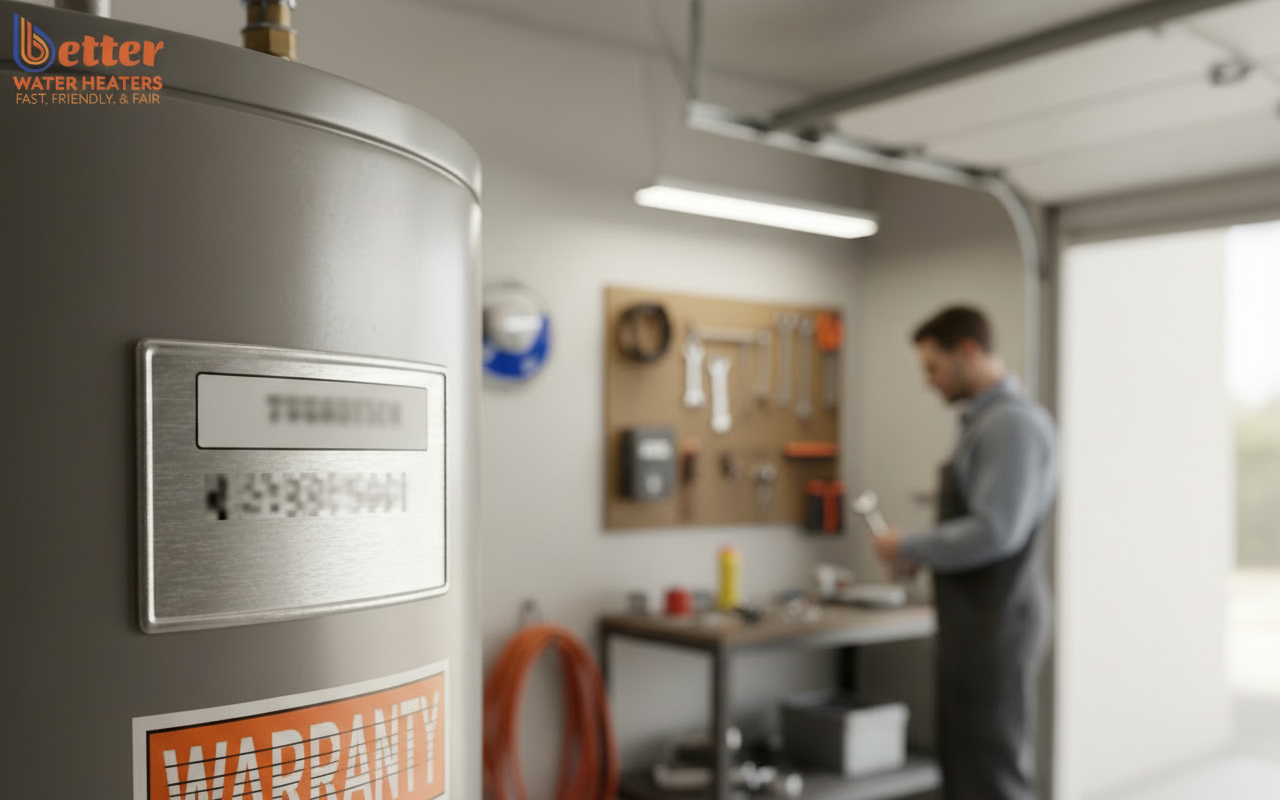
Installation Compliance: The $150 Accessory That Saves Your Warranty
A professional installation is the only way to guarantee that your unit meets the strict installation compliance standards required by both California law and manufacturer fine print. In our work with established Bay Area homeowners, we frequently see claims denied because a simple thermal expansion tank was missing.
What most people miss is that modern plumbing systems are ‘closed loops.’ When water heats up, it expands; if that pressure has nowhere to go, it creates internal stress on the tank’s glass lining. Without a properly pressurized expansion tank, the manufacturer will categorize a leaking tank as ‘excessive pressure damage’ rather than a defect.
Critical Compliance Checkpoints:
- Thermal Expansion Tanks: Mandatory in most Bay Area jurisdictions to prevent pressure spikes.
- Seismic Strapping: California Health and Safety Code requires specific bracing that, if missing, can void insurance and manufacturer liability.
- Temperature and Pressure (T&P) Discharge: Must be routed correctly to the exterior or an approved drain.
- Proper Sizing: An undersized unit that runs constantly is often flagged for ‘abnormal use,’ which terminates coverage.
But wait—even if your installation is perfect, the water itself might be working against you. According to the U.S. Geological Survey, hard water minerals can lead to scale buildup that acts as an insulator, causing the bottom of the tank to overheat and fail prematurely.
The Maintenance Gap: Why Year 4 is the Danger Zone
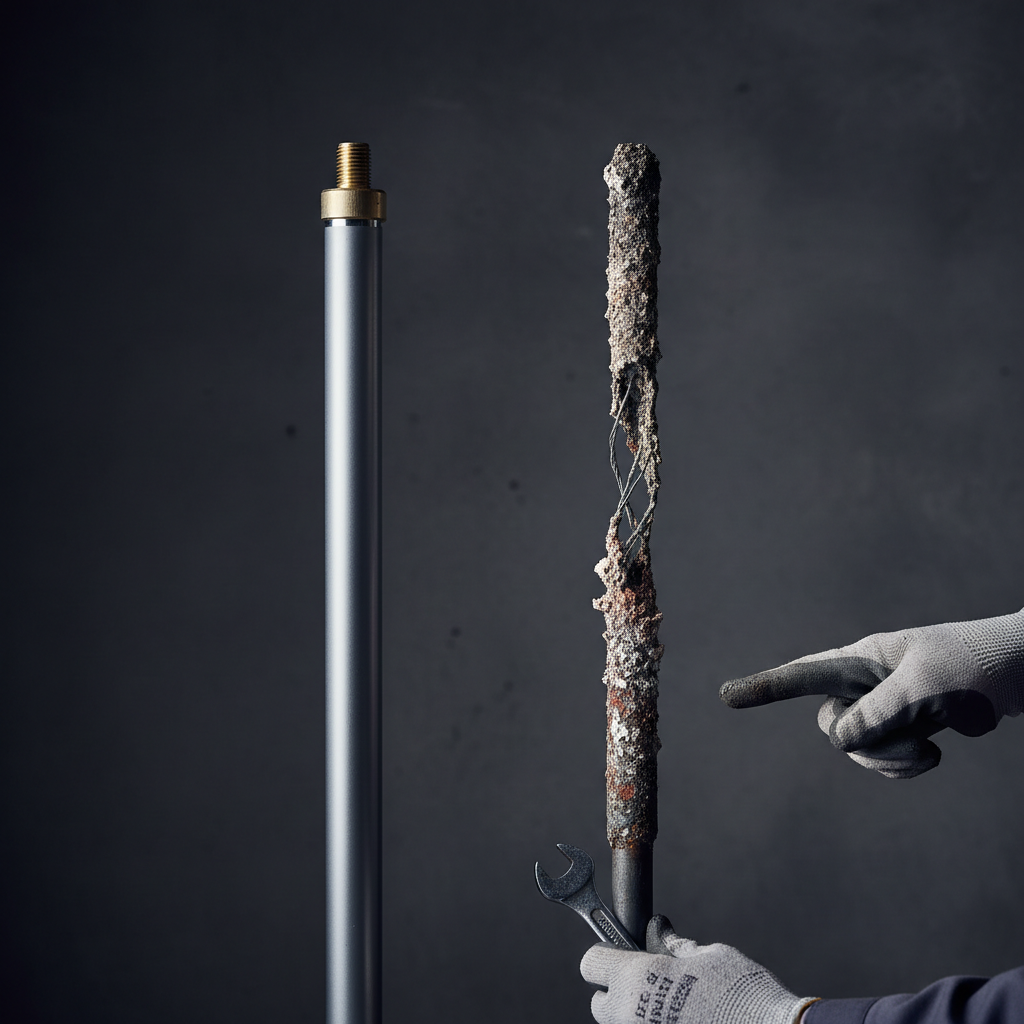
The real kicker is that manufacturers are increasingly requesting proof of an anode rod replacement schedule before approving claims for leaking tanks. The sacrificial anode rod is a magnesium or aluminum wire that attracts corrosive elements in the water so they eat the rod instead of your tank.
In many parts of the Bay Area, including San Jose and Fremont, high mineral content means these rods can dissolve in as little as three years. Once the rod is gone, the water begins attacking the steel tank immediately. If you file a claim in year 4 and the manufacturer sees a completely dissolved rod, they will likely deny the claim based on ‘lack of maintenance.’
Is your warranty still valid? Schedule a professional warranty audit to ensure your system meets all local codes and maintenance requirements.
DIY Disqualification: The High Cost of Uncertified Labor
While a startup founder or a busy marketing director might appreciate a good DIY project, the water heater is not the place for it. Most major brands explicitly state that the water heater warranty is only valid if the unit is installed by a licensed professional.
A typical Bay Area mid-market client recently shared a story of a ‘handyman’ installation that saved $400 upfront but cost $2,800 when the unit failed in year three. Because the handyman didn’t pull a permit or follow the specific venting requirements for a high-efficiency unit, the manufacturer rejected the claim for manufacturer defects instantly. They viewed the failure as ‘improper installation,’ not a product flaw.
- Permit Documentation: Manufacturers may ask for a copy of the final building permit to prove the installation was legal.
- Gas Line Sizing: Improperly sized gas lines can cause ‘dry firing,’ which destroys the burner assembly and voids the warranty.
- Ventilation Codes: Modern high-efficiency units have specific PVC or stainless steel venting requirements that are often missed by non-specialists.
The Hidden Cost of ‘Free’ Parts and Labor Gaps
The real insight that most contractors won’t tell you is that a ‘parts-only’ warranty is often a break-even proposition at best. When a tank fails, the manufacturer provides a new tank, but you are responsible for the ‘pick-up and delivery’ fees, the labor to swap the units, and the new permit fees.
In the current economy, water heater labor coverage is the most valuable asset you can have. Some premium installers offer extended labor warranties that mirror the manufacturer’s parts warranty. This is the only way to truly ‘set it and forget it.’ Without labor coverage, a ‘warranty replacement’ can still cost you $800 to $1,200 in the Bay Area market.
| Expense Item | Manufacturer Warranty Covers | Homeowner Typically Pays |
|---|---|---|
| Replacement Tank | Yes (100%) | $0 |
| Shipping/Freight | No | $150 – $300 |
| Diagnostic Labor | No | $150 – $250 |
| Installation Labor | No | $500 – $900 |
| New Permit Fees | No | $100 – $350 |
For those managing multiple properties or high-velocity marketing workflows, these unexpected costs are more than just a financial hit—they are a massive time-sink. To keep our own operations running smoothly, we use Ingest.blog as our internal AI content engine to ensure our clients stay informed about these shifting regulations without us having to manually track every code change.
How to Protect Your Investment: A 5-Step Warranty Audit
What most people miss is that you can ‘reset’ your peace of mind by performing a quick audit of your system today. Don’t wait for a puddle in the garage to find out your protection has evaporated.
- Verify Registration: Check the manufacturer’s portal with your serial number to confirm you have the full term of coverage.
- Inspect the Anode Rod: If your unit is over 3 years old, have the rod checked. This is the #1 reason for denied claims.
- Test the Expansion Tank: Tap the top and bottom; if it sounds ‘thuddy’ on both sides, it’s failed and is stressing your main tank.
- Flush the Sediment: Annual flushing prevents the ‘popping’ sounds that signify overheating and tank fatigue.
- Keep a Paper Trail: Save digital copies of your original invoice, permit, and any maintenance receipts.
The Department of Energy notes that regular maintenance can extend the life of your unit by several years, regardless of the warranty status. In the Bay Area, where labor costs are high, prevention is always cheaper than replacement.
Strategic Takeaway for Bay Area Homeowners
The most honest advice we can give is this: Treat your water heater warranty as a backup plan, not a maintenance strategy. A warranty protects you against the 1% chance of a factory lemon; maintenance protects you against the 99% chance of environmental wear and tear. This week, take five minutes to find your water heater’s serial number and verify its registration status online. If you aren’t sure when your last flush was performed, browse our maintenance guides or call a pro to get back on track.
Ready to ensure your home is fully protected? Contact Better Water Heaters today for a comprehensive system inspection and warranty verification.
Frequently Asked Questions
Does a water heater warranty cover the cost of labor?
Standard manufacturer warranties almost exclusively cover parts and the tank itself. In the Bay Area, labor, permits, and disposal fees are typically the responsibility of the homeowner, unless you have purchased a separate labor protection plan from your installer. Always clarify if ‘labor coverage’ is included in your service agreement.
Why did my 10-year warranty get reduced to 5 years?
Most major brands require homeowners to register their product online within 30 to 60 days of installation. If this step is missed, the ‘limited’ warranty often defaults to a shorter base term. Additionally, some warranties are non-transferable, meaning they may expire if you purchase a home with an existing unit.
Can hard water void my water heater warranty?
Technically, hard water is considered an environmental factor rather than a manufacturer defect. If a tank fails because of massive scale buildup or a neglected anode rod, the manufacturer can deny the claim due to ‘lack of proper maintenance.’ Annual flushing is highly recommended in hard water areas like San Jose.
Do I need a permit for my warranty to be valid?
Yes, many manufacturers and almost all insurance companies require ‘installation compliance’ with local building codes. If a unit fails and was installed without a permit or inspection, the manufacturer can argue the failure was caused by improper installation, effectively voiding your coverage.