Water heater article archive
Water Heater Tripping GFCI: Proven Diagnostics & Repairs
Historical article, not newly reviewed advice. Verify current requirements, incentives and model guidance with the relevant authority or manufacturer before relying on them. Equipment and service needs require an assessment.
📋 Table of Contents
Waking up to a freezing morning in San Jose only to find your water heater tripping GFCI protection is more than a minor inconvenience; it is a sophisticated safety signal. This electrical interruption often serves as the first line of defense against catastrophic tank failure or electrical fires. For Bay Area homeowners, understanding these electric water heater electrical issues is essential for maintaining both comfort and household safety.
Key Takeaways:
- A tripped GFCI is frequently caused by a microscopic breach in the heating element.
- Modern NEC 2023 code updates now require enhanced protection for 240V systems.
- Nuisance tripping in hybrid heat pump models often stems from high-sensitivity control boards.
- Professional diagnostics can prevent expensive water damage before a leak becomes visible.
Why Your Water Heater Tripping GFCI is a 'Ghost in the Machine'
Many homeowners report the frustrating phenomenon of a water heater that only trips the breaker at 3 AM. This isn't a coincidence; it occurs during the heavy reheat cycle when the electrical demand is at its peak. As the metal heating element expands under high temperatures, microscopic cracks can open, allowing water to touch the live electrical filament.
According to the Electrical Safety Foundation International, ground faults are a leading cause of residential electrical hazards. When your water heater tripping GFCI occurs, the outlet is detecting a current leakage as small as 5 milliamperes. This sensitivity is designed to protect you from lethal shocks, especially in damp garage or basement environments common in San Mateo and Alameda counties.
- Thermal Expansion: Micro-cracks in the element sheath expand only when hot.
- Cycle Timing: Reheat cycles often trigger faults that remain dormant during standby.
- Moisture Accumulation: High humidity in Bay Area utility closets can cause external terminal arcing.
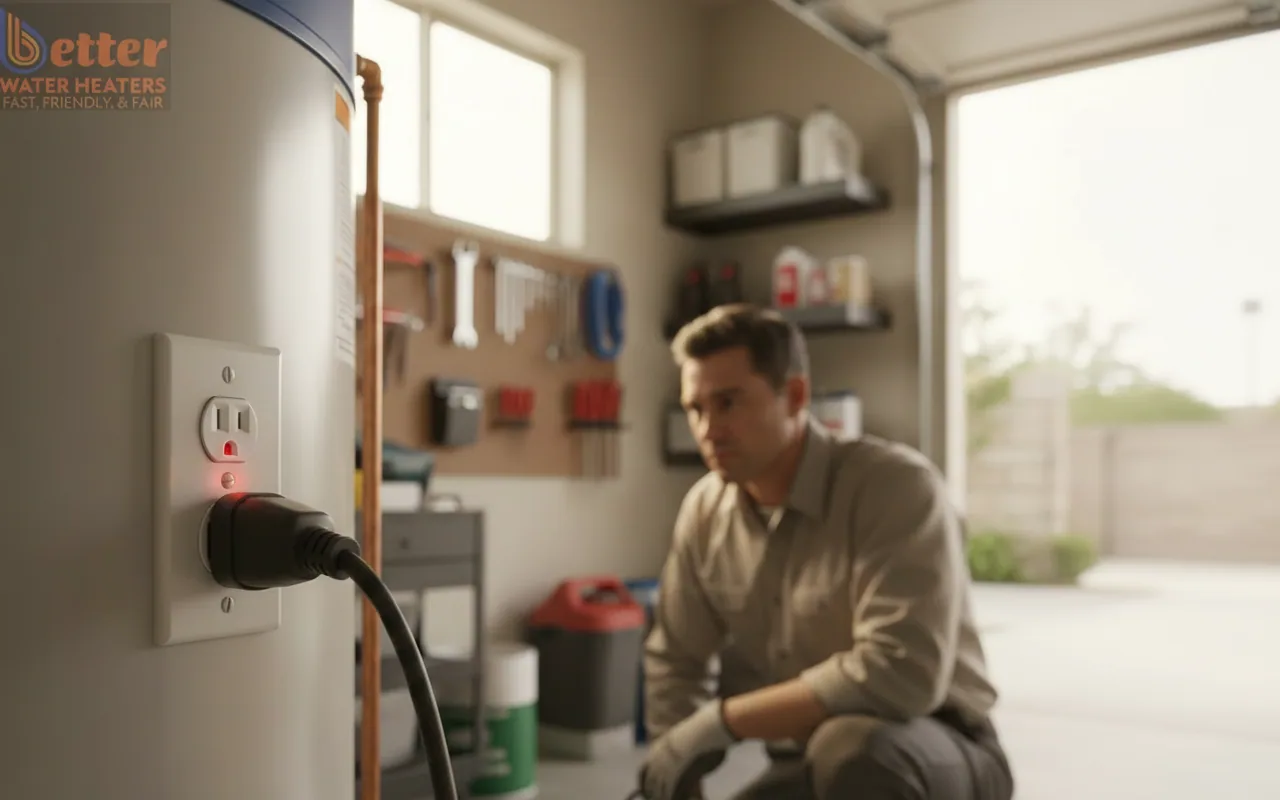
The Diagnostic Flowchart: Element vs. Outlet Roulette
Before assuming you need a total replacement, it is vital to distinguish between a faulty $20 GFCI outlet and a failing $500 heating element. A sediment-induced short circuit is often the culprit in older homes where hard water minerals have calcified around the lower heating element. This creates a 'hot spot' that eventually melts the protective insulation.
To determine the source of the fault, professionals perform a heating element continuity test. If the element shows continuity to the ground, the internal seal has failed. Conversely, if the heater passes all tests but the outlet still pops, the GFCI itself may have reached the end of its 10-year lifespan.
- Disconnect power and check for visible leaking heating element gaskets.
- Use a multimeter to check for resistance between the element terminals and the tank body.
- Inspect the wiring for signs of 'dry fire' damage or melted wire nuts.
If you are tired of playing 'breaker roulette' with your morning shower, schedule a professional diagnostic with our Bay Area specialists today.
Technical Comparison: Tank vs. Hybrid GFCI Requirements
As we transition toward high-efficiency models, many Bay Area residents are installing heat pump water heaters. However, the NEC 2023 code updates have introduced new complexities regarding GFCI protection for 240V appliances. These modern units often feature variable-speed compressors that can cause 'nuisance tripping' on older, overly sensitive breakers.
| Feature | Standard Electric Tank | Heat Pump (Hybrid) | Tankless Electric |
|---|---|---|---|
| Typical Voltage | 240V | 240V | 240V (Multiple Breakers) | GFCI Sensitivity | Standard (5mA) | High (Requires Class A) | Variable | Common Fault Root | Element Corrosion | Control Board/Compressor | Inrush Current |
Transitioning to hybrid systems requires a deep understanding of local San Francisco and San Jose electrical codes. If your contractor doesn't account for the increased sensitivity of modern control boards, you may face chronic water heater tripping GFCI issues shortly after installation.

The Hidden Danger of the Water Heater Safety Switch Reset
While it is tempting to simply hit the water heater safety switch reset and go about your day, doing so repeatedly is dangerous. A 'safety switch' or ECO (Energy Cut Off) trips because the water temperature has exceeded 180°F, usually due to a stuck thermostat. If the GFCI is also tripping, you likely have a combined electrical and mechanical failure.
Continually resetting a tripped breaker without addressing the electric water heater electrical issues can lead to 'dry fire' damage. This occurs when the element is energized without being fully submerged, leading to an immediate meltdown of the component. This is not just a repair issue; it's a significant fire risk for your property.
- Warning Sign: The reset button feels 'mushy' or won't stay depressed.
- Risk: Potential for electrical arcing inside the junction box.
- Action: Turn off the dedicated breaker and call a water heater specialist immediately.
Need immediate assistance with a stubborn breaker? Call Better Water Heaters at (408) 686-4969 for same-day expert service across the Bay Area.
Environmental Impact: Hard Water and Efficiency Loss
In many parts of the Bay Area, hard water is the silent killer of electric appliances. Mineral buildup causes the heating element to work harder, increasing the internal temperature of the wire. This stress leads to sediment-induced short circuits that trigger the GFCI. According to Energy.gov, sediment buildup can reduce water heating efficiency by as much as 15%.
By addressing a water heater tripping GFCI early, you aren't just fixing a circuit; you are restoring the energy efficiency of your home. Regular maintenance, including tank flushing and anode rod inspection, can prevent the 'tank breach' that ultimately causes these electrical faults.
- Flush your tank annually to remove conductive sediment.
- Inspect the anode rod every 2-3 years to prevent internal corrosion.
- Ensure all electrical connections are torqued to manufacturer specifications.
Conclusion: Don't Ignore the Warning Signs
A water heater tripping GFCI is your system's way of communicating a critical failure. Whether it is a simple $20 outlet replacement or a failing heating element, ignoring the 'ghost in the machine' can lead to property damage or electrical hazards. For homeowners in San Jose, Fremont, and Redwood City, keeping your hot water running safely requires a blend of plumbing expertise and electrical precision.
Don't wait for a cold morning to find out your system is failing. Contact Better Water Heaters today for a comprehensive safety inspection and maximize your home's reliability and efficiency.
Frequently Asked Questions
Why does my water heater trip the GFCI only after a long shower?
This usually indicates a failing heating element. As the element stays energized for an extended period to recover the water temperature, it expands. This thermal expansion allows water to enter microscopic cracks in the element's protective sheath, creating a ground fault that the GFCI detects and interrupts for your safety.
Is it safe to replace a GFCI breaker with a standard one?
No, this is a violation of the National Electrical Code (NEC) and poses a significant safety risk. GFCI protection is required in areas where moisture is present, such as garages and basements. Removing this protection could lead to lethal electric shocks if the water heater develops an internal short circuit.
Can hard water cause my electric water heater to trip the breaker?
Yes, hard water leads to sediment buildup. When sediment covers the lower heating element, it creates excessive heat, which can melt the element's insulation. This results in a sediment-induced short circuit. Regular tank flushing is the best way to prevent this specific electrical issue from occurring in Bay Area homes.
How do I know if the GFCI outlet itself is bad?
If the GFCI trips even when the water heater is completely disconnected from the circuit, the outlet or the wiring leading to it is likely faulty. GFCIs have a lifespan of roughly 10 years. If yours is older, it may suffer from 'nuisance tripping' due to internal component degradation rather than an actual water heater fault.