
📋 Table of Contents
According to the International Association of Certified Home Inspectors, standard tank water heaters have a predicted life expectancy of 10 to 12 years. In the high-cost environment of the San Francisco Bay Area, hitting that 12-year mark isn’t just a maintenance milestone—it’s a financial crossroads where water heater repair vs replace decisions can cost or save you thousands.
Key Takeaways for Bay Area Homeowners:
- The 12-year mark is often the ‘insurance cliff’ where providers may deny water damage claims.
- Hard water in San Jose and East Bay cities accelerates internal tank corrosion significantly.
- Current TECH Clean California incentives can provide up to $4,900 for high-efficiency upgrades.
- Proactive replacement avoids the ‘Sunday Night’ emergency premium common in San Francisco.
The 12-Year Threshold: Why Bay Area Homes Face an ‘Insurance Cliff’
The real kicker is that your water heater might look perfectly fine on the outside while the internal lining is structurally compromised. Most major insurance carriers now flag water heaters older than 10 years as high-risk assets, often requiring replacement to maintain full water damage coverage.
Here’s the thing about appliance longevity: in a region where real estate values are among the highest in the world, a $150 repair on a 12-year-old unit is often a ‘ghost tax’ on your future self. We frequently see homeowners in San Mateo or Palo Alto spend money on a new heating element, only to have the tank fail three months later, resulting in a $20,000 flooring claim that insurance refuses to cover because the unit was past its useful life.
- Liability Risk: Older tanks are prone to sudden seam failure.
- Premium Spikes: Some providers increase deductibles for homes with ‘aged’ appliances.
- Coverage Denial: Read your policy’s fine print regarding ‘seepage and leakage’ exclusions for units over a decade old.
Hard Water and Microclimates: The Local Wear Pattern
The water heater replacement timeline isn’t a suggestion; it’s a reflection of local chemistry. In San Jose and parts of the East Bay, the high mineral content leads to rapid scale buildup that acts as an insulator, forcing your burner to work twice as hard to heat the same amount of water.
- San Jose/South Bay: High calcium levels lead to ‘popping’ sounds (sediment boiling).
- Pacifica/Coastal: Salt air accelerates exterior corrosion of fittings and venting.
- San Francisco: Older plumbing systems often lack pressure-reducing valves, putting constant stress on tank seams.
Strategic Replacement vs. Throwing Good Money After Bad
What most people miss is that the cost of a 12-year-old gas unit repair is often 25% of the cost of a brand-new, high-efficiency system after rebates. If you are debating water heater repair vs replace, you have to look at the total cost of ownership over the next five years, not just the invoice on your desk today.
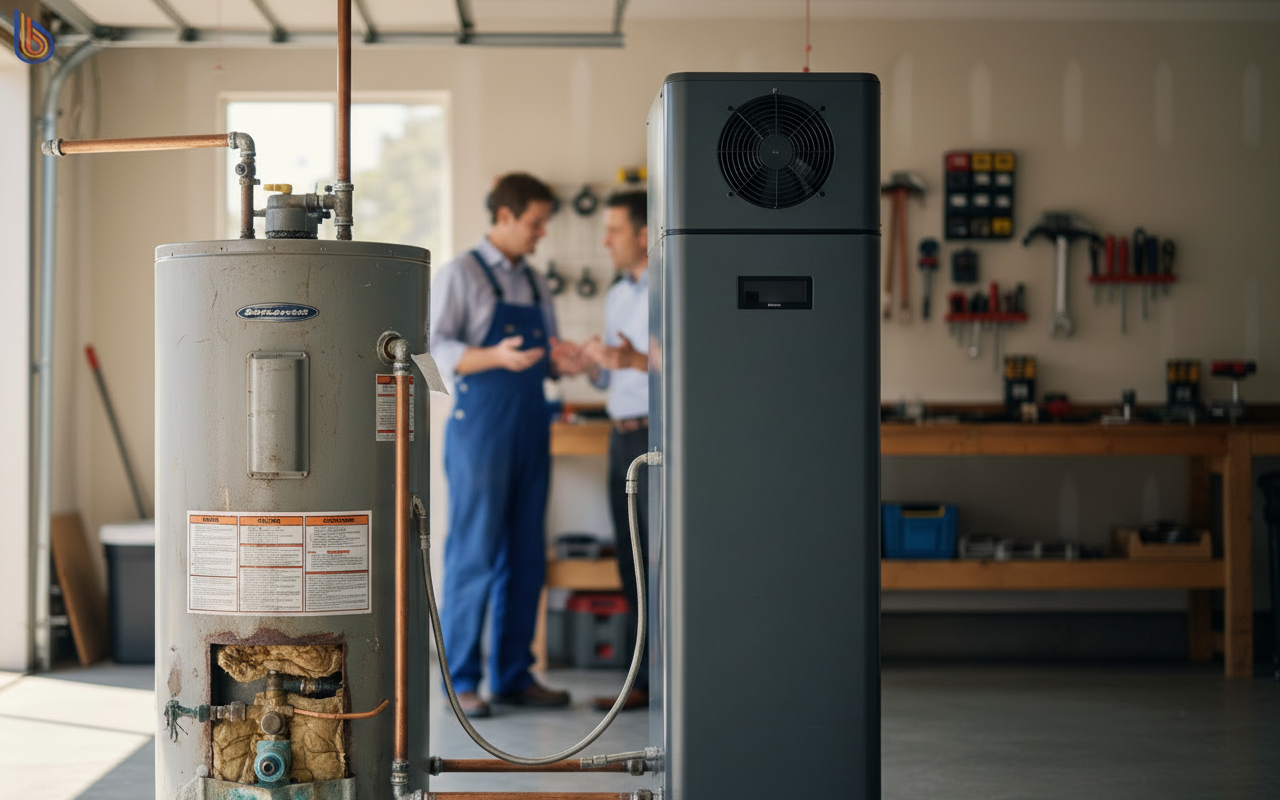
In our work with established homeowners in the Peninsula, we’ve found that those who wait for a total failure pay roughly 30% more due to emergency labor rates and the inability to shop for rebates. According to Energy.gov, water heating is the second largest energy expense in most homes, accounting for roughly 18% of your utility bill. Transitioning to a heat pump model during a planned window allows you to capture Bay Area heat pump water heater rebates that simply aren’t accessible during a 2:00 AM emergency swap.
But wait—is a repair ever the right move? If your unit is under 8 years old and the issue is a simple thermocouple or a sacrificial anode rod replacement, repair is almost always the winner. However, once you cross that 12-year line, you’re essentially maintaining a ‘zombie’ appliance that is costing you double in PG&E rates.
Need a professional eyes-on assessment? Schedule a diagnostic visit before the next Bay Area cold snap hits.
The Financial Strategy: Leveraging SB 1414 and Local Incentives
California’s SB 1414 compliance and the shift toward zero-NOx water heaters by 2027 mean the landscape for gas units is changing fast. If you replace your unit today, you are essentially ‘future-proofing’ your home against upcoming Title 24 water heater requirements 2024 updates.
| Factor | 12-Year-Old Gas Tank | New Heat Pump System |
|---|---|---|
| Annual Energy Cost | $600 – $800 (Est.) | $150 – $250 (Est.) |
| Available Rebates | $0 | Up to $4,900 |
| Expected Lifespan | 0-2 Years | 10-15 Years |
The real insight here? Most homeowners think they are saving money by ‘milking’ an old unit, but they are actually forfeiting thousands in state-sponsored ‘free money.’ Programs like TECH Clean California and Peninsula Clean Energy are aggressively funding the transition to electric. If your 12-year-old gas unit dies on a Sunday, you’ll likely buy whatever gas unit is on the truck just to get hot water back, completely missing out on these incentives.
Diagnostic Checklist: Is Your Unit a Candidate for a Last Service?
Before you commit to a water heater repair vs replace path, run through this risk assessment. We use a similar framework when advising property managers who handle multiple units across Oakland and Fremont.
- The Anode Test: When was the last time you performed an anode rod replacement? If never, and the unit is 10+ years old, the internal tank is likely already pitted.
- The Sound Check: Does your tank rumble or pop? This indicates heavy sediment buildup in San Jose homes that a simple water heater sediment flush San Jose might no longer fix.
- The Visual Inspection: Look for ‘rusty’ water or dampness around the base. If there is moisture on the floor, the internal glass lining has likely cracked.
At Better Water Heaters, we often tell clients that if the repair cost exceeds 50% of the replacement cost—and the unit is over 10 years old—replacement is the only logical move. For a 12-year-old unit, that threshold drops to 30%.
Emergency vs. Strategic Replacement: Avoiding the ‘Sunday Night’ Premium
There is a massive difference between a ‘Strategic Replacement’ and an ‘Emergency Replacement.’ In San Francisco, where parking and building access are notoriously difficult, an emergency call-out can carry a significant premium. By planning your water heater replacement timeline, you maintain the power of choice.
Strategic replacement allows you to:
1. Properly size the unit for your current household needs.
2. Upgrade electrical panels if moving to a heat pump.
3. Ensure all Title 24 water heater requirements 2024 permits are handled without rushing.
4. Research the best brands like Rheem or Bradford White rather than taking ‘whatever is in stock.’
Don’t wait for a flood. Get a free quote today and see how much you can save with current Bay Area rebates.
Conclusion: Your Monday Morning Action Plan
The 12-year threshold isn’t just about a mechanical failure; it’s about financial liability and missed opportunity. If your unit was installed before 2012, your first task this week is to find the manufacture date on the serial number. If you’re in that ‘red zone,’ call a specialist to discuss the tankless water heater retrofit cost or heat pump options. Staying ahead of the curve is the only way to ensure your home remains efficient, insured, and—most importantly—supplied with hot water.
Frequently Asked Questions
How do I know if I should repair or replace my 12-year-old water heater?
If the repair cost is more than 30% of a new unit and the tank is 12 years or older, replacement is usually the better financial move. At this age, the internal tank lining is reaching the end of its life, and further repairs are likely ‘throwing good money after bad’ given the risk of catastrophic failure.
What are the current Bay Area heat pump water heater rebates for 2024?
Homeowners can access up to $4,900 in total incentives through programs like TECH Clean California, local utility rebates (such as Peninsula Clean Energy or SVCE), and federal tax credits. These incentives are designed to make the transition from gas to high-efficiency electric nearly cost-neutral in many scenarios.
Why does my home insurance care about a 10-year-old water heater?
Insurance companies view water heaters over 10 years old as a primary source of preventable water damage claims. Many providers in the Bay Area are now implementing ‘age-out’ clauses where they may deny coverage or increase premiums if a unit past its 10-12 year life expectancy causes a flood.
Is a tankless water heater a better option for a 12-year-old replacement?
Tankless units offer significantly longer appliance longevity (20+ years) compared to tanks. While the tankless water heater retrofit cost is higher upfront, the long-term energy savings and space-saving benefits make them a popular choice for San Francisco and Peninsula homes with limited utility space.