
📋 Table of Contents
According to the U.S. Department of Energy, water heating is the second largest energy expense in most homes, accounting for roughly 18% of your utility bills. In the Bay Area, where hard water and seismic requirements add unique layers of complexity, a water heater reliability audit isn’t just a suggestion—it’s a financial safeguard for your home.
Most homeowners ignore their water heater until the morning they step into a freezing shower. But for units in the 6-to-10-year “mid-life” range, the difference between a $50 maintenance fix and a $4,000 emergency replacement is often just a few months of neglect. This guide provides a strategic framework to evaluate your system before the floor gets wet.
Quadrant 1: Internal Chemical Integrity and Anode Rod Inspection
The single most important component standing between your tank and a catastrophic leak is a sacrificial piece of metal called the anode rod. Think of it as the “lightning rod” for corrosion; it is designed to rust so your tank doesn’t have to.
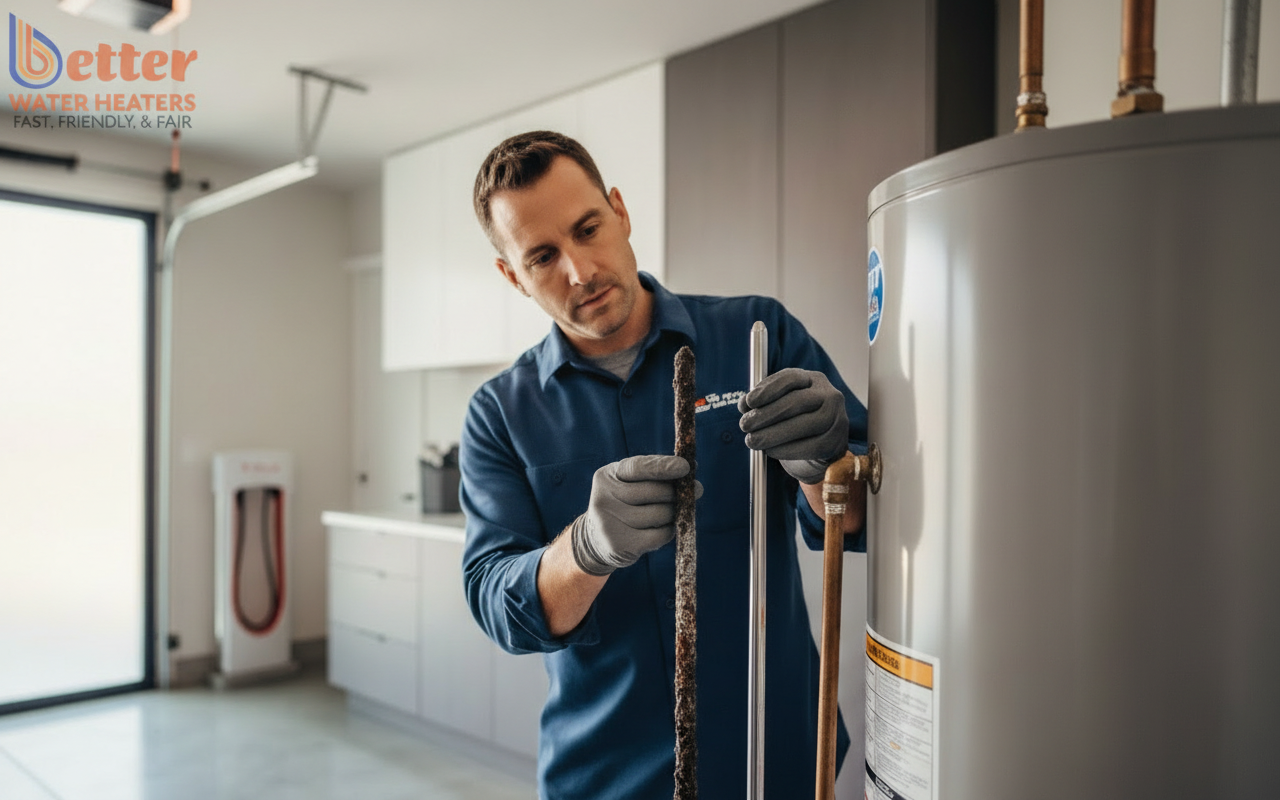
What most people miss: In the Bay Area, water chemistry varies wildly between the Hetch Hetchy-fed lines in San Francisco and the groundwater-heavy supplies in parts of the South Bay. This variance significantly impacts how fast your anode rod dissolves. A standard anode rod inspection should be performed every 2-3 years, but once you hit the 6-year mark, it becomes critical.
- The Rod Status: If the rod is more than 50% depleted, your tank’s steel lining is now the primary target for minerals.
- Water Quality Impact: Softened water actually accelerates anode rod depletion, a common surprise for homeowners with whole-house filtration.
- The Replacement ROI: Spending roughly $200-$300 on a professional anode rod replacement can legitimately double the lifespan of a mid-life tank.
Quadrant 2: Identifying Sediment Buildup Symptoms
Sediment is the silent killer of efficiency, acting as a thermal barrier between the burner and the water it’s trying to heat. When you hear that popping or rumbling sound—often called “kettling”—you aren’t just hearing noise; you’re hearing your tank struggle to breathe.
Common sediment buildup symptoms include:
- Popping or Gurgling: Steam bubbles escaping through a thick layer of calcium and magnesium at the bottom of the tank.
- Slow Recovery Time: Taking significantly longer to get hot water after one person showers.
- High Energy Bills: Your unit running longer to achieve the same temperature because it has to heat through inches of “rock” first.
The real kicker? In areas like San Jose or Fremont, where water hardness is higher than the national average, sediment can accumulate at twice the expected rate. If you’re noticing these signs, it’s time for a professional flush. Need an expert eye? Schedule your free estimate with Better Water Heaters today.
Quadrant 3: Decarbonization Readiness and Efficiency Audit
We are currently seeing a massive shift in California’s energy landscape, particularly with the upcoming 2027 zero-NOx requirements from the Bay Area Air Quality Management District. Your mid-life audit must look forward, not just backward.
A modern water heater efficiency audit asks: Is your current gas infrastructure holding you back from $4,900 in rebates? Transitioning to a Heat Pump Water Heater (HPWH) is the most effective way to future-proof your home. In our work with tech-forward homeowners in Palo Alto and Mountain View, we’ve found that mid-life is the perfect time to plan this transition before an emergency forces a “like-for-like” gas replacement.
| Feature | Standard Gas Tank | Heat Pump (HPWH) |
|---|---|---|
| Annual Operating Cost | $500 – $700 | $150 – $200 |
| Bay Area Rebates | Minimal | Up to $4,900+ |
| Environmental Impact | High Carbon | Zero Local Emissions |
Quadrant 4: Seismic Safety and Physical Vulnerabilities
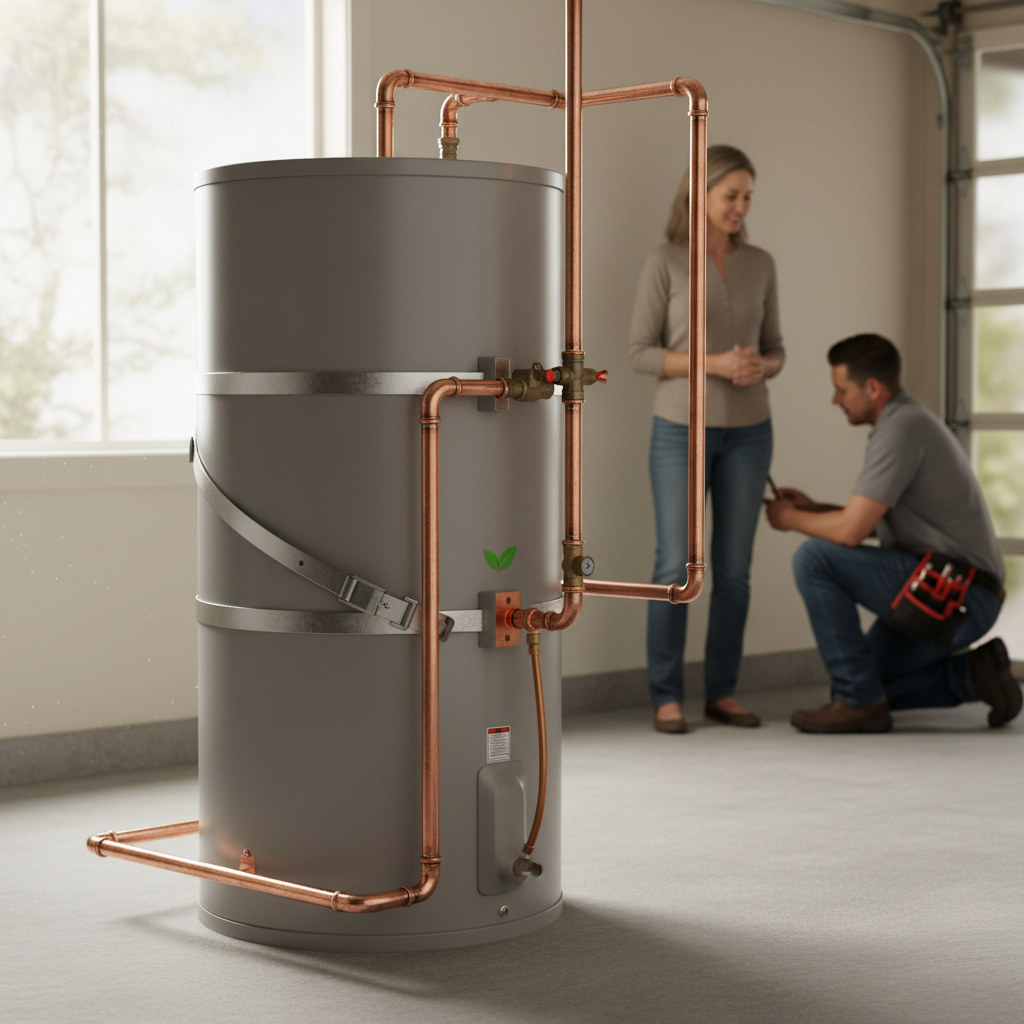
Living in the Bay Area means seismic safety isn’t an option—it’s the law. During a water heater reliability audit, we often find that straps installed ten years ago have loosened or were never anchored to studs correctly.
Here’s the thing: A water heater is often the heaviest appliance in your home, containing 400-500 pounds of water. If it tips during a tremor, it doesn’t just break the unit; it can rupture gas lines or flood your subfloor. We check for:
- Double Strapping: Ensuring straps are located in the upper and lower one-third of the unit.
- Flexible Connectors: Verifying that gas and water lines have enough “give” to move during an earthquake without snapping.
- Expansion Tanks: Checking if your closed-loop system has a functional expansion tank to prevent pressure spikes.
But wait—don’t just check the straps. Look for “weeping” at the Temperature and Pressure (T&P) relief valve. If you see crusty white deposits, the valve is failing or your tank is over-pressurizing. This is a primary indicator that your system is nearing the end of its reliable life.
The Mid-Life Decision: Repair vs. Electrify
What most people miss is that the “repair” cost of a 9-year-old unit often represents 25% of the cost of a new, highly efficient system. If your audit reveals significant sediment and a depleted anode rod, you are at a crossroads.
For a typical Bay Area mid-market client, we often recommend looking at California heat pump water heater rebates. Programs like TECH Clean California and local utility incentives can bring the net cost of a premium heat pump system down to near-parity with a standard gas installation. It’s an honest, contrarian insight: sometimes the most “reliable” thing you can do for a 9-year-old heater is to replace it before it chooses the replacement date for you.
Ready to see where your system stands? Contact Better Water Heaters for a professional assessment. We handle the permits, the rebates, and the heavy lifting.
Conclusion: Your 7-Day Reliability Action Plan
Don’t let your water heater become a Monday morning crisis. This week, take ten minutes to walk into your garage or utility closet and perform these three steps:
- Listen for the “kettling” popping sounds while the burner is active.
- Check the manufacture date on the serial number—if it’s 2016 or earlier, you’re in the danger zone.
- Look for any moisture or rust at the base of the tank.
If you find any red flags, reach out to a specialist who understands the specific codes and rebate structures of the Bay Area. At Better Water Heaters, we’ve spent 20 years helping neighbors make these exact decisions with transparency and expertise.
Frequently Asked Questions
How much does a professional water heater reliability audit cost?
A professional audit typically costs between $150 and $250, but many specialists (including Better Water Heaters) may apply this fee toward any necessary repairs or replacements. It is a small price to pay to avoid the thousands of dollars in water damage caused by a sudden tank failure.
Can I perform an anode rod inspection myself?
While DIY-savvy homeowners can technically inspect a rod, it requires specialized tools (like a 1-1/16 inch deep socket and a breaker bar) and the ability to safely shut off water and power. Given the risk of stripping the threads or causing a leak, most Bay Area homeowners prefer professional service to ensure the tank remains pressurized correctly.
What are the most common sediment buildup symptoms?
The most frequent symptoms include popping or knocking noises during heating cycles, a noticeable decrease in hot water volume, and cloudy or foul-smelling water. If you notice your energy bills creeping up without a change in usage, sediment is likely forcing your heater to work harder and longer.
Are there specific rebates for Bay Area residents replacing old heaters?
Yes, Bay Area residents have access to some of the best incentives in the country. Between federal tax credits (up to $2,000), TECH Clean California rebates (up to $3,100), and local utility programs from providers like Peninsula Clean Energy or Silicon Valley Clean Energy, total savings can exceed $4,900 for qualifying heat pump installations.