
📋 Table of Contents
According to the Bay Area Air Quality Management District (BAAQMD), water heaters account for roughly 90% of nitrogen oxide emissions from residential buildings, leading to the landmark 2027 phase-out of gas models. If you’re a homeowner in San Francisco or the Peninsula, water heater permitting isn’t just a bureaucratic hurdle—it is the legal safeguard that ensures your high-value property remains insurable and compliant with California’s aggressive electrification mandates.
Key Takeaways for Bay Area Homeowners
- Permits are mandatory for all replacements, including emergency 2 AM tank failures.
- Closing your permit is the only way to unlock up to $4,900 in TECH Clean California and Peninsula Clean Energy rebates.
- San Francisco’s Department of Building Inspection (DBI) now utilizes an Electronic Permit Submittal (EPS) system to expedite heat pump installations.
- Skipping a permit can lead to insurance claim denials during resale or in the event of water damage.
1. The Pre-Installation Audit and SF Plumbing Permits
The real kicker about Bay Area installations is that the work starts long before a wrench touches a pipe. For a typical Bay Area mid-market home, especially those built before 1970, the transition to a heat pump requires an immediate assessment of your electrical service panel. SF plumbing permits often require a secondary electrical sub-permit if you are upgrading from gas to electric, as most older homes lack the 240V circuit necessary for modern efficiency.
What most people miss is that Bay Area building codes are increasingly focused on Title 24 compliance, which dictates everything from pipe insulation thickness to the placement of expansion tanks. Here’s what we look for during the audit phase:
- Electrical Capacity: Does your panel have room for a 30-amp breaker?
- Space & Ventilation: Heat pumps need roughly 700-1,000 cubic feet of air to operate efficiently.
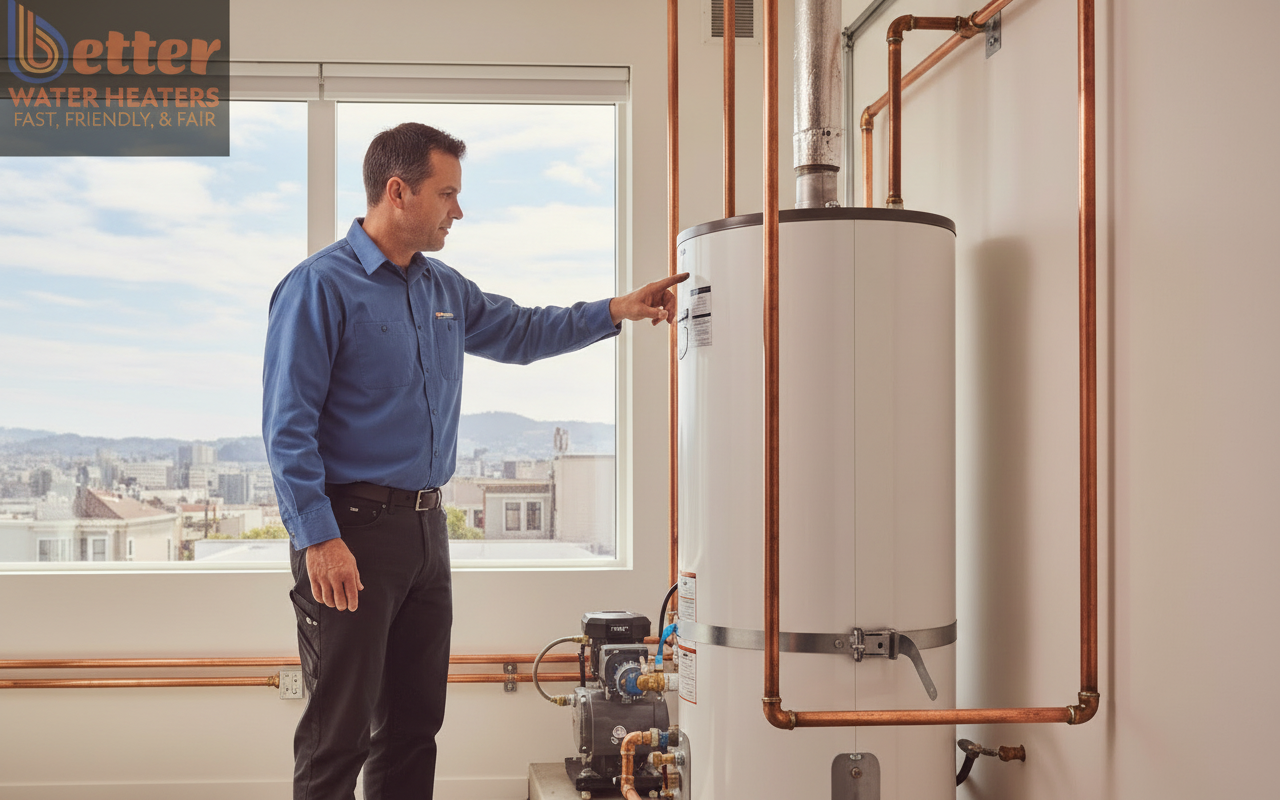
- Seismic Safety: California code requires double-strapping in the upper and lower third of the tank.
2. Navigating the Digital Filing Process
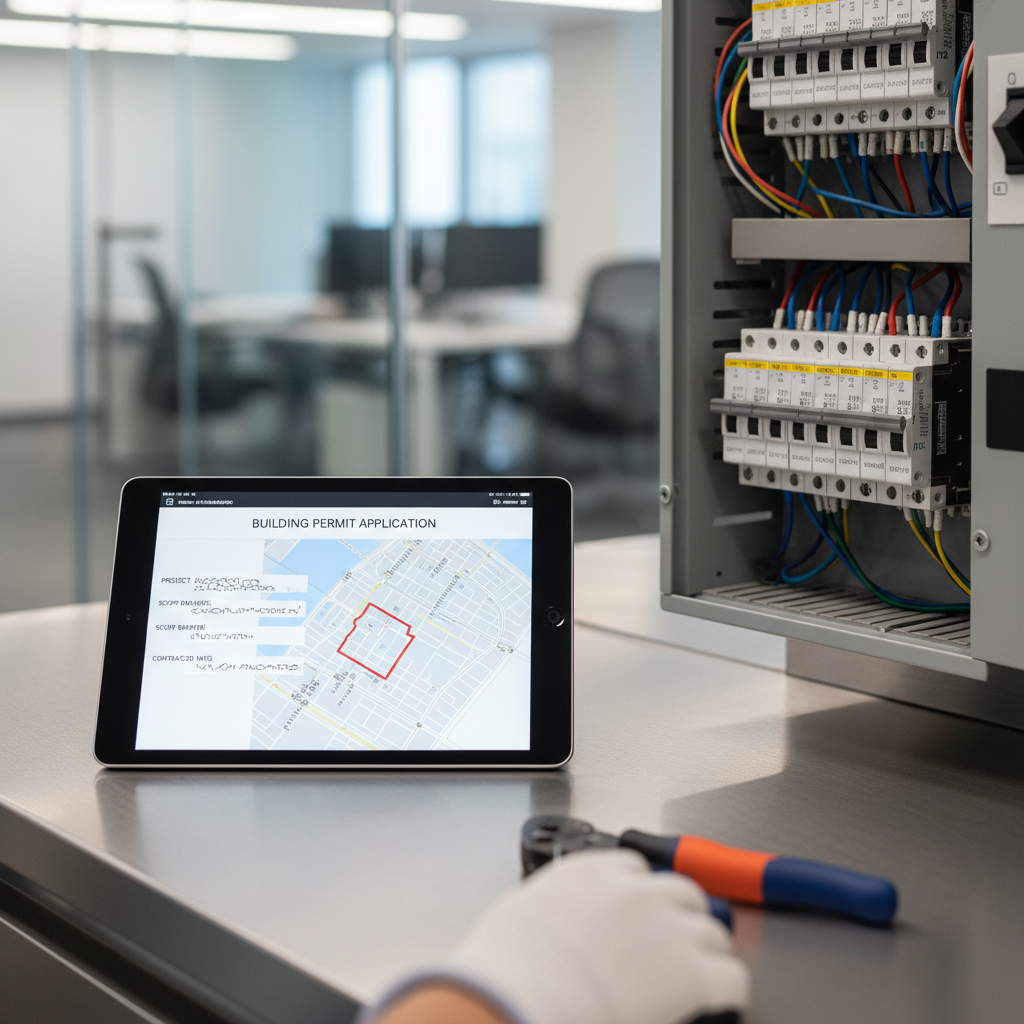
Here is the thing: every municipality in the Peninsula handles paperwork differently, creating a fragmented landscape for homeowners. While San Francisco uses the DBI Electronic Permit Submittal (EPS) system, cities like Palo Alto or Menlo Park have their own specific portals and fee structures. Understanding water heater permitting means knowing which jurisdiction’s rules apply to your specific street address.
The San Francisco DBI plumbing permit process has been streamlined recently to support the city’s all-electric building mandates. However, you must still provide a detailed floor plan for heat pump installations to prove adequate clearance. In our work with established homeowners in San Mateo County, we’ve found that documenting the existing venting system is critical for a smooth approval. You can check current local rebate requirements to ensure your filing matches the incentive criteria.
Pro-Tip: If your tank bursts in the middle of the night, California law allows for “emergency replacement.” You can install the unit immediately, provided you file the permit within the next business day. This prevents you from being stuck without hot water while waiting for a clerk to process your application.
Need help navigating the SF permit maze? Schedule a free consultation with our specialists today.
3. Installation and Title 24 Water Heater Compliance
An honest, contrarian insight we often share: many contractors will tell you that permits are just a “money grab” by the city. This is dangerously wrong. In the high-stakes world of SF real estate, an unpermitted water heater is a massive liability during the due diligence phase of a home sale. Furthermore, Title 24 water heater compliance ensures your unit isn’t just running, but running at the efficiency levels promised by the manufacturer.
During the installation stage, our team focuses on three critical compliance areas:
- Pressure Temperature Relief (PTR) Valve: Must be piped to a safe, visible discharge point outside or to a floor drain.
- Thermal Expansion Tank: Required in closed-loop systems to prevent pipe bursts.
- Condensate Management: Heat pumps produce moisture; this must be drained according to local Peninsula water heater code inspection standards.
We utilize Ingest.blog as our internal AI content engine to track shifting regulations across 15 different Bay Area building departments, ensuring our technicians are always up to date on BAAQMD water heater regulations 2024.
4. The Final Inspection and Rebate Redemption
But wait—the job isn’t done when the water gets hot. The final stage of water heater permitting is the onsite inspection by a city official. In San Francisco and the Peninsula, inspectors are specifically looking for seismic bracing and proper electrical grounding. A typical Bay Area homeowner might feel intimidated by this, but a professional installer handles the walkthrough for you.
| Requirement | Standard Gas Tank | Heat Pump (HPWH) |
|---|---|---|
| Permit Type | Plumbing Only | Plumbing + Electrical |
| BAAQMD Compliance | Ultra-Low NOx | Zero Emissions |
| Avg. Permit Fee | $150 – $300 | $250 – $500 |
Closing the permit is the “golden ticket” for your finances. Programs like TECH Clean California and Peninsula Clean Energy require a signed-off permit to release rebate funds. Without that final city signature, you could be leaving up to $4,900 on the table. We’ve seen many residents miss out on these funds simply because they didn’t follow through on the final inspection stage.
Don’t leave money on the table. Let us handle your permit and rebate paperwork from start to finish.
Common Pitfalls in Bay Area Building Codes
What most people miss is that heat pump water heater permit requirements are significantly more stringent regarding location. Because these units move heat from the air into the water, they discharge cool air. If you install one in a cramped closet without proper ducting, you’ll turn that room into a refrigerator and kill the unit’s efficiency. According to Energy.gov, proper installation is the single biggest factor in achieving the advertised 70% energy savings.
- Sound Levels: Some Peninsula cities have noise ordinances that affect where a heat pump can be placed if it’s near a bedroom window.
- Drainage: Unlike gas tanks, heat pumps need a way to dispose of condensate.
- Gas Line Capping: When switching to electric, the old gas line must be capped and inspected to ensure no leaks occur.
Your Monday Morning Action Plan
If your water heater is over 10 years old, don’t wait for a flood. This week, take a photo of your electrical panel and your current water heater setup. Send them to us for a free compliance review. We can tell you exactly what water heater permitting hurdles you’ll face and how to pre-qualify for thousands in local rebates before the 2027 gas bans make the process even more competitive.
Frequently Asked Questions
Do I really need a permit for a simple water heater replacement?
Yes. California Plumbing Code Section 502.1 requires a permit for all water heater installations. In the Bay Area, this ensures the unit is seismically braced for earthquakes and meets Title 24 energy standards. Unpermitted work can lead to fines and complications during home appraisals or insurance claims.
How much do SF plumbing permits cost in 2024?
In San Francisco, permit fees typically range from $200 to $450 depending on the complexity of the job (e.g., adding an electrical circuit for a heat pump). While it seems like an added expense, it is a requirement for accessing thousands of dollars in state and local electrification rebates.
What are the BAAQMD water heater regulations for 2024?
Currently, the Bay Area Air Quality Management District requires all new gas water heaters to be Ultra-Low NOx models. Starting in 2027, the sale and installation of natural gas water heaters will be phased out entirely in favor of zero-emission electric heat pump models.
Can I pull the water heater permit myself as a homeowner?
While homeowners can technically pull an “Owner-Builder” permit, it is generally discouraged. You become legally responsible for all code compliance and safety. Most Bay Area residents prefer to have a licensed specialist handle the filing to ensure the work passes inspection the first time.