
📋 Table of Contents
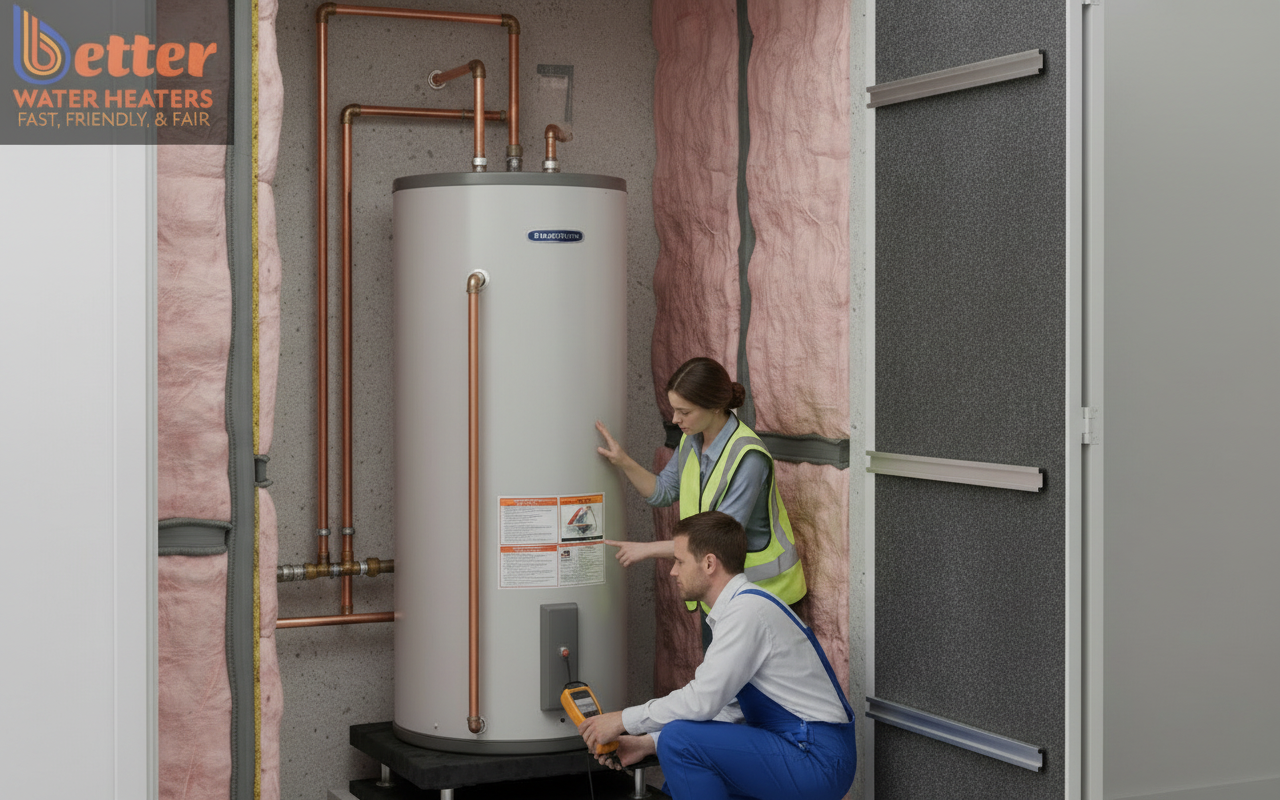
According to the U.S. Department of Energy, heat pump water heaters can produce up to 45-55 decibels of sound during operation, which is roughly equivalent to a quiet office or a humming refrigerator. While that sounds manageable on paper, in a compact San Francisco condo or a modern open-concept Palo Alto remodel, that constant hum can quickly become an intrusive nuisance. Effective water heater noise reduction isn’t just about muffling the sound; it’s about a strategic engineering approach to the utility closet.
Key Takeaways for Homeowners
- Vibration is the Enemy: Structure-borne noise often outweighs airborne sound in modern Bay Area homes.
- Electrification Impact: New Heat Pump Water Heaters (HPWH) require more sophisticated dampening than old gas units.
- Safety First: You cannot sacrifice combustion air or ventilation for the sake of silence.
- ROI: A silent utility closet is a hidden luxury feature that boosts property appraisal values.
1. The Decibel Rating Guide: Choosing the Right Unit
The most effective way to handle noise is to prevent it at the point of purchase by consulting a decibel rating guide. Most manufacturers don’t prominently feature noise levels on the yellow EnergyGuide labels, so you have to dig into the technical specifications. For example, a premium tankless water heater might operate at 45 dB, while a budget model could spike to 65 dB during high demand.
What most people miss is that decibels are logarithmic; a 10 dB increase represents a sound that is twice as loud to the human ear. In our work with established homeowners in San Jose, we’ve seen that spending 15% more on a unit with a lower decibel rating saves thousands in aftermarket soundproofing later. If you are transitioning to a heat pump model, look for units with top-mounted compressors and insulated jackets.
- Gas Tankless: Focus on fan noise and ignition clicks.
- Heat Pump (Hybrid): Focus on compressor hum and airflow velocity.
- Standard Electric: Generally the quietest, but least energy-efficient.
2. Managing Structure-Borne Noise with Acoustic Decoupling
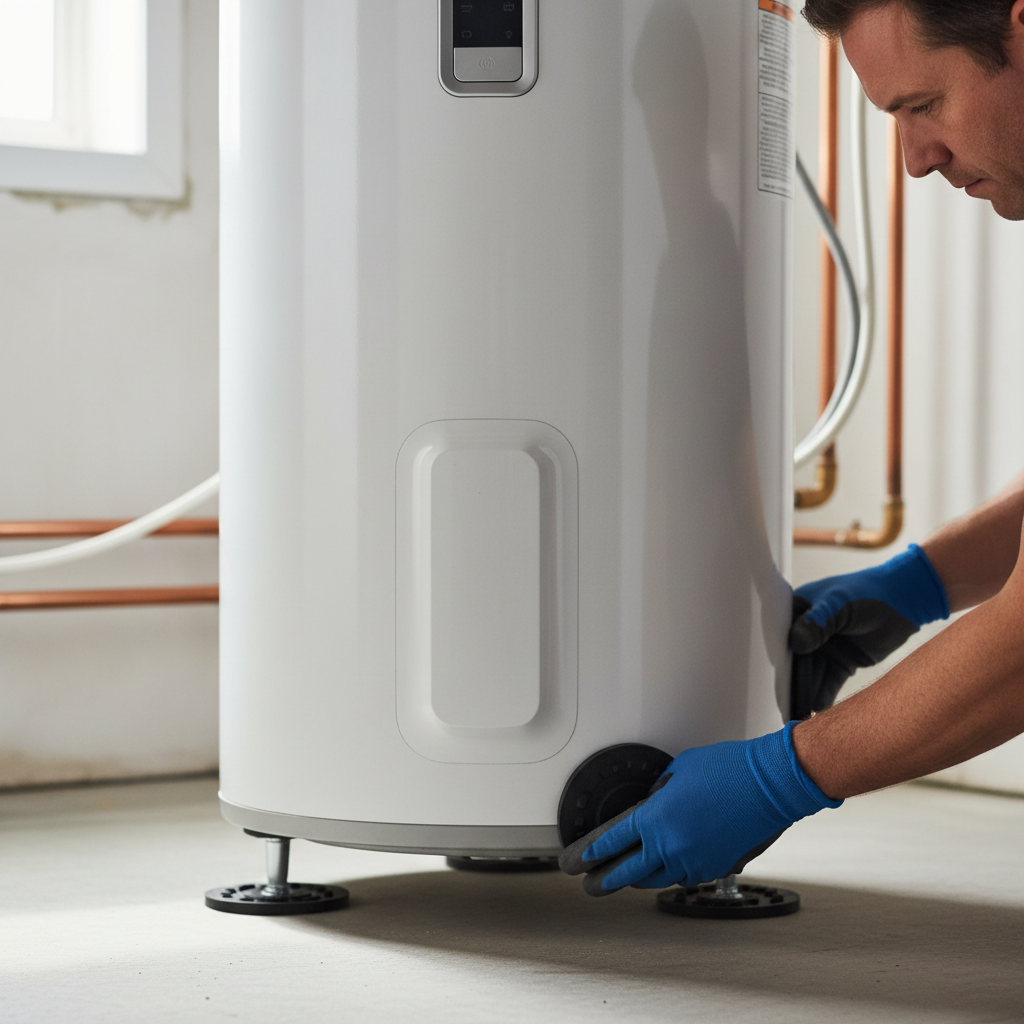
Structure-borne noise occurs when the vibrations from the water heater’s motor or compressor transfer directly into your home’s framing. This turns your drywall into a giant speaker, amplifying a low-frequency hum throughout the house. To solve this, we use a technique called acoustic decoupling, which physically separates the unit from the floor and walls.
The real kicker? Standard seismic strapping, required by California building code, often acts as a bridge for these vibrations. We recommend using vibration isolation pads made of high-density neoprene or cork-and-rubber composites under the unit. For tankless units mounted to walls, rubber isolation mounts should be installed between the bracket and the stud to break the vibration path.
In a typical Bay Area mid-market home, we often see water heaters installed in closets adjacent to bedrooms. In these cases, installing water hammer arrestors is also vital. These small devices absorb the shock of water stopping abruptly, preventing the “thumping” pipes that wake families up at night. Need a professional evaluation of your current setup? Schedule a diagnostic visit today.
3. The Soundproof Water Heater Closet: Airborne Barriers
Once you’ve tackled vibrations, you need to address the airborne noise—the actual sound of the fans and burners. Building a truly soundproof water heater closet requires high-mass materials. Sound passes through lightweight closet doors like they aren’t even there; therefore, the door is usually your weakest link.
Consider replacing a standard hollow-core door with an STC rated utility door (Sound Transmission Class). If a new door isn’t in the budget, applying Mass Loaded Vinyl (MLV) to the interior of the closet door can add the necessary density to block sound waves. However, here is a contrarian insight: acoustic foam (the egg-carton stuff) is almost useless for blocking noise; it only reduces echoes inside the closet. You need mass, not just texture.
| Material | Effectiveness | Best For |
|---|---|---|
| Mass Loaded Vinyl (MLV) | High | Blocking airborne noise on doors/walls |
| Acoustic Foam | Low | Reducing internal closet reverberation |
| 5/8″ Type X Drywall | Medium-High | Fire-rated sound dampening for walls |
| Rockwool Insulation | High | Filling stud cavities for thermal/acoustic gain |
4. Balancing Silence with Combustion Air Requirements
Here is where many DIY soundproofing projects become dangerous: you cannot simply seal a water heater closet airtight. Gas units require combustion air to prevent carbon monoxide buildup, and heat pump units need massive amounts of air exchange to extract heat. If you choke the unit for air, it will either fail prematurely or create a life-safety hazard.
The solution is to install combustion air intake silencers or acoustic baffles. These are “Z-shaped” ducts lined with sound-absorbing material that allow air to flow in but force sound waves to bounce off multiple absorbent surfaces, losing energy before they exit the closet. This is a critical component of water heater noise reduction in high-end luxury renovations where the utility closet is integrated into a kitchen or hallway.
But wait—if you’re managing a larger property or a multi-unit complex, the sheer volume of equipment noise can be overwhelming. We’ve found that using combustion air intake silencers in mechanical rooms significantly reduces tenant complaints. For those managing complex content needs for property portfolios, our internal AI content engine, Ingest.blog, helps us stay on top of these technical updates for our clients.
Practical Steps for Your Silent Utility Project
What most homeowners miss is the “path of least resistance.” Sound will find any gap—under the door, through pipe penetrations, or via unsealed electrical boxes. Use high-temperature acoustic sealant to plug the holes where pipes enter the walls. This small $20 fix can reduce noise transfer by up to 5-10%.
- Inspect: Identify if the noise is a hum (vibration) or a roar (airborne).
- Isolate: Install vibration isolation pads under the tank or behind the wall mount.
- Seal: Use fire-rated acoustic sealant around all pipe and wire penetrations.
- Dampen: Upgrade the closet door to a solid-core or MLV-lined alternative.
- Ventilate: Ensure your baffles meet Energy.gov safety standards for airflow.
Ready to reclaim the peace and quiet in your home? Don’t let a noisy appliance dictate your home’s atmosphere. Contact Better Water Heaters today for a professional sound-dampening consultation and installation. We serve the entire Bay Area, from San Francisco to San Jose, ensuring your home stays efficient and silent.
Frequently Asked Questions
How do I know if my water heater noise is dangerous?
While most noise is mechanical, high-pitched whistling or loud popping (like popcorn) usually indicates sediment buildup or high pressure. If you hear these specific sounds, it’s less about soundproofing and more about maintenance. According to industry standards, flushing your tank annually can prevent the sediment-related “kettling” noise that sounds like heavy banging.
Can I use standard insulation to soundproof my water heater?
You must use fire-rated materials. Mineral wool (Rockwool) is excellent because it is non-combustible and has a high density for sound absorption. Never use flammable materials like standard foam or blankets near a gas-fired unit, as this violates California building codes and poses a significant fire risk to your home.
Are heat pump water heaters louder than gas units?
Generally, yes. Because a heat pump uses a compressor and a fan (similar to an air conditioner), it creates more consistent mechanical noise than a gas burner. However, the noise is predictable and easier to dampen using acoustic decoupling and vibration isolation pads compared to the erratic sounds of an aging gas burner.
Does soundproofing affect my water heater’s warranty?
As long as you do not modify the unit itself or restrict the required airflow, soundproofing the closet will not void your warranty. However, mounting the unit on unapproved brackets or blocking intake vents can lead to overheating and mechanical failure. Always consult with a specialist to ensure your dampening framework meets manufacturer specifications.