
📋 Table of Contents
By 2026, the Bay Area Air Quality Management District (BAAQMD) will phase out the sale of most gas-fired water heaters, effectively turning your mechanical room into a high-tech energy hub. For established homeowners, water heater installation and repair is no longer just about fixing a leak; it is a strategic play in home valuation and grid-integrated efficiency.
Key Takeaways for 2026
- AI-Driven Diagnostics: Predictive sensors now alert you to heating element failure before you lose hot water.
- Thermal Storage: Modern units act as “batteries,” heating water during low-cost utility windows.
- Electrification Mandates: Local building codes are shifting rapidly toward heat pump technology.
- Specialist Consultation: The role of a plumber has evolved into an energy consultant and software integrator.
The 2026 ‘Electric-First’ Mandate: Why Water Heater Specialists Matter Now
The landscape of water heater installation and repair has shifted from reactive maintenance to proactive energy management. In our work with established Bay Area homeowners, we see a growing realization that a water heater is now a data-connected appliance that impacts your PG&E bill as much as your EV charger.
Here’s the thing: installing a standard gas tank today might actually hurt your home’s resale value by 2027. Buyers are looking for “net-zero ready” homes, and water heater specialists are the architects of this transition.
- Regulatory Compliance: Navigating Title 24 and local BAAQMD zero-NOx requirements.
- Permit Precision: Ensuring heavy-duty electrical upgrades (240V circuits) are handled by pros.
- Future-Proofing: Choosing units that integrate with home automation systems like Apple Home or Google Home.
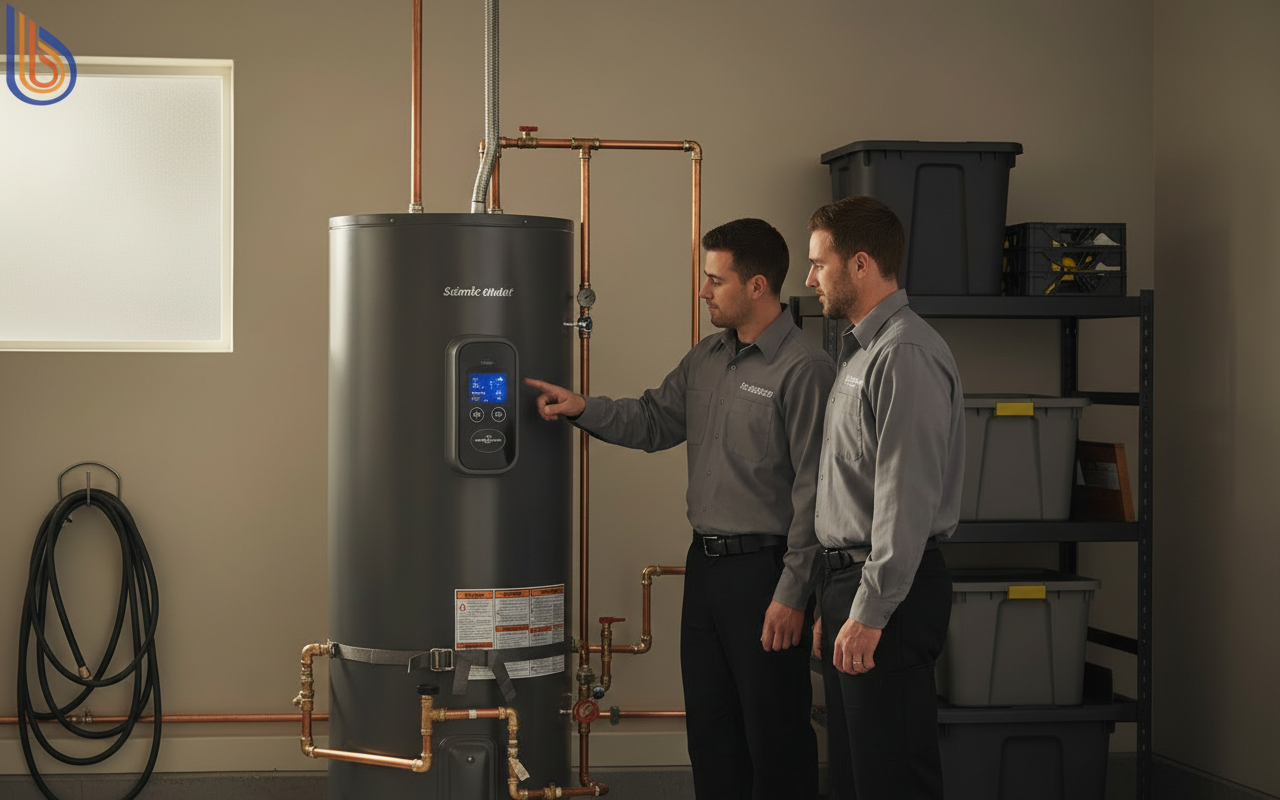
Beyond Smart: How AI Diagnostics Redefine Water Heater Installation and Repair
AI is predicting heating element failure 30 days before it happens, allowing for scheduled maintenance rather than 2:00 AM emergency calls. This shift in water heater installation and repair best practices means homeowners are no longer flying blind regarding their appliance’s health.
But wait—hardware is only as good as the calibration. A typical Bay Area mid-market client often has the right tech but the wrong settings, leading to “short-cycling” that kills the compressor early. Professional water heater specialists now use cloud-based diagnostic tools to tune your system for the specific water hardness found in cities like Fremont or San Jose.
What most people miss: predictive maintenance isn’t just about convenience. According to Energy.gov, properly maintained heat pump systems can maintain up to 70% higher efficiency over their lifespan compared to neglected units.
Need help navigating these new high-tech options? Schedule a free consultation with our expert team today.
Water Heaters as Batteries: The Rise of Thermal Storage
In 2026, your water heater is effectively a thermal battery that helps you bypass peak-hour utility rates. By heating water to a higher temperature during the day when solar production is high and storing it in a highly insulated tank, you avoid using expensive grid power at 6:00 PM.
| Feature | Standard Electric Tank | 2026 Smart Heat Pump |
|---|---|---|
| Annual Energy Cost | $500 – $800 | $150 – $250 |
| Grid Integration | None | Demand Response Ready |
| Expected Lifespan | 8-12 Years | 13-15 Years |
The real kicker? Many Bay Area utility providers offer “demand response” credits. They will literally pay you a small monthly rebate to allow them to slightly adjust your water heater’s timing during grid emergencies.
Retrofitting 1990s Homes for Ultra-High-Efficiency Systems
Retrofitting a home built in the 90s for tankless electric water heater installation or heat pump systems requires more than just a wrench. It involves a strategic audit of your electrical panel capacity and venting pathways.
In our experience with Series B SaaS founders who value data-driven decisions, we’ve found that the “shadow tax” of a cheap installation is the cost of emergency repairs three years down the line. Professional water heater installation and repair ensures that seismic strapping and condensate drainage are handled to code, preventing structural damage.
- Panel Capacity: Most heat pumps require a dedicated 30-amp breaker.
- Airflow Requirements: Heat pumps need roughly 1,000 cubic feet of air to operate efficiently.
- Sound Dampening: Modern specialists use vibration-isolation pads to keep the unit quiet in garage-adjacent bedrooms.
To keep our own educational content at a high velocity, we utilize Ingest.blog, our internal AI content engine, to track these rapid regulatory changes across the Bay Area.
DIY vs. Specialist: Why 2026 Technology Makes Pro Calibration Non-Negotiable
The contrarian truth? The more “user-friendly” these units become, the more dangerous they are to install yourself. A 2026-era hybrid water heater involves refrigerants, high-voltage electricity, and complex firmware updates.
One honest observation: we often see DIY attempts where the homeowner forgot to install a thermal expansion tank. In a closed-loop system, this oversight leads to pinhole leaks in your copper pipes within months. Water heater specialists don’t just swap tanks; they protect your entire plumbing ecosystem.
- Digital Pressure Testing: Ensuring no micro-leaks exist in the new lines.
- Firmware Setup: Connecting the unit to your local utility’s time-of-use (TOU) API.
- Rebate Management: Handling the complex paperwork for local incentives.
Maximizing ROI: Tax Credits and Net-Zero Plumbing Solutions
The intersection of FinTech and plumbing is where the most savvy homeowners are winning. By 2026, federal tax credits under the Inflation Reduction Act have become streamlined, but they still require specific performance certifications from your water heater installation and repair provider.
What most people miss is that these credits often cover up to 30% of the total project cost, including the electrical upgrades. According to ENERGY STAR, these incentives are designed to make high-efficiency choices the financial default for middle-to-upper-income households.
Ready to upgrade your home’s efficiency? Get your free estimate and see how much you can save with 2026 rebates.
Frequently Asked Questions
How do AI diagnostics improve water heater installation and repair?
AI diagnostics use sensors to monitor electrical resistance and water flow patterns. By analyzing this data against thousands of failure profiles, the system can identify a failing heating element or a slow leak weeks before a catastrophic failure occurs, transforming emergency repairs into simple, scheduled maintenance visits.
What are the current heat pump water heater rebates for 2026?
As of 2026, Bay Area residents can access a combination of federal tax credits (up to $2,000) and local utility incentives from providers like SVCE or Peninsula Clean Energy. Total savings can often reach $4,000 or more, depending on your specific county and electrical upgrade requirements.
Why are water heater specialists required for smart grid integration?
Smart grid integration involves connecting your water heater to a utility’s demand-response network via a CTA-2045 port or Wi-Fi API. Specialists ensure the communication protocols are secure and that the unit’s “load shifting” schedule doesn’t leave you with cold water during your typical shower times.
Is a tankless electric water heater installation right for my Bay Area home?
Tankless electric units are excellent for space-saving but require significant electrical capacity—often 80 to 120 amps. A specialist will evaluate your home’s service panel to determine if this is a viable option or if a high-efficiency heat pump tank offers a better return on investment.
Final Action Plan
Don’t wait for your current unit to fail. This week, check the manufacture date on your water heater’s rating plate. If it’s older than 10 years, call a specialist to discuss a 2026-compliant transition plan. Taking action now allows you to choose the best technology and maximize rebates, rather than being forced into a rushed, sub-optimal replacement during an emergency.