
📋 Table of Contents
While most homeowners wait for a flood to replace their unit, data from the U.S. Department of Energy shows that water heating accounts for nearly 20% of your home’s energy use. Relying on the ‘ten-year rule’ is a gamble that often leads to emergency expenses and missed rebate opportunities. A professional water heater health audit provides a roadmap for modernization before the crisis hits.
Key Takeaways:
- System age is less important than operational efficiency and sediment levels.
- Recovery rates directly indicate the health of your heating elements or burners.
- Bay Area residents can access up to $4,900 in rebates for high-efficiency upgrades.
- Predictive maintenance prevents the ‘hidden tax’ of hard water damage.
1. Physical Integrity: The Battle Against Mineral Decay
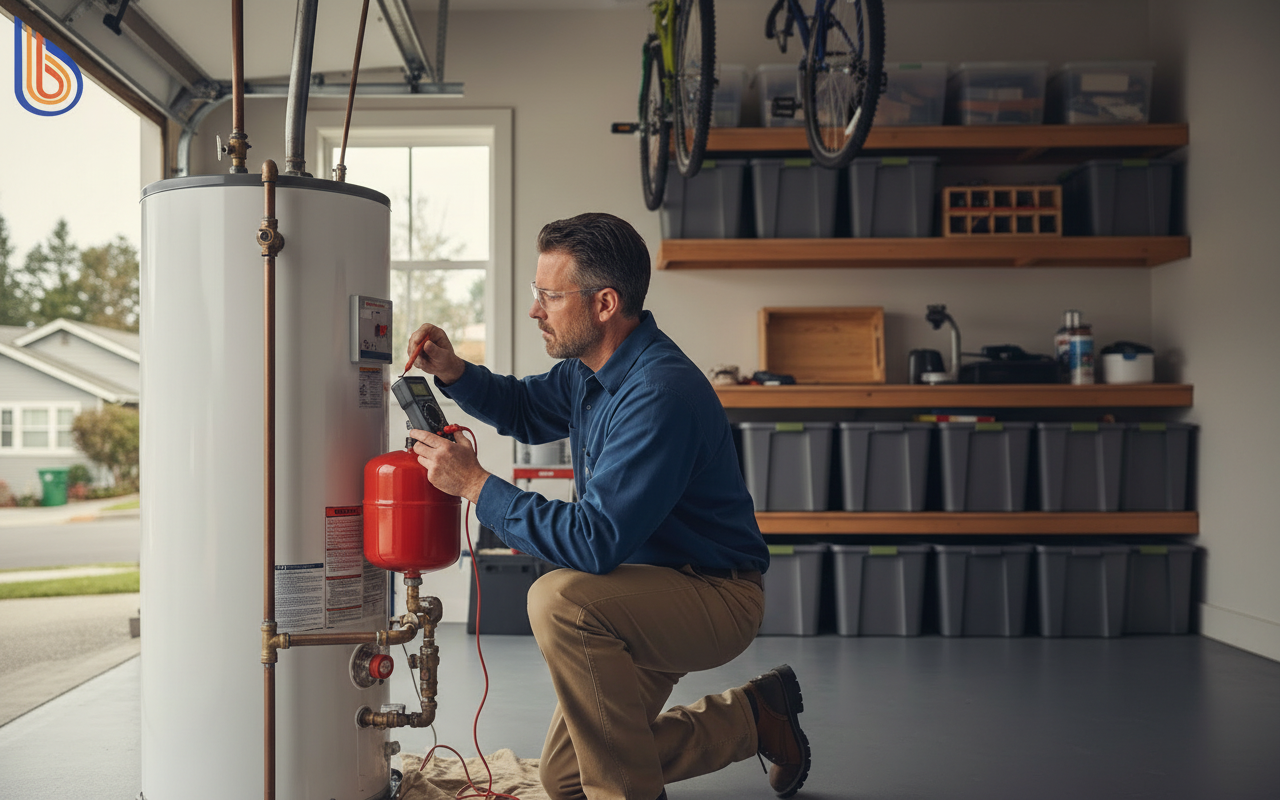
The internal state of your tank is often a mystery until a leak occurs, but specific markers tell the story of its remaining lifespan. What most people miss is that the anode rod is your tank’s only line of defense against the corrosive nature of Bay Area water.
- Anode Rod Depletion: If your sacrificial anode rod is more than 75% depleted, your tank walls are currently under attack.
- Sediment Accumulation Patterns: Heavy sediment at the bottom acts as an insulator, forcing the system to work harder and creating ‘hot spots’ that weaken the steel.
- External Corrosion: Look for ‘weeping’ at the nipples or the T&P valve, which signals internal pressure issues.
In our work with established homeowners in San Jose and Palo Alto, we frequently see tanks that are only 7 years old but performing like 15-year-old units due to lack of flushing. This is the ‘hidden tax’ of hard water. By the time you hear popping or rumbling, the efficiency has likely dropped by 10-15%.
2. Operational Efficiency: Recovery Rate Evaluation
A recovery rate evaluation measures how quickly your system can heat a full tank of water after it has been depleted. Here’s the thing: if your recovery time has slowed by more than 20% from the manufacturer’s spec, your energy bills are essentially a leaky bucket.
To understand your system’s health, compare these metrics:
| Metric | Healthy System | At-Risk System |
|---|---|---|
| Recovery Rate (GPH) | 30-50 Gallons/Hr | < 20 Gallons/Hr |
| Standby Heat Loss | < 1°F per hour | > 3°F per hour |
| Energy Factor (UEF) | 0.65 – 3.50+ | < 0.58 |
But wait—operational efficiency isn’t just about speed. It’s about the Energy Factor (UEF) rating. Modern heat pump water heaters offer UEF ratings above 3.0, while older gas units struggle to hit 0.60. For a typical Bay Area family, switching to a high-efficiency system isn’t just an environmental choice; it’s a financial strategy with a clear ROI.
Need a professional to run the numbers? Schedule your 3-Pillar Efficiency Audit today and stop guessing about your hot water.
3. Safety and Code Compliance: The Modern Standard
A water heater health audit must include a rigorous check of safety components that are often neglected during DIY installations. In California, seismic safety isn’t optional; it’s a critical component of system longevity factors and home insurance compliance.
- Thermal Expansion Tank Testing: If your expansion tank has failed, every heating cycle puts 150+ PSI of stress on your plumbing joints.
- Venting Integrity: For gas units, we inspect for backdrafting, which can introduce carbon monoxide into your living space.
- Seismic Strapping: We ensure your unit meets the specific California plumbing codes for earthquake safety.
The real kicker? Many older Bay Area homes lack a dedicated thermal expansion tank. As water heats and expands, that pressure has nowhere to go but back into your pipes or against your tank’s inner lining. This constant ‘breathing’ of the metal leads to premature tank failure.
4. Hybrid Readiness: Preparing for the 2027 Transition
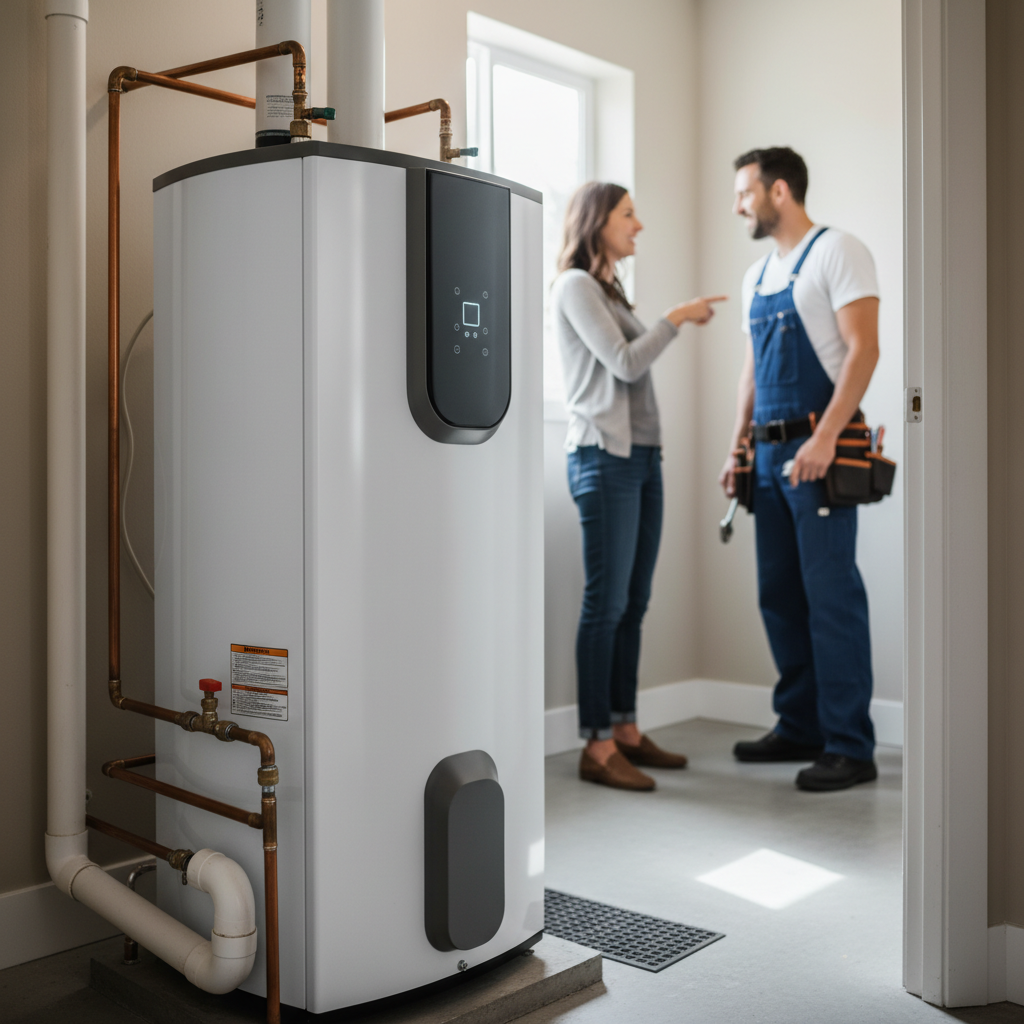
The Bay Area is leading the shift toward decarbonization, with regulations moving toward a zero-NOx standard by 2027. What most people miss is that transitioning to a heat pump system requires more than just a new tank; it requires electrical readiness.
As part of our audit, we evaluate your electrical panel. Does it have the 30-amp capacity for a standard HPWH, or should you look at the new 120v ‘plug-and-play’ models? According to ENERGY STAR, these units can save a household hundreds of dollars annually, but the installation must be planned to avoid expensive emergency panel upgrades.
In our experience with property managers across the Peninsula, those who audit their systems now are able to claim the full $2,000 Federal Tax Credit and local TECH Clean California rebates (up to $3,100), effectively neutralizing the higher upfront cost of the technology.
5. The ROI of Predictive Maintenance vs. Reactive Replacement
The most honest, contrarian insight we can offer is this: Not every old water heater needs to be replaced immediately. Sometimes, a $300 investment in a new anode rod and a professional descaling can buy you another 5 years of service.
However, the heat pump water heater ROI becomes undeniable when your current unit requires major repairs. If you are spending more than 50% of the cost of a new unit on repairs, the math dictates a replacement. We use a transparent framework to help you decide:
- The 50% Rule: If repair costs > 50% of replacement, upgrade.
- The Efficiency Gap: If your current gas bill is spiking, the ‘Invisible Leak’ of standby loss is likely the culprit.
- Smart Integration: Modern systems with leak detection can prevent thousands in water damage—a feature your 12-year-old tank simply doesn’t have.
To keep our own educational content as sharp as our diagnostic tools, we use Ingest.blog as our internal AI content engine to ensure our local guides stay updated with the latest Bay Area rebate changes.
6. Taking Action: Your System Modernization Roadmap
Don’t wait for the puddle in the garage to tell you your water heater is dead. A proactive water heater health audit allows you to choose your next system on your own terms, rather than being forced into a hurried decision on a Saturday night.
This week, take 10 minutes to check your unit for these three red flags:
- Check the manufacture date on the rating plate. If it’s over 8 years, it’s time for an audit.
- Look for white calcium buildup around the pipe connections.
- Listen for a ‘kettling’ sound when the burner is on.
Ready to maximize your home’s efficiency and secure your rebates? Contact Better Water Heaters at 408-250-6672 or book your professional efficiency audit online. We serve the entire Bay Area with transparent, expert-led service that puts your home’s health first.
Frequently Asked Questions
How do I know if my water heater’s recovery rate is failing?
If you notice that the second person taking a shower in your household consistently runs out of hot water, your recovery rate has likely dropped. A professional audit uses flow meters and temperature probes to compare your actual output against the original manufacturer’s specifications for your specific model.
What are the primary system longevity factors for Bay Area homes?
The most critical factors are water quality (mineral content), the condition of the sacrificial anode rod, and the presence of a functioning thermal expansion tank. Because the Bay Area has varying water hardness, annual flushing is essential to prevent sediment from insulating the heating elements and causing tank fatigue.
Is a heat pump water heater worth the investment in San Jose?
Yes, especially when factoring in the high cost of PG&E gas and the available incentives. With local rebates and federal tax credits often exceeding $4,000, the ‘payback period’ for a heat pump water heater in the Bay Area is frequently less than three years, compared to a standard gas unit.
Can sediment flushing actually save an old water heater?
While flushing won’t reverse existing corrosion, it can significantly improve heat transfer and stop the ‘kettling’ noises that lead to tank stress. If the audit shows the tank’s inner lining is still intact, a deep flush and anode rod replacement can extend the life of the unit by several years.