Water heater article archive
Water Heater Expansion Tank: Why Bay Area Inspections Flag Them
Historical article, not newly reviewed advice. Verify current requirements, incentives and model guidance with the relevant authority or manufacturer before relying on them. Equipment and service needs require an assessment.
📋 Table of Contents
In the high-stakes Bay Area real estate market, a water heater expansion tank is often the difference between a smooth closing and a frustrated buyer. While it may look like a small, unassuming metal canister sitting atop your heater, its absence is a primary reason for Bay Area home inspection plumbing red flags. As homes in San Jose, Fremont, and Oakland transition to modern safety standards, these devices have moved from 'optional' to 'mandatory' under California code.
Key Takeaways for Homeowners:
- Code Compliance: California Plumbing Code Section 608.3 requires thermal expansion relief in closed-loop systems.
- Safety First: Prevents 'thermal expansion' from rupturing pipes or damaging your water heater's inner lining.
- Sale Security: A $200–$400 installation prevents inspection delays on multi-million dollar property transfers.
- System Longevity: Protects your investment by reducing stress on the T&P (Temperature and Pressure) valve.
What is a Water Heater Expansion Tank and Why Do You Need It?
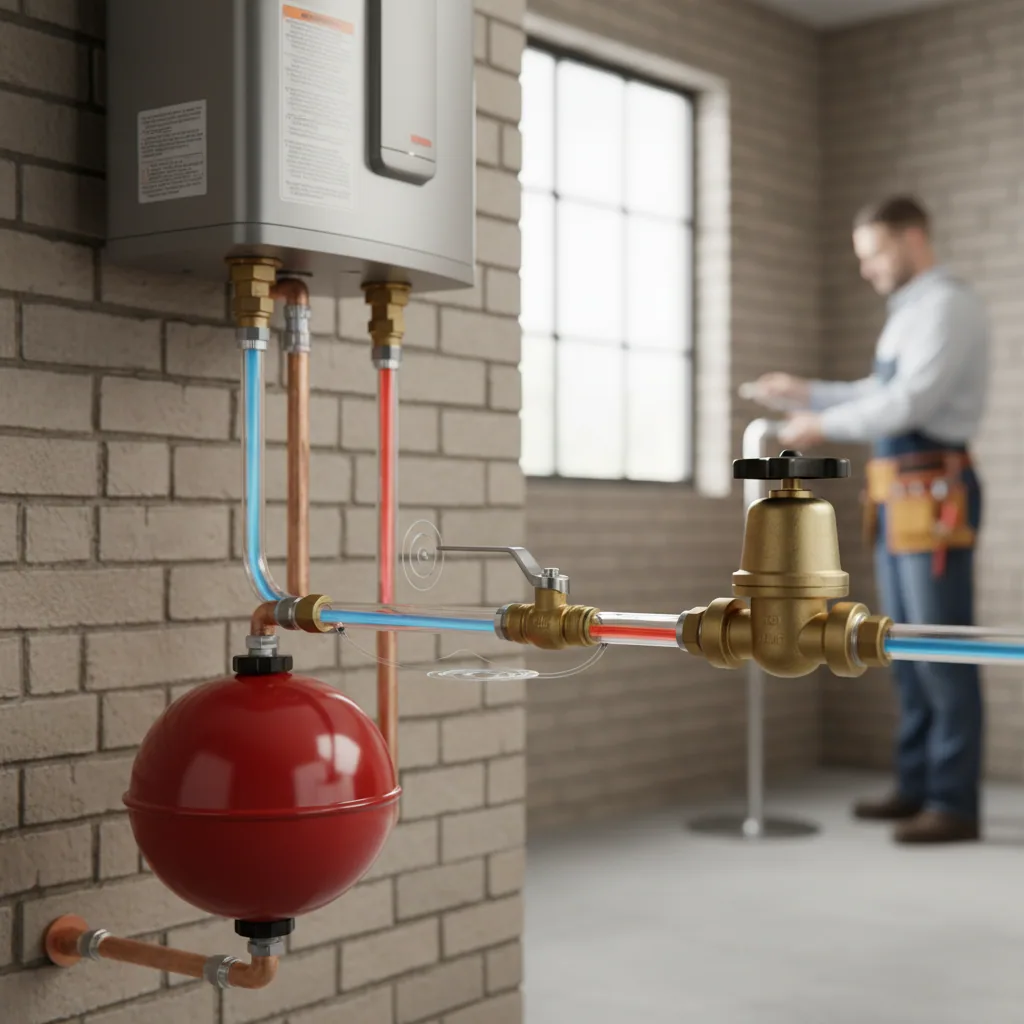
A water heater expansion tank is a safety device designed to handle the thermal expansion of water as it heats up. According to Energy.gov, water expands in volume when heated, creating significant internal pressure. In older 'open' systems, this pressure simply pushed back into the municipal water main, but modern Bay Area homes are different.
Most local municipalities now require a closed-loop plumbing system to prevent backflow. This is achieved through a backflow preventer or a pressure reducing valve (PRV). Consequently, when water expands inside your pipes, it has nowhere to go. Without an expansion tank, this pressure builds until it finds the weakest point in your plumbing.
The risks of a missing expansion tank include:
- Premature failure of the water heater tank's glass lining.
- Constant dripping from the T&P relief valve.
- Pinhole leaks in copper piping throughout the home.
- Shortened lifespan of faucets, toilets, and appliances.
The Bay Area Home Inspection Plumbing Red Flag
During a Bay Area home inspection plumbing review, inspectors look for three critical safety elements: water heater seismic strapping, proper venting, and the water heater expansion tank. In cities like San Francisco or Palo Alto, inspectors are particularly strict because high municipal water pressure often necessitates a PRV, which automatically triggers the need for an expansion tank.
Furthermore, many homeowners are surprised to find that their insurance company may deny a flood claim if an expansion tank was required by code but never installed. In a competitive market, buyers use these 'minor' plumbing defects to negotiate credits or demand immediate repairs before removing contingencies.
Common inspection 'hits' include:
- Missing Tank: The most common issue in homes older than 15 years.
- Improper Mounting: Tanks hanging by their pipes without support brackets.
- Failed Bladder: A 'waterlogged' tank that no longer absorbs pressure.
- Incorrect Location: Installing the tank on the hot side instead of the cold water inlet.
Need to ensure your home is ready for the market? Schedule a pre-listing inspection with Better Water Heaters to catch these issues before the buyer does.
California Plumbing Code Section 608.3 Explained
The California Plumbing Code Section 608.3 is the specific regulation that governs thermal expansion relief. It states that if a building has a check valve, backflow preventer, or pressure-regulating device, a means must be provided to control the pressure increase caused by thermal expansion. This is not just a suggestion; it is a safety mandate designed to prevent catastrophic tank explosions.
Interestingly, many Bay Area residents are seeing their 'open' systems become 'closed' overnight. Local utilities are increasingly installing smart water meters that contain internal check valves. This means even if you don't have a PRV, your system may now be closed-loop, making a water heater expansion tank essential for safety.
Key technical requirements for code compliance:
- The tank must be sized correctly for the total gallon capacity of the water heater.
- It must be pressurized to match the home's static water pressure.
- It must be installed on the cold water supply line.
- It must be accessible for future maintenance and inspection.
Comparison: Open System vs. Closed-Loop System
| Feature | Open System (Old Style) | Closed-Loop System (Modern/Code) |
|---|---|---|
| Pressure Relief | Pushes back to city main | Requires Expansion Tank |
| Backflow Risk | High (Contamination possible) | None (Protected by PRV/Check Valve) |
| Inspection Status | Often flagged for upgrade | Mandatory for compliance |
| Safety Level | Moderate | High (Prevents T&P failure) |
The 'Hidden Sale Killer': Why DIY Installs Fail Inspection
Many homeowners attempt a DIY installation of a water heater expansion tank to save a few hundred dollars. However, 'handyman' installs are frequently cited by Bay Area home inspection plumbing experts for lack of proper support. These tanks become incredibly heavy when full of water; if they aren't secured with specialized brackets, they can snap the copper piping, leading to a flood.
Moreover, a water heater expansion tank is not a 'set it and forget it' device. The internal rubber bladder usually lasts 5–7 years, especially in areas with hard water like Santa Clara County. If the bladder fails, the tank fills with water and loses its ability to compress air, rendering it useless. Professional installers use a pressure gauge to 'charge' the tank to the exact PSI of your home—a step most DIYers skip.
Don't let a $200 part stall your multi-million dollar home sale. Explore our professional installation services to ensure your system is up to code and ready for any inspector's scrutiny.
Signs Your Expansion Tank is Failing
Even if you have a tank, it might not be working. If you notice your T&P valve dripping or hear 'hammering' noises in your pipes, your thermal expansion relief system is likely compromised. In the Bay Area's moderate climate, thermal expansion occurs every time your heater fires up to recover from a shower or dishwasher cycle.
Watch for these warning signs:
- The Tap Test: Tap the top and bottom of the tank. One side should sound hollow (air) and the other solid (water). If both sound solid, it's failed.
- T&P Valve Leaking: If the safety valve on the side of your heater is dripping, it’s often because the expansion tank isn't doing its job.
- Visible Rust: Corrosion at the connection point indicates a slow leak that will eventually lead to a burst.
- Fluctuating Water Pressure: Sudden surges in pressure when you first turn on a faucet.
As an expert IAPMO member would suggest, regular maintenance of these safety devices is the only way to ensure California Plumbing Code Section 608.3 compliance over the long term. For homeowners in San Mateo or Alameda counties, checking this tank annually is as important as changing your smoke detector batteries.
FAQs About Water Heater Expansion Tanks
Do all Bay Area homes need an expansion tank?
Not every home, but the vast majority do. If your home has a pressure reducing valve (PRV) or a backflow preventer—common in most Bay Area municipalities—you are legally required to have a water heater expansion tank for thermal expansion relief. Even if you don't have one now, modern smart meters often create a closed-loop system that necessitates an upgrade.
How much does it cost to install an expansion tank in the Bay Area?
A professional installation typically ranges from $250 to $550, depending on the complexity of your existing plumbing and whether additional bracing is needed for seismic safety. While this may seem like an extra expense, it is significantly cheaper than the $2,500+ cost of replacing a water heater that ruptured due to excessive internal pressure.
Can I just replace the T&P valve instead of adding an expansion tank?
No. The T&P valve is an emergency safety device, not a pressure regulator. If your T&P valve is leaking due to thermal expansion, replacing the valve won't solve the underlying closed-loop plumbing system issue. You must address the pressure buildup with a properly sized water heater expansion tank to satisfy Bay Area home inspection plumbing requirements.
How long do water heater expansion tanks last?
Most expansion tanks have a lifespan of 5 to 8 years. The internal rubber bladder eventually loses its elasticity or develops a tear, especially in Bay Area regions with high mineral content in the water. We recommend checking the air pressure in your tank during your annual water heater flush to ensure it is still functioning correctly.
Ready to secure your home’s plumbing and pass your next inspection with flying colors? Contact Better Water Heaters today at https://betterwaterheaters.com/contact/ for a professional evaluation and same-day installation. Our experts ensure every tank is seismic-ready and code-compliant, giving you total peace of mind.