
📋 Table of Contents
According to the California Department of Housing and Community Development, ADU permit applications have surged by over 400% since 2017, yet nearly one-third of garage conversions face delays due to utility placement errors. If you are squeezing a modern utility closet into a 400-square-foot San Jose garage, water heater clearance requirements aren’t just a suggestion—they are the difference between a signed-off permit and a $5,000 teardown.
Key Takeaways for Bay Area Homeowners
- The 4-Zone Framework: A strategic approach to Service, Safety, Ventilation, and Seismic requirements.
- ADU Compliance: How to integrate Heat Pump Water Heaters (HPWH) without sacrificing living space.
- Inspection Readiness: Specific setbacks required by the California Plumbing Code (CPC).
- Future-Proofing: Preparing for the 2027 gas water heater phase-out.
1. The Service Zone: Why ‘Zero-Clearance’ is a Dangerous Myth
The most common mistake we see in Redwood City garage conversions is the assumption that a tankless unit requires zero physical space around it. While the unit itself is small, the California Plumbing Code (CPC) requires a 30-inch deep by 30-inch wide working space in front of the appliance. Here’s the thing: inspectors don’t care if your new ADU kitchen island is ‘just a little’ in the way; if a technician can’t safely access the burner or electronics, you fail.
- Access Panels: Ensure closet doors are wide enough to remove the entire unit if a tank fails.
- Vertical Clearance: Maintain at least 6-12 inches above the unit for venting and water line connections.
- Side Clearance: Most manufacturers require 2-6 inches on the sides, but local Bay Area inspectors often look for a ‘hand-width’ of space for tool maneuverability.
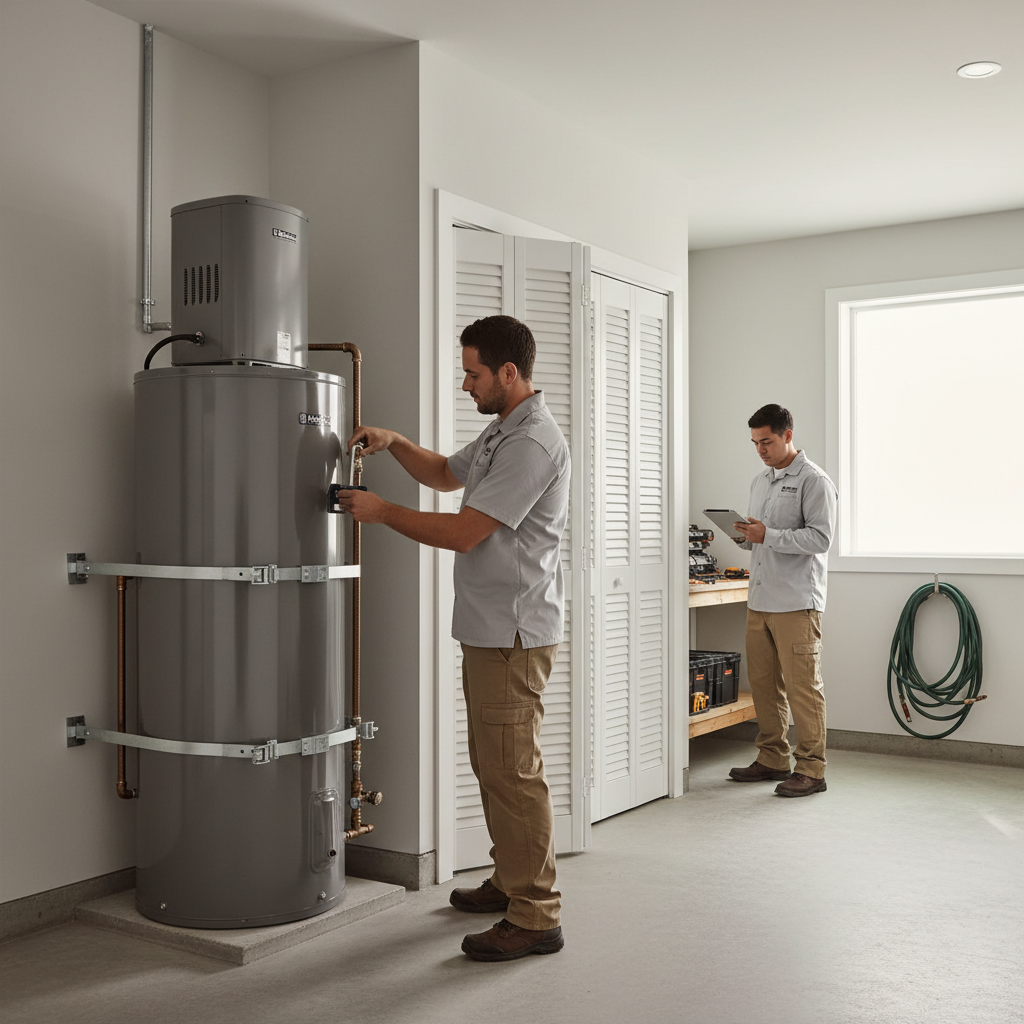
In our work with typical Bay Area mid-market residential developers, we’ve found that placing the water heater in a recessed wall niche can save up to 4 square feet of floor space while still meeting water heater clearance requirements. But wait—you must ensure that the niche doesn’t violate fire-rating requirements for the wall separating the garage from the new living space.
2. The Safety Zone: Navigating ADU Plumbing Codes and Fire Setbacks
Safety clearances are designed to prevent your water heater from becoming a fire hazard in high-density housing. For gas-fired units, the ‘Safety Zone’ focuses on combustible material setbacks. According to Energy.gov, improper clearance is a leading cause of residential appliance fires. In a tight garage-to-living-space conversion, every inch matters.
- Combustible Setbacks: Standard gas tanks usually require 1-2 inches of clearance from drywall, but 6 inches from any flammable storage.
- Egress Paths: You cannot install a water heater in a location that obstructs a required exit from the ADU.
- Ignition Source Elevation: In garages, the pilot light or ignition spark must be at least 18 inches above the floor to prevent igniting heavy gasoline vapors.
Need help navigating these tight spaces? Schedule a free site evaluation with our experts to ensure your utility plan is code-compliant before you pour concrete.
3. The Ventilation Zone: Solving the HPWH Airflow Dilemma
As the Bay Area moves toward electrification, Heat Pump Water Heaters (HPWH) are becoming the standard for garage conversion utility planning. However, these units act like a reverse refrigerator—they exhaust cold air and need a massive volume of ambient heat to function. What most people miss: a heat pump water heater needs approximately 700 to 1,000 cubic feet of air space to operate efficiently.
| Requirement | Standard Gas Tank | Tankless Gas | Heat Pump (HPWH) |
|---|---|---|---|
| Floor Space | ~5-7 sq ft | ~2 sq ft (Wall) | ~7-9 sq ft |
| Air Volume | Low (with vent) | Direct Vent | 700+ cu ft |
| Clearance Front | 30 inches | 30 inches | 36 inches (for airflow) |
If you’re putting a heat pump in a tiny 30-square-foot closet, you’ll need louvered doors or ducting to pull air from the rest of the garage. The real kicker? If the unit is adjacent to a bedroom in your new ADU, you need to account for acoustic dampening. Heat pumps have compressors that hum at about 45-55 decibels—roughly the sound of a modern dishwasher.
4. The Seismic Zone: Strapping for Bay Area Stability
Living in a high-seismic zone like San Francisco or San Jose means your water heater clearance requirements include specific bracing protocols. California Health and Safety Code Section 19211 requires all water heaters to be braced, anchored, or strapped to resist falling during an earthquake. In a tight garage conversion, this often means the unit is tucked into a corner where strapping is difficult to reach.
- Dual Strapping: You must have one strap in the top one-third and one in the bottom one-third of the tank.
- Wall Blocking: In new ADU construction, you must install solid 2×4 blocking between studs to give the seismic straps a structural anchor point.
- Clearance for Straps: Don’t forget that the straps themselves take up about 1-2 inches of depth—factor this in when measuring your closet depth.
For those managing multiple rental units, we recommend using heavy-duty, pre-approved seismic kits rather than DIY solutions. The FEMA guidelines emphasize that a secured water heater can serve as a critical source of emergency drinking water after a major quake—a vital consideration for high-density Bay Area living.
5. Future-Proofing for the 2027 Gas Ban
The Bay Area Air Quality Management District (BAAQMD) has passed regulations that will effectively ban the sale of new gas water heaters starting in 2027. When planning your garage conversion today, you are building for tomorrow. Designing your utility zone for Title 24 water heater compliance now will save you from a massive electrical retrofit in five years.
What we recommend for our Series B-level property investors: even if you install gas today, run a dedicated 240V/30A circuit to the water heater location now. The cost of adding a wire while the walls are open is negligible; the cost of doing it later is thousands. We use advanced heat pump technology to maximize efficiency for these forward-thinking builds.
Ready to upgrade your system or ensure your ADU is code-compliant? Get a quote for your Bay Area project today.
6. The Fire Marshal’s Checklist for Garage Conversions
The transition from a garage to a ‘habitable space’ changes the rules. In a garage, your water heater shares space with cars; in an ADU, it shares space with people. This shift triggers stricter ADU plumbing codes regarding combustion air. If you are using a gas unit, you cannot pull air from a bedroom or bathroom. You must pull ‘makeup air’ from the attic, a crawlspace, or directly from the outdoors.
One contrarian insight: Many contractors will tell you to just ‘vent it through the roof.’ In many Bay Area jurisdictions, side-wall venting for tankless units is actually more cost-effective and easier to inspect, provided you maintain a 3-foot clearance from windows and doors. Always check your specific city’s amendments to the California Building Code.
FAQs: Navigating Water Heater Clearances
How much space do I really need for a water heater in a San Jose ADU?
For a standard 50-gallon tank, you should plan for a footprint of at least 30″ x 30″. However, the water heater clearance requirements also mandate a 30-inch working space in front of the unit. In total, you need a dedicated utility area of approximately 9 to 12 square feet to be fully code-compliant and serviceable.
Can I put a water heater in a closet inside a bedroom?
Under the California Plumbing Code, you generally cannot install a gas water heater in a room used for sleeping unless it is a ‘direct-vent’ type or installed in a closet with a weather-stripped, self-closing door that pulls all combustion air from the outdoors. Electric and heat pump models have more flexibility but still require adequate volume for airflow.
What are the specific seismic strapping requirements in the Bay Area?
California law requires two straps: one in the upper third and one in the lower third of the tank. The bottom strap must be at least 4 inches above the controls. In the Bay Area, we recommend using kits that are specifically rated for Seismic Design Category E or F to ensure maximum safety during a tremor.
Do I need a permit to move my water heater during a garage conversion?
Yes, absolutely. Any time you move a water heater or change its fuel source (gas to electric), you must obtain a plumbing and/or electrical permit from your local building department. Failure to do so can result in significant fines and will likely complicate the sale of your home in the future.
Conclusion: Don’t Let Clearances Kill Your Conversion
Navigating water heater clearance requirements is the ultimate ‘measure twice, cut once’ scenario for Bay Area homeowners. By following the 4-Zone Framework—addressing Service, Safety, Ventilation, and Seismic needs—you protect your investment and your family. This week, take a tape measure to your proposed utility closet. If you don’t have that 30×30 inch clear floor space in front of the unit, it’s time to redraw the plans before the inspector arrives. For professional guidance and expert installation, contact Better Water Heaters—we’ve been solving Bay Area plumbing puzzles for over 20 years.