
📋 Table of Contents
Recent data from the U.S. Department of Energy suggests that water heating is the second largest energy expense in most California homes, accounting for nearly 18% of utility costs. In the Bay Area, where slab-on-grade construction is the standard, a significant portion of that heat is often lost to the soil before it even reaches your faucet.
If you are planning a high-efficiency water heater upgrade, you cannot afford to ignore what is happening beneath your feet. The thermal mapping process is the only way to ensure you aren’t buying a high-BTU system just to heat the dirt under your living room. At Better Water Heaters, we utilize a 4-stage framework to diagnose slab foundation plumbing efficiency before a single wrench is turned.
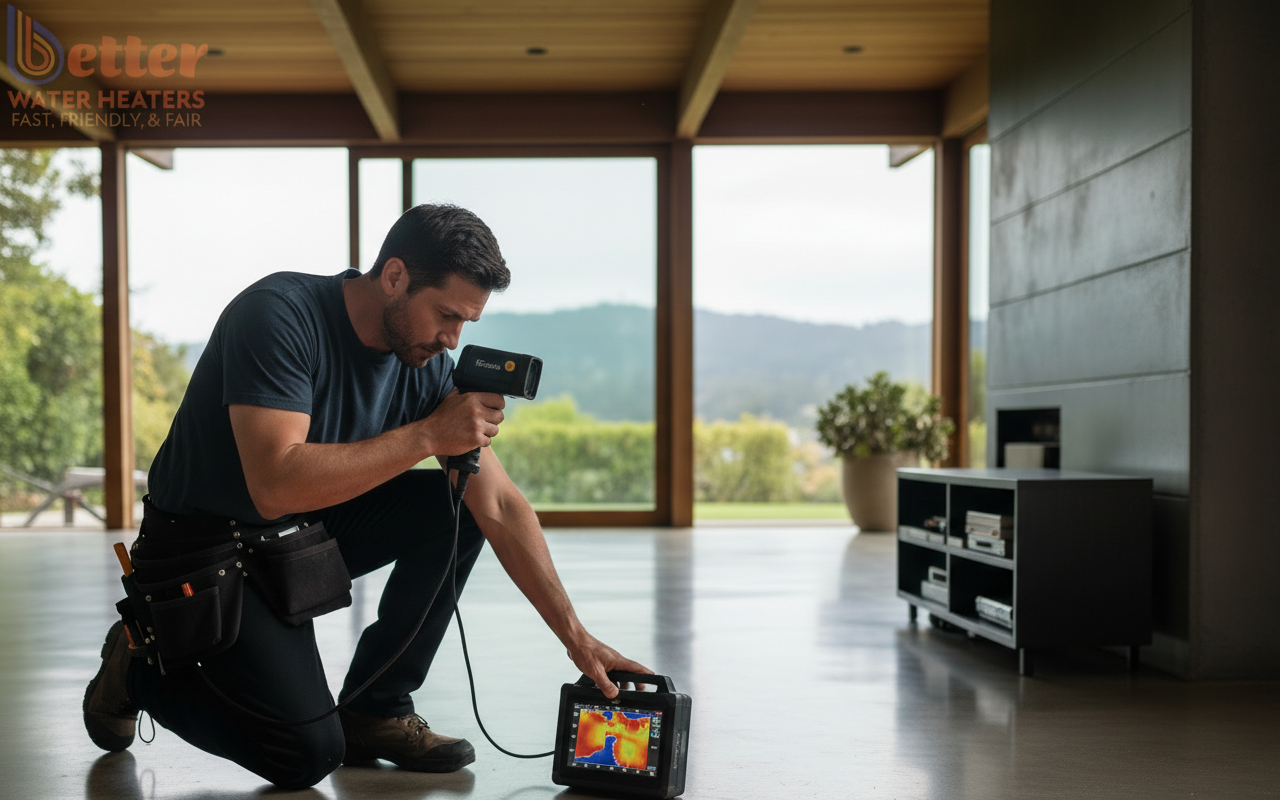
Stage 1: The Pre-Diagnostic Heat Loss Audit
The real kicker is that most contractors will suggest a larger water heater the moment you complain about “slow hot water,” without ever checking if your slab is stealing that energy. A professional heat loss audit identifies whether your pipes are properly insulated or if seismic shifting has created micro-fractures in your copper lines.
- Baseline Temperature Tracking: We measure the delta between the heater outlet and the furthest fixture.
- Soil Moisture Correlation: Bay Area soil expansion after atmospheric rivers can increase thermal conductivity, pulling heat away faster.
- Pressure Testing: A quick hydrostatic pressure test confirms if the heat loss is due to radiation or an actual physical leak.
What most people miss is that California’s Title 24 energy requirements now place a heavy emphasis on distribution efficiency. By performing thermal mapping early, we can determine if a recirculating pump or a localized point-of-use heater is a smarter investment than a massive tank upgrade.
Stage 2: Infrared Thermography and Surface Mapping
Infrared imaging isn’t just for finding drafts in windows; it is the most non-invasive way to see through two feet of concrete and rebar. Using high-resolution infrared thermal imaging plumbing tools, we create a visual heat map of your home’s hot water arteries.
Here is the thing: A “hot spot” on your floor isn’t always a leak; sometimes it is just a lack of sub-slab insulation. In our work with established homeowners in San Jose and Palo Alto, we often find that 1970s-era copper pipes have zero protection from the cold damp earth below.
- Active Flow Analysis: We run hot water through all lines to watch the thermal signature develop.
- Pattern Recognition: We look for “plumes” of heat that indicate a pinhole leak versus a linear heat signature of a healthy pipe.
- Depth Estimation: Advanced sensors help us estimate how deep the pipe is buried, which dictates the rate of heat dissipation.
Need a professional eyes-on-site? Schedule your thermal mapping consultation today to stop the energy drain.
Stage 3: The ‘Quiet Leak’ and Seismic Impact Analysis
Bay Area residents face a unique challenge: seismic shifting that puts constant stress on rigid copper slab foundation plumbing. Even minor tremors can cause pipes to rub against concrete, leading to what we call the “Quiet Leak”—a spike in your PG&E bill without any visible water damage.
The contrarian insight here is that PEX piping isn’t always the “fix-all” solution; while flexible, it has different thermal properties that can be harder to map if not installed with proper spacers. We use thermal mapping to verify that existing seismic straps are still holding and that the pipes haven’t migrated toward exterior footings where heat loss is maximized.
| Factor | Impact on Heat Loss | Mapping Indicator |
|---|---|---|
| Soil Saturation | High (Thermal bridging) | Wide, diffused heat plumes |
| Pipe Material | Medium (Copper vs PEX) | Sharpness of thermal edge |
| Slab Thickness | Low to Medium | Time delay in heat signature |
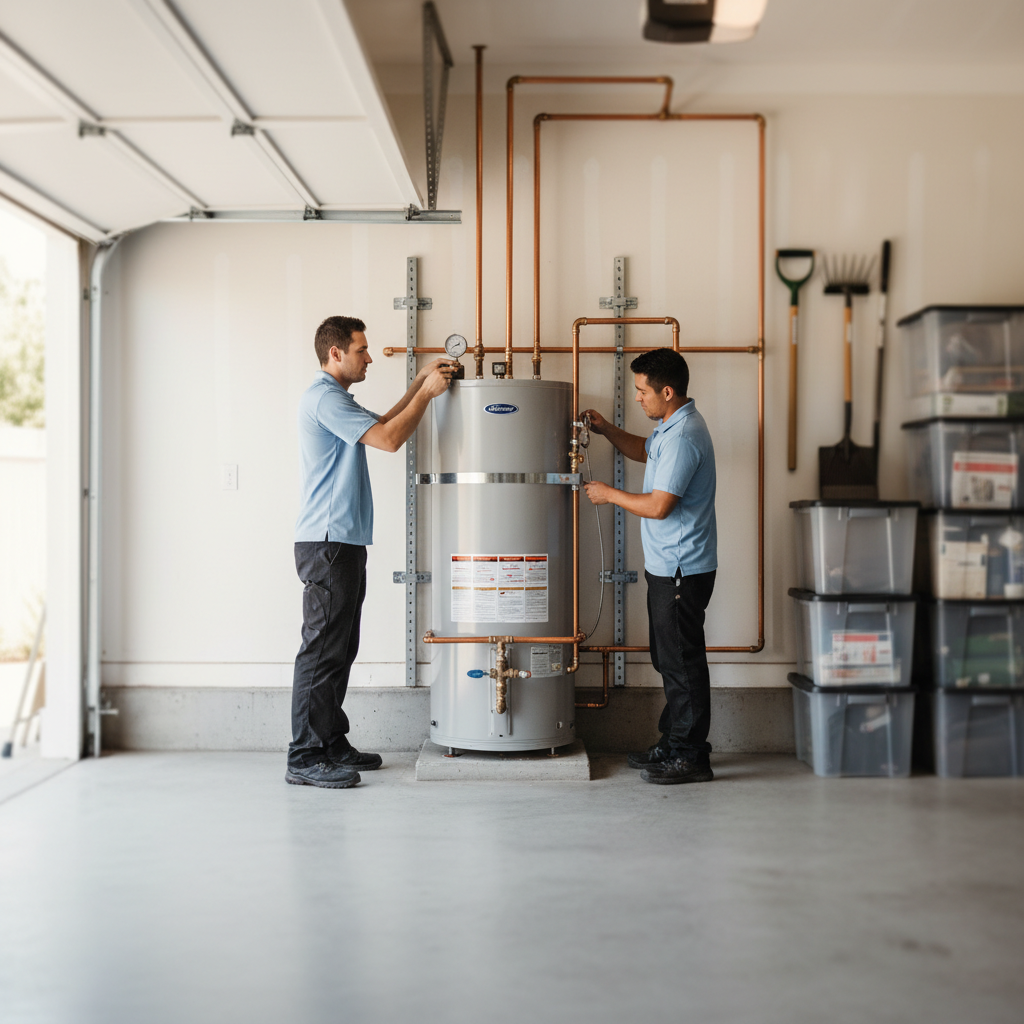
Stage 4: BTU Calibration and System Recommendations
Once we have the data, we don’t just hand you a report; we use it to size your new system with surgical precision. According to Energy.gov, proper sizing is critical for maximizing the lifespan of high-efficiency units like heat pump water heaters.
A typical Bay Area mid-market client might be tempted to buy a 75-gallon tank to solve a “running out of hot water” issue. However, our thermal mapping often reveals that the issue isn’t capacity—it’s that 30% of their heat is disappearing into the slab. By fixing the delivery path or adding a smart recirculating loop, they can often drop to a 50-gallon high-efficiency heat pump unit, saving thousands over the life of the appliance.
- Recovery Rate Optimization: We match the heater’s recovery speed to the actual delivered temperature at the tap.
- Rebate Maximization: We ensure your system meets the criteria for TECH Clean California incentives.
- Preventative Proof: Use your thermal map as documentation for insurance companies to prove you’ve mitigated sub-slab risks.
But wait—don’t try to DIY this with a cheap smartphone thermal camera. The cost of misinterpreting a ghost heat signature can lead to a $5,000 jackhammering mistake that didn’t need to happen.
Why Bay Area Homeowners Trust This Framework
We’ve seen it all, from the micro-climates of the Fog Belt to the expansive clay soils of the East Bay. Our internal AI content engine, Ingest.blog, helps us track these local trends to ensure our diagnostic frameworks are always ahead of the curve.
The 4-stage framework isn’t just about finding leaks; it’s about future-proofing your home. As we move toward the 2027 gas water heater regulations, understanding your home’s thermal efficiency is the first step in a successful transition to electric heat pump technology.
Key Takeaways for This Week
- Check your utility bills for unexplained 10-15% increases in gas or electric usage.
- Feel for “warm spots” on your ground floor, especially in laundry rooms or kitchens.
- Before upgrading your water heater, ask your contractor for a heat loss audit.
Ready to stop heating the soil under your home? Contact Better Water Heaters for a comprehensive thermal mapping of your slab foundation today. We serve San Jose, Fremont, Redwood City, and the entire Greater Bay Area.
Frequently Asked Questions
How accurate is thermal mapping for finding slab leaks?
When performed by a professional using high-resolution infrared equipment, thermal mapping is highly accurate, often identifying the precise location of a hot water leak within a few inches. This minimizes the need for invasive concrete removal and allows for targeted repairs that save both time and money.
Does thermal mapping work on all types of Bay Area foundations?
Yes, it is effective on standard slab-on-grade, post-tension slabs, and even homes with radiant floor heating systems. However, the interpretation of the data changes based on the slab thickness and the specific soil moisture levels common in regions like the Peninsula or East Bay.
Can I use thermal mapping to lower my insurance premiums?
While every carrier is different, many insurance companies view documented thermal mapping as proof of proactive maintenance. By identifying “quiet leaks” before they cause structural damage or mold, you demonstrate a lower risk profile, which can be leveraged during policy renewals.
How long does a professional heat loss audit take?
A comprehensive 4-stage audit typically takes between 2 to 4 hours, depending on the square footage of the home and the complexity of the plumbing layout. You will receive a full digital report showing the thermal signatures of your sub-slab lines and recommendations for efficiency improvements.