
📋 Table of Contents
A $5M estate in Los Altos recently saw its brand-new, high-efficiency water heater rupture and flood a finished basement just 18 months after installation. The culprit wasn’t a manufacturing defect; it was a thermal expansion tank failure caused by a city-mandated check valve that turned their home into a pressurized ticking time bomb.
Here is the cold, hard truth: if your Bay Area water agency has installed a backflow preventer or a pressure-reducing valve (PRV), your home is now a closed loop plumbing system. In these systems, water has nowhere to go when it heats up and expands, creating massive pressure spikes that hammer your pipes, blow out faucet seals, and eventually split your water heater tank like an overfilled balloon.
The Silent Killer: How a Closed Loop Plumbing System Destroys Your Investment
Most homeowners don’t realize that water expands by about 2% to 3% in volume when heated, and in a locked system, that force has to go somewhere.
- The Backflow Mandate: Cities like San Jose and Palo Alto are increasingly requiring backflow preventers to keep home water from flowing back into the municipal supply.
- Pressure Spikes: When your heater kicks on, the expanding water can drive internal pressure from a safe 60 PSI to a dangerous 120+ PSI in minutes.
- Total Tank Fatigue: This constant cycling of high pressure stretches the steel tank and cracks the internal glass lining, leading to premature rust and catastrophic thermal expansion tank failure.
The real kicker? Most manufacturers, including Rheem and Bradford White, will flat-out deny your warranty claim if they see evidence of excessive pressure without a functioning expansion tank. You’re looking at a $3,100 replacement cost entirely out of pocket because of a ‘code violation’ installation.
Why Your Water Heater Pressure Relief Valve Isn’t a Safety Net
Many ‘handy’ neighbors will tell you that the water heater pressure relief valve (T&P valve) will protect you, but they are dangerously wrong.
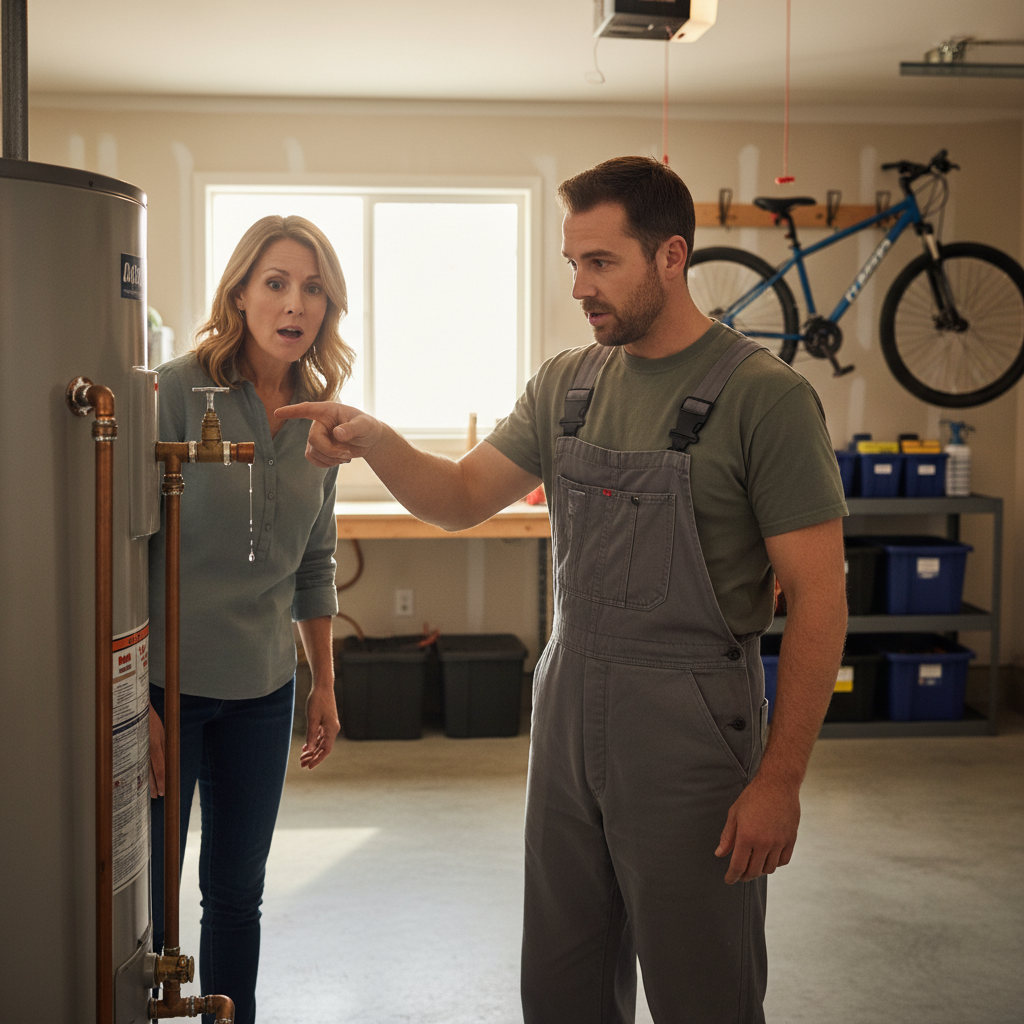
The T&P valve is an emergency fallback designed to prevent your house from exploding, not a daily pressure regulator. If you see that little silver valve dripping, it’s not just a ‘nuisance leak’—it’s a final warning that your system is under extreme duress. Relying on it to manage thermal expansion is like relying on your car’s airbags to stop you at every red light; eventually, the system fails, and the results are messy.
Signs Your Expansion Tank Has Already Failed:
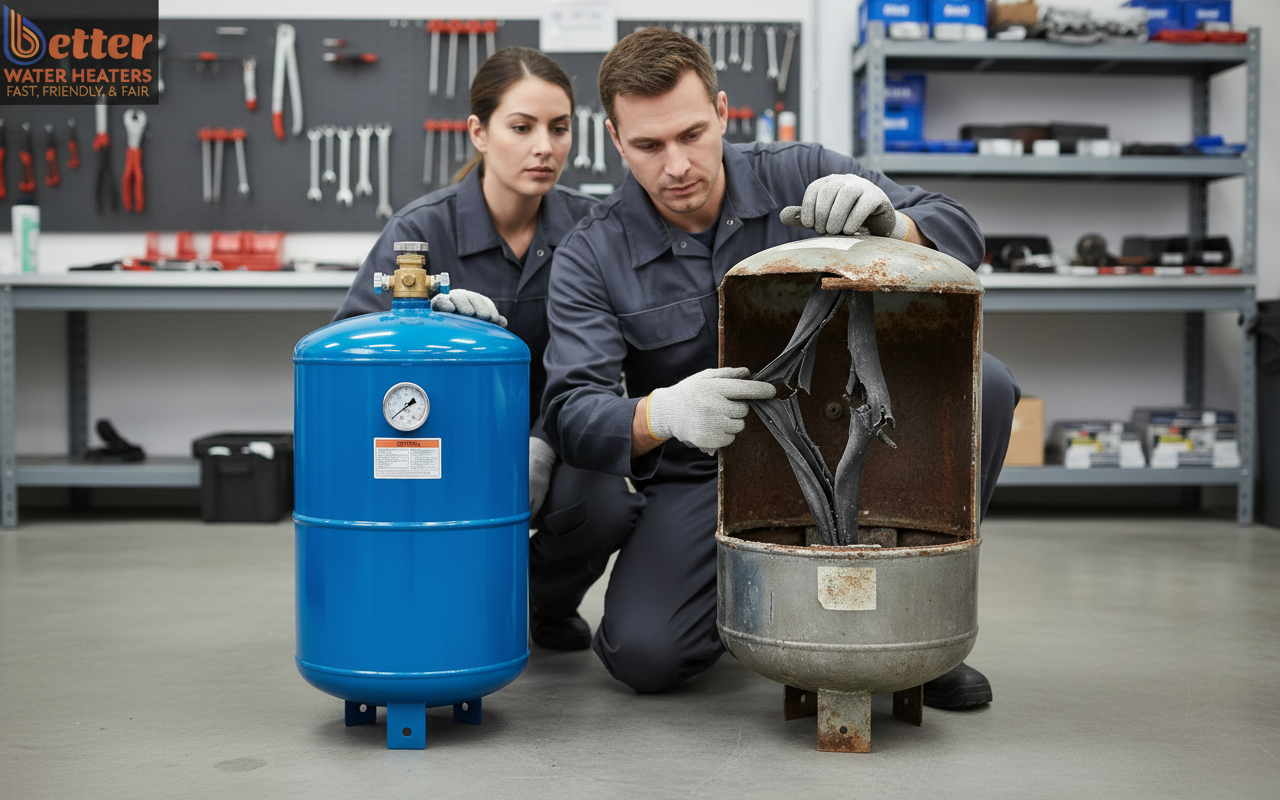
- The “Tap Test”: Tap the top and bottom of the tank; if both sound like a dull thud, the internal diaphragm is ruptured and the tank is full of water.
- Fluctuating Water Pressure: You notice a massive burst of pressure when you first turn on a faucet after the heater has been running.
- Premature Leaks: Faucets and toilet fill valves across the house start failing or dripping simultaneously.
What most people miss is that the air charge in these tanks must be calibrated to match your home’s static water pressure. A tank straight off the shelf at Home Depot is rarely set correctly for Bay Area homes, which often see high street pressures. If you’re worried about your current setup, schedule a professional pressure diagnostic before the next spike ruins your flooring.
The Warranty Trap: Why Insurance and Manufacturers Will Walk Away
Insurance adjusters are getting smarter, and they know exactly what a closed loop plumbing system looks like without proper protection.
One of our clients in Fremont learned this the hard way when their 2-year-old tankless unit suffered a heat exchanger failure. Because the installer hadn’t accounted for the local PRV installation Bay Area requirements, the manufacturer voided the $2,500 parts warranty instantly. The insurance company then denied the water damage claim, citing ‘improper installation not meeting California Plumbing Code Section 608.2.’
| Feature | Open System (Old) | Closed System (New/Standard) |
|---|---|---|
| Pressure Escape | Back into City Main | None (Trapped in Home) |
| Expansion Tank | Optional but Recommended | Mandatory by Code |
| Heater Lifespan | 10-15 Years | 2-4 Years (Without Tank) |
Contrarian Insight: Why ‘High Efficiency’ Makes the Problem Worse
Here’s something the big box stores won’t tell you: the more efficient your heater is, the more sensitive it is to pressure spikes.
Modern Heat Pump Water Heaters (HPWH) and high-output tankless units have thinner, more complex internal components designed for heat transfer, not structural rigidity. While an old 1990s ‘dumb’ tank might have survived five years of abuse, a modern unit will succumb to thermal expansion tank failure significantly faster. According to the U.S. Department of Energy, maintaining proper pressure is the single most important factor in appliance longevity.
But wait—it gets worse. If you have a recirculating pump to get instant hot water to your master bath, you are accelerating the expansion cycle. More cycles mean more pressure spikes, which means that $150 expansion tank is the only thing standing between you and a $3,100 disaster.
The Homeowner’s 2-Minute Safety Checklist:
- Locate your main water shut-off: Is there a bell-shaped valve (PRV) or a brass check valve nearby? If yes, you are in a closed loop.
- Check the expansion tank: Is it sagging? Is it supported by more than just the copper pipe?
- Check the air valve: Unscrew the plastic cap on the expansion tank and quickly depress the Schrader valve. If water squirts out, the tank is dead.
Need a professional eye to confirm your system is up to code? Explore our maintenance guides or call us to ensure your warranty remains valid.
Don’t Let a $150 Part Cost You $3,100
The real tragedy of thermal expansion tank failure is how preventable it is. It is the textbook definition of ‘penny wise and pound foolish.’ We see homeowners spend $4,000 on a top-of-the-line Navien or Rheem system only to skip the expansion tank to save a few bucks on the quote.
In the Bay Area, where labor costs are high and permits are strictly enforced, doing it right the first time is the only way to save money. We’ve seen the water heater pressure relief valve fail to open, resulting in cracked porcelain on toilets and blown-out fridge water lines. It’s not just about the heater; it’s about the integrity of your entire home’s infrastructure.
Advanced FAQs for Sophisticated Homeowners
How do I know if my Bay Area city requires a closed-loop setup?
Most municipalities in Santa Clara and San Mateo counties now require backflow prevention for new builds and major remodels. If you have a Pressure Reducing Valve (PRV) installed to manage high street pressure, your system is automatically closed. You can check your local building department’s website or look for a bell-shaped valve on your main water line.
Can I just replace the expansion tank myself?
While physically possible, it is technically difficult because the air pressure inside the tank must be manually pumped to match your home’s specific water pressure while the system is unpressurized. If the pressures don’t match, the diaphragm will over-extend and fail within months, leading to another thermal expansion tank failure. It’s a job best left to pros who carry high-accuracy gauges.
Why did my expansion tank fail after only two years?
Premature failure is usually due to poor initial calibration or high heat exposure. If the tank was never pressurized to match your 80 PSI home pressure, the internal rubber bladder was likely stretched to its limit from day one. Additionally, if it’s mounted horizontally without support, the weight of the water (once the bladder fails) can snap the piping, causing a flood anyway.
Does a tankless water heater need an expansion tank?
Technically, many tankless units have a small internal bypass, but in a closed loop plumbing system, most manufacturers still require an external expansion tank or a specialized thermal expansion relief valve to protect the sensitive copper heat exchanger. Skipping this often voids the very expensive heat exchanger warranty.
The Bottom Line: Your water heater is the heart of your home, and thermal expansion is the high blood pressure that causes a stroke. Don’t wait for the flood to find out your ‘closed loop’ was a ticking time bomb. Contact Better Water Heaters today for a comprehensive system audit and keep your warranty—and your floors—perfectly intact.