
📋 Table of Contents
- The Silent Foundation Killer: Acidic Water Damage Explained
- Why Most Walnut Creek Installs Are Code Violations
- The $150 Part Your Plumber Swears You Don’t Need
- Case Study: The $3,200 Foundation Bill in Walnut Creek
- Title 24 and the Future of Bay Area Plumbing
- The Walnut Creek Homeowner’s Compliance Checklist
- FAQs
Your high-efficiency tankless water heater is quietly eating your home’s foundation with every shower you take. In Walnut Creek, we are seeing a staggering number of tankless condensate disposal setups that are not just inefficient—they are outright illegal and structurally dangerous.
The real kicker? Most homeowners have no idea they are sitting on a $3,200 repair bill until the concrete starts crumbling. Here is the cold, hard truth: high-efficiency (condensing) water heaters produce a byproduct that is essentially liquid acid, and if your plumber didn’t install a neutralizer, they’ve turned your crawlspace into a chemistry experiment.
The Silent Foundation Killer: Acidic Water Damage Explained
Concrete is alkaline by nature, which makes it the perfect ‘snack’ for the pH 3.0 acidic runoff coming out of your Navien or Rinnai unit. What most people miss is that this liquid is roughly as acidic as a lemon or a cup of black coffee, and it never stops dripping.
When this untreated liquid hits your foundation or garage floor, it triggers a process called spalling. Over time, the acid dissolves the calcium hydroxide in the concrete, leaving behind a powdery, pitted mess that eventually leads to structural instability. We recently visited a $2.5M home in the Saranap neighborhood where a 4-year-old tankless unit had eaten a two-inch deep hole directly into the footing because the installer ‘forgot’ the drain line.
- pH Levels: Standard condensate sits between 2.9 and 4.0 pH.
- Volume: A typical family produces 5-8 gallons of this acid per day.
- Structural Impact: Acidic water damage can weaken rebar and cause foundation settlement.
If you suspect your system is dumping acid into your soil, don’t wait for the cracks to appear. Schedule a professional inspection today to protect your home’s value.
Why Most Walnut Creek Installs Are Code Violations
Walnut Creek building inspectors are currently cracking down on unpermitted retrofits because Bay Area plumbing code violations have reached an all-time high. According to the International Association of Plumbing and Mechanical Officials (IAPMO), all acidic condensate must be neutralized before entering the waste stream or being discharged.
But wait—it gets worse. Many ‘low-bid’ plumbers simply run a plastic tube into the crawlspace or out a hole in the siding. This isn’t just lazy; it’s a violation of California Title 24 requirements. A legal installation requires a dedicated condensate neutralizer kit and a discharge point that leads to the sanitary sewer, never the storm drain or the dirt under your house.
The ‘Permit Tax’ Myth
Homeowners often think skipping a permit saves money, but in Contra Costa County, an unpermitted tankless install is a massive liability. If you go to sell your home and the inspector flags an illegal tankless condensate disposal setup, you’ll be paying for the permit, the penalties, and the corrective plumbing work anyway. The real cost isn’t the city fee; it’s the structural integrity of your $1.5M+ asset.
The $150 Part Your Plumber Swears You Don’t Need
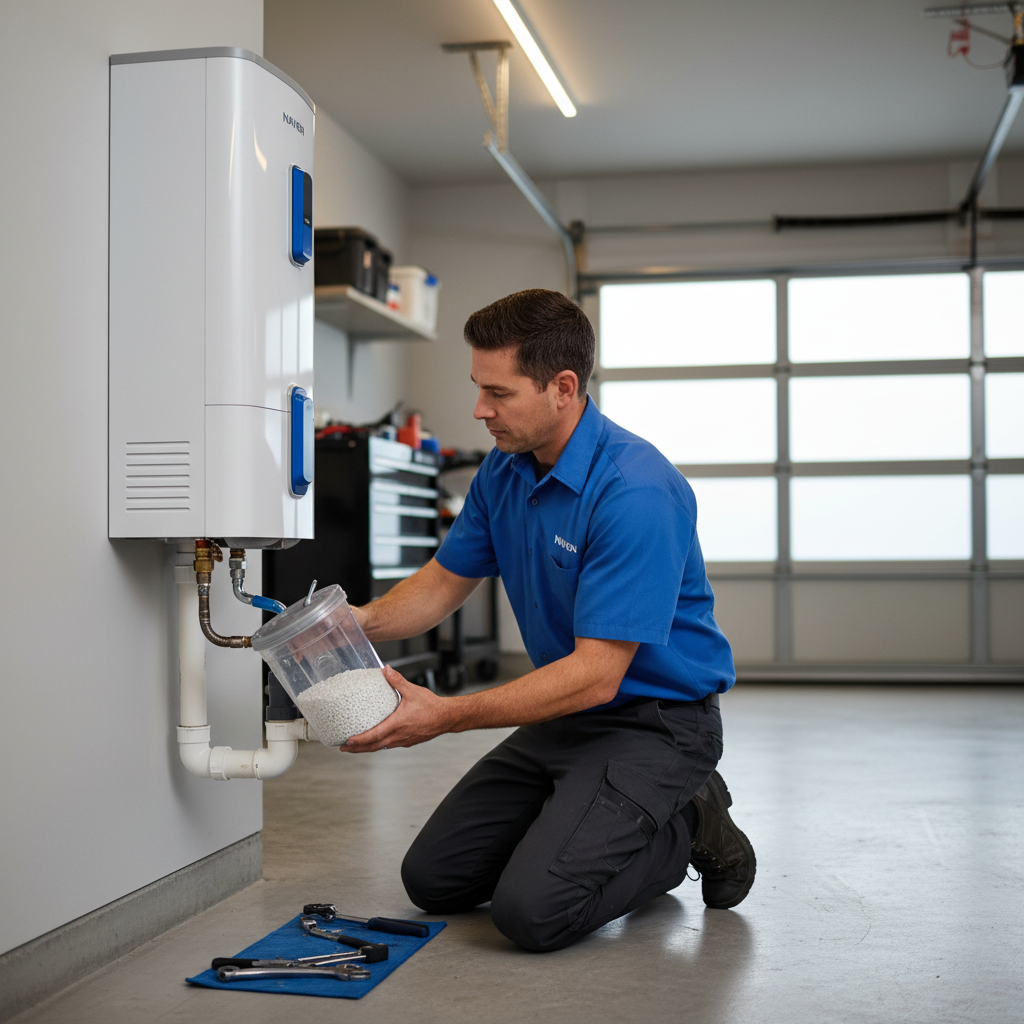
The difference between a legal, safe installation and a ‘foundation sinkhole’ is a simple $150 plastic tube filled with limestone chips. This is the condensate neutralizer kit. Here’s the thing: many installers skip this part because it requires annual maintenance, and they don’t want to explain to you that the ‘maintenance-free’ tankless system actually needs a filter change every 12 months.
What most people miss is that these neutralizers have a lifespan. Once the limestone rocks inside are coated in sediment or dissolved, they stop working. If your neutralizer is more than two years old and hasn’t been serviced, you’re likely dumping acid straight into your pipes. This can lead to pinhole leaks in cast iron sewer lines, which cost significantly more to replace than a water heater.
Common Installation Errors We See in the Bay Area:
- Discharging directly into a floor drain without a neutralizer.
- Piping condensate into a copper drain line (the acid eats the copper in months).
- Terminating the drain line against the exterior stucco or foundation.
- Using a neutralizer but failing to replace the media for 5+ years.
Need to know if your system is up to code? Check out our tankless maintenance guides for more details on what a proper setup looks like.
Case Study: The $3,200 Foundation Bill in Walnut Creek
One of our clients, a homeowner near Heather Farm Park, called us because their garage floor was ‘flaking.’ They had a high-end tankless unit installed by a generic ‘handyman-plumber’ three years prior. The installer had run the condensate line into a small hole drilled in the garage floor, assuming it would just ‘drain into the gravel.’
The reality? The acidic water damage had created a void under the slab. By the time we arrived, the concrete was so soft you could scrape it away with a screwdriver. The homeowner ended up paying $450 for the plumbing correction and $3,200 for a concrete specialist to patch and reinforce the slab. All of this could have been avoided with a $150 part and a $200 permit.
Pro-Tip: Check your discharge line. If it’s dripping onto concrete and you see white, chalky powder (efflorescence) or pitting, you have a problem. This is called foundation spalling, and it is a major red flag for home inspectors.
Title 24 and the Future of Bay Area Plumbing
As we move toward the 2027 gas water heater regulations, the focus on high-efficiency systems is only increasing. The California Energy Commission has strict standards for how these units are installed. If you are planning an upgrade, you must ensure your contractor understands the specific Walnut Creek plumbing permits process.
At Better Water Heaters, we handle the entire permit process and ensure every tankless condensate disposal system is 100% compliant with local codes. We don’t cut corners because we’ve seen the damage those corners cause. Whether you’re in a mid-century modern in Walnut Creek or a new build in San Ramon, the physics of acid and concrete remain the same.
Ready to ensure your home is safe? Book a free estimate with our experts and get your system checked before the damage spreads.
The Walnut Creek Homeowner’s Compliance Checklist
Don’t take your installer’s word for it. Use this checklist to verify your tankless condensate disposal is legal and safe:
- Is there a neutralizer? Look for a horizontal or vertical plastic tube (usually clear or white) filled with grey/white rocks.
- Where does it drain? It should go into a laundry standpipe, a floor drain with an air gap, or a condensate pump. It should NEVER go into the dirt.
- Is the pipe material correct? Condensate lines must be PVC, CPVC, or Polypropylene. Never copper or galvanized steel.
- Is there a permit on file? Check with the Walnut Creek Building Department. No permit usually means no inspection, which means high risk.
The real kicker? Most insurance companies will deny a claim for foundation damage if they find the cause was an unpermitted, non-compliant appliance installation. You aren’t just saving the foundation; you’re saving your insurance coverage.
FAQs: Protecting Your Foundation
How often should I replace my condensate neutralizer?
For most Bay Area homes, the neutralizer media should be replaced every 12 to 24 months. If you have a large family or high hot water usage, the limestone will dissolve faster. We recommend checking the pH of the output annually using a simple litmus strip; it should be above 5.0.
Can I just use a bucket to catch the water?
Absolutely not. A condensing tankless unit can produce up to 8 gallons of water a day. Unless you plan on emptying a bucket every few hours, you risk a flood. Furthermore, dumping that bucket into a garden will kill your plants and acidify your soil, potentially damaging your home’s exterior.
Does a heat pump water heater have the same problem?
Heat pump water heaters also produce condensate, but it is typically not acidic like gas-powered tankless units. However, they still require proper drainage to prevent mold and water damage in your garage or closet. Always ensure a professional handles the tankless condensate disposal or heat pump drainage.
Why is my plumber telling me I don’t need a neutralizer?
They are either uninformed or lazy. Many plumbers rely on ‘how we’ve always done it,’ but modern high-efficiency units are different beasts. If they refuse to install one, they are effectively asking you to risk your foundation for their convenience. Always insist on a condensate neutralizer kit for any condensing unit.
The Bottom Line: A tankless water heater is a fantastic investment for your Bay Area home, but only if it’s installed with respect for the laws of chemistry. Don’t let a ‘cheap’ installation turn into a $3,200 structural nightmare. If your system was installed without a permit or a neutralizer, call the experts who know Walnut Creek codes inside and out. Your foundation will thank you.