
📋 Table of Contents
A typical 80-gallon heat pump water heater can weigh over 1,000 pounds when fully loaded, yet many installers treat them like the lightweight gas tanks of the 1990s. According to the U.S. Department of Energy, heat pump models are significantly heavier due to the integrated compressor and larger tank sizes required to match the recovery rates of gas units.
Performing a structural load assessment isn’t just a technical formality; it is a safety imperative for Bay Area homeowners living in aging properties. If you are upgrading to take advantage of the Inflation Reduction Act tax credits, you must account for the physical reality of these “thermal batteries.”
Step 1: Calculating the Static vs. Dynamic Weight Capacity
The real kicker is that the “dry weight” listed on the box is a fraction of the total force your floor will actually sustain.
- Dry Weight: 200–450 lbs for the unit itself.
- Water Weight: Roughly 8.34 lbs per gallon (an 80-gallon tank adds 667 lbs).
- Dynamic Load: The vibration from the heat pump compressor adds a variable force that static tanks don’t have.
In our work with mid-market Bay Area residential properties, we often find that utility closets designed in the 1970s were only rated for a 40-gallon gas tank. Switching to a high-capacity hybrid model increases the water heater weight capacity requirement by nearly 60%.
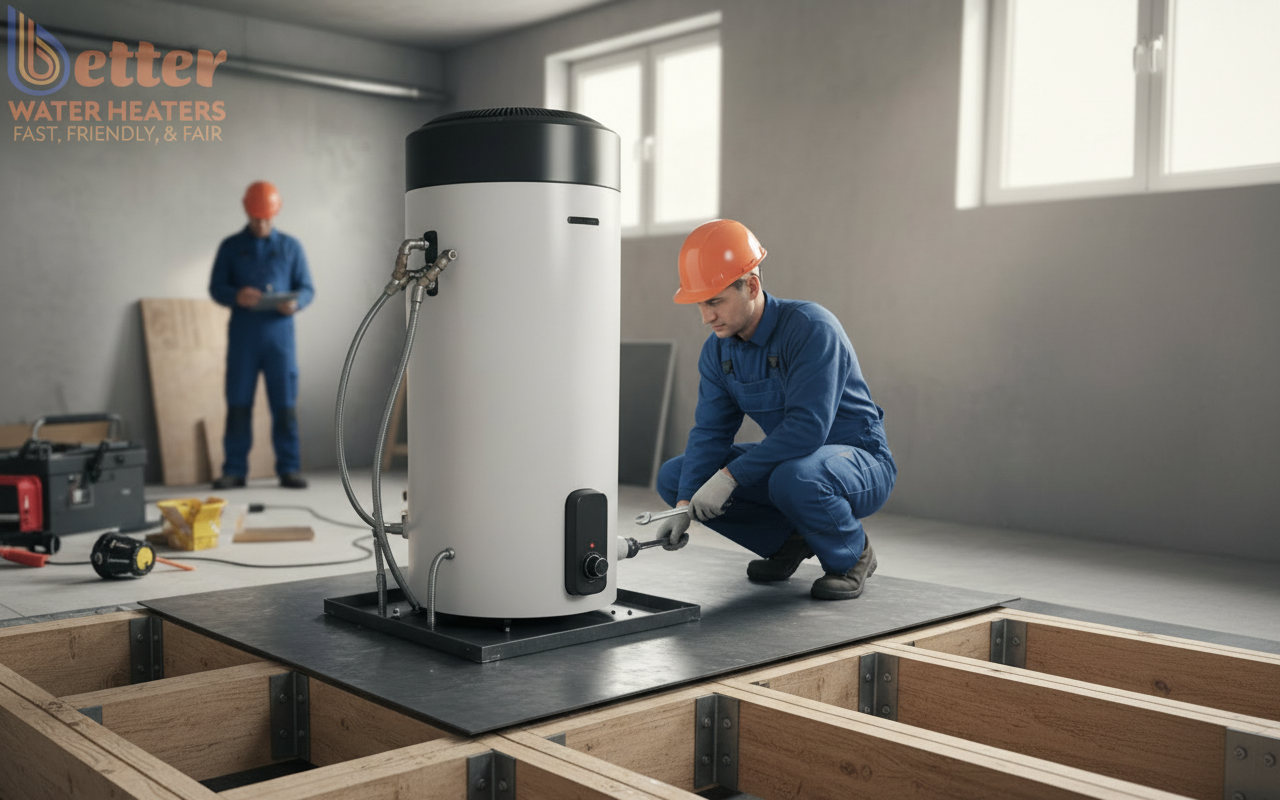
Step 2: Floor Joist Reinforcement and Point Load Distribution
Most people miss the fact that water heaters create a “point load,” concentrating hundreds of pounds on a tiny 4-square-foot footprint.
To ensure structural integrity, your structural load assessment must evaluate the span and condition of the underlying joists. In many San Jose or Oakland Victorian-style homes, the floor joists may have experienced minor dry rot or termite damage over decades, significantly reducing their ability to handle new heat pump installation requirements.
- Joist Inspection: Check for sagging or cracking in the wood directly beneath the installation site.
- Sistering Joists: Adding a second joist alongside the original to double the load-bearing capacity.
- Distribution Plates: Using a 3/4-inch plywood base or a steel plate to spread the weight across multiple joists.
Need a professional eye to check your flooring? Schedule a free structural site evaluation with our expert team today.
Step 3: Seismic Strapping and Lateral Force Mitigation
In the Bay Area, a heavy tank isn’t just a floor concern; it’s a life-safety hazard during an earthquake.
California Plumbing Code requires specific seismic strapping HPWH protocols. Because heat pumps are top-heavy due to the compressor unit sitting above the tank, the center of gravity is higher than traditional models. This shift requires more robust anchoring to the wall studs to prevent the unit from tipping and shearing water or refrigerant lines.
- Double Strapping: Mandatory straps at the top and bottom thirds of the tank.
- Blocking: Adding solid wood blocking between studs to ensure the lag bolts have sufficient “bite.”
- Clearance: Ensuring the unit has enough space to vibrate during operation without hitting structural walls.
Step 4: Integrated Condensate and Platform Integrity
One honest, contrarian insight we stand by: The weight isn’t your only structural enemy—moisture is.
Unlike gas heaters, heat pumps produce condensate (water pulled from the air). If your structural load assessment ignores the drainage path, a small leak can rot the very floor joists you just reinforced. A hybrid water heater installation requires a dedicated drain line or a condensate pump. If the platform becomes saturated, its load-bearing capacity drops by up to 50% in just a few months.
| Feature | Standard Gas Tank | Heat Pump (Hybrid) |
|---|---|---|
| Avg. Full Weight | 450 – 550 lbs | 850 – 1,100 lbs |
| Vibration Load | None | Low to Medium |
| Seismic Risk | Moderate | High (Top-Heavy) |
Thinking about a tankless option instead? Check out our comparison of tankless vs. heat pump systems to see which fits your home’s structure better.
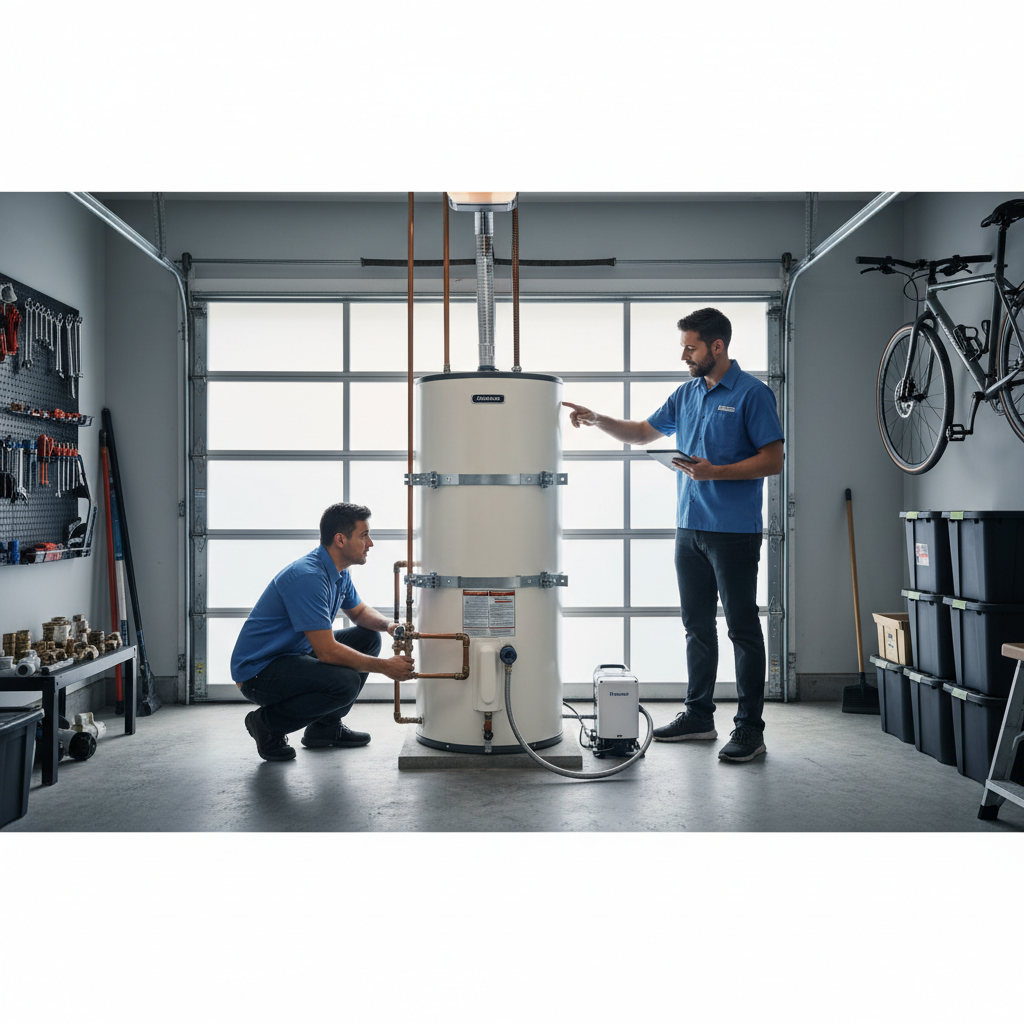
Why Documented Assessments Matter for Insurance
Here’s the thing: if your floor sags or collapses under the weight of a new unit, your homeowner’s insurance may deny the claim if the installation didn’t meet local building codes.
A documented structural load assessment proves that you performed due diligence. This is especially vital for property managers in San Francisco or Berkeley, where multi-family conversions place heavy units on upper floors. We use a rigorous checklist to ensure every heat pump installation requirement is met, protecting both your property and your liability.
But wait—don’t let the technical hurdles scare you away from the savings. The ENERGY STAR program notes that these units can save a household hundreds of dollars annually. The key is doing it right the first time.
Summary: Future-Proofing Your Bay Area Home
The transition to electric appliances is inevitable given the 2027 gas water heater regulations in the Bay Area. By addressing your home’s water heater weight capacity now, you are essentially preparing your home for the next generation of thermal technology. Whether you are a first-time homebuyer or a seasoned landlord, structural safety is the foundation of energy efficiency.
Your Action Item for Monday Morning: Go to your water heater closet with a flashlight. Look for any signs of floor discoloration or soft spots. If you’re planning an upgrade, measure the footprint and calculate the potential weight of an 80-gallon unit.
Ready to make the switch safely? Contact Better Water Heaters for a comprehensive installation quote that includes a full structural review.
Frequently Asked Questions
How much weight can a standard floor hold for a water heater?
Most residential floors are designed for a live load of 40 pounds per square foot. However, a large heat pump water heater can exert over 200 pounds per square foot. This is why a structural load assessment is necessary to determine if joist reinforcement or a distribution plate is required to prevent sagging.
Do I need a permit for a heat pump water heater in the Bay Area?
Yes, all Bay Area jurisdictions require a permit for water heater replacements. This ensures that the electrical upgrades, condensate drainage, and seismic strapping meet current California Building Code standards. Better Water Heaters handles the entire permit process for our clients to ensure full compliance.
Can I install a heat pump water heater on a wooden platform?
Yes, but the platform must be engineered to handle the 800+ lbs of a full tank. We recommend using pressure-treated lumber and 3/4-inch CDX plywood. Additionally, the platform must be level to ensure the internal components and condensate drainage function correctly without putting uneven stress on the tank walls.
What happens if my floor isn’t reinforced?
Over time, the excessive weight can cause floor joists to deflect or “creep.” This leads to cracked tiles, sticking doors in adjacent rooms, and potentially a catastrophic failure where the tank ruptures or falls through the floor. A proactive structural load assessment identifies these risks before the installation begins.