Water heater article archive
Stacking Water Heater Rebates: 2026 Bay Area Guide | Better Water Heaters
Historical article, not newly reviewed advice. Verify current requirements, incentives and model guidance with the relevant authority or manufacturer before relying on them. Equipment and service needs require an assessment.
📋 Table of Contents
- The 2026 Financial Roadmap for Stacking Water Heater Rebates
- Understanding the Energy Star 3.0 Tax Credit Requirements
- Bay Area Energy Incentives 2026: Local Stacking Opportunities
- The Real Cost: Gas vs. Stacked Heat Pump Comparison
- Why 2026 is the 'Cliff Year' for Bay Area Homeowners
- Strategic Installation: Microclimates and Grid Integration
- Maximizing ROI with an Authorized TECH Clean California Contractor
- FAQs
For sophisticated Bay Area homeowners, stacking water heater rebates is the most effective financial strategy to hedge against rising utility costs and upcoming regional gas bans. As we move toward 2026, a unique 'incentive alignment' has emerged, allowing residents to combine federal, state, and local subsidies to cover up to 75% of a premium heat pump system installation.
Key Takeaways for 2026
- The 25C Tax Credit provides a non-refundable credit of 30% (up to $2,000) for Energy Star 3.0 certified heat pumps.
- Local programs like TECH Clean California and BayREN offer stackable 'first-come, first-served' cash incentives.
- The BAAQMD (Bay Area Air Quality Management District) 2027 mandates make 2026 the critical 'cliff year' for proactive replacement.
- Innovative 120V 'plug-in' heat pumps now allow for high-efficiency upgrades without the $3,000 cost of an electrical panel upgrade.
The 2026 Financial Roadmap for Stacking Water Heater Rebates
Strategic financial planning for home infrastructure requires understanding how different incentive layers interact. While many homeowners are aware of the federal energy star 3.0 tax credit, few realize that these funds can be combined with localized California programs to create a 'Zero-Dollar' or near-zero-cost installation scenario.
Currently, the Inflation Reduction Act (IRA) provides the bedrock of these savings through the 25C tax credit. However, the real 'Bay Area Math' happens when you layer this with the TECH Clean California incentives and BayREN rebates. These local pools are limited and often fluctuate based on quarterly budget allocations, making the timing of your installation critical for ROI.
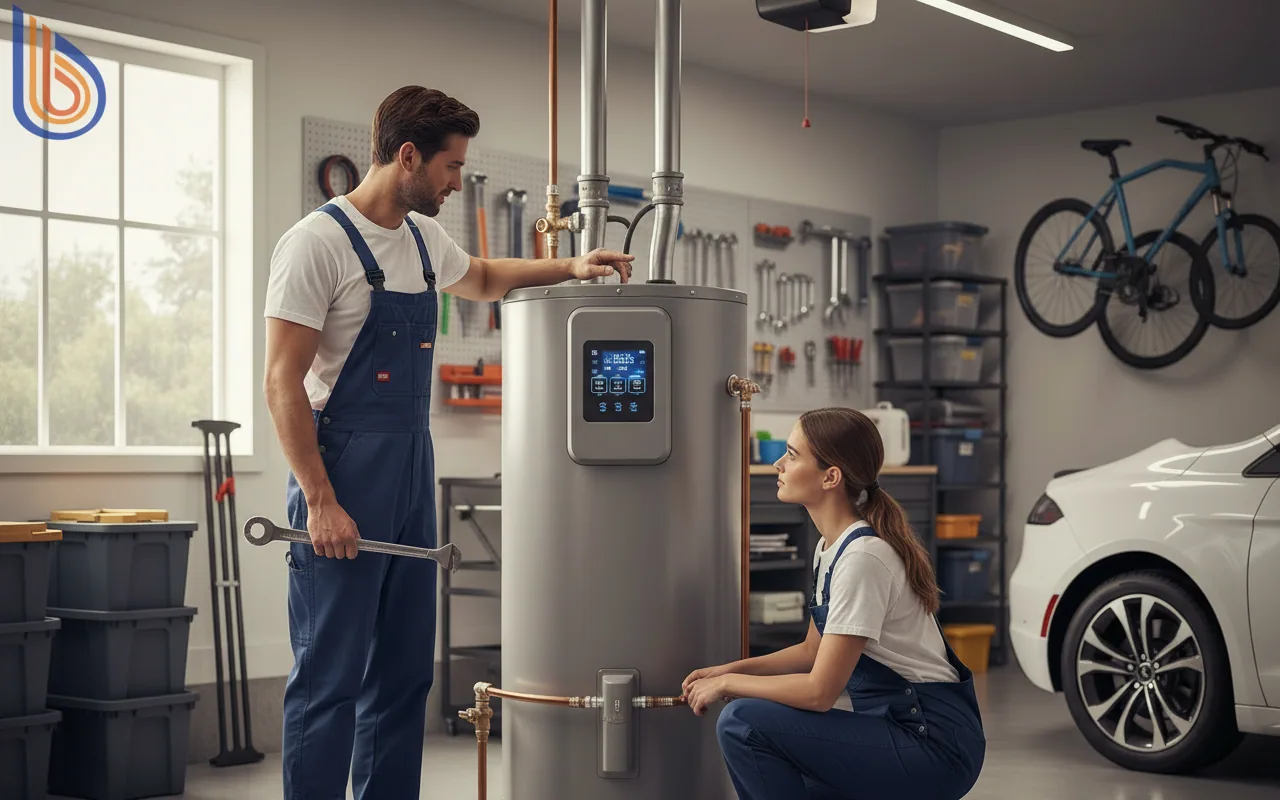
Furthermore, the shift toward electrification is no longer just an environmental choice; it is a regulatory requirement. According to the U.S. Department of Energy, heat pump water heaters are up to three times more efficient than conventional electric resistance water heaters, saving the average household hundreds annually on PG&E bills.
Understanding the Energy Star 3.0 Tax Credit Requirements
To qualify for the maximum federal incentive, your new system must meet strict efficiency benchmarks. The energy star 3.0 tax credit specifically targets high-performance heat pumps that achieve a high Uniform Energy Factor (UEF).
- Tax Credit Limit: 30% of the total project cost, capped at $2,000 per year.
- Eligibility: Must be a primary residence and the unit must meet Energy Star 3.0 specifications.
- Panel Upgrades: A separate tax credit of up to $600 is available if your heat pump requires an electrical panel upgrade.
Consequently, many homeowners in San Jose or Fremont are opting for the new 120V 'plug-in' heat pump models. These units are designed to plug into a standard outlet, bypassing the need for a dedicated 240V circuit and a costly panel upgrade while still remaining eligible for the 30% federal credit. This is a game-changer for older Bay Area homes with limited electrical capacity.
Bay Area Energy Incentives 2026: Local Stacking Opportunities
Beyond federal help, the bay area energy incentives 2026 landscape is dominated by three major players: TECH Clean California, BayREN, and local CCAs (Community Choice Aggregators) like Peninsula Clean Energy or Silicon Valley Clean Energy.
The 'Big Three' Local Incentives
- TECH Clean California: Offers varying rebates (often $1,000-$3,100) specifically for switching from gas to heat pump technology.
- BayREN Home+: Provides a standard $1,000 rebate for heat pump water heaters, often stackable with other programs.
- Utility-Specific Rebates: Some local providers offer 'Grid-Integrated' incentives, where you receive a rebate for allowing the utility to shift heating cycles to off-peak hours.
Are you overwhelmed by the paperwork? Our team at Better Water Heaters specializes in handling the rebate applications for you, ensuring you don't leave thousands of dollars on the table. Call us at (408) 686-4969 to verify which local funds are currently active for your zip code.
The Real Cost: Gas vs. Stacked Heat Pump Comparison
When evaluating stacking water heater rebates, it's essential to look at the net cost rather than the sticker price. In many cases, a high-end heat pump ends up costing less than a standard gas water heater after all incentives are applied.
| Expense/Credit Factor | Standard Gas Heater | Stacked Heat Pump (HPWH) |
|---|---|---|
| Average Installation Cost | $2,500 | $5,500 |
| Federal 25C Tax Credit | $0 | ($1,650) |
| TECH Clean CA Rebate | $0 | ($1,000) |
| BayREN Rebate | $0 | ($1,000) |
| Net Homeowner Cost | $2,500 | $1,850 |
As demonstrated, the 'Bay Area Math' clearly favors the heat pump. However, these local rebates are 'first-come, first-served.' Waiting until your current gas heater fails in late 2026 might mean the local funds are depleted, leaving you to pay the full price for a mandatory emergency replacement.
Why 2026 is the 'Cliff Year' for Bay Area Homeowners
The urgency for stacking water heater rebates is driven by the BAAQMD (Bay Area Air Quality Management District) regulations. Starting in 2027, the sale and installation of natural gas water heaters will be phased out across the region to meet zero-NOx emission standards.
- Inventory Shortages: As the deadline nears, demand for heat pumps will skyrocket, likely leading to labor price increases.
- Funding Depletion: State programs like TECH Clean California are budget-capped; once the 2026 allocation is gone, it may not be renewed at the same levels.
- Property Value: Homes already converted to electric heat pumps will be more 'future-proof' for prospective buyers in the increasingly regulated California real estate market.
Moreover, the Energy Star program frequently updates its criteria. By acting now, you lock in the current 3.0 standards before potentially more expensive requirements are introduced in the next version of the tax code.
Strategic Installation: Microclimates and Grid Integration
Sophisticated homeowners often ask about heat pump performance in specific Bay Area microclimates. Whether you are in the foggy Sunset District of San Francisco or the heat of Livermore, modern heat pumps are designed to operate efficiently in ambient temperatures down to 40°F.
Additionally, choosing a 'Grid-Integrated' or 'CTA-2045' compliant water heater allows you to participate in demand-response programs. This means PG&E can communicate with your water heater to avoid heating during peak evening hours when electricity is most expensive, effectively lowering your operational costs without affecting your hot water supply.
Ready to maximize your savings? Schedule a free site assessment with our expert technicians to see if your home is ready for a stacked-incentive upgrade.
Maximizing ROI with an Authorized TECH Clean California Contractor
To successfully navigate stacking water heater rebates, you must work with a licensed TECH Clean California contractor. Many of these incentives are not available for DIY installations or through contractors who haven't undergone the specific state-mandated training.
- Verified Performance: Authorized contractors ensure the unit is sized correctly for your household's peak demand.
- Permit Compliance: We handle all local Bay Area permits and seismic strapping requirements, which are mandatory to claim rebates.
- Instant Discounts: In many cases, we can apply the TECH rebates directly to your invoice, reducing your out-of-pocket costs immediately.
Don't let your aging gas unit dictate your timeline. By proactively replacing your system in 2025 or 2026, you control the costs, capture the maximum available incentives, and avoid the stress of an emergency 'no hot water' situation during a holiday weekend.
Final Verdict: The Window is Closing
The combination of the energy star 3.0 tax credit and local bay area energy incentives 2026 creates a once-in-a-decade opportunity. At Better Water Heaters, we’ve spent 20+ years helping Bay Area families navigate the complexities of local codes and rebates. Contact us today at (408) 686-4969 or book your consultation online to secure your spot in the 2026 rebate queue.
Frequently Asked Questions
How do I apply for the 25C Tax Credit for my water heater?
You claim the 25C tax credit when you file your annual federal income tax return using IRS Form 5695. Ensure you keep the manufacturer’s certification statement and your itemized receipt from Better Water Heaters, as these documents prove the system meets the Energy Star 3.0 efficiency requirements needed for the 30% credit.
Can I stack the TECH Clean California rebate with BayREN?
Yes, in most Bay Area jurisdictions, you can stack TECH Clean California, BayREN, and the Federal tax credit. However, some specific utility programs have 'anti-double-dipping' rules. As an authorized contractor, we verify the current stacking rules for your specific city—such as San Jose or Redwood City—before we begin the project.
Do I need a 240V electrical outlet for a heat pump water heater?
Traditionally, yes, but 2026 brings more 'plug-and-play' 120V models to the market. These units are designed to work on a standard household circuit, which can save you up to $3,000 in electrical panel upgrade costs. These 120V models are still eligible for the 30% federal tax credit, making them an excellent choice for older homes.
What happens if I wait until 2027 to replace my gas water heater?
Starting in 2027, the BAAQMD zero-NOx regulations will make it nearly impossible to find or legally install a standard natural gas water heater in the Bay Area. Waiting until then likely means you will face higher equipment costs due to increased demand and potentially fewer available rebates as early-adopter funding pools are depleted.