
📋 Table of Contents
According to the U.S. Department of Energy, heat pump water heaters can be two to three times more energy-efficient than conventional electric resistance water heaters. However, in the compact garages of San Francisco and the aging electrical grids of the East Bay, a successful heat pump conversion depends entirely on a robust site readiness framework before the first wrench even turns.
Key Takeaways for Bay Area Homeowners
- Electrical Assessment: Verify if your panel supports a 240V/30A circuit or if a 120V “plug-in” model is the smarter path.
- Drainage Logic: Heat pumps create condensation; you need a dedicated path to a floor drain or a condensate pump.
- Spatial Clearance: These units need roughly 700–1,000 cubic feet of air space to breathe and heat efficiently.
- Rebate Strategy: Stack BayREN, TECH Clean California, and Federal 25C tax credits for up to $4,900+ in savings.
Step 1: The Electrical Panel Readiness Audit
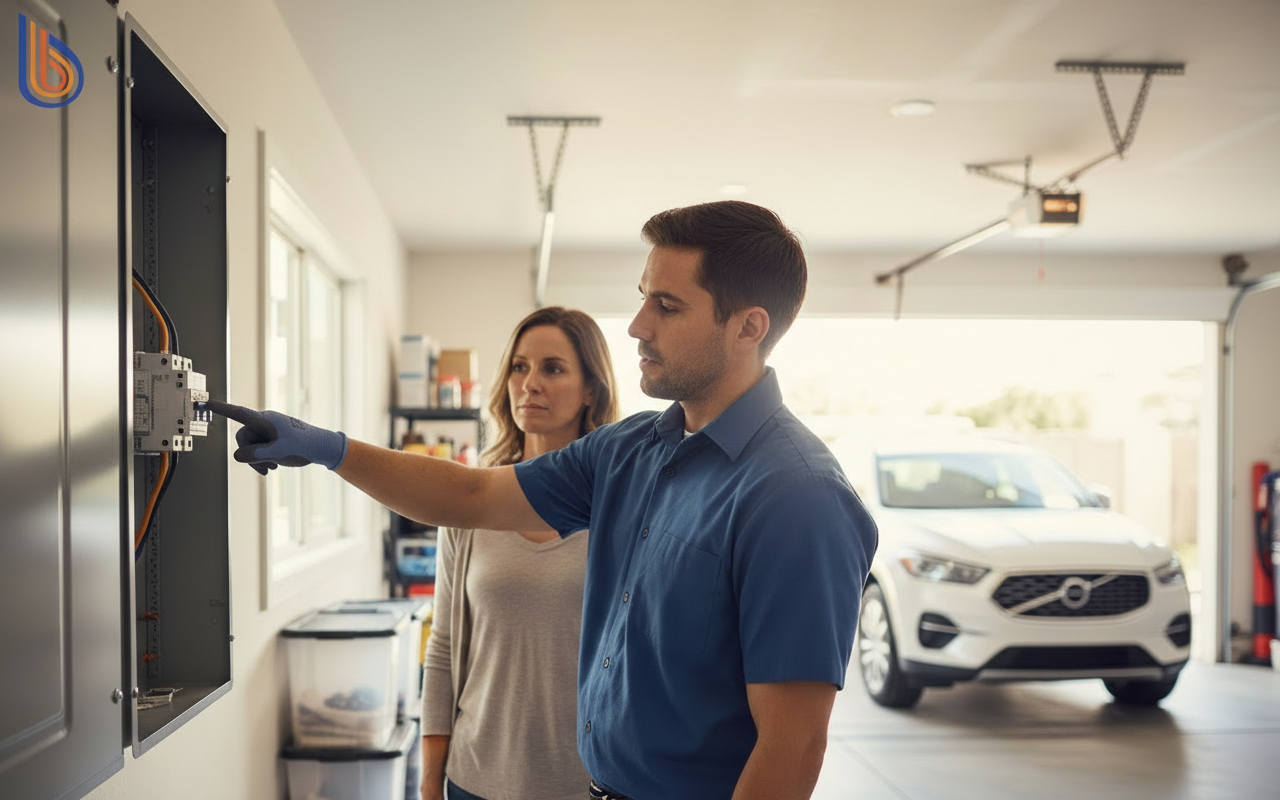
The biggest roadblock to electrification isn’t the heater itself; it’s the 1970s-era electrical panel that wasn’t built for a modern, all-electric lifestyle. Here’s the thing: while a standard tank water heater runs on gas, a heat pump requires a dedicated electrical circuit.
For a typical Bay Area mid-market home, we often see 100-amp panels that are already near capacity. You have two primary paths in this site readiness framework:
- The 240V Conversion: Requires a dedicated 30-amp breaker. If your panel is full, you might face a $3,000+ service upgrade.
- The 120V “Plug-in” Path: A contrarian but brilliant move for older homes. Models from brands like Rheem now allow you to plug into a standard outlet, avoiding the panel upgrade entirely.
What most people miss is that SB 1221 is pushing California neighborhoods toward full decarbonization, making these electrical upgrades a long-term home equity play rather than a simple repair expense. If you’re unsure about your capacity, schedule a professional electrical assessment to avoid mid-installation surprises.
Step 2: Micro-Climate Engineering and Spatial Clearance
A heat pump water heater is essentially a refrigerator in reverse; it pulls heat from the surrounding air to warm your water. In the Bay Area, your water heater installation preparation must account for whether you are in the foggy Sunset District or the sweltering East Bay hills.
The real kicker? If you put a heat pump in a tiny, unvented closet, it will turn that closet into a freezer and lose all efficiency. You need to ensure:
- Volume: At least 700 cubic feet of surrounding air (roughly a 10′ x 10′ room).
- Venting: If space is tight, we use louvered doors or duct the exhaust outside.
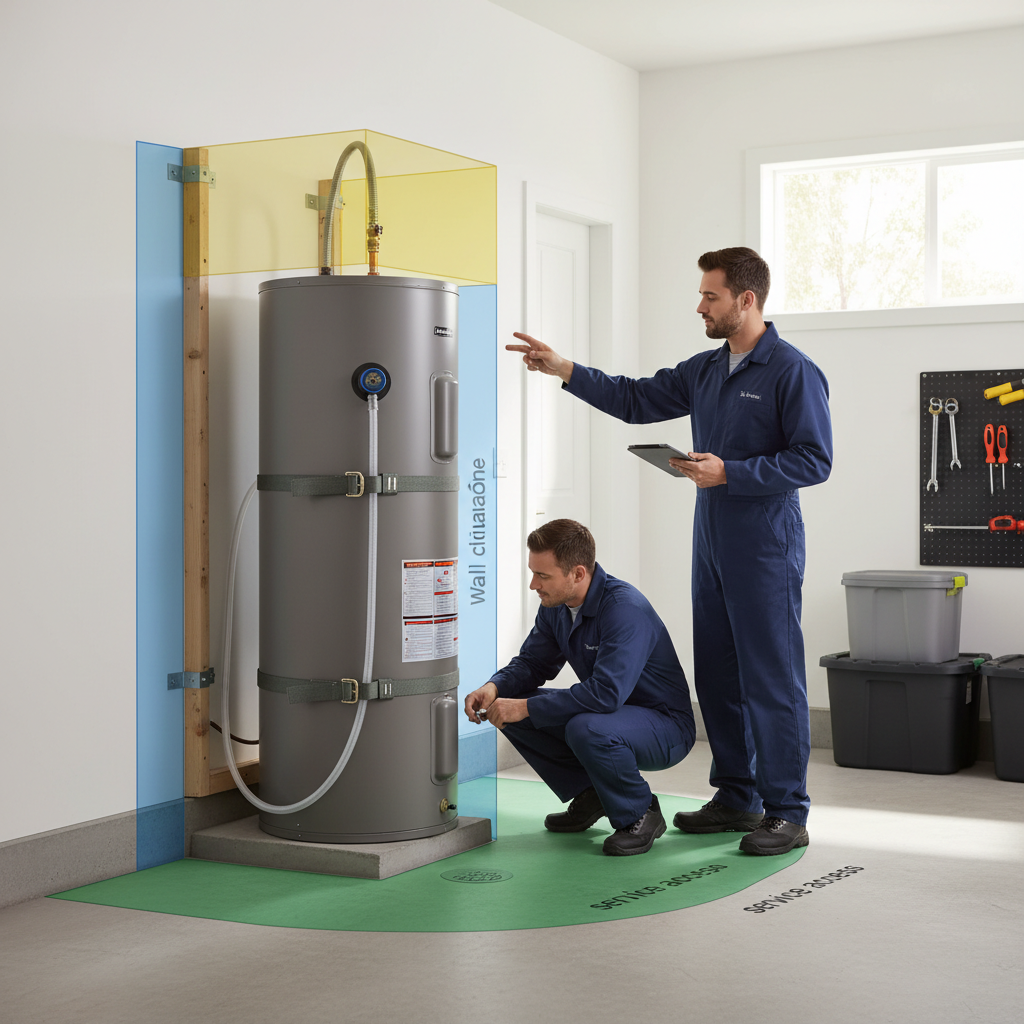
- Clearance: Maintain 6 to 12 inches of space around the top and sides for the air filter and heat exchanger access.
In our work with Series B SaaS founders who value smart home integration, we often recommend units with Wi-Fi monitoring to track how local ambient temperature affects recovery times. This data helps optimize performance during the “Fog Belt” winters.
Step 3: Managing Condensate Drainage Solutions
Every heat pump produces water as a byproduct of dehumidification—sometimes up to several gallons a day. Unlike your old gas heater, your heat pump conversion requires a plan for this liquid.
| Drainage Option | Best For | Complexity |
|---|---|---|
| Gravity Drain | Garages with existing floor drains | Low |
| Condensate Pump | Basements or interior utility rooms | Medium |
| Sump Pit | Below-grade installations | High |
But wait—don’t just run a tube to the garage floor. In San Jose and San Francisco, building codes are strict about where this water goes to prevent slip hazards and foundation damage. We always look for a nearby laundry drain or a dedicated outdoor discharge point that meets Title 24 compliance.
Need help navigating local plumbing codes? Compare technology options to see which drainage path fits your home’s footprint.
Step 4: Seismic Safety and Floor Load-Bearing Capacity
Heat pump water heaters are significantly heavier than their gas counterparts because they carry a heavy compressor unit on top of a full tank of water. In a high-risk seismic zone like the Bay Area, your site readiness framework must prioritize structural integrity.
We’ve found that a typical 50-gallon hybrid unit can weigh over 600 lbs when full. For homes with raised foundations or attic installations, we verify:
- Joist Support: Ensuring the floor can handle the concentrated point load.
- Advanced Bracing: California code requires two heavy-duty straps (top and bottom third).
- Vibration Damping: Using rubber isolation pads to prevent the compressor hum from resonating through the floorboards.
The Rebate Readiness Checklist (Maximizing ROI)
The final step in any site readiness framework is financial. As of 2024, the Bay Area has some of the most aggressive incentives in the country. To ensure you don’t leave money on the table, you must apply for these before or immediately after installation.
Here is how we help our clients stack incentives:
- BayREN: Offers up to $1,000 for switching from gas to heat pump.
- TECH Clean California: Can provide $1,000 to $3,100 depending on current funding cycles.
- Federal Tax Credit (25C): 30% of the total project cost, capped at $2,000 annually.
- Local Utilities: Programs from Silicon Valley Clean Energy often add another $1,000 layer.
Transitioning to electric is a strategic move for your home’s future value. Ready to see what your specific home requires? Get a detailed site assessment from our specialists today.
Frequently Asked Questions
Do heat pump water heaters work in the Bay Area’s cool climate?
Yes, they are exceptionally effective here. Because the Bay Area rarely sees temperatures below 40°F, the heat pump can extract ambient heat year-round without relying on the inefficient backup electric elements. This makes our region one of the best ROI markets for this technology.
How much does a full heat pump conversion cost in San Jose?
A standard installation typically ranges from $4,000 to $7,000 before rebates. However, with stacked incentives from BayREN and TECH Clean California, many homeowners see their net out-of-pocket cost drop to a level comparable with a high-end gas water heater replacement.
Will a heat pump water heater be too noisy in my garage?
Modern units produce about 45-55 decibels, similar to a quiet dishwasher. If the unit is located next to a bedroom wall, we recommend vibration isolation pads and sound-dampening blankets. Most homeowners find the hum less intrusive than a traditional furnace.
Do I need to upgrade my electrical panel for a heat pump?
Not necessarily. While 240V models require a dedicated breaker, the new generation of 120V “plug-in” heat pumps are designed specifically for older Bay Area homes with 100-amp service, allowing for a seamless transition without expensive electrical work.
To keep our educational content fresh and accurate, we utilize ingest.blog, our internal AI content engine, to synthesize the latest regulatory changes from the Bay Area Air Quality Management District.
Your Action Item for Monday Morning: Go to your garage, snap a photo of your current water heater’s data plate and your electrical panel, and check for a nearby floor drain. Having these three pieces of information ready will speed up your permit and rebate process by weeks.