
📋 Table of Contents
According to the Adaptive Reuse Report from CBRE, office-to-residential conversions saw a 17.6% increase in 2023, yet many developers are finding that legacy plumbing systems are the ultimate deal-breakers. Implementing a site_readiness_framework is no longer optional; it is the difference between a high-yield asset and a project mired in unforeseen change orders.
Key Takeaways for Property Managers
- Infrastructure Audit: Identify legacy pipe scaling and “dead legs” early to avoid water quality crises.
- Load Balancing: Commercial boilers rarely match the morning-peak demand of residential tenants.
- Rebate Capture: Use the framework to align with Inflation Reduction Act (IRA) incentives.
- Decarbonization: Transitioning to heat pump technology is the most effective way to meet 2027 Bay Area NOx regulations.
Quadrant 1: The Infrastructure Integrity Audit
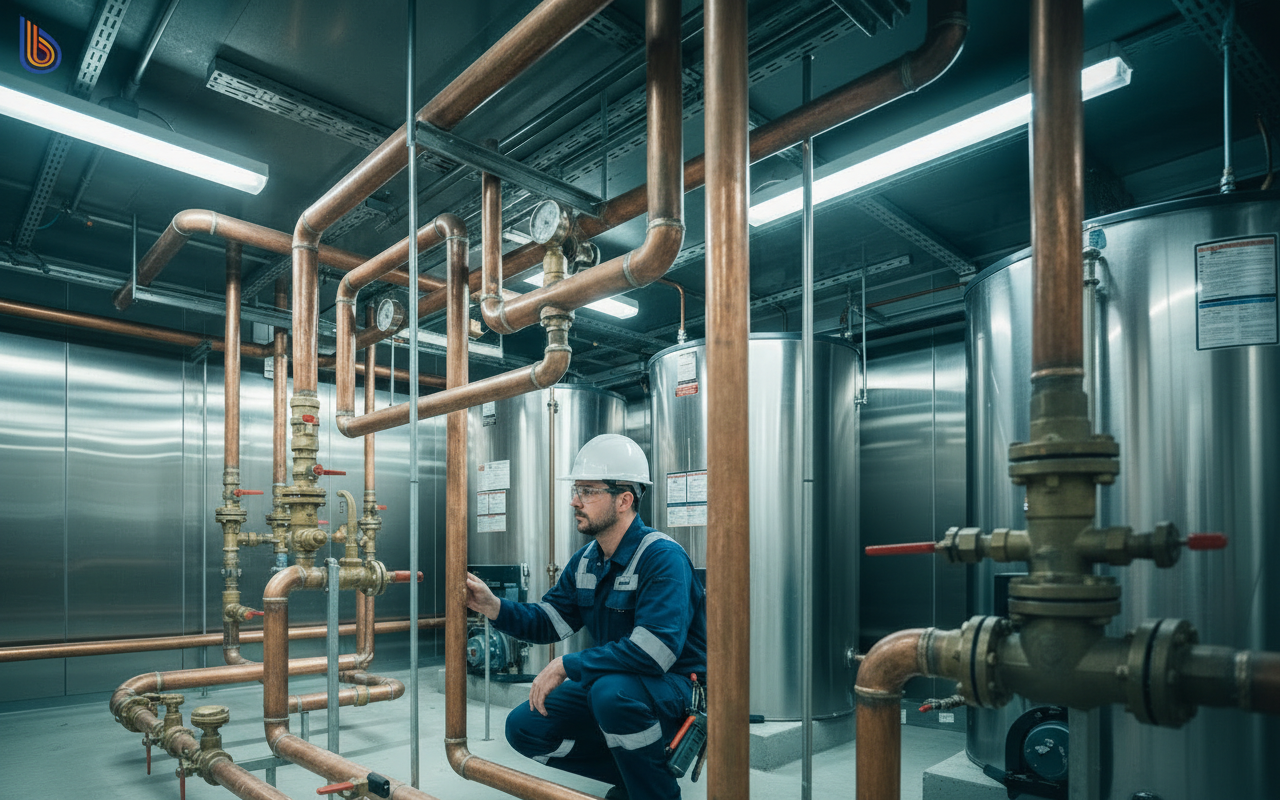
The first pillar of any site_readiness_framework requires a deep dive into the “Hidden Infrastructure” that commercial tenants never noticed but residential tenants will hate. What most developers miss is that commercial office buildings are designed for low-volume, consistent usage, whereas apartments require massive bursts of hot water between 6:00 AM and 8:30 AM.
In our work with mid-market Bay Area developers, we often find that legacy copper or galvanized lines have significant scaling. This buildup restricts flow exactly when a residential building needs it most. Furthermore, commercial layouts often create “dead legs”—sections of pipe that no longer lead to a fixture—which become breeding grounds for bacteria like Legionella.
- Pipe Scaling Assessment: Evaluate internal diameters of existing hot water loops.
- Dead Leg Mitigation: Map and remove stagnant lines during the partitioning phase.
- Seismic Compliance: Ensure all new residential units meet California seismic strapping codes.
Quadrant 2: Load Profile Analysis and Sizing
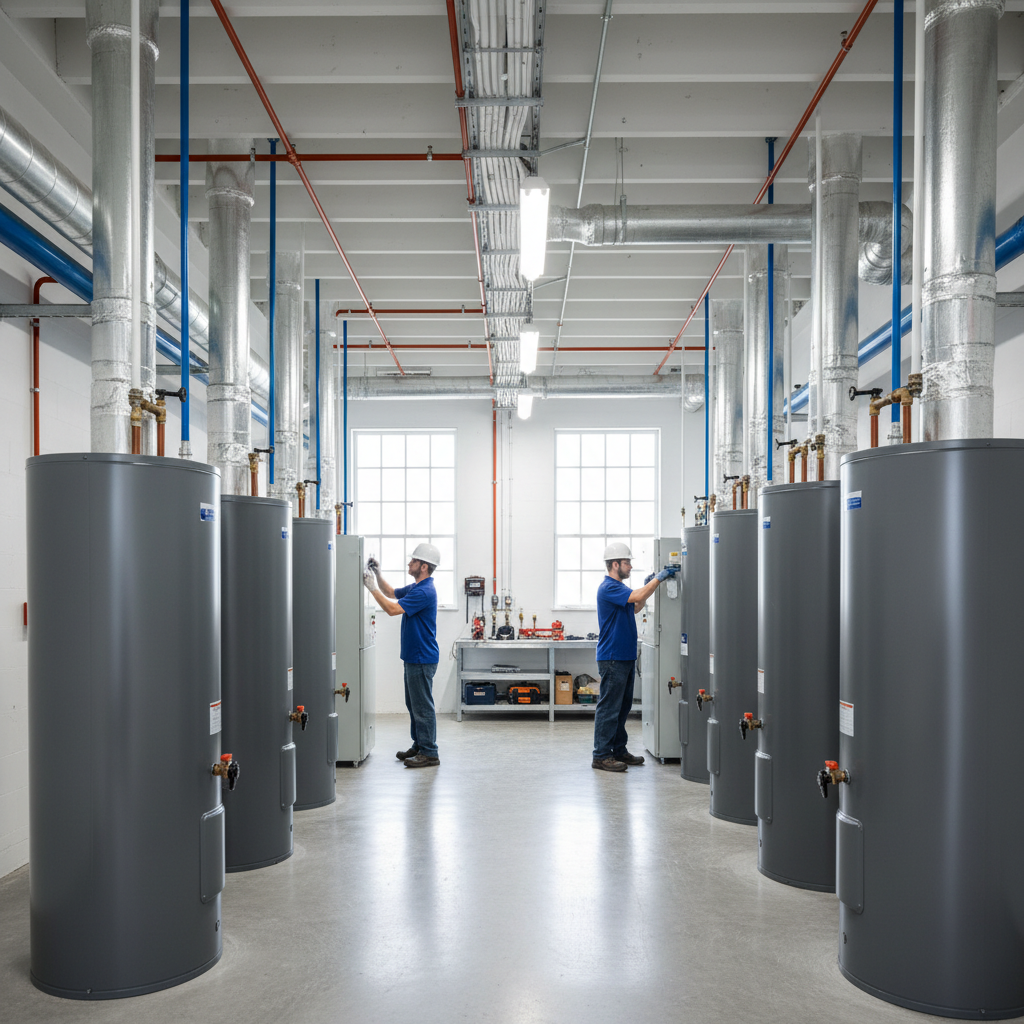
Relying on a centralized commercial boiler for residential hot water is often a recipe for energy inefficiency and tenant complaints. The site_readiness_framework emphasizes a shift toward modular or point-of-use systems. For a typical Bay Area mid-market client, converting 50,000 square feet of office space into 60 units means moving from a single 2-million BTU boiler to a decentralized array of high-efficiency units.
The real kicker? Commercial load profiles are flat, while residential profiles are spiky. If you don’t calculate the “simultaneous use” factor correctly, your top-floor tenants will be taking cold showers by 7:15 AM. We recommend a load profile analysis that accounts for modern low-flow fixtures and high-efficiency appliances.
| Metric | Commercial Office Use | Residential Conversion Use |
|---|---|---|
| Peak Demand Time | 10:00 AM – 3:00 PM | 6:00 AM – 9:00 AM |
| Water Temp Requirement | 110°F (Hand washing) | 120°F – 140°F (Showers/Sanitization) |
| Diversity Factor | High (Few simultaneous uses) | Low (High simultaneous demand) |
Need help determining if your current setup can handle residential demand? Schedule a site readiness consultation with our experts today.
Quadrant 3: Decarbonization and Heat Pump Retrofit
The most successful conversions we see today are those that lean into building decarbonization early in the design phase. With the Bay Area Air Quality Management District (BAAQMD) pushing for zero-NOx water heating by 2027, installing a new gas boiler in 2025 is essentially building a stranded asset. A heat pump water heater retrofit is the strategic move for long-term property management infrastructure.
But wait—heat pumps require space and airflow. In an adaptive reuse project, utility closets are often cramped. The site_readiness_framework helps you identify if your garage or roof-top can house centralized heat pump arrays, or if individual unit-based CO2 heat pumps are more viable. This transition isn’t just about compliance; it’s about the “ESG Hook” that increases the asset value for institutional investors.
- Electrical Capacity: Verify if the existing commercial panel can handle the 30-amp circuits required for HPWHs.
- Venting & Drainage: Heat pumps act as dehumidifiers; you must plan for condensate management.
- Noise Mitigation: Unlike gas units, heat pumps have compressors; placement relative to bedrooms is critical.
Quadrant 4: Compliance and Incentive Maximization
The final quadrant of the site_readiness_framework is where you find the money. Many developers leave thousands on the table because they don’t align their commercial plumbing conversion with local utility programs. In the Bay Area, programs like TECH Clean California can provide significant offsets for switching to electric technology.
Here is an honest, contrarian insight: Most “green building” consultants focus so much on the IRA tax credits that they miss the immediate local rebates that expire annually. By using a quadrant-based approach, you can stack federal credits with local Peninsula Clean Energy or Silicon Valley Clean Energy incentives, often covering up to 40% of the equipment cost.
What most people miss is the permit timeline. Converting a commercial space to residential requires a change-of-use permit, which triggers modern Title 24 requirements. Your property management infrastructure must be ready for inspection before the first tenant signs a lease.
Ready to maximize your project’s ROI? Contact Better Water Heaters for a comprehensive rebate analysis.
Choosing Between Centralized and Point-of-Use Systems
The biggest debate in adaptive reuse plumbing is whether to stick with a central plant or go modular. In our experience with Series B startup founders looking to develop boutique live-work spaces, modularity wins every time. Why? Because it allows for individual tenant billing and reduces the risk of a single point of failure taking down the whole building’s hot water.
- Centralized Systems: Easier maintenance but requires complex recirculation loops.
- Point-of-Use (Tankless): Saves massive floor space but requires high-amperage electrical or large gas lines.
- Hybrid Heat Pump: The current “gold standard” for Bay Area conversions due to efficiency and rebates.
To stay ahead of these complex shifts, our team utilizes Ingest.blog, our internal AI content engine, to track regulatory changes across 40+ Bay Area municipalities in real-time.
The Multi-family Hot Water Sizing Challenge
If you get the sizing wrong, your site_readiness_framework fails. We recently consulted on a project where the developer used “rule of thumb” sizing from a 1990s handbook. The result? The heat pump recovery rate couldn’t keep up with the morning gym rush. We fixed this by adding specialized mixing valves and increasing storage capacity without increasing the footprint.
- Peak Hour Demand (PHD): Calculate based on 20 gallons per occupant.
- Recovery Rate: Ensure your system can recover 70% of its volume within one hour.
- Storage vs. Power: Balance tank size with BTU/kW input to optimize for space.
Summary of the Framework
The site_readiness_framework is your roadmap through the technical and regulatory minefield of Bay Area conversions. By auditing infrastructure, analyzing load profiles, prioritizing decarbonization, and maximizing incentives, you transform an aging office building into a future-proof residential asset. This week, walk your utility rooms and look for legacy scaling—it’s the first sign that your conversion needs a professional eye.
Don’t let plumbing delays stall your project. Call Better Water Heaters at (408) 250-6672 for an expert site readiness assessment today.
Frequently Asked Questions
What is the most common mistake in commercial-to-residential plumbing?
The most common mistake is failing to account for the residential peak demand curve. Commercial systems are designed for steady, low-volume use throughout the day. Residential buildings require massive surges of hot water in the morning. Without a proper site_readiness_framework, the existing infrastructure will fail to meet tenant expectations.
How do 2027 Bay Area NOx regulations affect my conversion?
Starting in 2027, the BAAQMD will phase out the sale of gas-fired water heaters. For a conversion project starting now, installing gas infrastructure is a high-risk move. Transitioning to heat pumps during the commercial plumbing conversion phase ensures your building remains compliant and avoids costly retrofits within the next decade.
Can I use existing commercial gas lines for residential tankless heaters?
Often, no. Residential tankless heaters require significantly higher BTUs (up to 199,000 per unit) than standard commercial sinks. Your property management infrastructure audit must verify that the gas meter and main lines can handle the increased manifold pressure required for multiple tankless units.
Are there specific rebates for heat pump water heaters in San Jose?
Yes, San Jose residents and developers can access multiple layers of incentives, including Silicon Valley Clean Energy rebates and TECH Clean California funds. When combined with federal tax credits, these can cover a substantial portion of the upgrade cost during an adaptive reuse project.