Water heater article archive
Recirculation Pumps vs. On-Demand Heating: Strategic Guide
Historical article, not newly reviewed advice. Verify current requirements, incentives and model guidance with the relevant authority or manufacturer before relying on them. Equipment and service needs require an assessment.
📋 Table of Contents
The average American household wastes nearly 3,650 gallons of water annually just waiting for the shower to get warm, according to data from the EPA WaterSense program. In the Bay Area, where tiered water pricing and persistent drought cycles make every drop a line item on your balance sheet, choosing between a water heater recirculation pump and on-demand hot water isn't just about comfort—it’s a strategic infrastructure decision.
Key Takeaways for Homeowners
- Recirculation pumps provide instant heat but require smart controllers to avoid high energy bills.
- On-demand (tankless) systems eliminate standby heat loss but often suffer from the "cold water sandwich" effect without a buffer.
- California water conservation goals are best met by combining these technologies in larger multi-story floor plans.
- Federal HEERA tax credits can offset up to 30% of high-efficiency upgrade costs.
The Strategic Reality of a Water Heater Recirculation Pump
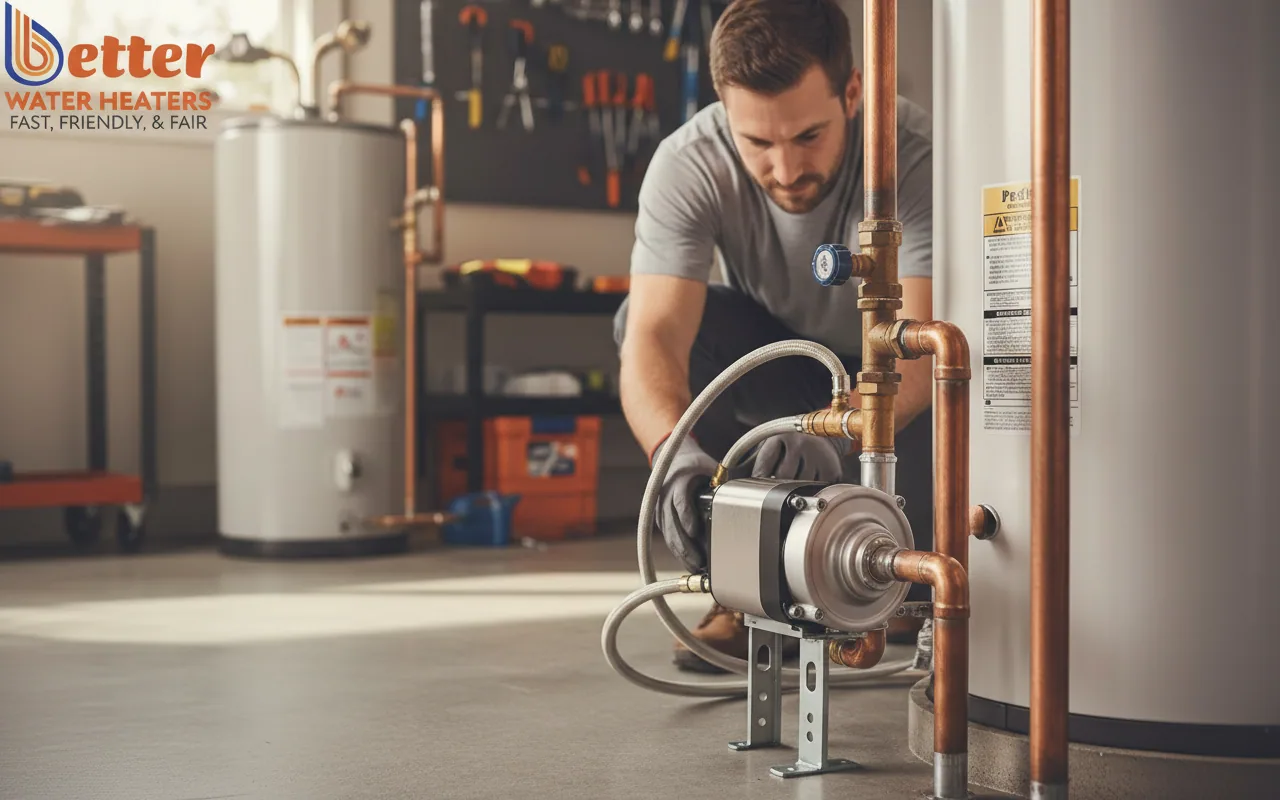
Most homeowners view instant hot water as a luxury, but in a 3,000-square-foot Palo Alto home with sprawling floor plans, it is actually a primary conservation tool. A water heater recirculation pump works by creating a loop that keeps hot water moving through your pipes, ensuring it's at the tap the moment you turn the handle.
What most people miss: without a dedicated return line, you are essentially pumping hot water into your cold water pipes using a bridge valve. This is common in many older Bay Area retrofits, but it can lead to "lukewarm" cold water for the first few seconds of use. For our clients in San Jose or Walnut Creek, we often recommend smart hot water controllers that learn your usage patterns to mitigate the electricity draw of the pump.
Why Recirculation Wins in Large Footprints
- Zero Wait Time: Eliminates the 30-90 second lag common in distant master suites.
- Infrastructure Compatibility: Works with existing tank-style heaters and some high-end tankless models.
- Smart Integration: Modern pumps like those from Grundfos or Taco can be controlled via smartphone or voice assistants.
On-Demand Hot Water: Efficiency vs. The User Experience Gap
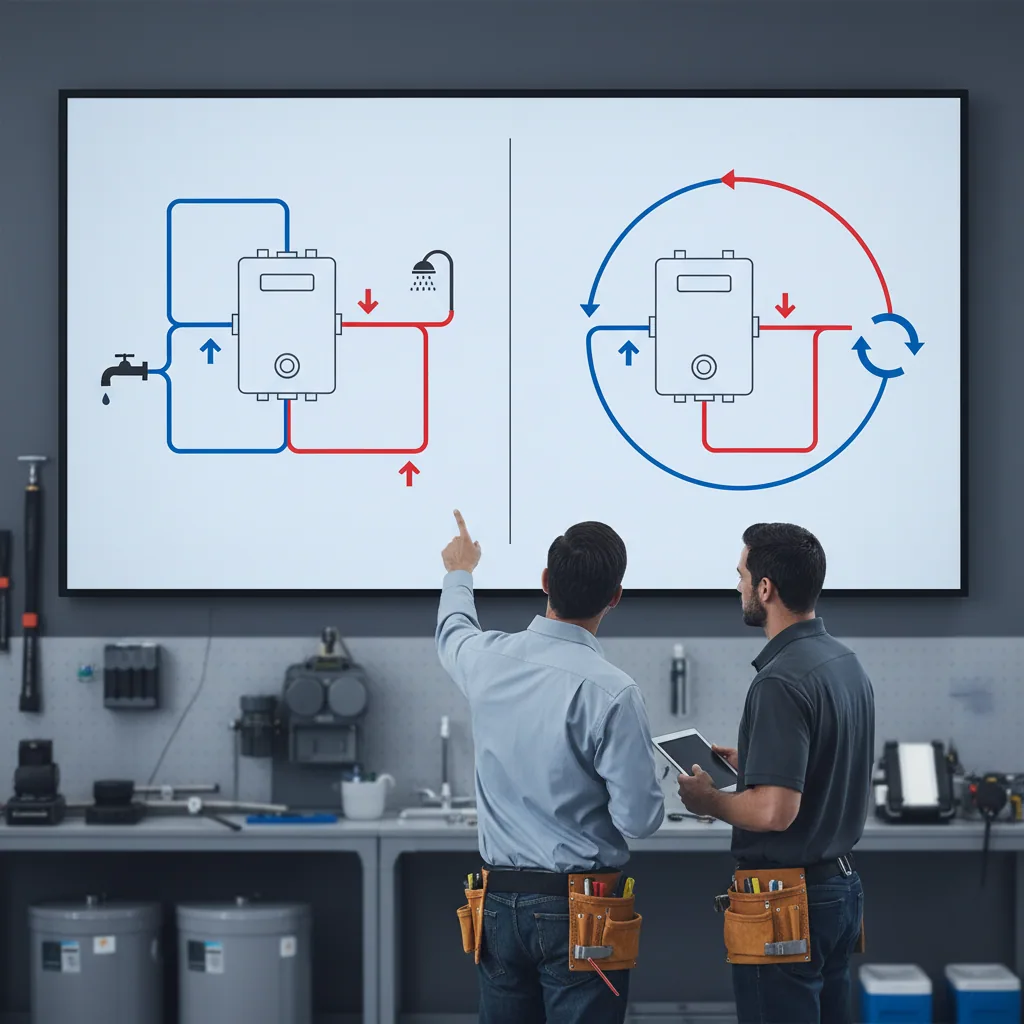
The real kicker with on-demand (tankless) systems is that while they are incredibly energy-efficient, they don't solve the "distance to tap" problem. On-demand hot water units only heat water when a flow is detected, which means the cold water already sitting in your pipes still has to be pushed out before the heat arrives.
Here’s the thing: many homeowners switch to tankless and are frustrated to find they are still wasting the same amount of water waiting for the shower to warm up. This is where the "user experience gap" lives. According to Energy.gov, tankless heaters can be 24%–34% more energy-efficient than conventional tanks, but they don't inherently fix water waste caused by pipe length.
Managing the Tankless Transition
- The Cold Water Sandwich: This occurs when a second user turns on a tap shortly after the first, resulting in a burst of cold water between two hot streams.
- Flow Rate Limitations: You must ensure the unit's GPM (gallons per minute) matches your household's peak demand.
- Maintenance: Tankless units in hard-water areas like Fremont require annual descaling to maintain efficiency.
Need help deciding which system fits your floor plan? Schedule your free Bay Area home assessment to see a custom ROI breakdown.
California Water Conservation: A Data-Driven Comparison
In our work with environmentally-conscious entrepreneurs and tech leaders, we’ve found that the best ROI often comes from a hybrid approach. California water conservation standards are becoming increasingly strict, and 2027 regulations will further limit gas-powered options. A data-driven comparison helps clarify the break-even point.
| Feature | Recirculation Pump (Tank) | On-Demand (Tankless) | Hybrid (Tankless + Pump) |
|---|---|---|---|
| Water Waste | Near Zero | Moderate (Wait time) | Zero |
| Energy Usage | Higher (Standby loss) | Lowest | Optimized |
| Upfront Cost | $600 - $1,200 | $3,500 - $5,500 | $4,500 - $6,500 |
| Lifespan | 8-12 years | 20+ years | 15-20 years |
But wait—don't forget the impact on your septic system if you live in more rural parts of the Bay Area. Reducing "wait-time" runoff significantly extends the life of your drain field by preventing unnecessary hydraulic loading.
The Dedicated Return Line vs. Bridge Valve Debate
The most honest, contrarian insight we provide is this: if you are remodeling, always install a dedicated return line. While bridge valves are a clever workaround for retrofits, they are a compromise that affects water quality and temperature consistency.
A typical Bay Area mid-market client often chooses the bridge valve to save on drywall repair costs. However, for those managing long-term assets or high-end rentals, the dedicated line is the only way to achieve true instant hot water recirculating pump performance without the "lukewarm cold water" side effect. This is a classic case of "do it once, do it right."
Maximizing ROI with Rebates and Tax Credits
The financial landscape for water heating changed significantly with the Inflation Reduction Act. Homeowners can now access HEERA tax credits and local Bay Area incentives that make the transition to high-efficiency systems much more palatable.
- Federal Tax Credits: Up to 30% of the project cost for heat pump water heaters.
- Bay Area Air Quality Management District: Local rebates for transitioning away from gas.
- Utility Rebates: Programs from PG&E or Peninsula Clean Energy frequently offer $1,000+ for efficient upgrades.
Ready to maximize your savings? Check out our latest guide on Bay Area rebates to see what you qualify for this month.
Which System is Right for Your Home?
The best way to choose is to evaluate your specific usage hurdles. If you have a single-story home with the water heater centrally located, a standard on-demand system is likely your best bet. If you have a three-story home in San Francisco or a sprawling estate in Los Gatos, a water heater recirculation pump is almost mandatory for conservation.
What most people miss is the "smart" factor. We’ve seen clients integrate their pumps with our internal AI content engine, Ingest.blog, to track energy data and automate scheduling based on household occupancy. While that's the extreme end of tech-forward living, even a simple timer can save you $100+ a year in electricity.
Decision Framework
- Measure the wait: If it takes more than 30 seconds for hot water, you need a pump.
- Check your electrical: Tankless and Heat Pump systems may require panel upgrades.
- Look at the pipes: Can you easily run a return line through an attic or crawlspace?
Stop wasting water and money. Contact Better Water Heaters today for a professional consultation and same-day service in the Bay Area.
Frequently Asked Questions
How much electricity does a water heater recirculation pump use?
A standard pump uses about as much energy as a 25-watt light bulb. However, if it runs 24/7, it also causes your water heater to fire more frequently to replace lost heat. Using a smart controller or timer can reduce this energy impact by over 70% while still providing instant heat during peak hours.
Does a tankless water heater provide instant hot water?
Technically, no. While it heats water instantly, that water still has to travel through your pipes to reach the faucet. To get true "instant" hot water with a tankless unit, you must pair it with a recirculation pump or a small point-of-use (POU) electric unit located under the sink.
Are there rebates for California water conservation plumbing?
Yes, many Bay Area water districts and energy providers offer rebates for high-efficiency water heaters and smart recirculation pumps. Programs like TECH Clean California and local utility incentives can often cover a significant portion of the installation costs, especially when switching to heat pump technology.
What is a dedicated return line and do I need one?
A dedicated return line is a separate pipe that carries unused hot water back to the heater. It is the gold standard for recirculation because it keeps the hot and cold water systems completely separate. If your home is under construction or has accessible plumbing, it is highly recommended over a bridge valve system.