
📋 Table of Contents
- The Strategic Reality of Point-of-Use Water Heater Technology
- Whole-Home Water Heating: The Centralized Powerhouse
- Decision Matrix: POU vs. Whole-Home
- The ADU Strategy and Title 24 Plumbing Compliance
- Maximizing Bay Area Electrification Rebates
- The Hybrid Approach: Solving the Cold Water Sandwich
- FAQs
According to the U.S. Department of Energy, water heating is the second largest energy expense in most homes, accounting for roughly 18% of utility bills. For Bay Area homeowners, this financial pressure is compounded by some of the highest electricity rates in the nation and a complex web of local building codes.
Choosing between a point-of-use water heater and a whole-home water heating system isn’t just a matter of comfort; it is a strategic financial decision that impacts your property value and long-term operating costs. Whether you are adding an ADU in San Jose or modernizing a Victorian in San Francisco, understanding the trade-offs is essential for a successful remodel.
Key Takeaways for Homeowners
- Point-of-use (POU) units are ideal for isolated fixtures and meeting Title 24 plumbing compliance without major pipe overhauls.
- Whole-home systems offer superior ROI for high-demand households but may trigger expensive electrical panel upgrades.
- Hybrid strategies—combining a central heat pump with POU boosters—are becoming the gold standard for Bay Area electrification.
The Strategic Reality of Point-of-Use Water Heater Technology
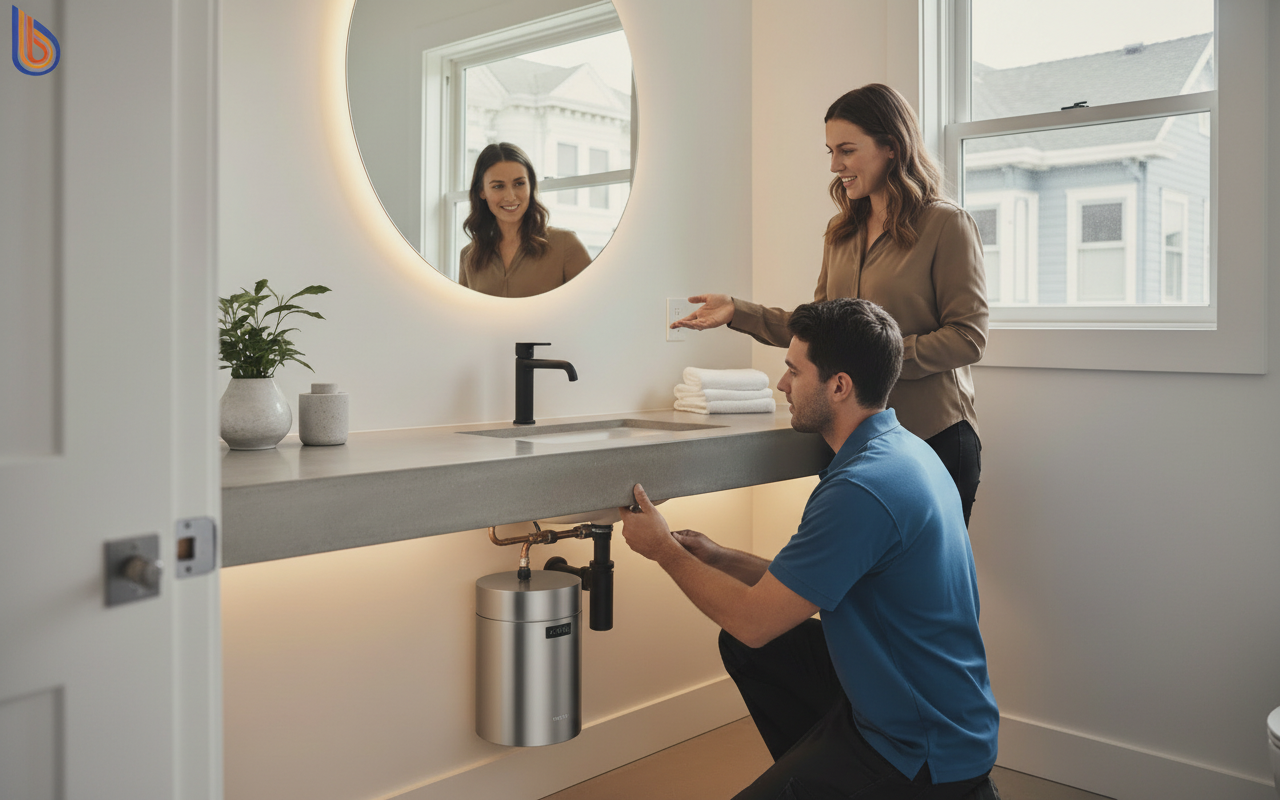
The smartest way to view a point-of-use water heater is as a tactical surgical strike against energy waste and waiting times. By installing a compact unit directly under a sink or in a closet near a shower, you eliminate the “wait for hot water” that wastes thousands of gallons of water annually in California’s drought-prone climate.
In our work with high-density urban remodels, we often see homeowners struggle with the “cold water sandwich” effect in multi-story homes. Here is why POU is gaining ground:
- Zero Lag Time: Hot water is delivered instantly, which is a luxury upgrade for master suites.
- Space Efficiency: These units are often the size of a shoebox, fitting into tight San Francisco floor plans.
- Simplified Permitting: In some cases, adding a small POU unit is less invasive than re-routing gas lines for a central tankless system.
But wait—there is a catch. While the units themselves are affordable, they require dedicated electrical circuits. If your panel is already maxed out by an EV charger and AC, adding three or four POU units could be more expensive than a single central upgrade.
Whole-Home Water Heating: The Centralized Powerhouse
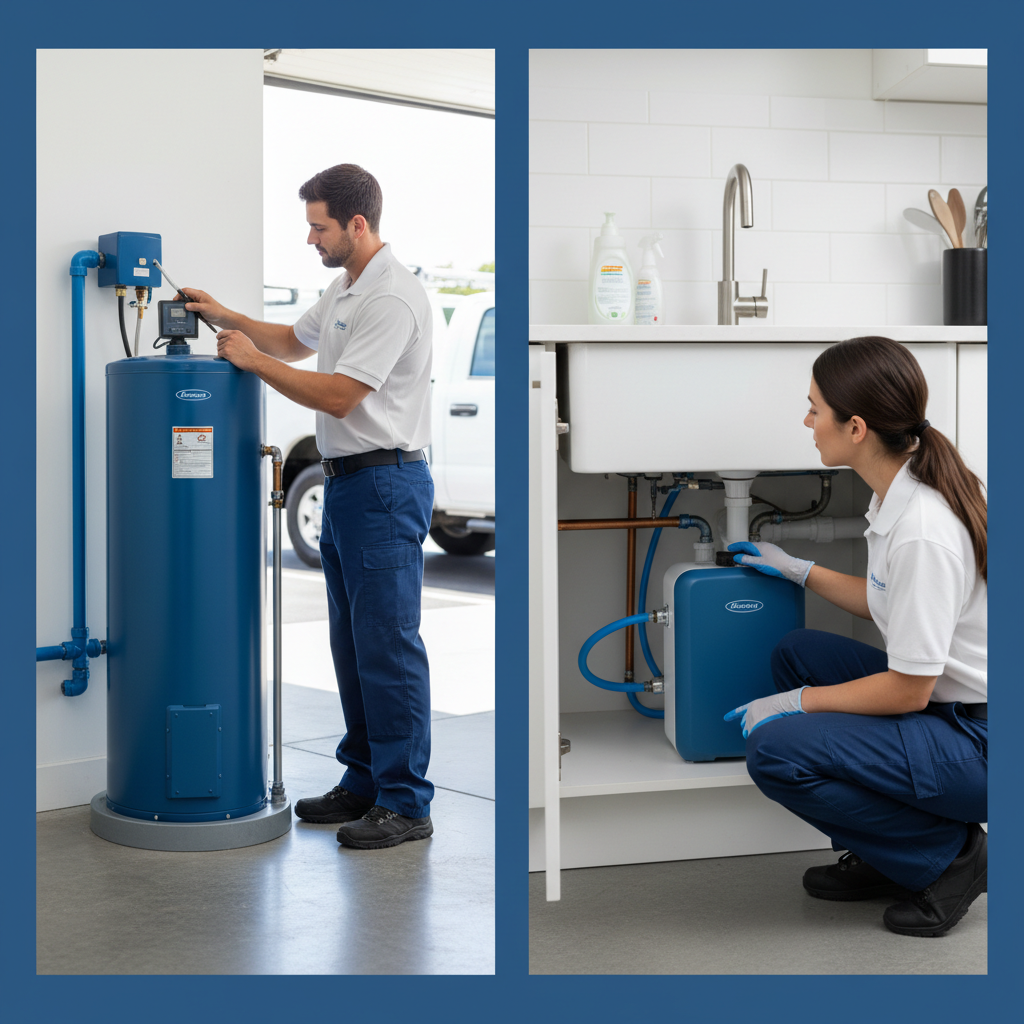
Centralized systems remain the backbone of most Bay Area residences because they handle high-simultaneous demand better than almost any other configuration. A high-output tankless water heater or a modern heat pump can feed two showers and a dishwasher at the same time without breaking a sweat.
However, the shift toward electrification is changing the math. A typical Bay Area mid-market client transitioning from gas to a heat pump water heater often discovers that their 100-amp electrical panel cannot handle the new load. This is where the “Electrification Friction” hits hardest, sometimes adding $5,000 or more to the project cost for a panel upgrade.
The real kicker? Title 24 plumbing compliance in California now heavily incentivizes heat pump technology. To navigate this, many homeowners are looking toward California Title 24 standards to ensure their remodel doesn’t get stalled at the inspection phase.
Decision Matrix: POU vs. Whole-Home
To help you decide, we have developed this matrix based on 20+ years of Bay Area installations.
| Factor | Point-of-Use (POU) | Whole-Home System |
|---|---|---|
| Installation Cost | Low per unit ($500-$1,500) | High ($3,500-$7,000+) |
| Electrical Needs | Dedicated 120V or 240V per unit | Heavy 240V (30-50 Amp) |
| Best Use Case | ADUs, Remote Sinks, Guest Suites | Primary Residences, Large Families | Minimal per unit | Annual flushing required |
The ADU Strategy and Title 24 Plumbing Compliance
If you are building an Accessory Dwelling Unit (ADU) in the Bay Area, Title 24 is your biggest hurdle. State law requires strict energy budgets for these “backyard cottages,” and often, a small point-of-use water heater is the secret weapon to passing inspection.
What most people miss is that POU units can act as “boosters.” In a typical Bay Area mid-market scenario, a homeowner might run a long hot water line from the main house to the ADU. By the time the water arrives, it’s lukewarm. Installing a POU unit at the ADU fixture ensures Title 24 plumbing compliance by reducing the “ready-hot” time and preventing massive water waste.
Need help navigating these codes? Schedule a consultation with our specialists today to see which system fits your floor plan.
Maximizing Bay Area Electrification Rebates
The financial landscape for water heating has changed dramatically thanks to the Inflation Reduction Act (IRA) and local programs like TECH Clean California. Currently, Bay Area homeowners can access thousands in Bay Area electrification rebates when switching to high-efficiency technology.
Here’s the breakdown of what’s available as of 2024:
- Federal Tax Credits: Up to $2,000 for heat pump water heaters.
- TECH Clean California: Incentives that can reach $3,100+ depending on your utility provider.
- Bay Area Air Quality Management District (BAAQMD): Local grants for transitioning away from gas.
Here is an honest, contrarian insight: Don’t chase every rebate if it forces a $10,000 electrical overhaul. Sometimes, keeping a high-efficiency gas tankless unit and adding a small electric POU for the distant master bath is the more sustainable financial move. We often use Ingest.blog, our internal AI content engine, to track these rapidly shifting local regulations and rebate deadlines to keep our clients informed.
The Hybrid Approach: Solving the Cold Water Sandwich
The most sophisticated remodels we see in San Francisco and Oakland aren’t choosing one or the other—they are going hybrid. This involves a centrally located heat pump water heater vs POU boosters at the furthest fixtures.
This setup solves the two biggest complaints in Bay Area plumbing:
- Energy Savings: The central heat pump does the heavy lifting at 300-400% efficiency.
- Instant Gratification: The POU unit handles the first 30 seconds of flow, so you aren’t shivering in the shower waiting for the central line to clear.
For those managing multiple units, this hybrid approach also limits the “single point of failure” risk. If the main unit goes down, the POU units can still provide basic warm water at critical sinks.
Which System is Right for Your Remodel?
The real question isn’t which technology is “better,” but which one fits your home’s existing infrastructure. If you have an older home with a 100-amp panel, a tankless point-of-use installation might be the strategic workaround that saves you from a full utility overhaul. Conversely, if you have a large family and the space for a tank, a centralized heat pump is the undisputed king of ROI.
Before you commit to a plumbing plan, consider the long-term grid resilience of your choice. As PG&E continues to update the Bay Area’s infrastructure, moving toward highly efficient, lower-draw appliances will make your home more resilient during Peak Pricing hours.
Ready to upgrade? Contact Better Water Heaters for a transparent, expert assessment of your home’s needs. We handle the permits, the rebates, and the installation so you can just enjoy the hot water.
Frequently Asked Questions
Is a point-of-use water heater enough for a whole bathroom?
Generally, no. A standard point-of-use unit is designed for a single fixture, like a sink. If you want to power a shower and a sink simultaneously, you would need a larger “whole-home” tankless unit or a high-capacity POU model (at least 6-8 kW), which requires significant electrical amperage.
Does Title 24 require me to get rid of my gas water heater?
As of 2024, Title 24 does not outright ban gas water heaters for existing home repairs, but it sets very high efficiency standards for new construction and certain major remodels. In many Bay Area jurisdictions, heat pumps are becoming the mandatory default for ADUs and new additions to meet carbon-neutral goals.
How much can I save with Bay Area electrification rebates?
Combined incentives from federal tax credits (Section 25C) and state programs like TECH Clean California can often offset $4,000 to $5,000 of the total project cost. However, these programs are fund-limited and require installation by a licensed, program-enrolled contractor like Better Water Heaters.
Will a point-of-use water heater increase my electric bill?
While they are 99% efficient at the point of heating, they use high-wattage heating elements. However, because they eliminate the energy lost in long pipe runs (distribution loss), most homeowners see a net decrease in water heating costs, especially when replacing an old, inefficient central tank.