
📋 Table of Contents
- 1. The Hot Water Delivery Speed Gap
- 2. Point-of-Use Water Heater vs. Whole-Home: The Decision Matrix
- 3. Navigating Bay Area Electrification Mandates
- 4. The Hidden Costs of Retrofitting Historical Homes
- 5. ROI and Drought Resilience
- 6. Maintenance and Longevity Secrets
- 7. Final Verdict: Which One Should You Choose?
- FAQs
According to the U.S. Department of Energy, water heating accounts for nearly 18% of your home’s energy consumption, yet many Bay Area homeowners lose gallons of water daily just waiting for the shower to get warm. Choosing between a point-of-use water heater and a whole-home tankless system isn’t just about brand names; it is a strategic architectural decision that impacts your monthly PG&E bill and daily comfort.
Key Takeaways for Bay Area Homeowners
- Whole-home units are best for centralized plumbing stacks in compact floor plans.
- Point-of-use (POU) units eliminate the “wait time” in sprawling ranch-style homes or long Edwardian flats.
- Electrification mandates in San Jose and San Francisco are pushing homeowners toward electric POU solutions for ADUs.
- Hybrid strategies often provide the best ROI by combining a central heat pump unit with a POU at distant fixtures.
1. The Hot Water Delivery Speed Gap
The real kicker in Bay Area real estate is that our historic homes—from Redwood City Victorians to mid-century moderns in San Mateo—were never designed for modern hot water demands. In a whole-home tankless comparison, the primary drawback isn’t the heater’s capacity, but the distance the water must travel through cold pipes.
What most people miss is the “dead leg” volume: the cold water sitting in your pipes between the heater and the faucet. In a typical Bay Area mid-market client home with a garage-mounted heater and a second-story master suite, you might flush two gallons of perfectly good water down the drain before feeling heat. A point-of-use water heater solves this by sitting directly under the sink or in a nearby closet, providing near-instant hot water delivery speed.
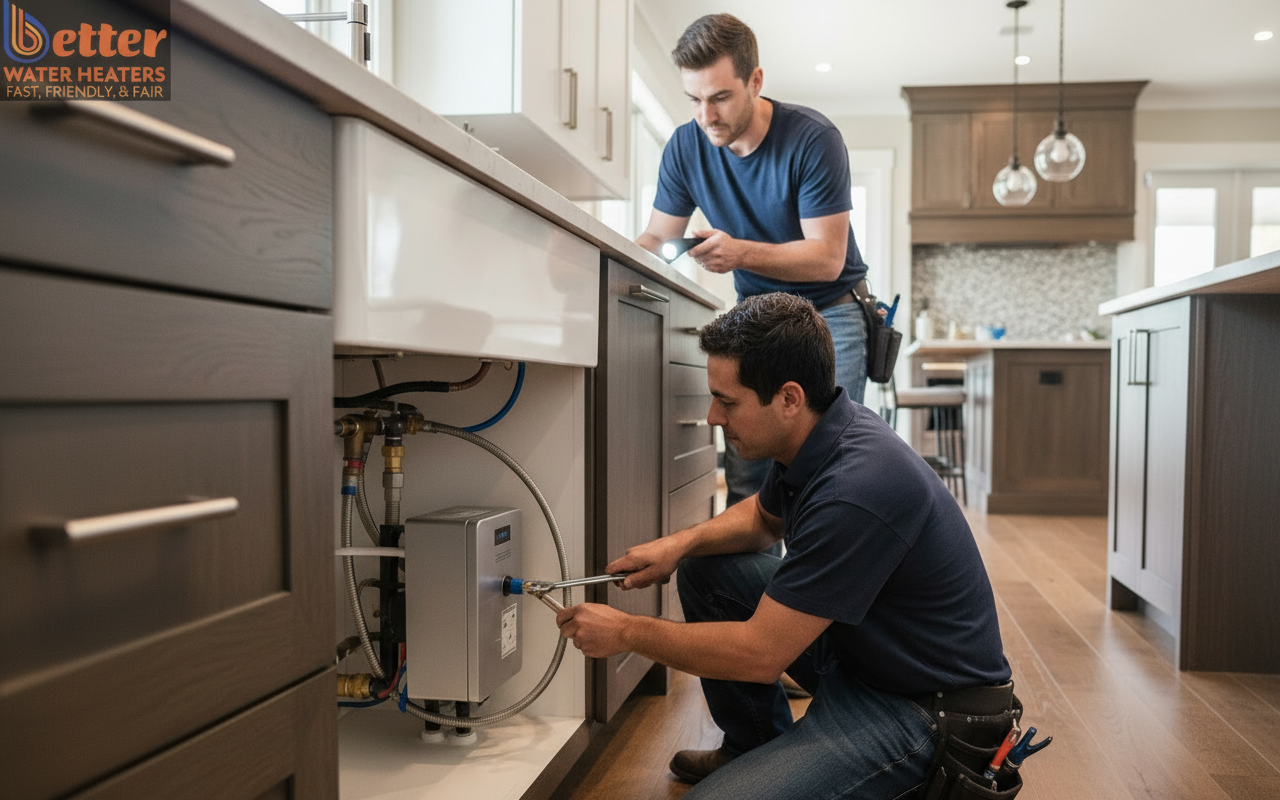
Consider these layout factors:
- Sprawling Ranches: Often require POU units at the far ends to avoid 60-second wait times.
- Multi-Story Victorians: Face the “cold water sandwich” effect where frequent on/off usage leads to bursts of cold water; POU buffers can mitigate this.
- Compact Condos: A single whole-home tankless is usually sufficient due to short pipe runs.
2. Point-of-Use Water Heater vs. Whole-Home: The Decision Matrix
Strategic decision-making requires weighing upfront installation complexity against long-term utility savings. Here is how the two technologies stack up for common Bay Area scenarios.
| Feature | Point-of-Use (POU) | Whole-Home Tankless |
|---|---|---|
| Installation Location | Under sink / Closet | Garage / Exterior Wall |
| Wait Time | 0–5 seconds | 30–90 seconds (distance dependent) |
| Energy Source | Primarily Electric | Gas or High-Voltage Electric |
| Best For | ADUs, Remote Bathrooms, Wet Bars | Primary Residences, High-Demand Families |
| Bay Area Rebates | Limited | High (up to $4,900 for Heat Pump variants) |
But wait—don’t assume one size fits all. In our work with established homeowners in Palo Alto, we often find that a “Hybrid Approach” yields the highest satisfaction. By using a whole-home unit for the main bathrooms and a small point-of-use electric water heater for a distant kitchen or guest suite, you maximize efficiency without a massive electrical panel upgrade.
Need a professional eye to look at your floor plan? Schedule your free Bay Area home consultation today.
3. Navigating Bay Area Electrification Mandates
Local regulations are changing the game for how we heat water in Santa Clara and Alameda counties. With Bay Area electrification mandates gaining steam, many cities are incentivizing the switch away from gas.
For ADU plumbing solutions, POU units are often the only logical choice. Adding a gas line to a backyard cottage can cost thousands in trenching and permits. Conversely, a high-efficiency electric POU unit can often run on a dedicated 240V circuit, meeting Title 24 compliance with much less friction. We’ve seen this become the standard for backyard offices and guest houses across San Jose.
4. The Hidden Costs of Retrofitting Historical Homes
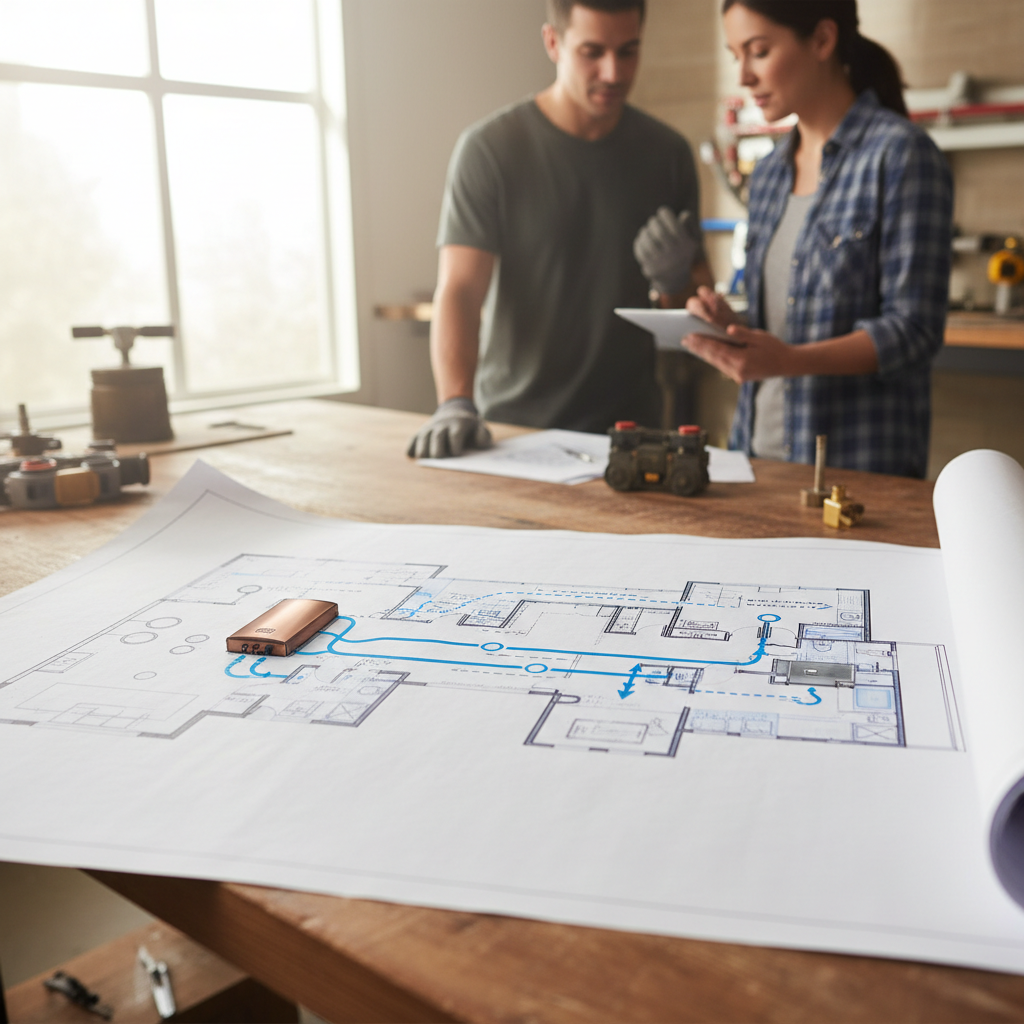
The real challenge in San Francisco or Oakland isn’t the heater itself—it’s the infrastructure surrounding it. Many older homes have limited electrical capacity, often capped at 100 or 125 amps. A large whole-home electric tankless heater can require 80 to 120 amps alone, necessitating a costly panel upgrade.
Here’s the thing: point-of-use water heater units for single sinks typically pull much less power. This allows you to improve hot water delivery speed in a remote bathroom without triggering a $5,000 utility service upgrade. It’s a surgical approach to plumbing that respects the limitations of vintage Bay Area architecture.
- Venting Constraints: Gas tankless units need specific exterior wall clearances that “tightly-packed” neighborhoods like Noe Valley often lack.
- Seismic Safety: Tankless units (both POU and whole-home) are significantly lighter than 50-gallon tanks, reducing structural stress on hillside properties during a tremor.
- Space Value: In a region where square footage is valued at $1,000+, reclaiming a water heater closet for storage adds real equity.
5. ROI and Drought Resilience
We live in a region where water conservation isn’t just a virtue; it’s a necessity. Every second spent waiting for hot water is treated water literally going down the drain. Over a year, a typical family of four can waste over 10,000 gallons of water just waiting for the temperature to rise.
While the upfront cost of a whole-home tankless comparison might seem high, the reduction in water waste and energy standby loss provides a clear long-term ROI. Furthermore, using our internal AI content engine at Ingest.blog to track local utility trends, we’ve noted that PG&E rates continue to climb, making high-efficiency choices more urgent than ever. If you’re looking for instant hot water Bay Area solutions, the POU model is the gold standard for conservation.
Ready to stop wasting water? Explore our tankless installation services and see which rebates apply to your zip code.
6. Maintenance and Longevity Secrets
One honest, contrarian insight we share with all our clients: Tankless systems are not “set it and forget it.” Because the Bay Area has pockets of hard water, especially in the South Bay, scale buildup can kill a tankless unit in less than five years if not maintained.
- Annual Descaling: Both POU and whole-home units need a vinegar flush to remove calcium deposits.
- Filter Checks: Ensure the inlet screen is clear of debris from aging city pipes.
- Sizing Accuracy: Never undersize a POU unit for a shower; you’ll end up with a lukewarm experience that leads to buyer’s remorse.
7. Final Verdict: Which One Should You Choose?
The best way to decide is to map your “points of pain.” If your kitchen sink takes two minutes to get hot, a point-of-use water heater is a no-brainer. If your old 50-gallon tank is leaking and you have a family of five, a whole-home tankless conversion is the strategic move.
What most people miss is that you don’t have to choose just one. The most sophisticated Bay Area renovations now utilize a central heat pump water heater for the bulk of the load, supplemented by POU units at high-luxury touchpoints like a master soaking tub or a remote outdoor kitchen. This ensures hot water delivery speed is never sacrificed for energy efficiency.
Your Monday Morning Action Item: Time how long it takes for your furthest faucet to get hot. If it’s over 30 seconds, you are losing money and water. Call us at 408-250-6672 to discuss a targeted POU retrofit or a full system upgrade.
Frequently Asked Questions
Can a point-of-use water heater handle a shower?
Technically yes, but it requires a larger POU unit (typically 7-12kW or more). For Bay Area homes, these often require a dedicated 240V circuit. They are excellent for guest cottage showers but may struggle with high-flow rain showerheads in a primary bathroom unless sized precisely by a professional.
How much do I save with a whole-home tankless comparison?
Homeowners typically see a 24-34% increase in energy efficiency compared to conventional tanks. In the Bay Area, combined with water savings and available BayREN or TECH Clean California rebates (up to $4,900), the system often pays for its premium within 5-7 years while lasting twice as long as a tank.
Do I need a permit for a point-of-use water heater in San Jose?
Yes, most Bay Area municipalities, including San Jose and San Francisco, require a plumbing or electrical permit for new water heater installations. This ensures the unit is properly grounded and, if gas-powered, safely vented to prevent carbon monoxide buildup. Better Water Heaters handles all permit filings for our clients.
What is the ‘cold water sandwich’ and how do I fix it?
This occurs when a tankless unit fires up, shuts off, and then fires up again quickly, leaving a pocket of unheated water in the pipes. You can fix this by installing a tankless unit with a built-in recirculation pump or by adding a small 2-gallon point-of-use buffer tank at the fixture.