
📋 Table of Contents
According to the Pew Research Center, nearly 60 million Americans now live in multi-generational households, a trend that is particularly prevalent in high-cost regions like the Silicon Valley and the greater San Francisco Peninsula. If your 10-year-old water heater was originally sized for a family of four, but you now have grandparents and adult children under one roof, you aren’t just risking a cold shower—you are likely redlining your Bay Area home infrastructure and driving up utility bills.
Conducting a hot water performance audit is the only way to determine if your current system is a ‘silent budget killer’ or a reliable asset. In our 20+ years of experience, we’ve seen that high-occupancy households put three times the mechanical stress on traditional tanks compared to standard residential use. This guide provides a technical framework to evaluate your system’s capacity versus the actual demand of modern, shared living.
Key Takeaways for Bay Area Homeowners
- Capacity vs. Demand: Learn why tank size matters less than recovery rate in a full house.
- Safety First: Why anti-scald technology is non-negotiable for seniors and toddlers.
- Efficiency Gains: How a tankless water heater retrofit or heat pump can lower high-occupancy energy costs.
- Infrastructure Check: Assess if your electrical panel can handle modern upgrades.
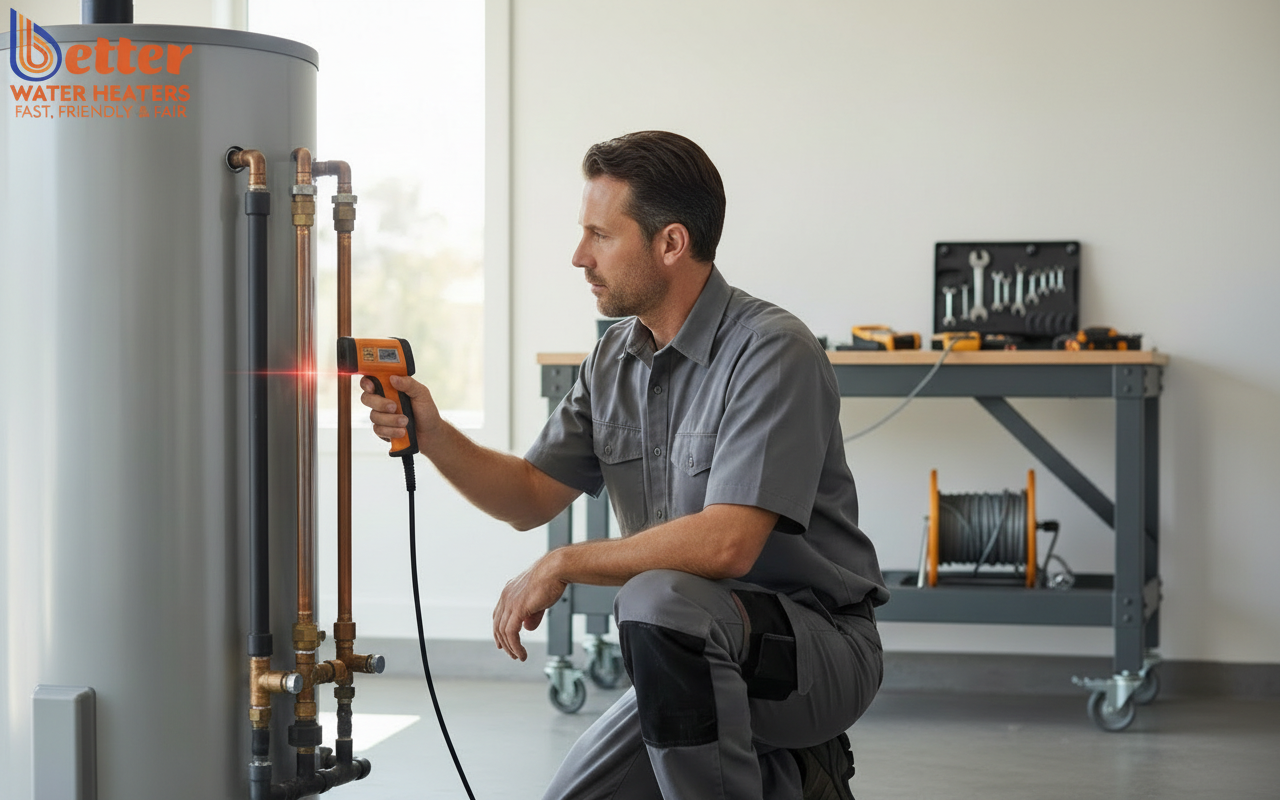
Step 1: The ‘Stress Test’ for Multi-Generational Water Needs
The most honest way to evaluate a system is to measure its performance during the 7:00 AM rush when the dishwasher, laundry, and two showers are running simultaneously. Most aging tanks fail this test because they rely on stored volume rather than active heating speed. For many multi-generational water needs, the issue isn’t the size of the tank, but the “recovery rate”—how fast the unit can reheat water after it’s been depleted.
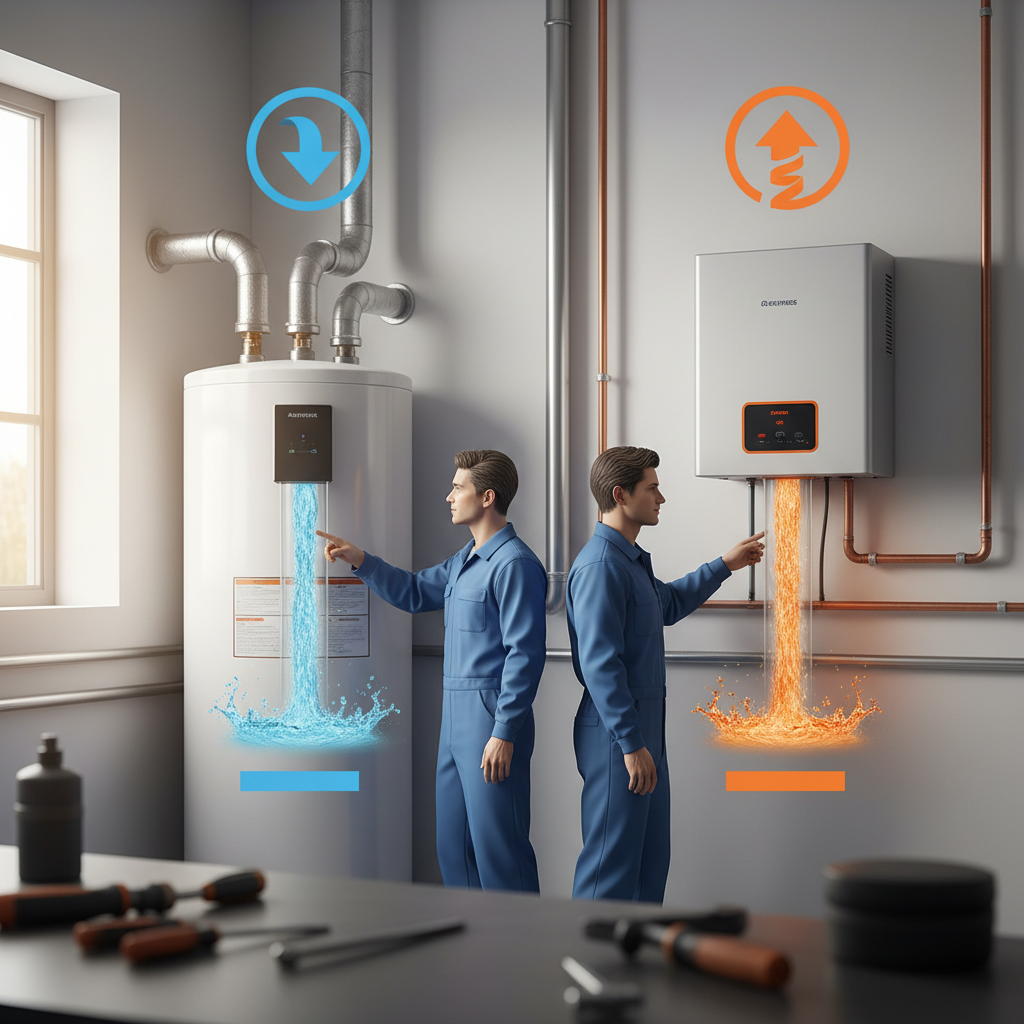
Here’s the thing: a standard 50-gallon gas heater typically has a recovery rate of about 40 gallons per hour. If your household demands 60 gallons in a single hour, someone is getting a cold surprise. In our work with established Bay Area families, we often find that transitioning to a high-recovery water heater or a tankless system is the only way to eliminate these bottlenecks without adding massive storage tanks that take up valuable square footage.
- Track simultaneous usage: How many hot water taps run at once?
- Check the First Hour Rating (FHR) on your current unit’s yellow EnergyGuide label.
- Identify “dead zones” where hot water takes more than 60 seconds to arrive.
Step 2: Infrastructure and Electrical Load Analysis
Before you fall in love with a high-efficiency heat pump model, you must verify if your Bay Area home infrastructure can actually support it. Many historic homes in areas like Palo Alto or Los Gatos still operate on 100-amp or 125-amp panels. A modern heat pump water heater typically requires a dedicated 30-amp, 240-volt circuit, which might necessitate a panel upgrade.
But wait—you might not need a full $5,000 panel overhaul. New “plug-and-play” 120V heat pump models are hitting the market, designed specifically for older homes. According to Energy.gov, these units can reduce water heating energy use by up to 70%. For high-occupancy homes, this efficiency isn’t just a perk; it’s a necessity to offset the increased utility costs of a larger household.
Need a professional eyes-on assessment? Schedule your free Bay Area infrastructure consultation today.
Step 3: The Scald-Proof and Safety Audit
In a house with three generations, the safety requirements for water temperature are drastically different for a 35-year-old versus a 3-year-old or an 80-year-old. Thinner skin in children and seniors makes them more susceptible to third-degree burns in seconds at standard heater settings. A critical part of any hot water performance audit is checking for thermostatic mixing valves.
What most people miss: You should actually keep your water heater set to 140°F to prevent Legionella bacteria growth, but use a mixing valve to deliver it to the tap at a safe 120°F. This “store hot, deliver safe” strategy also effectively increases your tank’s capacity, as you’ll use less hot water mixed with more cold water at the faucet. It’s a simple mechanical fix that provides peace of mind for the whole family.
| Feature | Standard Tank | High-Recovery/Tankless | Heat Pump (Hybrid) |
|---|---|---|---|
| Multi-Gen Capacity | Low – Moderate | Unlimited / Very High | Moderate – High |
| Energy Efficiency | Standard | High (On-Demand) | Ultra-High | Minimal | Up to $1,000+ | Up to $4,800+ |
Step 4: Sediment and Invisible Hazard Check
High usage equals high flow, and high flow accelerates the accumulation of minerals at the bottom of your tank. In hard-water areas of the Bay Area, a water heater sediment flush should be performed annually—especially in full houses. If you hear a popping or rumbling sound, that’s the sound of energy being wasted as heat struggles to pass through a layer of “rock” at the bottom of your tank.
The real kicker? In older homes, the turbulence of a new, high-powered installation can sometimes disturb decades of buildup in galvanized pipes. During our audits, we look for signs of lead or copper leaching. If you are doing a tankless water heater retrofit, it’s the perfect time to install a whole-home filtration system or a smart leak detection valve. These devices can automatically shut off the water if a pipe bursts, protecting your home and the multiple generations living within it.
- Schedule a professional water heater sediment flush to extend tank life.
- Inspect the thermal expansion tank; if it’s failed, your water heater is under constant, damaging pressure.
- Consider smart shut-off valves like Moen Flo or Phyn for aging infrastructure.
For those managing high volumes of property data or seeking to scale their own home service business, using tools like Ingest.blog, our internal AI content engine, can help streamline the educational process for your clients.
Expert Recommendation: When to Repair vs. Replace
A contrarian insight we often share: Just because your heater is 12 years old doesn’t mean it’s a ‘ticking time bomb’—if it’s been maintained. However, for a multi-generational home, the math changes. If a repair costs more than 35% of a new unit, or if the family is constantly running out of hot water, the ‘repair’ is just a band-aid on a lifestyle problem. Moving to a modern system often pays for itself in 3-5 years through energy savings and available Bay Area rebates.
Ready to future-proof your home? Contact Better Water Heaters for a comprehensive performance audit. We’ll help you navigate the 2027 gas regulations and find the system that fits your family’s unique load profile.
Frequently Asked Questions
How do I know if my current water heater is undersized for a multi-gen family?
If you consistently run out of hot water during back-to-back showers or cannot run the dishwasher while someone is bathing, your system is likely undersized. A professional hot water performance audit can calculate your peak hour demand versus your unit’s First Hour Rating (FHR) to provide a definitive answer.
Can I install a tankless water heater in an older Bay Area home without upgrading my gas line?
It depends on the total BTU load of your home. While some high-efficiency tankless models can use a 1/2-inch gas line, many require a 3/4-inch upgrade. We specialize in tankless water heater retrofit projects that assess your specific Bay Area home infrastructure to minimize invasive plumbing work.
What are the best rebates for high-efficiency water heaters in California?
As of 2024, Bay Area residents can access significant incentives through TECH Clean California and local utility programs like Peninsula Clean Energy or Silicon Valley Clean Energy. Combined with federal tax credits, total savings for a heat pump water heater can exceed $4,800, making it an ideal choice for high-usage households.
Why is my water heater making a popping noise when the whole family is home?
That popping sound is usually caused by steam bubbles escaping through a thick layer of sediment at the bottom of the tank. In high-occupancy homes, this buildup happens faster due to increased water throughput. A professional water heater sediment flush is required to restore efficiency and prevent the tank floor from overheating and failing.