
📋 Table of Contents
- The Critical Role of a Soft Story Retrofit Water Heater Strategy
- Oakland vs. Berkeley: Navigating Municipal Seismic Codes
- Integrating Multi-Unit Water Heater Replacement with Structural Work
- The ‘Hidden Risk’: Why Structural Retrofits Fail Inspections
- Minimizing Tenant Disruption During Seismic Upgrades
- The ROI of Safety: Protecting Property Value
- FAQs
For property owners in the East Bay, navigating the soft story retrofit water heater requirements is no longer optional; it is a critical component of asset preservation and legal compliance. As Oakland enforces Chapter 15.27 and Berkeley moves through its final compliance tiers, the intersection of structural engineering and specialized plumbing has become a focal point for sophisticated landlords.
According to the Federal Emergency Management Agency (FEMA), unbraced water heaters are among the most common causes of post-earthquake fires in multi-unit residential buildings. When a building undergoes a soft story retrofit—strengthening the ground floor to prevent collapse—the plumbing systems must be simultaneously hardened to withstand lateral forces.
The Critical Role of a Soft Story Retrofit Water Heater Strategy
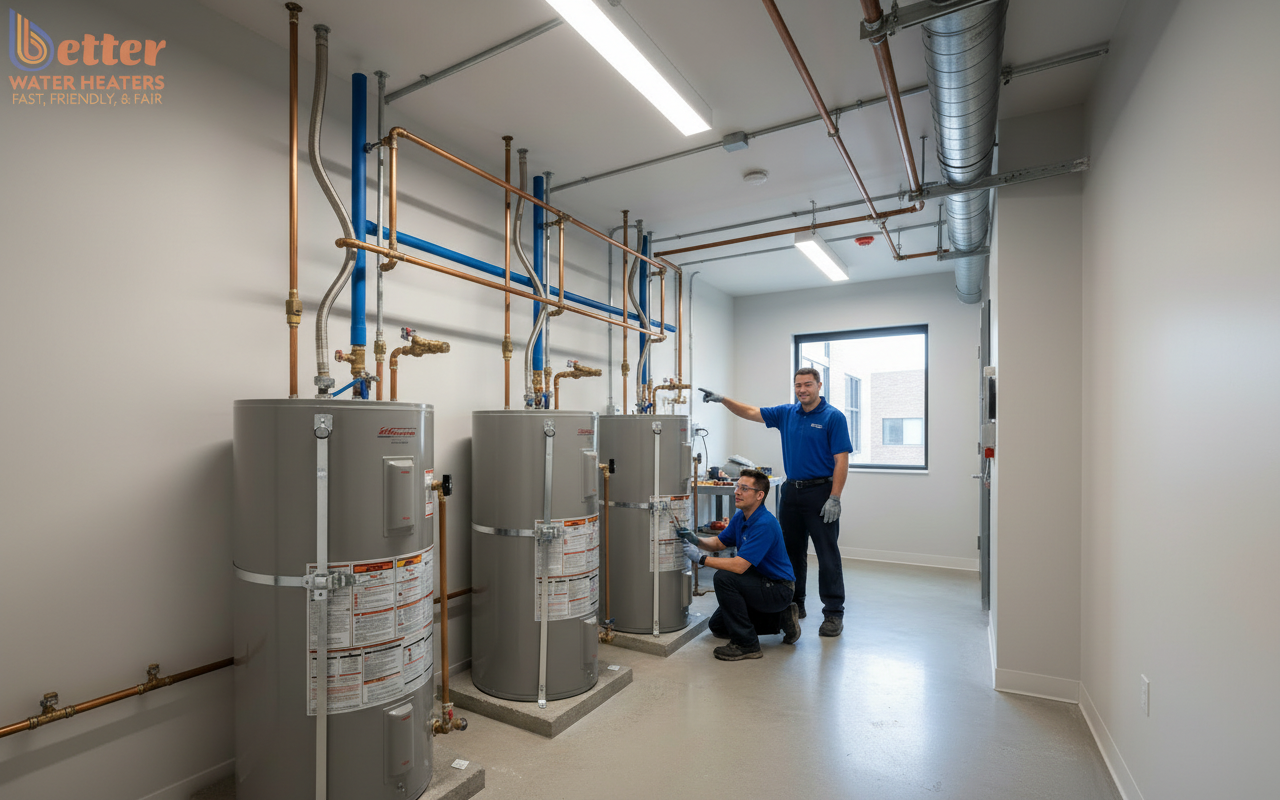
A strategic approach to your soft story retrofit water heater installation ensures that your building remains habitable after a seismic event. In the Bay Area, where property values are at a premium, a single ruptured gas line in a utility closet can lead to catastrophic losses that far exceed the cost of the retrofit itself.
Sophisticated property managers view these mandatory structural upgrades as the ideal time to modernize their mechanical rooms. By coordinating plumbing upgrades with structural work, you can achieve the following:
- Insurance Premium Reductions: Many carriers offer lower rates for buildings with certified seismic bracing and automatic shut-off valves.
- Code Compliance: Meeting the specific Oakland apartment water heater code requirements during the initial construction phase avoids costly re-inspections.
- Future-Proofing: Transitioning to high-efficiency systems while walls are already open for structural reinforcement.
If you are currently planning a seismic upgrade, schedule a professional consultation to ensure your plumbing meets the latest municipal standards.
Oakland vs. Berkeley: Navigating Municipal Seismic Codes
While both cities prioritize safety, the Oakland Soft Story Retrofit Ordinance and Berkeley’s Building Energy Savings Ordinance (BESO) have distinct nuances. Oakland focuses heavily on the structural integrity of the ‘soft’ ground floor, often where central water heating plants or individual unit heaters are located.
In Berkeley, the integration of seismic safety with energy efficiency is paramount. Property owners must often provide proof of seismic water heater strapping in Berkeley as part of the broader BESO energy assessment process during a point of sale or major renovation.
- Oakland Chapter 15.27: Requires specific permits for any plumbing relocation necessitated by steel frame or shear wall installation.
- Berkeley Soft Story Program: Mandates that all gas appliances have flexible connectors and double-strapping to the wall studs.
- California Plumbing Code: Requires that the bottom strap be located within the upper 1/3 of the tank and the lower 1/3 of the tank.
Integrating Multi-Unit Water Heater Replacement with Structural Work
When executing a multi-unit water heater replacement during a retrofit, the primary challenge is space management. Structural engineers often need to place massive steel Grade Beams or Simpson Strong-Walls exactly where your old 50-gallon tanks currently sit.
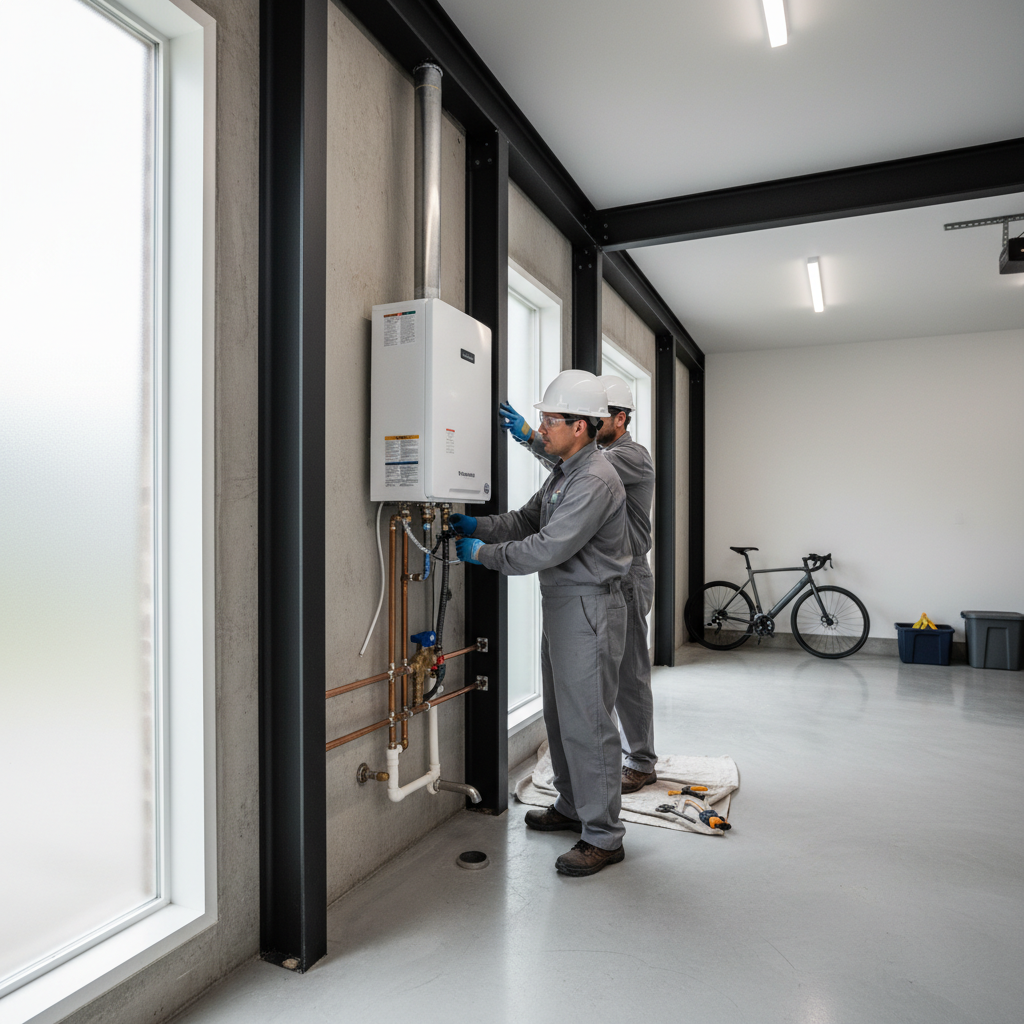
This conflict presents a unique opportunity for technology upgrades. Instead of fighting for floor space, many owners are opting for wall-mounted tankless units or centralized heat pump systems that can be relocated to more efficient footprints.
| Feature | Traditional Tank | Tankless Conversion | Heat Pump (HPWH) |
|---|---|---|---|
| Seismic Stability | High Risk (Top Heavy) | Lower Risk (Wall Mounted) | Moderate (Requires Specialized Base) |
| Space Requirement | Large Floor Footprint | Minimal (Wall Space Only) | Large (Needs Airflow) |
| Bay Area Rebates | Low/None | Up to $1,000 | Up to $4,900+ |
| Code Compliance | Requires Strapping | Requires Rigid Mounting | Requires Specialized Strapping |
Transitioning to a soft story retrofit water heater solution like a tankless system often simplifies the structural engineer’s job by clearing the floor for seismic footings. You can learn more about these options by searching our technology comparison guides.
The ‘Hidden Risk’: Why Structural Retrofits Fail Inspections
A common pitfall for East Bay landlords is focusing entirely on the steel and wood while neglecting the gas and water connections. Even the strongest building will fail a post-retrofit inspection if the Oakland apartment water heater code regarding gas shut-off valves isn’t met.
Automatic gas shut-off valves (ASVs) are often required during major retrofits. These valves sense seismic activity and instantly kill the gas supply to the building, preventing the fires that typically follow a major San Andreas or Hayward fault rupture.
- Vibration-Sensitive Valves: These trigger at a specific magnitude to protect the entire multi-unit complex.
- Flexible Gas Connectors: Essential for allowing the heater to move slightly with the building without snapping the gas line.
- Clearance Requirements: Ensuring that new structural beams do not block access to the water heater’s sacrificial anode rod or T&P valve.
Need an expert to review your retrofit plans? Contact Better Water Heaters today for a specialized multi-unit site assessment.
Minimizing Tenant Disruption During Seismic Upgrades
For a CEO or property owner, the biggest headache of a soft story retrofit water heater project is tenant management. Shutting off hot water to a 12-unit building in Berkeley for three days is a recipe for legal friction and rent withholding.
Strategic planning allows for “hot-swaps” where the new system is staged and tested before the old system is decommissioned. This is especially effective when moving from individual unit tanks to a high-efficiency central manifold system.
- Staged Installations: Replace units in clusters to ensure the majority of the building has service.
- Temporary Bypass Lines: Use flexible PEX piping to maintain service while structural footings are poured.
- Communication Logs: Provide tenants with clear timelines for multi-unit water heater replacement milestones.
The ROI of Safety: Protecting Property Value in High-Risk Zones
Investing in high-end Bay Area earthquake safety plumbing is not just about avoiding fines; it is about protecting your internal rate of return (IRR). A building that is “Earthquake Ready” with certified water heater bracing and smart leak detection commands higher rents and lower vacancy rates among sophisticated Bay Area professionals.
Furthermore, state programs like The Department of Energy and local initiatives provide significant financial tailwinds for those who combine seismic safety with electrification. By installing a soft story retrofit water heater that utilizes heat pump technology, you may qualify for thousands in federal tax credits and TECH Clean California rebates.
Conclusion: Future-Proofing Your East Bay Assets
The mandatory Oakland Soft Story Retrofit Ordinance and Berkeley’s seismic deadlines are complex, but they offer a rare window of opportunity. By integrating your multi-unit water heater replacement into the structural project, you save on labor, permit fees, and long-term energy costs.
At Better Water Heaters, we have spent 20+ years helping Bay Area homeowners and property managers navigate these exact challenges. We understand the specific Oakland apartment water heater code requirements and the nuances of seismic bracing in Berkeley’s unique housing stock.
Don’t wait for the next inspection or the next tremor. Schedule your seismic safety plumbing audit today and ensure your building is truly secure.
Frequently Asked Questions
Do I need a separate permit for water heater work during a soft story retrofit?
Yes, in both Oakland and Berkeley, plumbing work typically requires its own sub-permit under the main building permit. This ensures that the soft story retrofit water heater installation meets specific seismic strapping and venting codes that are inspected by the city’s plumbing division, rather than just the structural inspector.
What is the most space-efficient water heater for cramped Berkeley basements?
Tankless water heaters are the gold standard for space efficiency in Berkeley retrofits. By mounting the units on the wall, you free up the floor space required for new structural grade beams or shear walls. This often makes the difference between a successful retrofit and one that requires expensive structural redesigns.
Are automatic gas shut-off valves mandatory in Oakland?
While requirements vary by the scope of the project, Oakland often triggers the requirement for an automatic seismic gas shut-off valve whenever a building undergoes a major structural retrofit or a multi-unit water heater replacement valued over a certain dollar threshold. It is a highly recommended safety feature for all multi-unit properties regardless of the mandate.
How do I know if my current water heater bracing is earthquake-ready?
A compliant soft story retrofit water heater must be double-strapped with heavy-duty metal webbing. One strap must be in the top third of the tank (at least 9 inches above the controls) and the other in the bottom third (at least 4 inches above the floor). They must be anchored directly into the wall studs with lag bolts, not just into the drywall.