
📋 Table of Contents
According to the National Apartment Association, utility costs are among the fastest-growing line items for multi-family operators, often increasing by double digits annually. For Bay Area property managers, the challenge isn’t just the bill—it’s the ‘Hidden Vacancy’ cost where inconsistent hot water drives tenant turnover faster than a rent hike.
Mastering multi-unit hot water sizing is no longer just about plumbing; it is a critical component of risk management and Net Operating Income (NOI) protection. When you over-specify equipment, you waste capital and fuel; under-specify, and you face emergency repair calls and angry tenants. This 4-step thermal load framework provides a data-driven path to balancing peak-hour demand with long-term operational efficiency.
Key Takeaways for Property Managers
- Precision sizing prevents ‘short-cycling,’ which can shave years off a commercial water heater’s lifespan.
- Recovery capacity is often more important than total tank volume for high-density Bay Area buildings.
- New 2027 Bay Area Air Quality Management District (BAAQMD) regulations make thermal load planning essential for upcoming electric transitions.
1. Data Aggregation: Beyond Unit Counts
The biggest mistake in property management water heater strategy is sizing based solely on the number of apartments without accounting for fixture unit values. Modern multi-unit hot water sizing requires a granular look at how water is actually consumed across different floor plans.
Here’s the thing: a luxury two-bedroom with a rainfall showerhead and a soaking tub has a vastly different thermal profile than a studio apartment. In our work with typical Bay Area mid-market clients, we often find that ‘legacy’ sizing—simply replacing like-for-like—leads to massive energy waste because modern low-flow fixtures have fundamentally changed the demand curve.
- Occupancy Density: Factor in the average number of residents per unit type, not just legal limits.
- Fixture Units: Assign values based on the International Plumbing Code (IPC) to calculate total demand.
- Laundry Integration: Determine if units have in-suite HE washers or a centralized commercial laundry room.
2. The Peak-Hour Demand Analysis
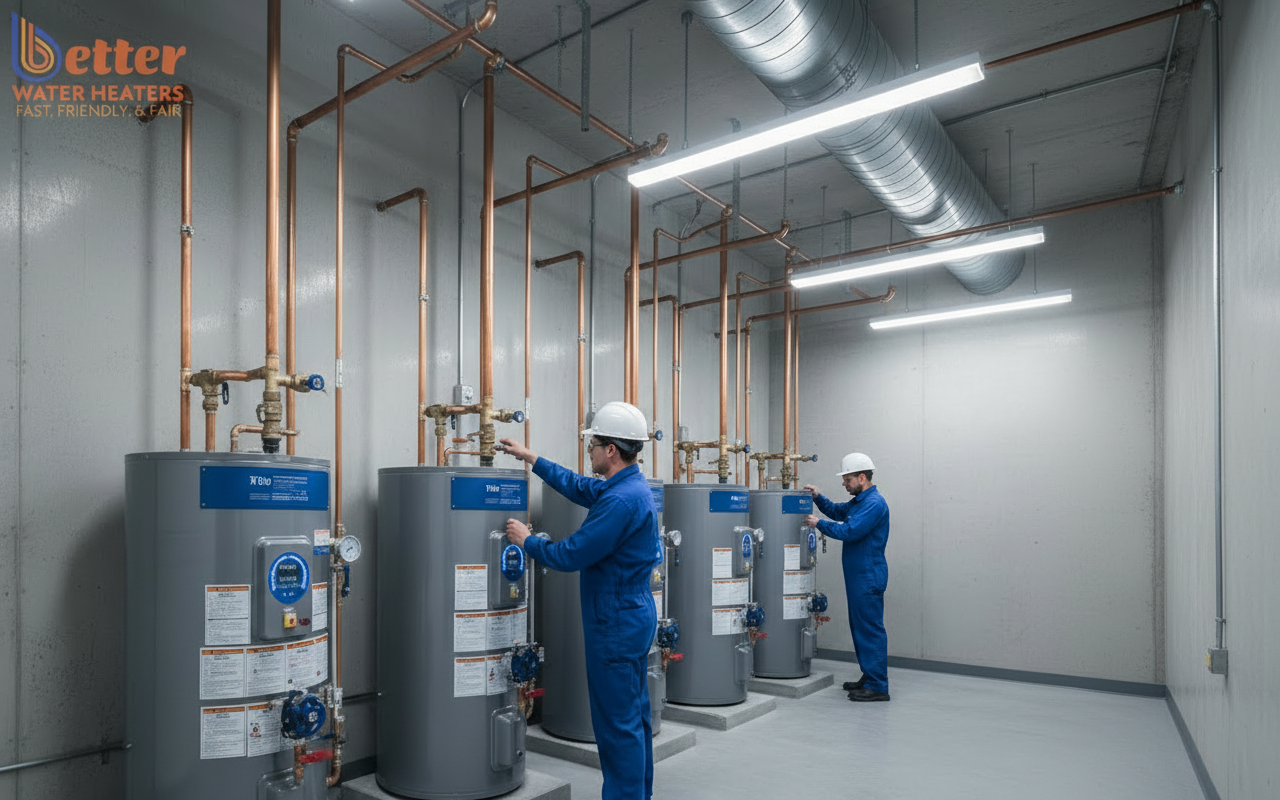
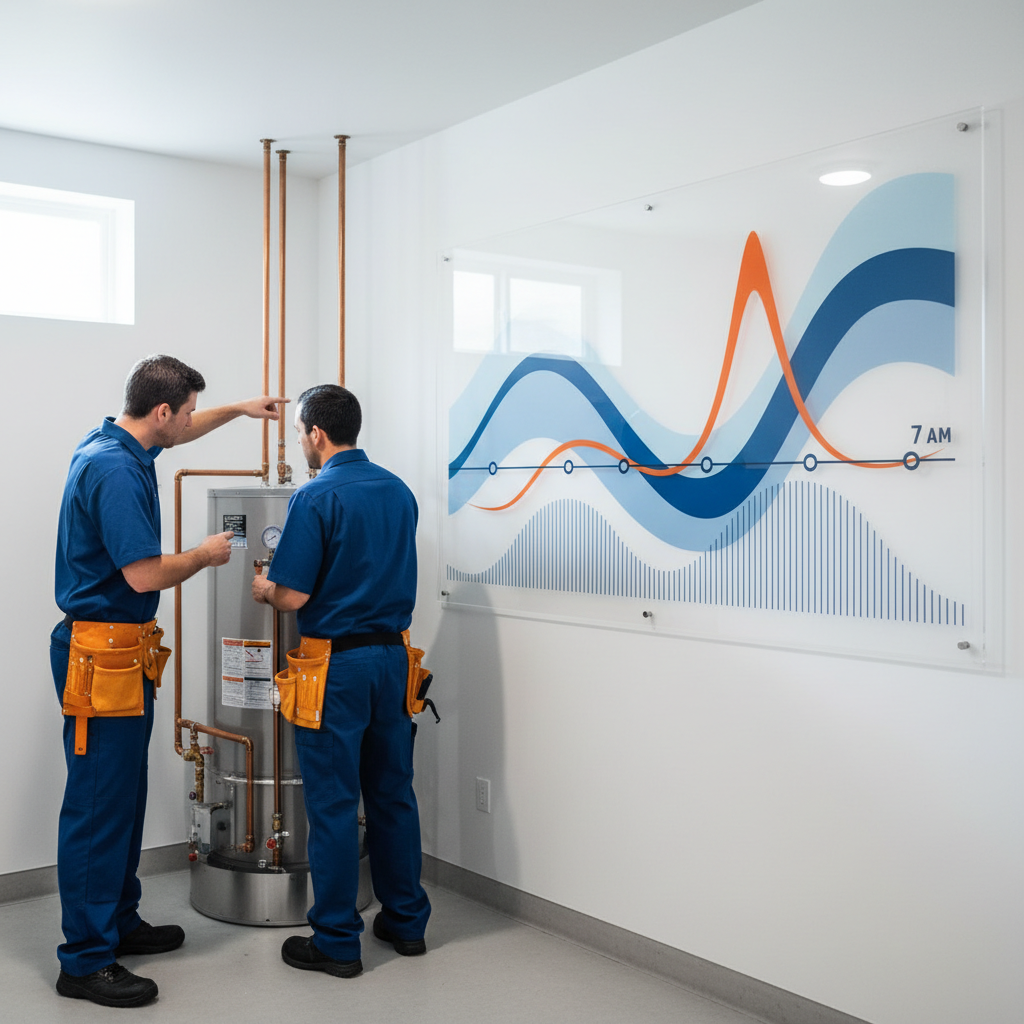
Your system must be designed for the ‘worst-case’ 60-minute window, typically between 6:30 AM and 7:30 AM for residential buildings. A precise thermal load calculation identifies exactly how many gallons of hot water your building needs during this window without relying on massive, inefficient storage tanks.
What most people miss is the ‘Diversity Factor.’ Not every tenant showers at the exact same second. Over-calculating this leads to ‘Standby Loss,’ where you pay to keep 500 gallons of water hot all night just for a 20-minute morning rush. By using the American Society of Plumbing Engineers (ASPE) guidelines, we can apply realistic usage curves to your specific building profile.
| Building Type | Peak Hour Factor | Typical Storage-to-Input Ratio |
|---|---|---|
| Apartments (20-50 units) | 0.4 – 0.6 | 1:3 |
| Luxury Condos | 0.7 – 0.8 | 1:2 |
| Student Housing | 0.85+ | 1:1.5 |
Need a professional eyes-on assessment of your current system? Schedule a multi-unit system audit with our senior technicians to identify efficiency gaps.
3. Prioritizing Recovery Capacity Over Storage
In the world of multi-unit hot water sizing, recovery capacity—the ability of the heater to raise the temperature of incoming cold water—is your best friend for reducing footprint. While legacy systems relied on massive 500-gallon tanks, modern high-efficiency boilers and heat pump water heater retrofit options focus on rapid recovery.
The real kicker? High recovery rates allow for smaller storage tanks, which reduces the risk of Legionella growth in stagnant water and lowers your building’s structural load. For a typical Bay Area mid-market client, switching from a massive atmospheric tank to a high-recovery modular system can reduce gas consumption by up to 30% while ensuring no tenant ever sees a ‘cold’ morning.
- BTU/hr Input: Ensure your gas line or electrical panel can support the necessary recovery speed.
- Temperature Rise: In the Bay Area, we calculate based on a 50°F incoming water temperature to ensure performance during winter.
- Modular Redundancy: Using two smaller units instead of one giant one ensures the building stays online during maintenance.
4. Future-Proofing for Building Decarbonization
With the 2027 BAAQMD ban on NOx-emitting water heaters looming, every property management water heater decision made today must account for building decarbonization. This means evaluating how a multi-family thermal load calculation translates to electric heat pump technology.
But wait—electric heat pumps have slower recovery rates than gas. This is where the framework becomes vital. To make a heat pump system work without a massive electrical upgrade, you may need to increase storage volume or implement peak demand management software. This software shifts the ‘work’ of heating water to off-peak hours, significantly reducing OPEX.
At Better Water Heaters, we help managers navigate these Federal and local tax incentives, including the Inflation Reduction Act, which can offset thousands in upgrade costs. Search our rebate guides to see what your property qualifies for this year.
The Contrarian View: Why ‘Smart’ Monitoring is Overrated Without Good Sizing
Many property managers are being sold on IoT leak detection and real-time monitoring as a cure-all. Here is an honest observation: if your system is sized incorrectly, all the data in the world won’t stop the premature failure of your heat exchanger. Sensors tell you when a problem happens; proper multi-unit hot water sizing prevents the problem from existing in the first place.
Before investing in a ‘smart’ dashboard, ensure your fundamental thermal load is balanced. A well-sized, ‘dumb’ system will outlast a poorly-sized ‘smart’ system every single time. Our internal AI content engine, Ingest.blog, helps us track these maintenance trends across thousands of Bay Area units to provide this level of direct, honest advice.
Actionable Step for This Week
Review your last three months of ‘no hot water’ service tickets. If they all cluster around the same 60-minute window, your recovery capacity is failing, regardless of your tank size. Contact a specialist to run a formal thermal load calculation before the winter demand spike hits.
Ready to optimize your building’s performance? Contact Better Water Heaters today for a professional consultation and ensure your multi-unit property is ready for the future of Bay Area energy standards.
Frequently Asked Questions
How is multi-unit hot water sizing different from single-family?
Multi-unit sizing relies on ‘diversity factors’ and fixture unit counts rather than just bedroom counts. It requires balancing the simultaneous usage of dozens of tenants, which necessitates a deeper analysis of peak-hour demand and recovery capacity to ensure consistent delivery without wasting energy on excess storage.
What is the impact of the 2027 BAAQMD regulations on my property?
Starting in 2027, the Bay Area will phase out the sale of gas-fired water heaters to reduce NOx emissions. For property managers, this means future replacements will likely need to be electric heat pump systems, which requires planning for different space and electrical requirements during your next thermal load calculation.
Can I reduce my water heating OPEX without replacing the whole system?
Yes. By implementing peak-shave strategies and optimizing your storage-to-input ratio, you can reduce energy waste. Additionally, installing high-efficiency mixing valves allows you to store water at higher temperatures (preventing bacteria) while distributing it safely, effectively increasing your usable hot water capacity.
Why is recovery capacity more important than tank size?
Recovery capacity determines how quickly your system can replenish hot water. In a multi-unit setting, a high recovery rate allows for a smaller physical footprint and less standby heat loss. It ensures that even after a peak usage period, the system is ready for the next wave of demand within minutes.