
📋 Table of Contents
According to the Pew Research Center, nearly 20% of the U.S. population now lives in multi-generational households, a trend that is particularly pronounced in high-cost regions like the Silicon Valley and East Bay. Managing multi-generational home plumbing isn’t just about fixing leaks; it is a high-stakes logistics challenge where a single water heater failure can disrupt three generations of schedules and remote work commitments.
Key Takeaways for Bay Area Homeowners
- Tier 1 Safety: Prioritize seismic bracing and pressure valves to meet California code.
- Tier 2 Performance: Implement a staggered water heater maintenance schedule to handle high-occupancy loads.
- Tier 3 Future-Proofing: Leverage up to $4,900 in Heat Pump Water Heater rebates in the Bay Area.
- ADU Strategy: Decouple hot water systems to ensure independent reliability between main homes and backyard cottages.
The High Cost of Reactive Maintenance in the Bay Area
In our work with established families in Palo Alto and Los Gatos, we consistently see that the cost of an emergency flood in a finished basement or ADU far exceeds the price of a decade’s worth of preventative care. The real kicker? Most homeowners treat their water heater like a ‘set it and forget it’ appliance until the morning the grandmother in the ADU has a cold shower and the kids are late for school.
What most people miss is that high-occupancy homes put 3x the strain on standard components. While a typical tank might last 10 years for a couple, that same unit in a multi-gen environment often fails at year six due to accelerated sediment buildup and constant thermal cycling. To combat this, we developed the 3-Tier Home Health Audit.
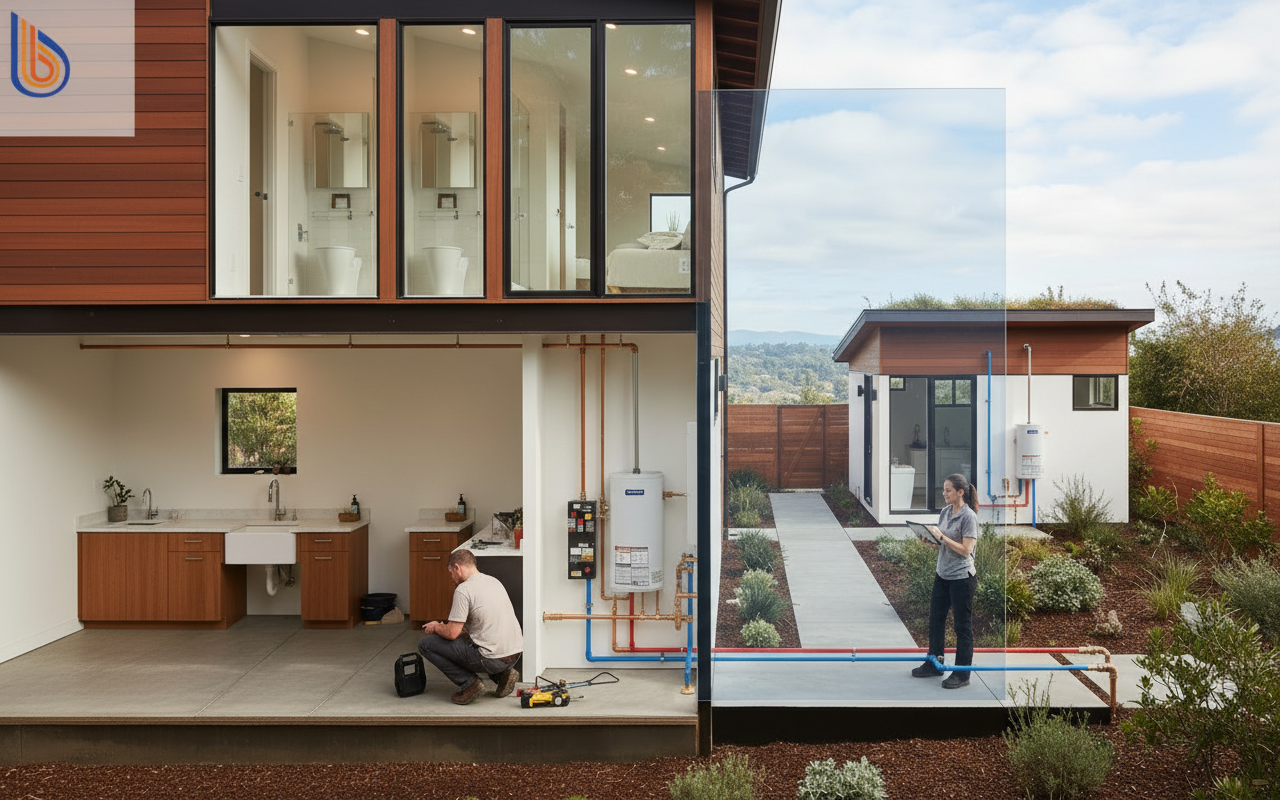
Tier 1: Safety and Compliance – The Foundation of Your Home Health Audit
Safety is the non-negotiable first step, especially considering the seismic activity inherent to our region. Here is the thing: a water heater is essentially a heavy torpedo if not properly secured during a tremor.
- Seismic Bracing: California Health and Safety Code Section 19211 requires all water heaters to be strapped to prevent motion. We often find that older straps have loosened or were installed into drywall rather than studs.
- Temperature and Pressure (T&P) Relief Valves: These are your system’s primary defense against explosions. In high-use homes, these valves can become calcified and fail to trigger.
- Expansion Tanks: If you have a closed-loop plumbing system (common in newer San Jose developments), an expansion tank is critical to prevent pressure spikes from damaging your pipes.
For those managing multiple units or aging-in-place parents, Tier 1 is about peace of mind. If you haven’t had your straps checked in the last two years, schedule a safety inspection to ensure you’re up to code.
Tier 2: Efficiency and Scale – Managing the Multi-Gen Load
A robust water heater maintenance schedule is what separates a reliable home from a constant source of stress. When you have six or more people under one roof, the recovery speed of your unit becomes the primary metric of success.
The mineral profile of Bay Area water varies wildly. While Hetch Hetchy water is relatively soft, many South Bay residents deal with hard water that creates a ‘blanket’ of sediment at the bottom of the tank. This sediment acts as an insulator, forcing the burner to work harder and eventually cracking the glass lining of the tank.
| Maintenance Task | Frequency (Multi-Gen) | Benefit |
|---|---|---|
| Tank Flushing | Every 6 Months | Removes sediment, improves heating speed |
| Anode Rod Inspection | Every 2 Years | Prevents tank corrosion and ‘rotten egg’ smell |
| Heat Pump Filter Clean | Quarterly | Maintains airflow and energy efficiency |
But wait—if you’ve transitioned to a tankless system to support a large family, your maintenance needs actually increase. Tankless water heater maintenance for large families requires annual descaling (flushing with a food-grade solution) to keep the heat exchanger from failing. We’ve seen $3,000 units ruined in four years because this simple 60-minute task was ignored.
Tier 3: Future-Proofing and the ADU Hot Water Strategy
The most sophisticated homeowners are currently looking at how to decouple their systems. A common ADU hot water strategy involves installing a dedicated heat pump or tankless unit for the backyard cottage rather than piping hot water from the main house.
Why? Heat loss over long pipe runs (known as ‘wait-to-waste’) is a massive efficiency killer. According to Energy.gov, heat pump water heaters can be up to three times more energy-efficient than conventional electric models. In the Bay Area, programs like The Switch Is On and TECH Clean California offer massive incentives to help families make this transition.
- Smart Monitoring: We recommend Wi-Fi enabled leak detectors (like Moen Flo or Phyn) that can automatically shut off the water main if a pipe bursts while you’re at the office.
- Point-of-Use (POU) Heaters: For sprawling multi-gen layouts, adding a small POU heater under the kitchen sink or in a distant bathroom ensures instant hot water without taxing the main system.
- Electrification Readiness: Even if you aren’t ready to switch today, Tier 3 involves ensuring your electrical panel has the 240V capacity needed for future heat pump installations.
The ‘Zero-Interruption’ Maintenance Strategy
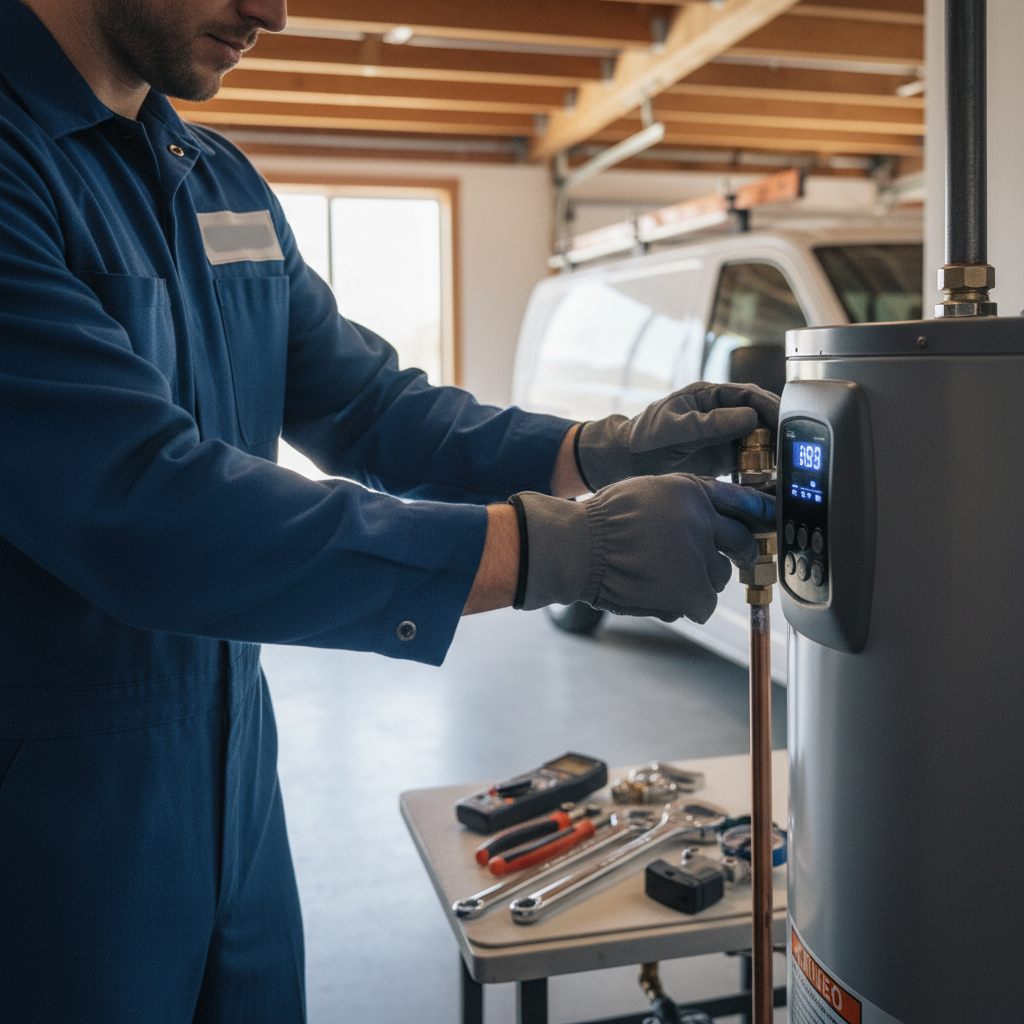
In our work with remote-working professionals in the East Bay, we’ve learned that you cannot simply shut off the water at 10:00 AM on a Tuesday. A zero-interruption plumbing strategy involves scheduling maintenance during ‘off-peak’ windows or utilizing bypass valves that allow us to service the heater while the rest of the house remains functional.
Contrarian Insight: Many ‘energy-saving’ settings on water heaters actually cause more harm than good in multi-gen homes. Setting your temperature too low (below 120°F) to save a few dollars on your PG&E bill creates a breeding ground for Legionella bacteria in large tanks with high turnover. We recommend a consistent 130°F with a thermostatic mixing valve to ensure safety and capacity.
If managing this sounds like a full-time job, it’s because it is. We use Ingest.blog as our internal AI content engine to keep our clients updated on the latest Bay Area water heater regulations and rebate deadlines, ensuring our community stays ahead of the 2027 gas water heater phase-out.
Calculating the ROI of Prevention
A typical Bay Area mid-market client might spend $250 on an annual maintenance visit. Compare that to the $5,000+ cost of an emergency tank replacement on a Sunday, or the $20,000+ in flooring damage from a slow leak behind a wall. The math is simple: preventative care is the highest-yielding investment you can make in your property.
- Check your water heater’s manufacture date (found on the serial number sticker).
- Look for signs of ‘weeping’ or moisture around the base.
- Verify that your ADU has its own shut-off valve.
Don’t wait for a breakdown to realize your system is overtaxed. Book your 3-Tier Home Health Audit today and ensure your multi-generational home stays comfortable and compliant.
Frequently Asked Questions
How do I know if my multi-generational home plumbing is overtaxed?
The most common signs include frequent ‘lukewarm’ water during peak morning hours, popping or knocking sounds from the tank (indicating heavy sediment), and a noticeable drop in water pressure when multiple showers are running. If your recovery time—the time it takes for the tank to get hot again—exceeds 45 minutes, your system is likely undersized for your current household occupancy.
Are there specific rebates for ADU hot water systems in the Bay Area?
Yes, homeowners can often stack federal tax credits (up to $2,000) with local TECH Clean California and utility-specific incentives (like Peninsula Clean Energy or Silicon Valley Clean Energy). These can total over $4,000 for heat pump installations. It is important to note that the ADU must usually be permitted and meet specific electrical requirements to qualify for the highest tiers of funding.
What is the best water heater for a home with 6+ adults?
For high-occupancy homes, we generally recommend either a high-output tankless system (like a Rinnai or Navien) or a large-capacity (80-gallon) heat pump water heater. Tankless units provide endless hot water, while heat pumps offer the lowest operating costs. The choice depends on your electrical panel capacity and whether you have natural gas available.
Do I really need to flush my tankless water heater every year?
Absolutely. Because tankless heaters use a compact heat exchanger with narrow passages, even a small amount of scale can cause the unit to overheat and shut down. In the Bay Area, where hard water is common in many municipal districts, annual descaling is the only way to ensure the unit reaches its 20-year expected lifespan and maintains its manufacturer warranty.
Ready to upgrade or protect your investment? Better Water Heaters has been serving the Bay Area for over 20 years with transparent pricing and expert service. Contact us now to get started.